admin
admin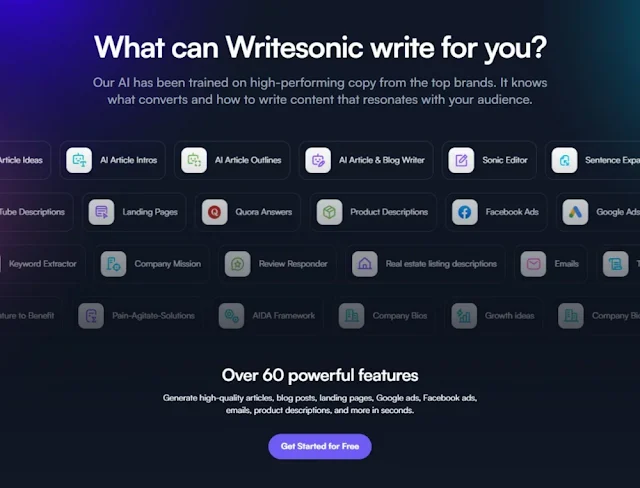
The landscape of digital content creation underwent a significant transformation in 2022, largely driven by the rapid advancements and widespread adoption of Artificial Intelligence (AI) content generation tools. These platforms emerged as pivotal resources for individuals and organizations seeking to enhance content production efficiency, maintain relevance, and engage audiences more effectively in an increasingly competitive online environment. The proliferation of sophisticated AI models capable of generating human-like text at scale marked a new era, offering solutions to persistent challenges faced by content creators, marketers, and businesses alike.
The Evolving Demand for Digital Content and Traditional Challenges

Prior to the widespread integration of AI, content creation was often a labor-intensive and time-consuming process. Businesses, bloggers, and digital marketers constantly grappled with the need for fresh, engaging, and SEO-optimized content across various platforms, from blog posts and social media updates to ad copy and product descriptions. The sheer volume required to maintain visibility and audience engagement placed considerable strain on human resources, often leading to bottlenecks, inconsistent quality, and escalating costs. The demand for content grew exponentially with the expansion of the internet and digital marketing, creating a gap between creation capacity and market need.
This era saw content teams struggling with repetitive tasks, writer’s block, and the meticulous process of keyword research and optimization. Maintaining a consistent brand voice, ensuring grammatical accuracy, and avoiding plagiarism added further layers of complexity. The market was ripe for innovations that could streamline these processes without compromising quality or authenticity.
The Advent of AI Content Generators: A New Paradigm
The emergence of AI content generators, particularly those powered by advanced Large Language Models (LLMs), provided a compelling answer to these challenges. By leveraging machine learning algorithms trained on vast datasets of text, these tools became capable of understanding context, generating coherent narratives, and adapting to specific writing styles. They promised to accelerate content pipelines, reduce operational costs, and free human creators to focus on strategic planning, editing, and creative oversight.
By 2022, the AI content generation market was experiencing robust growth. Industry reports indicated a burgeoning sector, with projections suggesting substantial year-over-year increases in adoption rates. Businesses, from small startups to large enterprises, began to explore and integrate these tools into their workflows, recognizing their potential to scale content production unprecedentedly. This period was characterized by intense innovation, with various platforms specializing in different content formats and offering diverse feature sets to cater to a broad spectrum of user needs.
Leading Platforms in AI Content Generation (2022 Review)

Several platforms distinguished themselves in the competitive AI content generation market of 2022, each offering unique capabilities and catering to specific user profiles.
1. Jasper AI (formerly Jarvis): The Comprehensive Content Solution
Jasper AI, rebranded from Jarvis, stood out as a leading AI content writing and generation tool. It utilized artificial intelligence to assist users in identifying optimal phrasing and sentence structures tailored to specific writing styles and mediums. Its strength lay in its ability to produce long-form content efficiently and quickly, making it a favorite among content marketers and bloggers.
- Key Capabilities: Jasper offered a wide array of templates for various content types, from blog posts and articles to marketing copy and video scripts. Its "Boss Mode" plan, priced around $99/month, provided enhanced control and longer content generation capabilities, allowing users to direct the AI more precisely.
- User Feedback (Generalized): Users frequently lauded Jasper for its versatility and the quality of its output, particularly for long-form content. Its ability to generate content that often required minimal editing was a significant draw. The platform was perceived as a robust solution for scaling content production.
- Pricing Structure: While detailed feature lists for each tier were not provided, the Boss Mode at $99/month suggested a premium offering aimed at professional users requiring extensive capabilities. Promotional offers, such as 10,000 free credits, were common incentives for new users.
2. Copy AI: Specializing in Short-Form and Marketing Copy
Copy.ai positioned itself as a potent tool for generating marketing copy, social media posts, and various short-form content. With over 90 templates covering formats like bullet points to blogs, general ads, and hook text, it proved invaluable for businesses focused on concise and impactful messaging.
- Key Capabilities: This platform excelled in producing product descriptions, website copy, and sales reports, serving immediate business needs. Its template-driven approach streamlined the creation of diverse marketing assets.
- User Feedback (Generalized): Copy.ai was frequently praised for its speed and the breadth of its templates, making it highly suitable for marketers needing quick iterations of ad copy or social media captions. The utility for short-term and specific business formats was a recurring positive.
- Pricing Structure: A 7-day free trial with 100 runs per day allowed users to test its capabilities. The Pro Plan, at $49/month or $420 annually ($35/month), indicated a value proposition for consistent users. Special promotions, such as 7,000 free words and a 40% discount for early upgrades, aimed to convert trial users.
3. Frase AI: The SEO-Centric Content Optimizer
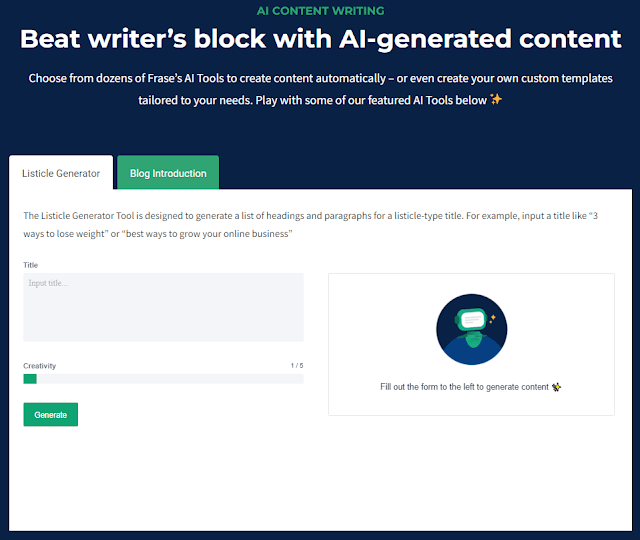
Frase AI distinguished itself by integrating content research, creation, and SEO optimization into a single platform. Similar to other SEO-focused tools, Frase aimed to produce high-quality content optimized for search engines through intelligent keyword integration and topic clustering.
- Key Capabilities: Frase’s core strength lay in its ability to analyze top-ranking content for a given keyword and provide comprehensive outlines and briefs, enabling users to create content that addressed search intent effectively. Its AI content generation complemented its robust research features.
- User Feedback (Generalized): Users valued Frase for its deep integration of SEO principles, which helped them craft content with a higher likelihood of ranking. Its ability to quickly generate content briefs and identify competitive gaps was often cited as a major benefit.
- Pricing Structure: Frase offered tiered plans: Solo ($14.99/month, 4 document credits), Basic ($44.99/month, 30 document credits), and Team ($114.99/month, unlimited for 3 users). An additional $35/month for SEO add-ons underscored its specialized focus.
4. Article Forge: Automated Long-Form Article Generation
Article Forge adopted a distinct approach to long-form content generation. Unlike platforms requiring detailed briefs, Article Forge could generate a complete article from a single keyword input, emphasizing efficiency and affordability for blog writing.
- Key Capabilities: The tool’s ability to produce full articles with minimal input was its defining feature. It also guaranteed that all generated content passed Copyscape, addressing critical concerns about originality and plagiarism.
- User Feedback (Generalized): Its simplicity and speed in generating full articles were frequently highlighted. Users appreciated the Copyscape guarantee, which provided assurance regarding content uniqueness, a common concern with automated generation.
- Pricing Structure: Article Forge offered a 30-day money-back guarantee but no free plan. Plans included Basic ($27/month for 25k words), Standard ($57/month for 250k words), and Unlimited ($117/month for unlimited words), catering to different scales of content needs.
5. Rytr: Accessible AI Content Writing Assistant
Rytr.me emerged as an accessible AI content generator, particularly suitable for small businesses, bloggers, and students. Its user-friendly interface allowed for the quick generation of SEO-friendly blog posts, articles, and various other content types.

- Key Capabilities: Rytr provided a wide range of content types and tones, coupled with a built-in plagiarism checker, making it a versatile tool for diverse writing needs. Its focus on accessibility made it attractive to those new to AI writing.
- User Feedback (Generalized): Users often praised Rytr for its ease of use, affordability, and the quality of its output for its price point. The free plan and affordable paid tiers made it a popular choice for budget-conscious creators.
- Pricing Structure: Rytr offered a free plan (up to 5,000 characters/month) with plagiarism checking. The Saver Plan ($9/month or $90/year for 50k characters) and the Unlimited Plan ($29/month or $290/year for unlimited characters) provided scalable options.
6. Writesonic: Versatility with Integrated Grammar and Plagiarism Checks
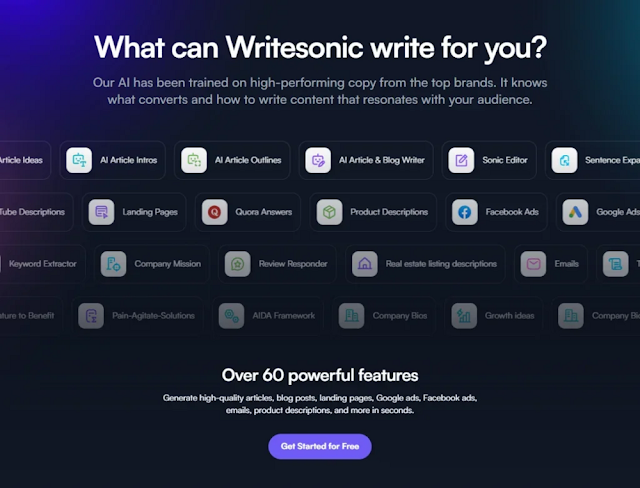
Writesonic presented itself as a free and easy-to-use AI content generator, designed for marketing content, website copy, and blog posts. It aimed to assist small businesses and solopreneurs in producing quality content efficiently.
- Key Capabilities: Writesonic offered a broad spectrum of templates and a user-friendly interface. Its integration of grammar and plagiarism checks directly within the platform added significant value, ensuring both quality and originality.
- User Feedback (Generalized): The tool was often commended for its comprehensive features, including the integrated checkers, which simplified the content creation workflow. Its adaptability for various marketing needs was also a strong point.
- Pricing Structure: A free trial (10 credits) allowed initial exploration. Paid plans included Short-form ($15/month for basic content types and 1 user) and Long-Form ($19/month for advanced features and 1 user), demonstrating a focus on different content lengths and complexity.
7. CopySmith: Enterprise-Ready Content Scaling
CopySmith was positioned as an AI content generator capable of creating personal and professional documents, blogs, and presentations, with a strong emphasis on enterprise-level scalability. Its wide range of features included document and presentation creation, supported by numerous templates.
- Key Capabilities: CopySmith’s strength lay in its suitability for larger teams and businesses requiring extensive content generation and management. Its templates facilitated rapid content deployment across various organizational needs.
- User Feedback (Generalized): The platform was noted for its robust features suitable for professional environments, including collaboration tools and integrations. Its ability to scale content production for larger operations was a key advantage.
- Pricing Structure: After a free trial, plans included Starter ($19/month for 20k words, 20 plagiarism checks, 1 user) and Professional ($59/month for 80k words, 100 plagiarism checks, 5 users), with an Enterprise option for custom plans.
8. Hypotenuse.ai: E-commerce and Product Description Specialization
Hypotenuse.ai emerged as an online tool particularly adept at generating AI content for e-commerce and product descriptions. Its user-friendly interface made it accessible for beginners, allowing for the creation of articles, videos, and infographics with ease.

- Key Capabilities: Hypotenuse.ai excelled in creating compelling product narratives and e-commerce copy, crucial for online retailers. Its simple interface lowered the barrier to entry for new users.
- User Feedback (Generalized): Users in the e-commerce sector frequently praised Hypotenuse.ai for its ability to generate high-quality product descriptions quickly, which directly translated to improved online store performance. Its ease of use was also a consistent positive.
- Pricing Structure: While no free plan was offered, a free trial allowed testing. The Starter Plan ($29/month for 100 credits) and Growth Plan ($59/month for 300 credits) provided options for varying content volumes, with custom pricing for enterprise solutions.
9. Kafkai: Niche-Specific Article Generation for SEOs and Marketers
Kafkai distinguished itself as an AI content generator and writing software focused on producing niche-specific content across a wide array of topics. It targeted SEO professionals and marketers who needed to generate high volumes of content for diverse niches.
- Key Capabilities: Kafkai’s ability to generate content tailored to specific, often narrow, niches was its core offering. This specialization was particularly valuable for SEO strategies involving long-tail keywords and comprehensive topic coverage.
- User Feedback (Generalized): SEO practitioners appreciated Kafkai’s capacity for generating large quantities of niche content, which could be instrumental in building authority and ranking for specific keywords. Its focus on automation for article production was a clear benefit.
- Pricing Structure: Following a free trial, Kafkai offered tiered plans based on article volume: Writer ($29/month for 100 articles), Newsroom ($49/month for 250 articles), Printing Press ($129/month for 1000 articles), and Industrial Printer ($199/month for 2500 articles), emphasizing cost-effectiveness per article at higher volumes.
10. Peppertype.ai: Best for Blogging and Small Business
Peppertype.ai positioned itself as an easy-to-use online AI content generator, ideal for small business owners and bloggers seeking a powerful tool to craft and generate various content types for multiple purposes.
- Key Capabilities: Peppertype.ai offered a user-friendly interface and a diverse set of content generation capabilities, making it a versatile assistant for content creation, particularly for blog posts and marketing materials relevant to small businesses.
- User Feedback (Generalized): Small business owners and bloggers found Peppertype.ai beneficial for its simplicity and effectiveness in generating a wide range of content quickly, aiding in their content marketing efforts without requiring extensive technical knowledge.
- Pricing Structure: A free trial was available, followed by paid plans: Personal ($35/month for 50k words, 1 user) and Team ($199/month for 250k words, 5 users), with custom pricing for enterprise solutions, reflecting a scalable approach for growing businesses.
Analyzing the Broader Implications of AI in Content Creation
The widespread adoption of these AI content generation tools in 2022 had several profound implications for the digital ecosystem.
Efficiency and Scalability: The most immediate impact was the dramatic increase in content production efficiency. Businesses could generate hundreds of articles, thousands of product descriptions, or countless social media posts in a fraction of the time it would take human writers. This scalability allowed for more aggressive content marketing strategies and a quicker response to market trends.
Impact on SEO: AI tools became indispensable for SEO professionals. Their ability to quickly analyze keywords, generate optimized meta descriptions, and produce keyword-rich content at scale significantly influenced search engine rankings. Platforms like Frase AI and Kafkai specifically highlighted their SEO-centric features, demonstrating the industry’s recognition of this critical application. The guarantee of Copyscape-passing content, as offered by Article Forge, also addressed concerns about duplicate content penalties.

Quality and Originality: While initial concerns about the quality and originality of AI-generated content were prevalent, the tools evolved rapidly. By 2022, many platforms were capable of producing coherent, grammatically correct, and contextually relevant text. However, human oversight remained crucial for refining output, ensuring factual accuracy, maintaining brand voice, and adding the nuanced creativity that AI still struggled to replicate consistently. The inclusion of plagiarism checkers in tools like Rytr and Writesonic underscored the industry’s commitment to originality.
Cost-Effectiveness: For many businesses, AI content generators offered a more cost-effective alternative to hiring full-time human writers or agencies for high-volume, lower-stakes content. The subscription models, often based on word count or article generation limits, provided predictable expenses and a clear return on investment through increased content output.
Ethical Considerations and the Future of Work: The rise of AI content generation also sparked discussions about the ethics of automated content, potential for misinformation, and the future of creative professions. While AI was not seen as fully replacing human writers, it was clearly redefining their roles, shifting the focus towards editing, strategizing, and adding unique human insights. The emphasis moved towards human-AI collaboration, where AI served as a powerful assistant rather than a standalone creator.

Conclusion
The year 2022 marked a pivotal moment for AI content generation, solidifying its role as a transformative force in digital publishing and marketing. Platforms like Jasper AI, Copy AI, Frase AI, and others provided a diverse suite of tools catering to various needs, from long-form articles and SEO optimization to short-form marketing copy and niche content. Their collective impact was evident in the enhanced efficiency, scalability, and cost-effectiveness they brought to content creation. While these tools offered remarkable capabilities, the consensus remained that optimal results were achieved through a synergistic approach, combining the speed and analytical power of AI with the creativity, critical thinking, and ethical judgment of human content strategists. As the technology continues to evolve, AI content generators are expected to become even more sophisticated, further embedding themselves as indispensable assets in the digital content landscape.
Note: This article may contain affiliate links, which means the publisher may earn a small commission if purchases are made through these links.