Lana Rhoades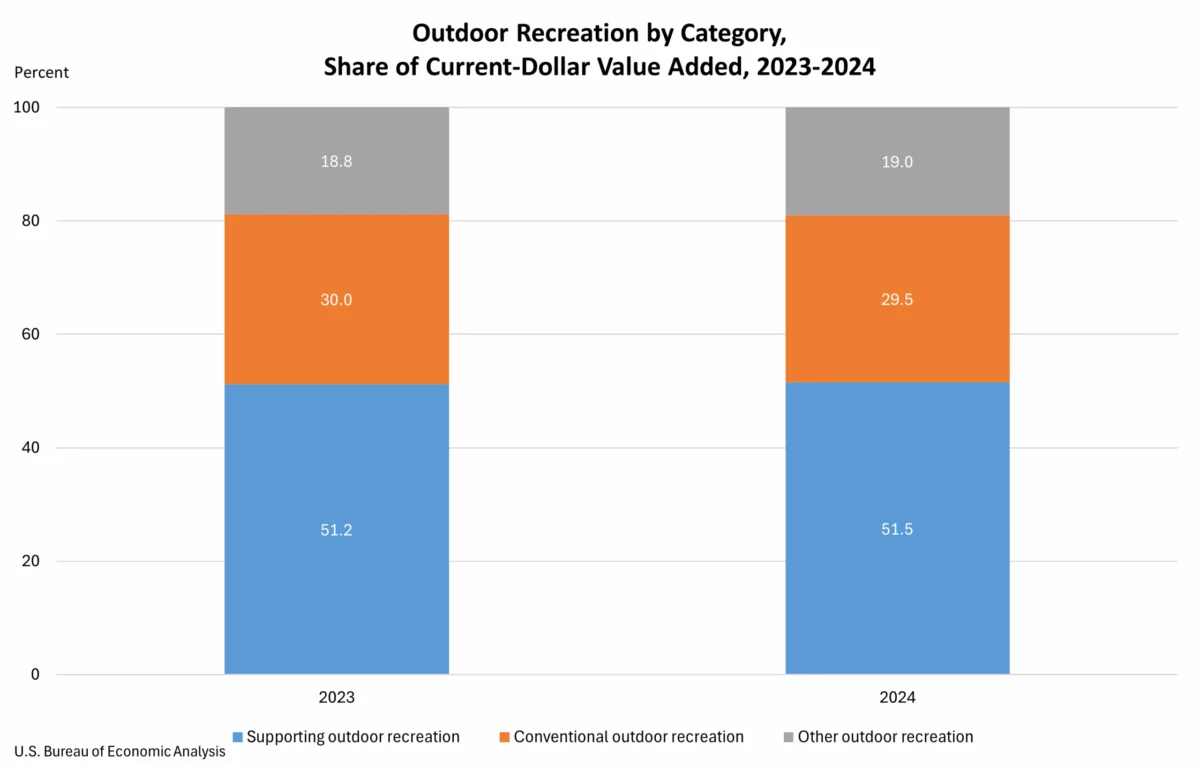
The United States Bureau of Economic Analysis (BEA) has unveiled its latest comprehensive report on the nation’s outdoor recreation economy, revealing a significant economic powerhouse that contributed $696.7 billion, or 2.4 percent, to the current-dollar Gross Domestic Product (GDP) in 2024. This substantial figure underscores the growing importance of outdoor activities as a driver of national economic prosperity, impacting all 50 states and the District of Columbia. The new data, released today, offer a granular look at the sector’s performance, employment trends, and the diverse range of activities that comprise this vital economic engine.
National Economic Impact and Growth Trajectory
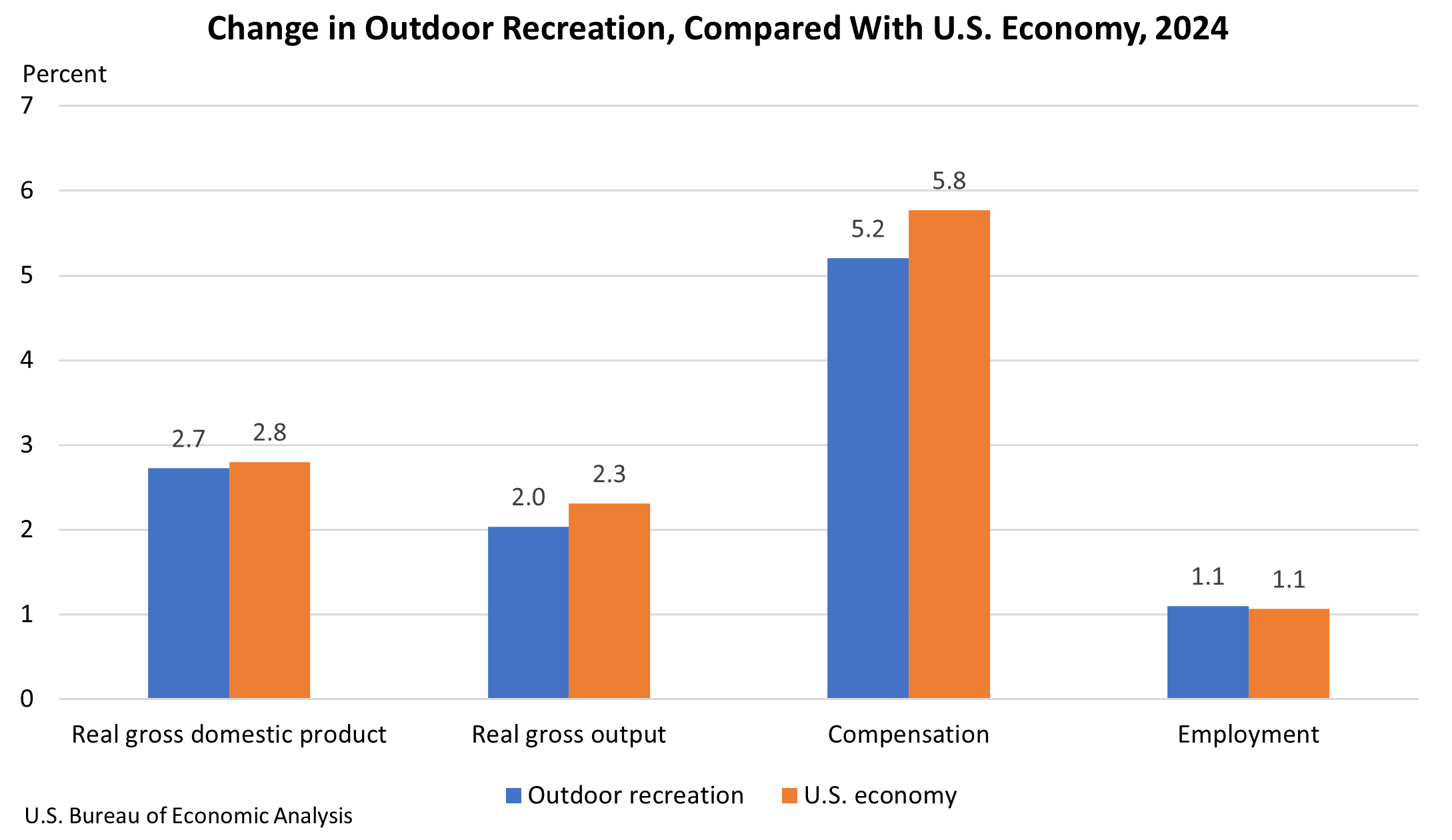
The BEA’s findings indicate that the outdoor recreation economy demonstrated a notable growth rate in 2024, with inflation-adjusted ("real") GDP increasing by 2.7 percent. While this represents a slight deceleration from the robust 5.3 percent growth observed in 2023, it still outpaces the overall U.S. economy’s 2.8 percent growth in the same year, highlighting the sector’s resilience and continued expansion. The report also details that real gross output for outdoor recreation saw a 2.0 percent increase.
Beyond GDP, the sector’s impact on employment and compensation is equally compelling. Outdoor recreation compensation rose by a significant 5.2 percent, and employment within the sector experienced an increase of 1.1 percent. These figures suggest a healthy demand for labor and a growing investment in the workforce dedicated to outdoor pursuits.
The BEA’s annual update of outdoor recreation economic statistics incorporates data from 2020 to 2023, reflecting the most recent advancements in national economic accounting. This includes the integration of the 2025 annual update of the National Income and Product Accounts and the Industry Economic Accounts, along with newly available and revised source data. Similarly, state-level statistics have been updated to align with these national revisions and the 2025 annual update of the Regional Economic Accounts, ensuring the most accurate and up-to-date picture of the sector’s economic footprint.
State-Level Performance: A Varied Landscape
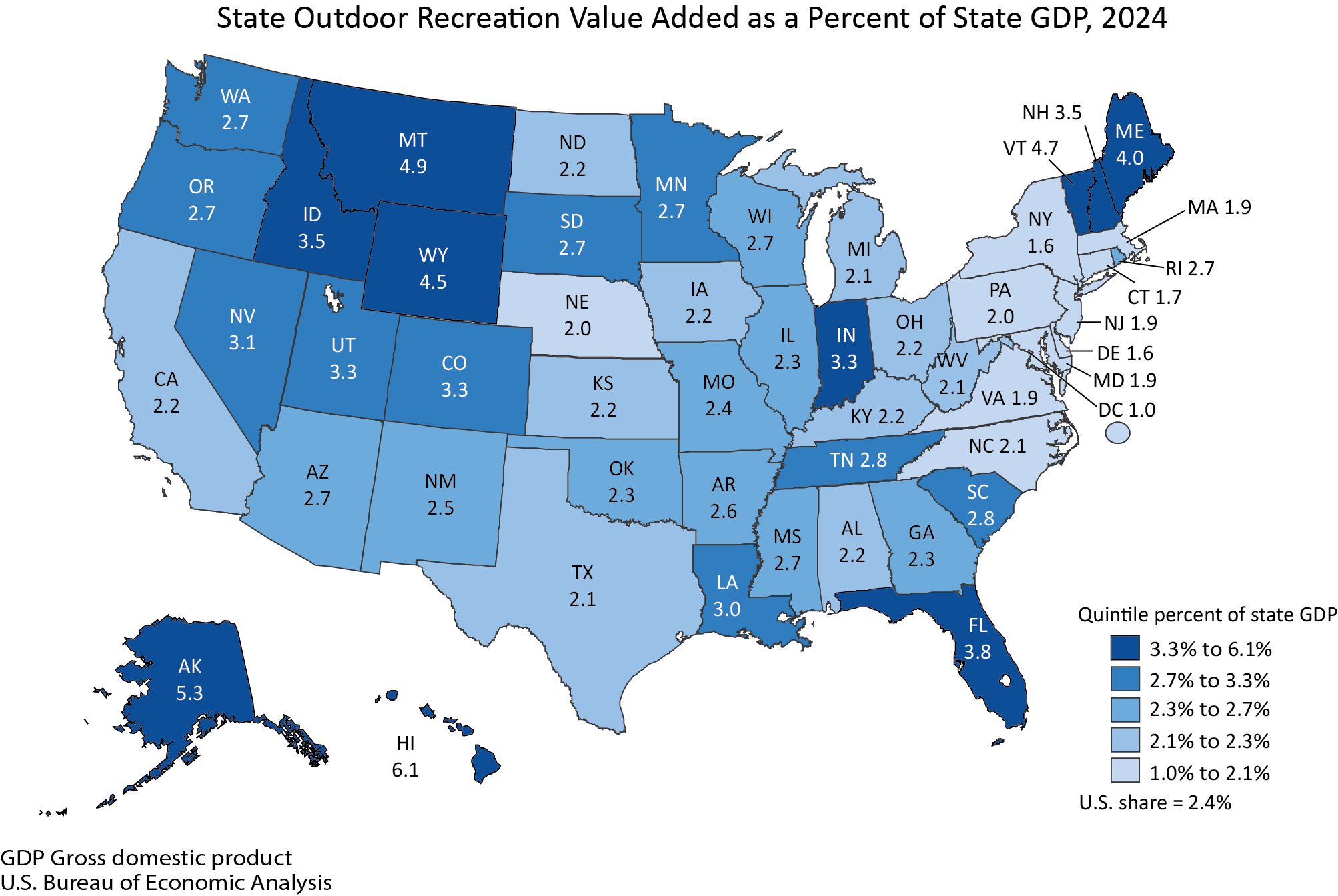
The economic contribution of outdoor recreation varies considerably across the nation, reflecting diverse geographic features, recreational preferences, and state-specific economic structures. In 2024, the value added of outdoor recreation as a share of state GDP ranged from a high of 6.1 percent in Hawaii to a low of 1.0 percent in the District of Columbia. This wide spectrum illustrates the varying degrees to which states leverage their natural resources and recreational opportunities for economic gain.
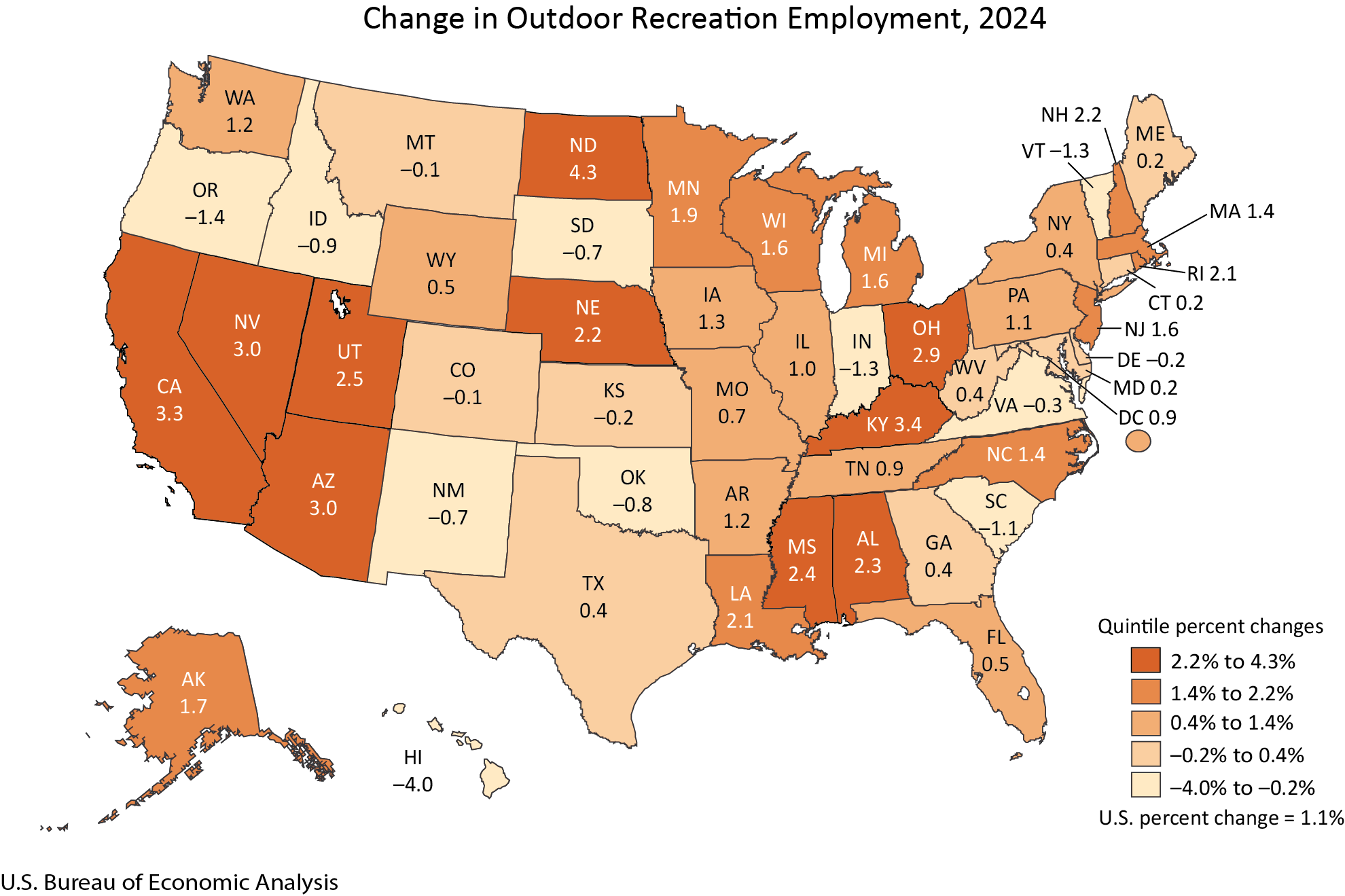
Employment in outdoor recreation also showed a mixed pattern, with increases reported in 36 states and the District of Columbia. North Dakota led the nation in percentage change of outdoor recreation employment, with a remarkable 4.3 percent increase. Conversely, Hawaii experienced a decline of 4.0 percent in outdoor recreation employment, indicating a localized challenge or shift within the sector in that state. These regional disparities underscore the need for tailored economic development strategies that capitalize on the unique strengths of each state’s outdoor recreation potential.
Deconstructing the Outdoor Recreation Economy: Activities and Industries
The BEA categorizes outdoor recreation activities into three broad segments: conventional activities, other activities, and supporting activities. Conventional activities encompass pursuits such as bicycling, boating, hiking, and hunting. "Other outdoor recreation" includes activities like gardening and outdoor concerts, while "supporting activities" form the backbone of the sector, comprising construction, travel and tourism, local trips, and government expenditures.
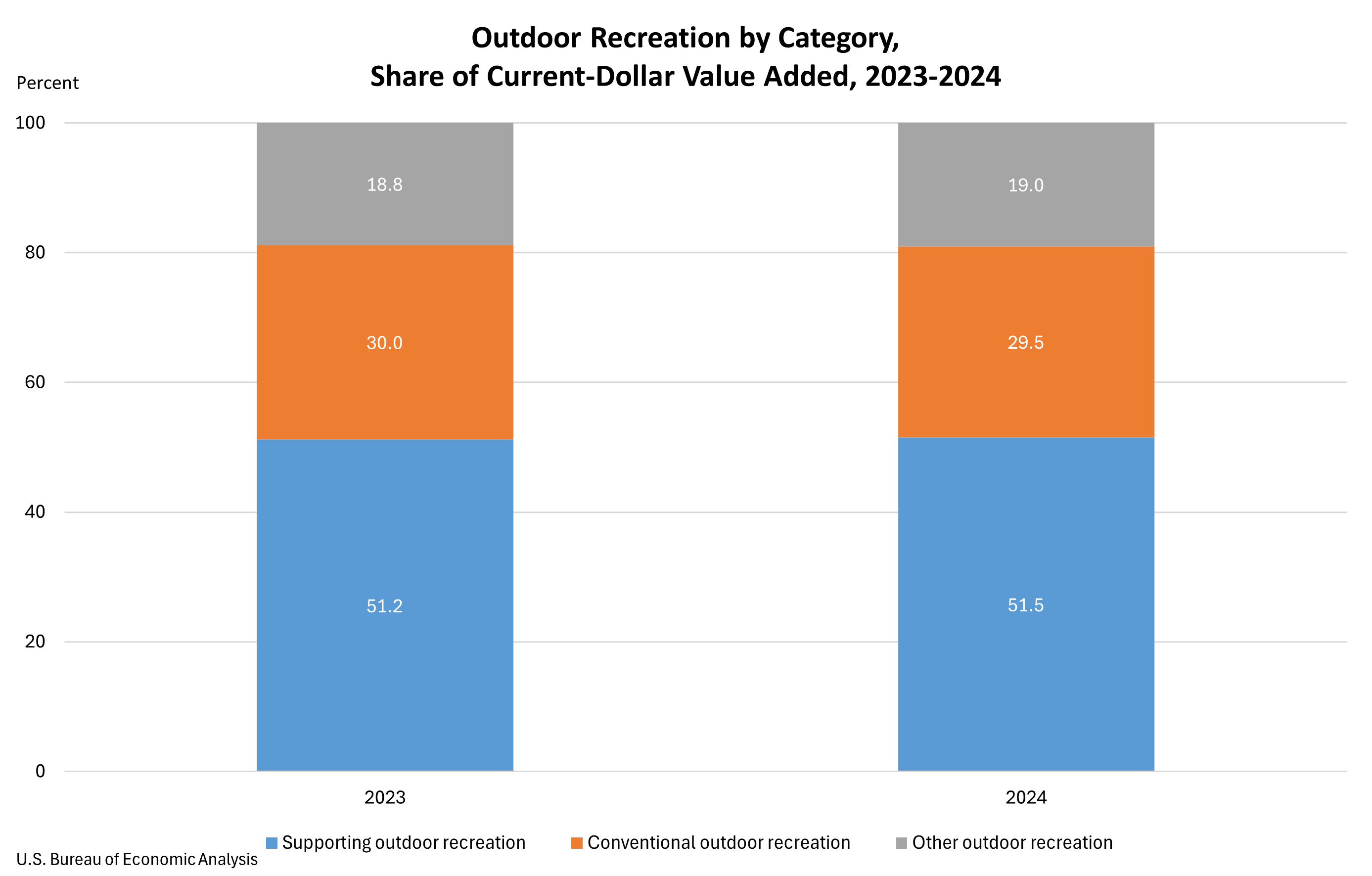
In 2024, supporting activities accounted for the largest share of U.S. outdoor recreation value added, representing 51.5 percent of the total. This segment was primarily driven by growth in travel and tourism, including increased spending on transportation, hotels, and restaurants. Conventional outdoor recreation followed, making up 29.5 percent of value added, a slight decrease from 30.0 percent in 2023. "Other outdoor recreation" contributed 19.0 percent of value added, a marginal increase from 18.8 percent in the previous year. This distribution highlights the significant role of infrastructure, accessibility, and broader economic conditions in shaping the overall outdoor recreation landscape.
Examining the contributions by industry reveals further insights into the economic structure of outdoor recreation. The "arts, entertainment, recreation, accommodation, and food services" industry group emerged as the largest contributor to the nation’s outdoor recreation value added in 2024, accounting for $174.4 billion, or 25.0 percent. This sector’s dominance is particularly evident in states like California ($24.1 billion), Florida ($22.7 billion), and New York ($11.8 billion), which are major tourist destinations and hubs for leisure activities.
The "retail trade" industry secured the second-largest share of national value added at $169.1 billion, representing 24.3 percent. This industry’s strength is notable in states such as California ($19.3 billion), Texas ($14.4 billion), and Florida ($13.4 billion), reflecting the demand for outdoor gear, apparel, and equipment.
The "manufacturing" sector also plays a crucial role, contributing $91.3 billion, or 13.1 percent, to the national outdoor recreation value added. States like Texas ($13.1 billion), California ($11.6 billion), and Indiana ($9.1 billion) are significant contributors in this area, underscoring the production of goods essential for outdoor pursuits. Indiana and Louisiana were identified as states where manufacturing is the largest industry group within outdoor recreation.
Historical Context and Future Outlook
The BEA’s commitment to providing annual updates on the outdoor recreation economy allows for a valuable historical perspective and facilitates the tracking of trends over time. The initial release of these statistics in 2020 marked a significant step forward in quantifying the economic impact of an often-underestimated sector. The continuous refinement of data collection and analytical methodologies, as evidenced by the 2025 annual update of the National and Regional Economic Accounts, ensures that these figures remain a reliable barometer of the sector’s health and dynamism.
The deceleration in real GDP growth for outdoor recreation in 2024, while still positive, warrants attention. Factors such as evolving consumer spending patterns, potential inflationary pressures impacting disposable income, and shifts in travel and leisure preferences could all contribute to this trend. However, the consistent growth in compensation and employment suggests underlying strength and continued investment in the sector.
The BEA’s interactive tables, accessible via their website, provide an invaluable resource for researchers, policymakers, and industry stakeholders to delve deeper into the specific data and trends. These tools allow for customized analysis and a more nuanced understanding of the economic forces at play.
Broader Implications and Economic Significance
The robust performance of the outdoor recreation economy has far-reaching implications. It signifies the growing recognition of outdoor activities not just as leisure pursuits but as significant economic drivers that generate jobs, stimulate local economies, and contribute to national wealth. For communities, particularly those rich in natural assets, a thriving outdoor recreation sector can be a powerful engine for sustainable development, offering opportunities for entrepreneurship, diversification of local economies, and enhanced quality of life.
The BEA’s detailed breakdown by activity and industry also provides critical information for strategic planning. Businesses can leverage these insights to identify emerging market opportunities, optimize their product and service offerings, and tailor their marketing efforts. Policymakers can use this data to inform investments in infrastructure, conservation efforts, and programs designed to support the growth of the outdoor recreation sector.
As the nation continues to grapple with economic challenges and opportunities, the outdoor recreation economy stands out as a resilient and dynamic force. Its ability to generate economic value while promoting well-being and environmental stewardship positions it as a key sector for future growth and prosperity. The BEA’s ongoing commitment to tracking and reporting on this vital economic segment will undoubtedly continue to shape our understanding and support the sustained development of America’s great outdoors.
The next release of the Outdoor Recreation Economic Statistics for the U.S. and States, covering the 2025 data, is anticipated in the Fall of 2026, promising further insights into the evolving landscape of this critical economic sector.