Candice Horbacz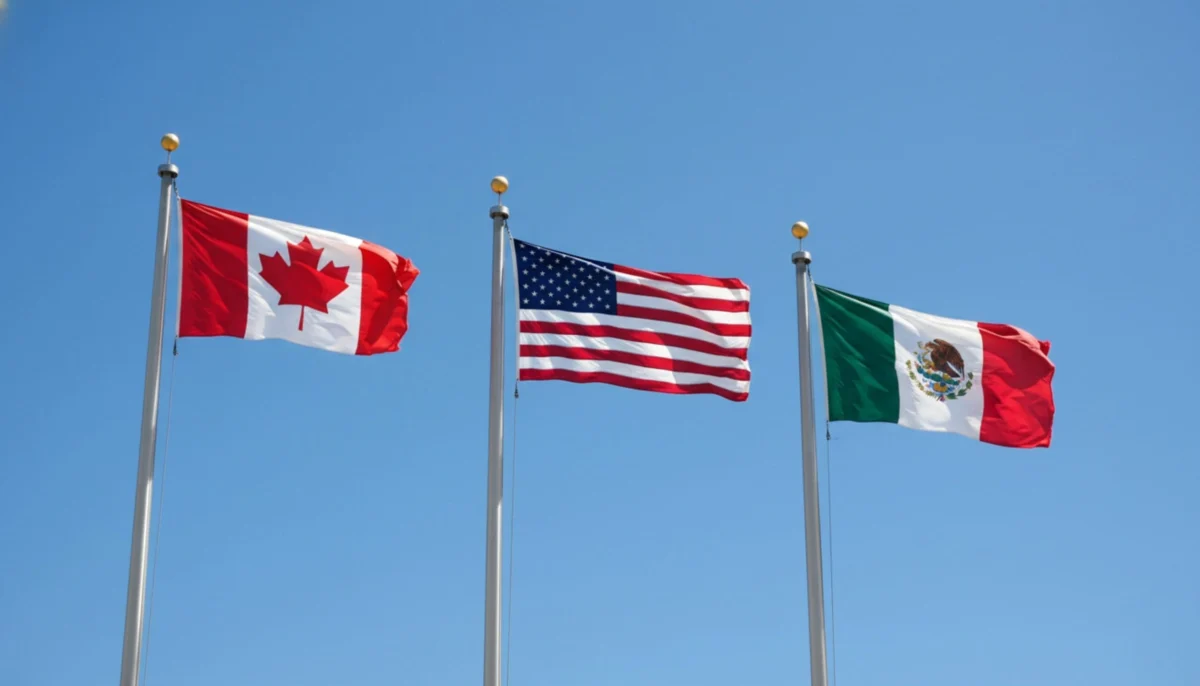
As the United States, Mexico, and Canada approach the pivotal first formal review deadline for the US-Mexico-Canada Agreement (USMCA) in July 2026, policymakers across the continent are confronted with a stark choice: either endorse a clean extension of the groundbreaking trade pact, thereby preserving a critical bedrock of North American economic stability, or risk plunging the region into a prolonged period of trade uncertainty, potential renegotiations, and the specter of higher tariffs. The decision carries profound implications for integrated supply chains, millions of jobs, and the future competitiveness of the three nations in the global marketplace.
Reports indicating that former President Donald Trump, a potential future occupant of the White House, has expressed a disinclination towards a straightforward extension of the USMCA introduce a significant layer of complexity. This stance, consistent with his past trade policies which saw the dismantling of NAFTA in favor of USMCA, suggests a preference for leveraging the review mechanism to pursue perceived better terms, even if it entails navigating through protracted annual reviews, renewed renegotiations, or even a contentious shift towards bilateral trade agreements. Such a scenario, many analysts warn, would inevitably usher in an era of economic volatility, impacting industries from automotive manufacturing to agriculture, and challenging the established framework that has governed North American trade for decades.
The Genesis of North American Trade: From NAFTA to USMCA
To fully appreciate the gravity of the current juncture, it is essential to revisit the historical trajectory of North American trade integration. The North American Free Trade Agreement (NAFTA), which came into effect on January 1, 1994, was a landmark accord designed to eliminate most tariffs and non-tariff barriers to trade and investment among the U.S., Canada, and Mexico. It created one of the world’s largest free trade areas, fostering an unprecedented level of economic interdependence. Over its nearly quarter-century lifespan, NAFTA facilitated the growth of intricate supply chains, particularly in the automotive and manufacturing sectors, and significantly boosted trilateral trade volumes.
However, despite its economic successes, NAFTA became a lightning rod for criticism, particularly in the United States, where some argued it led to job losses in manufacturing, depressed wages, and favored corporate interests over American workers. These criticisms gained political prominence, culminating in President Trump’s campaign promise to either renegotiate or withdraw from NAFTA. The subsequent negotiations, initiated in 2017, were contentious and protracted, marked by threats of tariffs and withdrawal. The outcome was the USMCA, signed in November 2018 and entering into force on July 1, 2020.
The USMCA retained many core provisions of NAFTA but introduced significant updates and modifications. Key changes included:
- Automotive Rules of Origin: A more stringent requirement for North American content (raising it from 62.5% to 75%) and a new mandate that 40-45% of auto content be made by workers earning at least $16 per hour. These provisions aimed to incentivize manufacturing within the region and address labor concerns.
- Labor Protections: Stronger and more enforceable labor provisions, including commitments to protect workers’ rights, allow collective bargaining, and prohibit forced labor. Mexico, in particular, committed to significant labor reforms.
- Digital Trade: New chapters addressing digital trade, cross-border data flows, and intellectual property protections, reflecting the realities of the 21st-century economy.
- Environmental Standards: Enhanced environmental protections and enforcement mechanisms.
- Sunset Clause: Perhaps the most significant and currently relevant addition, the USMCA included a "sunset clause." This provision mandates a 16-year term for the agreement, with a joint review every six years. If, during a review, the parties agree to extend the agreement, it is extended for another 16 years. However, if they fail to agree on an extension, the agreement enters a 10-year winding-down period, after which it would expire. The July 2026 deadline marks the first of these crucial six-year reviews.
The Economic Tapestry of North America: Supporting Data
The economic ties binding the U.S., Mexico, and Canada are extensive and deeply interwoven. Together, these three nations represent an economic bloc with a combined GDP exceeding $30 trillion, supporting a vast network of trade and investment.
- Trade Volume: Trilateral trade under USMCA (and previously NAFTA) consistently exceeds $1.5 trillion annually. In 2023, for example, two-way trade between the U.S. and Canada alone reached approximately $793 billion, while trade between the U.S. and Mexico approached $860 billion. Canada and Mexico are the United States’ top two trading partners, collectively accounting for a significant portion of U.S. exports and imports.
- Job Creation: Millions of jobs across all three countries are directly or indirectly dependent on this trade relationship. Estimates suggest that trade with Canada and Mexico supports over 12 million American jobs. Sectors like manufacturing, agriculture, energy, and services are particularly reliant on seamless cross-border commerce. For instance, the U.S. agricultural sector relies heavily on Mexican and Canadian markets, with billions of dollars in agricultural exports flowing north and south.
- Foreign Direct Investment (FDI): The stability provided by NAFTA and now USMCA has fostered significant foreign direct investment within the region. U.S. companies have invested trillions in Canada and Mexico, creating jobs and integrating supply chains. Conversely, Canadian and Mexican companies have substantial investments in the U.S.
- Integrated Supply Chains: The automotive industry serves as a prime example of deep integration. Parts often cross borders multiple times during the manufacturing process before a finished vehicle is assembled. A disruption to this flow, such as the imposition of tariffs, would significantly increase production costs, reduce competitiveness, and potentially lead to higher consumer prices or shifts in manufacturing locations. Beyond automotive, sectors like electronics, aerospace, and machinery also benefit from these established regional supply chains.
The stability and predictability offered by the USMCA are thus not merely abstract economic concepts; they translate directly into tangible benefits for businesses, workers, and consumers across North America.
The Political Climate and Reported U.S. Intentions
The prospect of a non-renewal or a demand for further renegotiation stems largely from the "America First" trade philosophy championed by Donald Trump during his previous administration. This approach prioritized bilateral deals and sought to reduce trade deficits, often viewing multilateral agreements with skepticism. His reported decision against a "clean extension" of the USMCA, as per news outlets, aligns with this historical pattern.
Should Trump return to the presidency, his administration would likely view the 2026 sunset review as an opportunity to push for what it perceives as additional concessions or improvements, particularly concerning specific sectors or perceived imbalances. This could involve demands for even stricter rules of origin, further modifications to labor provisions, or new protections for certain domestic industries. The implication is that the U.S. might be willing to endure a period of uncertainty, or even trigger the 10-year winding-down process, to achieve its objectives.
However, the political landscape in the U.S. is not monolithic. While some political factions might support a hardline stance, many members of Congress, particularly those representing agricultural or manufacturing states heavily reliant on trade with Canada and Mexico, would likely advocate for stability and extension. Major business associations, such as the U.S. Chamber of Commerce and various industry-specific groups, have consistently emphasized the importance of maintaining predictable trade relations.
Reactions and Perspectives Across the Continent
The potential for the U.S. to refuse a clean extension elicits varied, yet largely predictable, responses from key stakeholders in all three nations.
- Canada and Mexico: Both Canada and Mexico have consistently expressed their strong preference for the extension of the USMCA. The agreement represents stability and guaranteed market access, which are crucial for their economies. For Mexico, the USMCA is vital for attracting foreign investment and maintaining its position as a global manufacturing hub. For Canada, its deep energy, automotive, and agricultural ties with the U.S. make a stable trade environment paramount. Any move by the U.S. to not extend would be met with significant diplomatic efforts from both Ottawa and Mexico City to convince Washington of the benefits of continuity and to mitigate potential economic fallout. They would likely emphasize the shared prosperity and competitiveness that the agreement fosters for North America as a whole.
- North American Business Community: Business leaders across all three countries are overwhelmingly in favor of a clean extension. Predictability in trade policy is crucial for investment planning, supply chain management, and long-term growth strategies. The prospect of annual reviews or renewed renegotiations creates significant uncertainty, which can deter investment, slow expansion plans, and lead to increased operational costs. Industry associations, representing sectors like automotive, technology, agriculture, and manufacturing, would likely lobby intensely for an extension, highlighting the economic risks of disruption.
- Labor Unions: While some labor unions initially had reservations about NAFTA, many have acknowledged the improved labor protections within USMCA. Their reaction to a potential non-extension or renegotiation could be mixed. Some might see an opportunity to push for even stronger labor standards or enforcement mechanisms, while others might prioritize the stability that the existing agreement provides, fearing that a prolonged period of uncertainty could negatively impact jobs.
- Economists and Trade Experts: The consensus among most economists and trade experts is that a failure to extend the USMCA would be detrimental to all three economies. They point to the potential for a return to higher tariffs under Most Favored Nation (MFN) rules of the World Trade Organization (WTO), which would raise costs for businesses and consumers, disrupt integrated supply chains, and diminish the competitiveness of North American goods in global markets. The administrative burden and legal complexities of a potential shift to bilateral agreements or a winding-down period would also create significant headwinds.
The Specter of Uncertainty: Economic Implications of Non-Extension
Should the U.S. opt against a clean extension, the economic implications would be far-reaching and potentially severe:
- Tariff Reinstatement: Without the USMCA, trade would revert to WTO MFN tariff rates. This would mean significant tariff increases on a vast array of goods currently traded duty-free. For instance, many agricultural products, automotive parts, and manufactured goods would face tariffs ranging from 2% to over 25%, depending on the product and origin. These tariffs would act as a direct tax on imports, increasing costs for businesses and, ultimately, for consumers.
- Supply Chain Disruption: North America’s supply chains are among the most integrated in the world. The automotive sector, in particular, relies on parts crossing borders multiple times. Tariffs and increased border friction would severely disrupt these intricate networks, leading to higher production costs, delays, and potential re-shoring or re-localization efforts that could be costly and inefficient.
- Reduced Competitiveness: Higher costs due to tariffs and supply chain disruptions would make North American goods less competitive both regionally and globally. This could lead to a loss of market share for businesses operating within the bloc, especially when competing with goods from regions with more stable or favorable trade agreements.
- Investment Chill: Economic uncertainty is a significant deterrent to investment. Businesses contemplating new factories, expansions, or R&D initiatives would likely postpone or cancel plans if the future of North American trade relations becomes unclear. This "investment chill" would affect job creation and long-term economic growth.
- Sector-Specific Impacts:
- Automotive: This sector would be among the hardest hit due to its deep integration. Increased tariffs on parts and finished vehicles would dramatically alter cost structures, potentially leading to job losses and reduced production.
- Agriculture: Farmers and ranchers in all three countries rely heavily on cross-border trade. Tariffs on agricultural products could lead to decreased exports, lower prices for producers, and increased food costs for consumers.
- Manufacturing: Other manufacturing sectors, from electronics to machinery, would face similar challenges, impacting profitability and employment.
- Energy: While less tariff-sensitive, the energy sector benefits from stable regulatory environments and infrastructure development, which could be complicated by trade instability.
The Path Forward: Scenarios and Strategic Considerations
The immediate decision point in July 2026 presents several potential scenarios:
- Clean Extension: The most desirable outcome for businesses and many policymakers, ensuring continuity and stability for another 16 years.
- Conditional Extension/Renegotiation: The U.S. agrees to extend but demands specific renegotiations on certain provisions. This would lead to a period of renewed trade talks, similar to the process that led from NAFTA to USMCA, with associated uncertainty.
- Annual Reviews with No Extension: As suggested by reports, the U.S. could choose not to agree to an extension, initiating a prolonged period of annual reviews. This would maintain a constant state of flux, with businesses unable to plan long-term, and the looming threat of the 10-year winding-down period becoming more immediate with each passing year.
- Shift to Bilateral Deals: In a more extreme scenario, the U.S. might explicitly push for the dissolution of the trilateral framework in favor of separate bilateral agreements with Canada and Mexico. This would be a complex and unprecedented undertaking, potentially fragmenting the integrated North American market and leading to significant economic disruption.
Regardless of the specific path taken, the strategic considerations for all three nations are complex. For Canada and Mexico, their primary objective will be to preserve the benefits of integrated market access and stability, likely through robust diplomatic engagement and a willingness to discuss potential refinements within the existing framework. For the United States, particularly under a potential Trump administration, the focus would likely be on leveraging the review to secure perceived advantages, even if it means challenging the status quo.
The USMCA, despite its disagreements and challenges, represents a critical pillar of North American economic partnership. Failure to extend it would not only dismantle years of integrated economic development but also introduce an unparalleled level of uncertainty into a region that thrives on predictability. As the July 2026 deadline looms, the choice before policymakers is indeed straightforward: preserve a system that has largely served to enhance North American competitiveness and prosperity, or embark on a path fraught with economic peril. The consequences of this decision will resonate across the continent for decades to come.