Layla Zulfa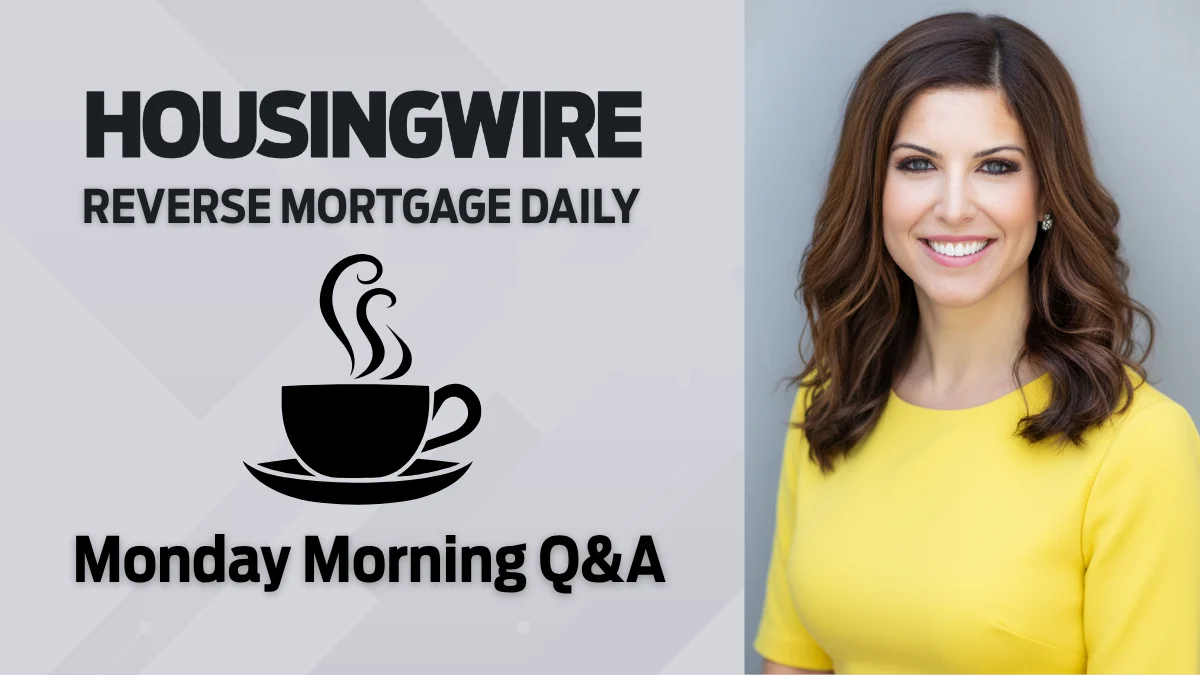
In a strategic pivot aimed at significantly expanding the reverse mortgage market, wholesale lender SmartFi Home Loans is moving beyond its traditional reliance on specialized originators. The company’s ambitious growth strategy centers on "growing the pie" by equipping conventional, forward-centric loan officers with the necessary tools and comprehensive education to seamlessly integrate reverse mortgages into their existing service offerings. This approach signals a significant shift in how the industry perceives and pursues market expansion.
Kim Smith, Senior Vice President of Wholesale Lending at SmartFi, articulated the company’s vision, stating, "I hear a lot of people talk about growing the pie – that forward base would be growing the reverse mortgage pie, and that’s our core focus for growth. We are going to continue to support those traditional, reverse-focused originators, but the growth mindset has to be looking at reverses that aren’t even done in the current market." This forward-thinking strategy underscores a commitment to tapping into a vast, underserved segment of the market by making reverse mortgages more accessible and understandable to a broader professional network.
Leveraging Technology to Bridge the Knowledge Gap
To effectively execute this expansion strategy, SmartFi is heavily investing in technology designed to demystify and simplify the reverse mortgage origination process for newcomers. A key development in this area is the company’s recent partnership with Reverse Mortgage Insight (RMI). This collaboration involves the integration of SmartFi’s proprietary Choice loan program into RMI’s established technology platform. By embedding its product directly into a widely used tool, SmartFi aims to expose its offerings to a significantly larger audience of loan officers who may not have previously considered reverse mortgages.
Complementing its external technological integrations, SmartFi is also developing a sophisticated internal partner portal. This user-friendly platform is engineered to provide forward-thinking loan officers with an intuitive and rapid method for generating financial projections and illustrating the complex mechanics of reverse mortgages to their clients. The goal is to provide a transparent and accessible experience, enabling loan officers to confidently present reverse mortgage solutions as a viable option for their borrowers.
Navigating the Macroeconomic Landscape and Industry Challenges
In a recent interview with HousingWire’s Reverse Mortgage Daily, Kim Smith delved into SmartFi’s strategic initiatives, the prevailing macroeconomic environment, and the primary obstacles facing the reverse mortgage industry. Her insights provided a comprehensive overview of the company’s innovative approach.
The Impact of the Macroeconomic Environment on Reverse Mortgages
Smith observed that the current macroeconomic landscape, particularly elevated interest rates, has a distinct impact on the mortgage market. While higher rates typically translate to increased monthly mortgage payments in the traditional forward mortgage space, the reverse mortgage, by design, offers an optional monthly principal and interest payment. "With the reverse mortgage, it’s designed to offer an optional monthly principal and interest mortgage payment," Smith explained. "The bottom line is rates are less impactful in reverse than they are in forward. Not that they don’t matter."
Furthermore, Smith highlighted that SmartFi’s proprietary Choice reverse mortgage program, in the current rate environment, can often facilitate higher loan amounts compared to the federally insured Home Equity Conversion Mortgage (HECM) program. "I feel rates are fueling the growth of proprietary reverse mortgages," she noted.
Smith identified a critical distinction between demand and distribution within the reverse mortgage sector. "As far as demand, I don’t know that reverse has a demand issue. We have a distribution and education gap," she asserted. SmartFi’s strategy is squarely aimed at bridging this gap through its account executives, advanced technology, and by bringing the product to forward-centric loan officers, thereby expanding distribution channels. Product innovation, she added, will remain a crucial element in this expansion.
A Comparative Look at Proprietary and HECM Products
When contrasting SmartFi’s Choice proprietary reverse mortgage program with the HECM, Smith detailed key differentiators. "The product is not FHA-insured. The Choice proprietary loan program doesn’t have a mortgage insurance premium," she stated, underscoring a significant cost advantage. This can translate into a more affordable option for borrowers. "Right now, with rates being as high as they are, what we look at is the principal limit factor tables. With HECM, when you put it side by side with the principal limit factor table of the proprietary Choice loan, you see Choice winning in a lot of cases. In a lower-rate environment, that wouldn’t be the case."
The Choice program offers both fixed-rate and adjustable-rate options. Unlike HECM loans, which are FHA-insured and adhere to strict FHA guidelines, the Choice program operates under more conventional underwriting standards. This provides greater flexibility in borrower qualification, although the requirement for borrowers to demonstrate the ability and willingness to pay property taxes and insurance remains a constant.
Driving Growth Through People, Culture, and Excellence
SmartFi demonstrated significant growth in HECM endorsements, achieving a 32% year-over-year increase in 2025, positioning the company at 12th nationally. Smith attributed this success primarily to the company’s people and its distinct culture. With over two decades of experience in wholesale reverse mortgages, Smith described SmartFi as possessing "the best combination of sales and operational excellence." She emphasized the proactive engagement of team members who are readily available to assist partners and a pervasive "solution mindset" as the company’s core differentiator.
"Our goal isn’t to be the biggest in this industry. It’s to be the best," Smith declared. "We want the best experience for the originators and their borrowers from start to finish." This focus on service excellence, she believes, resonates throughout the industry and is the primary driver of SmartFi’s consistent growth. The company’s objective is not rapid, unsustainable expansion, but rather "month-over-month consistent growth," a pattern observed in both 2025 and continuing into 2026.
Strategic Evolution: The Wholesale Focus
SmartFi’s decision to launch and subsequently close its retail division within approximately a year offers valuable lessons. Smith characterized the company’s approach as one of continuous learning and evolution: "The mentality of SmartFi is to leave no stone unturned. We want to be the best company we can; we’re not afraid to try different strategies, and then we just will learn from those and continue to evolve."
The shift to an all-in wholesale model has proven advantageous, particularly in fostering strong partner relationships. "It’s very refreshing to not compete with our partners," Smith remarked. "In every other role that I’ve had in the space, there’s been a retail organization. It’s been my experience that those don’t necessarily cross paths that much. That being said, it’s very nice to not have to even have that conversation. We will not compete with our partner." This clarity of focus allows SmartFi to dedicate its resources and energy entirely to supporting its wholesale partners.
Building a "Best-in-Class" Wholesale Platform
Upon joining SmartFi three years ago, Smith highlighted the company’s freedom from legacy processes, a key factor in building a "best-in-class wholesale platform." She elaborated on what this entails in practice: "Building the right team is where it starts. The people are the most important part, and that’s something that has become abundantly clear to me in the last three years." Empowering these individuals is equally critical. "You can have the best tech, the best process, and if you don’t have the right people as your foundation for that process, you’re going to see cracks."
SmartFi has made significant strides in assembling a skilled team. The current focus is on building upon this foundation by continuously enhancing its technology, including its CRM system and operational workflows. These are ongoing efforts aimed at refining the platform’s capabilities.
The company is also addressing outward-facing technology challenges. Currently, the reverse mortgage sector has limited options for loan origination systems, and forward mortgage professionals lack easy access to reverse mortgage products. SmartFi is actively exploring technological solutions to overcome these barriers and expand the market.
In-House Development and Strategic Vendor Partnerships
SmartFi employs a multi-faceted approach to technology development, combining internal innovation with strategic vendor collaborations. "We’ll bring all the resources together," Smith stated, acknowledging the recent proliferation of technologies aimed at simplifying the forward mortgage integration into reverse.
The partnership with RMI exemplifies this strategy. "We’ve partnered most recently with RMI. They built a tech platform, and we want the Choice product to be in all of those technologies that are out trying to make a difference in the space," Smith explained. This long-standing relationship with RMI made the partnership a natural progression, directly aligning with the goal of broadening the reach of the Choice loan program. "One of our goals is to bring our Choice loan program to a broader audience, and we saw the RMI tool taking us a step closer to reaching that goal."
Simultaneously, SmartFi is investing in its internal capabilities. The partner portal is a prime example, designed to offer forward loan officers a quick and user-friendly solution for running scenarios and understanding the financial implications of reverse mortgages. "We’re employing any strategy that could possibly expand the reach of the product," Smith affirmed.
The Future of Reverse Mortgage Growth: Forward LOs as Key Drivers
When asked whether the future growth in the reverse mortgage space will stem from forward loan officers or reverse-focused originators, Smith reiterated SmartFi’s core strategy. "We’ve built teams to support both," she said. "I hear a lot of people talk about growing the pie – that forward base would be growing the reverse mortgage pie. That’s our core focus for growth." While acknowledging the continued support for traditional reverse-focused originators, Smith emphasized that the primary growth imperative lies in reaching those segments of the market that are currently underserved.
Confronting the Industry’s Persistent Challenge: Misconceptions and Education Gaps
Smith identified the most significant hurdle for the widespread adoption of reverse mortgages: persistent misconceptions. "Twenty years ago, I started in this space, and there was a complete misconception of what this product was," she recalled. "There was a lot of very bad press, old products that people had learned about that they still thought was a reverse mortgage. You would think that at this point, we would be past those misconceptions. We aren’t."
Even today, Smith encounters leaders of forward mortgage companies, originators, and everyday individuals who react with apprehension upon learning about reverse mortgages. "I still, every day, am talking to leaders of forward companies, originators, or the person sitting next to me on an airplane, and they say, ‘Oh, what do you do?’ And when you say, ‘Oh, I do reverse mortgages,’ the cringe that you still get just because of misunderstanding of the product – that’s still this industry’s biggest hurdle."
This deep-seated misunderstanding creates a significant education gap. Smith advocates for greater involvement from respected financial planning and lending professionals to educate the public. "We need more respected people that understand both financial planning and lending helping people understand that this is simply a mortgage with an optional principal and interest payment. That is what this is."
Furthermore, outdated perceptions about loan origination timelines persist. "The thought that loans can take dramatically longer than a forward mortgage loan – that’s just not the case," Smith stated. "We’re closing loans in seven to 14 days at SmartFi. They don’t have to take longer." The challenge, she concluded, lies in dislodging these ingrained beliefs through consistent and effective education. This, Smith believes, is the most substantial challenge facing both SmartFi and the broader reverse mortgage industry.