Candice Horbacz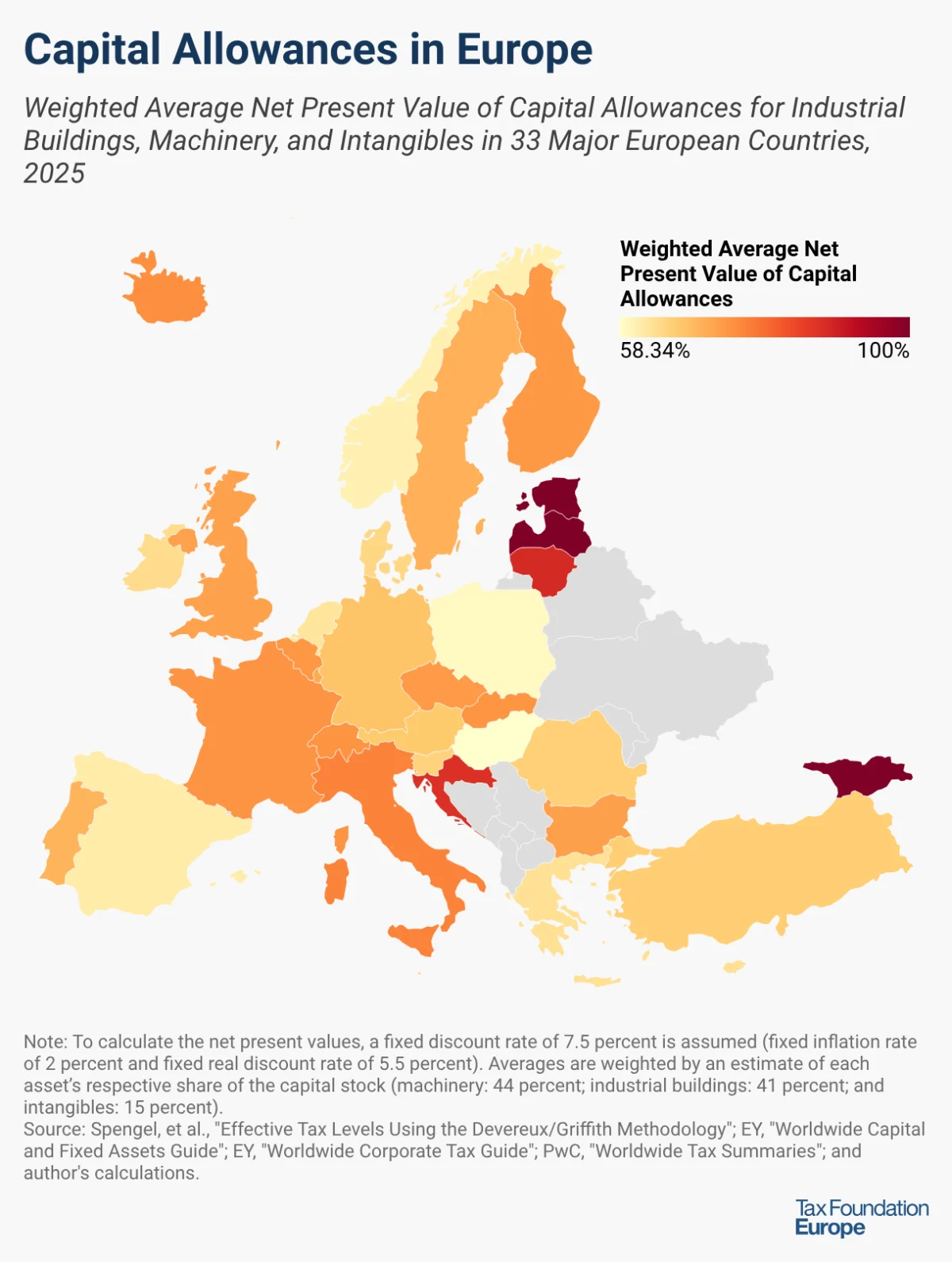
While often secondary in public discourse surrounding corporate taxation, capital allowances are fundamental to a nation’s corporate tax base and profoundly influence business investment decisions, carrying significant, far-reaching economic consequences. A comprehensive analysis reveals a stark divergence in the extent to which European countries allow businesses to deduct their capital investments, a variance that directly impacts their respective economic landscapes.
Understanding Capital Allowances: The Foundation of Business Investment
At its core, a business determines its taxable profit by subtracting various operational costs—such as wages, raw materials, and utility expenses—from its total revenue. However, capital investments, which represent significant outlays on long-term assets like machinery, industrial buildings, or intangible assets, are not typically treated as immediate, fully deductible operational costs in the year of acquisition. Instead, most jurisdictions mandate the use of depreciation schedules. These schedules prescribe the "useful life" of an asset, dictating the multi-year period over which its cost can be gradually written off against taxable income. By the end of this prescribed depreciation period, a business would have theoretically recovered the total initial euro cost of the asset through these annual deductions.
The critical issue, and often a point of contention, arises from the fact that most traditional depreciation schedules fail to adequately account for the time value of money and the erosive effects of inflation. The time value of money acknowledges that a euro received today is worth more than a euro received in the future due to its potential earning capacity. Similarly, inflation continuously diminishes the purchasing power of money over time. For instance, if a machine costs €10,000 and is subject to a straight-line depreciation schedule over 10 years, a business could deduct €1,000 annually. However, due to the time value of money and inflation, a €1,000 deduction in the later years of this period holds considerably less real economic value than an immediate €1,000 deduction in the year of purchase.
This discrepancy means that businesses are often unable to fully deduct the net present value of their capital investments. The consequence is an artificial inflation of taxable profits, which, in turn, elevates the effective after-tax cost of capital investment. A higher cost of capital serves as a disincentive, leading to a decline in overall business investment, hindering the productivity of capital, and ultimately suppressing wage growth across the economy. Economists and policymakers widely acknowledge that tax systems that allow for immediate expensing or neutral cost recovery—where the full present value of an investment can be deducted—are crucial for fostering a robust investment climate.
The European Landscape: A Patchwork of Cost Recovery Policies
The varying approaches to capital allowances across Europe are clearly illustrated by the weighted average capital allowance rates for three primary asset types: machinery, industrial buildings, and intangibles (including patents and "know-how"). These allowances are expressed as a percentage of the present value cost that businesses can write off over an asset’s life. The average is weighted to reflect the typical capital stock composition within an economy: machinery at 44 percent, industrial buildings at 41 percent, and intangibles at 15 percent. A capital allowance rate of 100 percent signifies a business’s capacity to fully deduct the economic cost of an asset, achievable either through full immediate expensing or a neutral cost recovery system that adjusts for the time value of money and inflation.
Leaders in Capital Investment Incentives
In 2025, several European nations stood out for their highly favorable treatment of capital investment. Estonia, Georgia, and Latvia lead the pack, effectively allowing for 100 percent of the present value of all capital investment to be written off. This exceptional treatment stems from their unique distribution-based tax systems, where corporate profits are only taxed when they are distributed to shareholders, while reinvested earnings remain untaxed. This structure inherently incentivizes reinvestment and provides the most attractive environment for capital deployment in Europe.
Among countries that do not employ distribution-based systems, Lithuania emerged with the best tax treatment, allowing businesses to recover 88.2 percent of their investment costs. Croatia followed closely at 87.2 percent, and Italy at 76.3 percent. These nations have implemented policies that significantly reduce the after-tax cost of capital, making them more attractive for businesses looking to expand and modernize.
Countries with More Restrictive Policies
Conversely, businesses in Norway (60.7 percent), Poland (59.3 percent), and Hungary (58.3 percent) faced the most restrictive capital allowance regimes in 2025, being able to write off the lowest shares of their investment costs. These lower rates effectively increase the tax burden on capital investment, potentially deterring domestic and foreign direct investment and slowing down economic modernization.
On average, European businesses in 2025 could write off 72.1 percent of the present value cost of their investments across machinery, industrial buildings, and intangibles. Breaking this down by asset category, machinery received the highest allowances at 87 percent, followed by intangibles at 82.6 percent, and industrial buildings at a comparatively lower 52.3 percent. This disparity suggests a policy bias, perhaps unintentional, towards certain types of capital, which could influence investment patterns within economies.
Global Context: The US Approach to Capital Recovery
For comparison, the United States, a major global economic player, allowed its businesses to recover an average of 94.5 percent of capital investment costs in 2025. This high rate is largely attributable to its robust approach to capital cost recovery. The temporary bonus depreciation, initially adopted in 2017 to stimulate investment, began phasing out in 2023. However, a significant policy shift in 2025 saw the US return to permanent full expensing for a broad range of qualifying investments. Additionally, the US temporarily extended 100 percent expensing for qualifying structures, covering roughly 10-15 percent of all industrial buildings, provided construction began after January 19, 2025, and before January 1, 2029, and the assets were placed in service before January 1, 2031. This aggressive stance reflects a strong commitment to incentivizing capital formation and enhancing economic competitiveness.
Recent Policy Shifts and Their Rationale: A Chronology of Change
The past few years have seen notable policy changes across Europe, reflecting a growing recognition among policymakers of the strategic importance of capital allowances in driving economic recovery and fostering long-term growth. These adjustments, often made in response to global economic shifts, inflationary pressures, or the need to boost competitiveness, highlight an evolving understanding of tax policy’s role in capital formation.
-
Finland’s Proactive Extension: Finland, for example, had temporarily doubled the declining-balance depreciation rate for machinery for the years 2020-2023, a measure designed to counteract the economic slowdown caused by the COVID-19 pandemic. Recognizing its positive impact on business investment, the Finnish government extended this policy until 2025, signaling a commitment to sustained capital expenditure. This extension underscores a strategic effort to maintain momentum in industrial modernization and productivity enhancements, especially in a competitive Nordic and European market.
-
Germany’s Adaptive Measures: Germany initially implemented accelerated depreciation schedules for machinery from 2020 to 2022, also as a response to economic uncertainties. While these measures expired at the end of 2022, the government partially renewed them for 2024, demonstrating an adaptive approach to fiscal stimulus. Furthermore, this renewal was strategically paired with accelerated depreciation for dwellings, extending until 2029, reflecting a dual focus on industrial and housing sector investment. In a more recent development, the German government has increased and further extended accelerated depreciation schedules for machinery into 2027, signifying a longer-term commitment to boosting industrial investment and innovation in Europe’s largest economy. This move is seen as critical for maintaining Germany’s manufacturing prowess and navigating global supply chain challenges.
-
United Kingdom’s Permanent Full Expensing: A significant policy shift occurred in the United Kingdom in April 2023. The UK implemented full expensing for machinery and equipment, alongside a 50 percent first-year deduction for long-life asset investments. This bold move coincided with an increase in the corporate tax rate from 19 percent to 25 percent. Initially, these expensing provisions were set to expire on March 31, 2026. However, in a pivotal decision announced in the 2023 Autumn Statement, the UK government made full expensing and the 50 percent first-year deduction permanent features of the tax code. This decision was lauded by business groups as a crucial step towards long-term investment certainty, aiming to make the UK a more attractive destination for capital investment and to stimulate productivity growth, particularly in the post-Brexit economic landscape.
-
Lithuania’s Forward-Looking Permanence: Lithuania, already a strong performer in capital allowances, further solidified its position by implementing permanent full expensing for machinery and equipment, as well as for software and acquired rights, effective January 1, 2026. This forward-looking policy aims to eliminate uncertainty for investors and position Lithuania as a highly competitive environment for technology and industrial investment within the Baltics and the broader EU.
These changes underscore a critical challenge: many favorable capital allowance policies are initially introduced as temporary measures. As these temporary provisions expire, the after-tax cost of investment tends to rise, potentially undermining the very economic stimulus they were designed to provide. The trend towards making these policies permanent, as seen in the UK and Lithuania, reflects a growing understanding that stability and predictability in the tax code are as important as the immediate incentives themselves.
The Economic Imperative: Why Capital Allowances Matter for Growth
The way capital investments are treated in the tax code is not merely an accounting detail; it is a fundamental determinant of economic growth, productivity, and ultimately, living standards. When businesses can quickly and fully deduct the cost of their investments, it reduces the after-tax cost of capital, making new projects more financially viable. This encourages firms to invest in new machinery, expand facilities, develop innovative technologies, and train their workforce.
Impact on Business Investment and Productivity
Increased business investment directly translates into higher capital stock per worker, which is a key driver of labor productivity. When workers have access to better tools, more efficient machines, and advanced technology, they can produce more goods and services per hour, leading to higher output and economic expansion. This enhanced productivity, in turn, allows businesses to pay higher wages without compromising profitability, creating a virtuous cycle of growth. Conversely, tax regimes that impose a higher effective tax on capital investment can stifle this process, leading to underinvestment, stagnant productivity, and slower wage growth.
Fostering Innovation and Competitiveness
Favorable capital allowance policies are also crucial for fostering innovation. Investments in research and development, new software, and advanced manufacturing processes are often long-term and capital-intensive. Providing robust cost recovery mechanisms for these investments incentivizes companies to take risks, innovate, and bring new products and services to market. This not only benefits the domestic economy but also enhances a country’s global competitiveness, attracting foreign direct investment and positioning it as a leader in key industries.
The Role of Neutrality and Permanence
The ideal tax treatment for capital investment, as advocated by many economists, involves "neutral cost recovery." This means that the tax system should not distort investment decisions by artificially increasing the cost of capital. Full immediate expensing, which allows businesses to deduct the full cost of an investment in the year it is made, is widely considered the closest approximation to neutral cost recovery, especially in the absence of inflation adjustments. When inflation is a factor, or for assets with very long lifespans, adjustments for the time value of money and inflation become essential to ensure that the real economic cost of the asset is fully recovered.
The shift towards permanent policies, as witnessed in the UK and Lithuania, is a significant positive development. Temporary measures, while providing short-term boosts, introduce uncertainty and can lead to boom-bust cycles in investment as businesses rush to take advantage of expiring benefits. Permanent, predictable policies allow businesses to plan for the long term, fostering sustained investment and stable economic growth.
Looking Ahead: Policy Recommendations and Future Trends
As European countries continue to navigate complex economic challenges—from geopolitical shifts and supply chain disruptions to the imperative of climate transition and digital transformation—the role of tax policy in supporting investment will only grow. Policymakers have a clear roadmap for action:
- Embrace Immediate Deductions: Governments should strive to permanently provide immediate deductions for investments in machinery and equipment. These assets are typically central to productivity growth and respond quickly to tax incentives.
- Ensure Neutrality for All Capital: For all other capital investments, particularly long-lived assets like industrial buildings and intangible assets, tax systems should incorporate robust adjustments for inflation and the time value of money. This ensures that businesses can truly recover the full economic cost of their investments over time, without being penalized by declining purchasing power.
- Prioritize Permanence and Predictability: The recent moves by the UK and Lithuania to make full expensing permanent should serve as a model. Consistent and predictable tax rules are paramount for fostering a stable investment climate, enabling businesses to make long-term strategic decisions with confidence.
- Harmonization for Competitiveness: While national priorities differ, a greater degree of convergence towards best practices in capital allowance policies across Europe could enhance the continent’s overall competitiveness on the global stage, making it a more attractive destination for capital compared to regions with more favorable tax regimes.
The variations in capital allowance policies across Europe highlight a diverse approach to stimulating economic activity. As the continent strives for sustainable growth, increased productivity, and enhanced global competitiveness, a concerted effort to optimize these crucial tax provisions will be instrumental in shaping its economic future. The evidence suggests that countries that embrace more generous and neutral cost recovery systems are better positioned to attract investment, foster innovation, and ultimately, deliver higher living standards for their citizens.