Candice Horbacz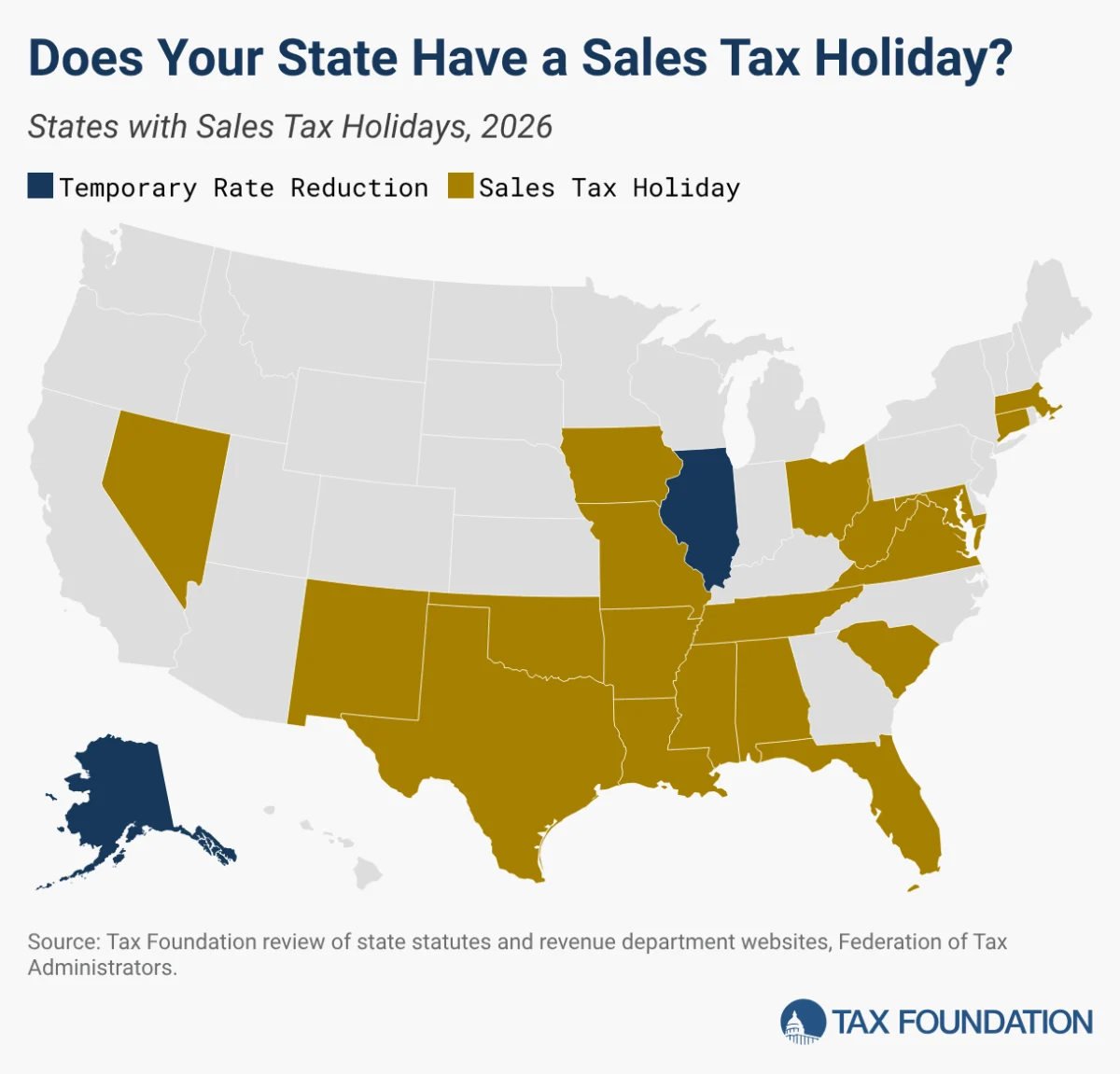
Sales tax holidays, those designated periods when select goods or services are temporarily exempted from state, and sometimes local, sales taxes, continue to demonstrate remarkable political popularity across the United States. For 2026, a notable 20 states have either implemented or are slated to hold such holidays, marking an increase from 19 states in the preceding year. This uptick is primarily driven by states like Illinois, which has reinstated a sales tax holiday previously observed in 2010 and 2022, and Alabama, which has expanded its offerings to include a new holiday for SNAP-eligible food items, complementing its existing severe weather preparedness and back-to-school exemptions.
This figure of 20 states specifically excludes local sales tax holidays, such as the one offered by a single municipality in Alaska, and also does not account for state gas tax holidays that have been temporarily introduced by some states in response to fluctuating fuel prices. The persistence and expansion of these tax breaks underscore a complex interplay of political incentives, consumer perception, and underlying economic considerations that continue to shape state fiscal policies.
The Genesis and Growth of Sales Tax Holidays
The concept of a sales tax holiday is not new, tracing its origins back several decades. While specific historical data varies, these holidays gained significant traction in the late 1990s and early 2000s, often as a response to economic slowdowns or as a perceived way to stimulate consumer spending during peak shopping seasons. Initially, a handful of states experimented with these temporary exemptions, primarily targeting back-to-school items like clothing and school supplies. The idea was to provide a measurable, albeit brief, financial reprieve to families facing significant seasonal expenses.
Over time, the scope and frequency of these holidays broadened considerably. What began as a niche policy in a few states gradually became an annual event in many, with exemptions expanding to encompass a wider array of products. Today, sales tax holidays target a diverse range of consumer goods. Beyond the perennial exemption for clothing, states like Maryland, Missouri, Texas, and Virginia have strategically focused on energy-efficient appliances, aiming to incentivize environmentally conscious purchases while offering a perceived financial benefit. Other common categories include hurricane preparedness supplies, often timed before the storm season, and, as seen with Alabama’s new initiative, essential food items. This evolution reflects a growing political appetite to leverage these holidays for various policy objectives, from economic stimulus to targeted social support.
The Political Appeal and Perceived Consumer Benefits
From a political standpoint, sales tax holidays are undeniably attractive. They offer a tangible, easily understood tax break that can be widely publicized and directly experienced by constituents. Policymakers often champion them as a means to put money back into the pockets of hardworking families, stimulate local economies, and support retailers. The immediate perception of savings resonates strongly with consumers, who often view these holidays as an opportunity to reduce their overall spending on necessary items. This visible benefit, even if limited in its actual economic impact, translates into significant political capital for elected officials.
Retailers, particularly larger chains, also often express support for sales tax holidays. The promise of increased foot traffic and higher sales volumes during the designated period can be appealing, potentially boosting quarterly figures and clearing inventory. Marketing campaigns frequently center around these holidays, further amplifying the perception of a major savings event. This confluence of political will and retail promotion creates a powerful narrative that often overshadows the more nuanced economic critiques.
The Economic Realities: Shifting Demand, Not Creating It
Despite their popularity, sales tax holidays face significant scrutiny from economists and tax policy experts. The primary argument against them centers on their economic inefficiency and limited actual benefit. Proponents often claim these holidays generate economic growth by increasing retail activity. However, extensive studies, including research from the National Bureau of Economic Research, consistently show that much of the increased shopping during these periods is simply demand that consumers would have met at other times. Instead of stimulating new purchases, sales tax holidays primarily shift the timing of demand, concentrating it into a narrow window to capitalize on the temporary discount.
For example, a family needing school supplies in August will likely purchase them regardless of a sales tax holiday. If a holiday is available, they will simply defer their purchase to that period. While some consumers may make incidental or "impulse" purchases during these times, the additional revenue generated from such spontaneous spending is generally insufficient to offset the significant revenue costs associated with the exemptions. Consequently, states and local governments experience a reduction in tax collections for little to no genuine economic benefit. The revenue losses are particularly pronounced because these holidays are often scheduled during periods of naturally high demand, such as back-to-school season or pre-hurricane preparation, meaning transactions that would have occurred anyway are now tax-exempt.
Furthermore, the prevalence of sales tax holidays subtly highlights a more fundamental issue within state tax codes. If suspending the sales tax for a brief period can purportedly stimulate economic activity, it implicitly acknowledges that the tax itself acts as a drag on economic growth for the remaining 51 weeks of the year. This suggests that sales tax holidays are not a form of genuine, sustainable tax relief but rather a temporary patch that obscures deeper structural flaws and a reluctance to enact more meaningful, permanent tax reforms.
Fiscal Implications and Alternative Uses of Funds
The revenue losses, while sometimes not individually massive for each holiday, accumulate and require offsetting by other revenue sources. This can be detrimental to a state’s overall economic health, especially if the alternative revenue sources are themselves more economically distortive than a broad-based sales tax. Economists often argue that revenue generated through more efficient and less distortive means could be better utilized for long-term investments in infrastructure, education, or even permanent, across-the-board tax rate reductions, which offer more consistent and predictable economic benefits.
For states that consistently run budget surpluses and can "afford" these holidays, the question arises whether these excess funds could be deployed in a manner that yields greater economic efficiency and long-term public benefit. Instead of short-term, targeted exemptions, permanent rate reductions or other structural reforms are often advocated as superior alternatives for fostering sustained economic growth and providing equitable tax relief.
Challenges for Businesses: Compliance and Market Distortions
Sales tax holidays, despite their intended benefits, impose significant administrative and compliance burdens on businesses, particularly small and medium-sized enterprises. The complexities are manifold:
- Product Eligibility: Retailers must accurately determine which specific products qualify for the exemption. This can be challenging, especially when definitions are nuanced or when price caps are imposed. For instance, a state might exempt clothing under a certain price point, forcing retailers to distinguish between qualifying and non-qualifying items at the point of sale.
- Price Caps: The imposition of price caps (e.g., clothing under $100, computers under $1,000) can distort consumer choices. Shoppers might be incentivized to purchase a lower-quality, less expensive item to meet the threshold, even if they would have preferred a higher-quality product outside the exemption. This also disadvantages small businesses that may offer more specialized or premium goods with higher price points.
- Logistical Adjustments: Businesses often need to reconfigure their cash register systems and train staff on short notice. The Illinois Public Act 104-0468, signed into law on June 16, 2026, reinstating a back-to-school holiday from August 7 to August 16, 2026, provides a stark example of the limited time retailers have to adapt. The sudden change from a 6.25 percent state sales tax to 1.25 percent on qualifying items requires swift and accurate system updates.
- Staffing and Inventory Management: The induced spikes in demand during holidays necessitate additional short-term staffing, which can be difficult for businesses with fewer employees to manage. Furthermore, retailers must anticipate increased demand to ensure adequate stock, while also managing the inevitable slowdowns in sales in the weeks immediately preceding and following the holiday. For small businesses operating on thin margins, these timing distortions can be particularly painful, even if overall revenue remains similar.
- Online Retailer Nightmares: For online retailers selling into multiple states, compliance becomes an even greater nightmare. The varying structures, product lists, price caps, and treatment of shipping, handling, layaway sales, and "rain check" policies across different states create a complex web of regulations. Legal consequences for over-collecting sales tax further pressure sellers to make accurate, real-time eligibility judgments for an evolving range of products, often with last-minute legislative changes.
Some states have attempted to shift the compliance burden. Nevada’s National Guard sales tax holiday, for instance, places the onus on the consumer. Eligible Guard members and their families must apply for the exemption in advance, pay the tax upfront during the holiday, and then request a refund from the Department of Taxation. While this simplifies things for retailers, the cumbersome refund process can deter participation, especially for smaller purchases where the administrative effort outweighs the savings.
Equity Concerns and Inadvertent Harm to Consumers
While sales tax holidays are often framed as beneficial for all consumers, especially lower-income families, their actual impact can be mixed and even inadvertently harmful to those they intend to help most.
- Price Increases: The concentrated demand during a short holiday window can incentivize retailers to increase prices, effectively absorbing a portion of the tax savings. Research suggests that companies can capture up to 20 percent of the benefit of sales tax holidays through such price adjustments, eroding the intended savings for consumers. This effect disproportionately impacts lower-income shoppers who are most sensitive to price fluctuations.
- Timing and Stock Issues: Lower-income families, who might struggle to increase household savings or take time off work to shop during a specific holiday window, may find themselves at a disadvantage. If they wait to buy school supplies on the weekend before school starts to benefit from a holiday, they might face depleted stock or fewer choices compared to families who shopped earlier. This can force them to purchase items they don’t necessarily want or need, or to pay higher prices for remaining stock.
- Limited Geographic Reach: The argument that sales tax holidays attract out-of-state consumers for discounts is largely diminished by their widespread adoption. With so many states offering similar holidays, and often for lower-cost items that wouldn’t justify a significant detour, the effect of attracting cross-border shoppers is negligible. Moreover, consumers making tax-free, out-of-state purchases for consumption in their home state are legally obligated to pay use tax, though compliance is notoriously low.
Economists and social policy advocates often argue that if the goal is truly to assist lower-income consumers, more direct and targeted assistance policies—such as direct cash transfers, increased welfare benefits, or permanent, progressive tax reforms—are far more effective and equitable than broad, temporary sales tax exemptions.
The Broader Impact on Tax Policy and Political Decision-Making
Beyond the immediate economic and logistical issues, sales tax holidays have broader, more subtle implications for tax policy and political discourse. They inject unnecessary instability into government revenue streams, making fiscal planning more challenging. They also create an environment where politicians and lobbyists can "pick winners and losers" by selectively choosing which goods and services qualify for exemption. This can lead to special interest lobbying and unfair discrimination against certain consumers or industries not included in the holiday.
Ultimately, sales tax holidays are widely regarded by tax policy experts as an inefficient vehicle for providing tax relief or stimulating additional economic activity. They often fail to deliver on their stated promises, creating administrative burdens, distorting markets, and potentially harming the very taxpayers they aim to assist. Several states have recognized these downfalls and have accordingly abandoned their sales tax holidays in recent years, signaling a shift in some legislative bodies.
However, their enduring electoral utility, coupled with the immediate gratification they offer to consumers, remains a powerful incentive for policymakers. With 20 states committed to offering sales tax holidays in 2026, it is clear that despite the accumulating evidence of their economic inefficiencies and structural flaws, these temporary tax breaks are likely to remain a feature of the American fiscal landscape for the foreseeable future. The debate continues, weighing the immediate political benefits and perceived consumer savings against the long-term economic costs and missed opportunities for more effective tax reform. For a more detailed analysis, comprehensive reports offer in-depth examinations of the arguments for and against these ubiquitous fiscal events.