Nila Kartika Wati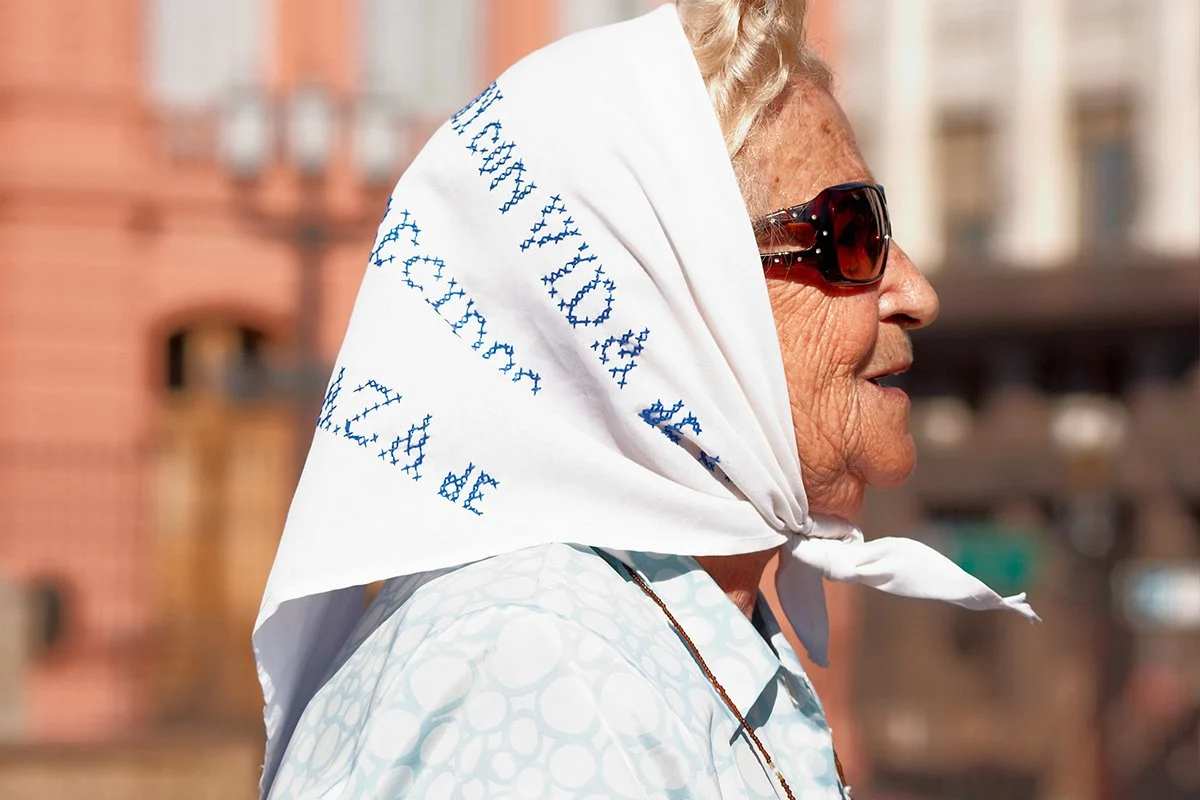
Across the landscape of Latin American history, the phenomenon of forced disappearance has left an indelible mark on the social and political fabric of the continent, giving rise to a unique and potent form of resistance known as maternal activism. This movement, which emerged from the private domestic sphere to occupy the most prominent public squares, represents a fundamental challenge to state-sponsored violence and the systematic erasure of historical truth. From the iconic marches of the Mothers of Plaza de Mayo in Argentina to the persistent demands for justice by the Mothers of Soacha in Colombia, these collectives have transformed individual grief into a collective political force. By leveraging their identities as mothers—a role traditionally confined to the home—these women have successfully navigated repressive environments to demand accountability, subverting the very patriarchal structures that sought to silence them. As these movements evolve, they face a dual struggle: the ongoing search for their disappeared loved ones and a rising tide of institutional denialism that seeks to reframe or white-wash the atrocities of the past.
The Genesis of Resistance: Argentina’s Mothers of Plaza de Mayo
The historical blueprint for maternal activism against forced disappearance was established in 1977 during Argentina’s "Dirty War," a period of state-sponsored terrorism under a military junta. At the height of the dictatorship, which lasted from 1976 to 1983, an estimated 30,000 people were "disappeared"—abducted by security forces, tortured in clandestine centers, and often murdered without a trace. In April 1977, a group of 14 mothers, frustrated by the wall of silence from bureaucratic and religious institutions, gathered in the Plaza de Mayo in front of the Casa Rosada, the seat of government in Buenos Aires.
Their strategy was rooted in the subversion of traditional gender expectations. By demanding the return of their children so they could fulfill their "natural" roles as caregivers and nurturers, they created a political paradox for the military regime. The state, which championed "traditional family values," found it difficult to justify the violent repression of grieving mothers. Despite this, the regime attempted to delegitimize them, famously labeling them "Las Locas de la Plaza de Mayo" (The Crazy Women of the Plaza de Mayo).
The movement’s iconography—most notably the white headscarves (originally made from their children’s cloth diapers)—became a global symbol of human rights. Every Thursday at 3:30 PM, the mothers began their ritual of walking in circles around the Pirámide de Mayo, a practice that continues to this day. This "Ronda" serves as a weekly reminder of the state’s unresolved crimes and the persistence of memory over oblivion.
The Colombian Context: From Armed Conflict to "False Positives"
While the Argentine movement responded to a centralized military dictatorship, the Colombian experience of maternal activism emerged within the context of a sixty-year internal armed conflict involving state forces, paramilitary groups, and leftist guerrillas. In Colombia, the "searching mothers" have had to navigate a complex landscape where enforced disappearance was used as a systematic weapon of war under the veneer of a functional democracy.
A pivotal moment in this history occurred in 2008 with the "False Positives" scandal. It was revealed that members of the Colombian National Army were murdering civilians—mostly young men from impoverished backgrounds—and dressing them in guerrilla uniforms to present them as combat kills. This practice was driven by a pressure-cooker environment of "body counts" used to measure military success and earn promotions or bonuses.
The Mothers of Soacha, a group of women from a municipality bordering Bogotá, were instrumental in exposing this practice after their sons disappeared and were later found in mass graves hundreds of miles away, officially recorded as insurgents killed in battle. According to the Special Jurisdiction for Peace (JEP), the judicial component of the 2016 Peace Accord, at least 6,402 individuals were victims of extrajudicial executions between 2002 and 2008. This figure, significantly higher than previous state estimates, underscored the scale of the systemic violence and the importance of the mothers’ persistence in seeking the truth.
The Weaponization of the "Madness" Trope
A recurring theme in the history of Latin American maternal activism is the state’s use of pathologization to discredit victims. By labeling these women as "crazy" or "unstable," state actors and their civilian allies attempt to strip them of their political agency and citizen status. This strategy serves a dual purpose: it allows institutions to ignore the substance of the mothers’ demands and shifts the focus from the crime to the mental state of the accuser.
In Argentina, the "madness" label was used to justify the initial indifference of the public and the church. However, the Mothers of Plaza de Mayo reclaimed the term, suggesting that in a society where the state murders its own citizens, "madness" is the only sane response. In Colombia, the Mothers of Soacha and the Mothers of La Candelaria have faced similar stigmatization. Cecilia Arenas, a prominent voice in the movement, noted in 2023 that the struggle is constantly undermined by officials who use the "crazy" label to justify the historical erasure of their murdered relatives.
Furthermore, the state apparatus often engages in "victim blaming," suggesting that the disappeared "must have been involved in something" or "were not saints." This narrative seeks to diminish the moral weight of the crime by implying the victims were inherently disposable. Maternal activism counters this by humanizing the victims, insisting on their status as sons, fathers, and citizens with rights.
Contemporary Denialism and Symbolic Violence
In recent years, the struggle for memory in Colombia has faced aggressive pushback from political sectors that view the acknowledgment of state crimes as a threat to national prestige or military morale. This denialism often manifests as symbolic and physical violence against memorials and art installations.
A notable incident occurred in early 2025 involving Miguel Polo Polo, a member of the Colombian House of Representatives. Polo Polo was filmed violently removing an art installation titled "Mujeres con las Botas Bien Puestas" (Women with Their Boots on Right), which consisted of boots decorated by the Mothers of False Positives (MAFAPO) to represent their murdered sons. Polo Polo threw the boots into trash bags, questioning the 6,402 figure provided by the JEP and suggesting the memorial belonged in the garbage. This act was widely condemned by human rights organizations as a form of "revictimization" and a literal attempt to trash the memory of the deceased.
Similarly, symbolic confrontations have involved high-ranking former officials. In a widely reported event, a group of citizens and human rights activists painted a mural near a property owned by former President Álvaro Uribe Vélez, whose administration (2002–2010) coincided with the peak of the "False Positives" killings. In a direct act of censorship, the former president personally used a paint roller to white-wash the mural. Such actions demonstrate that the battle for historical narrative is not merely academic but is fought in the physical and symbolic spaces of the country.
Data and the Impact of Collective Action
The impact of these movements is measurable not only in social awareness but also in legal and forensic milestones. In Argentina, the work of the Mothers and the Grandmothers of Plaza de Mayo led to the creation of the National Genetic Data Bank, which has helped identify 133 children (now adults) who were stolen at birth during the dictatorship.
In Colombia, the pressure from maternal collectives has been a driving force behind the work of the Unit for the Search for Persons Deemed as Disappeared (UBPD). As of 2024, the UBPD has registered over 100,000 disappeared persons in the context of the armed conflict. The activism of the mothers has ensured that the "False Positives" remain a central focus of the JEP’s investigations, leading to unprecedented public admissions of guilt by former military officers.
The following table summarizes the key distinctions and overlaps between the two primary movements:
| Feature | Mothers of Plaza de Mayo (Argentina) | Mothers of Soacha/MAFAPO (Colombia) |
|---|---|---|
| Origin Period | 1977 (Military Dictatorship) | 2008 (Armed Conflict/Democracy) |
| Primary Crime | Enforced Disappearance | Extrajudicial Executions ("False Positives") |
| Symbolism | White Headscarves, "The Ronda" | Decorated Boots, Public Murals |
| State Narrative | National Security/Anti-Subversion | Counter-Insurgency/Criminalization |
| Estimated Victims | 30,000 | 6,402 (Extrajudicial killings only) |
Broader Implications for Global Human Rights
The legacy of Latin American maternal activism transcends the borders of the continent. It offers a profound ethical framework known as the "logic of care." Unlike traditional political movements that may seek power or ideological dominance, these mothers seek truth and the restoration of dignity. Their mobilization demonstrates that even in the most repressive environments, the domestic identity of "mother" can be weaponized as a tool for radical democratic participation.
As global politics sees a resurgence in authoritarian rhetoric and historical revisionism, the strategies of the searching mothers remain highly relevant. Their resistance teaches that memory is a "living" entity that must be defended daily. By refusing to let their children be forgotten or dismissed as "non-saints," they have created a counter-power that destabilizes official narratives.
In conclusion, the movement of the searching mothers represents an indispensable ethical imperative for Latin America. In a region where state impunity has often been the norm, their insistence on justice provides the only viable path toward a future where "Never Again" (Nunca Más) is not just a slogan, but a lived reality. The struggle against erasure is ongoing, but as long as the "Ronda" continues and the boots remain "on right," the truth remains shielded from the shadows of history.