admin
admin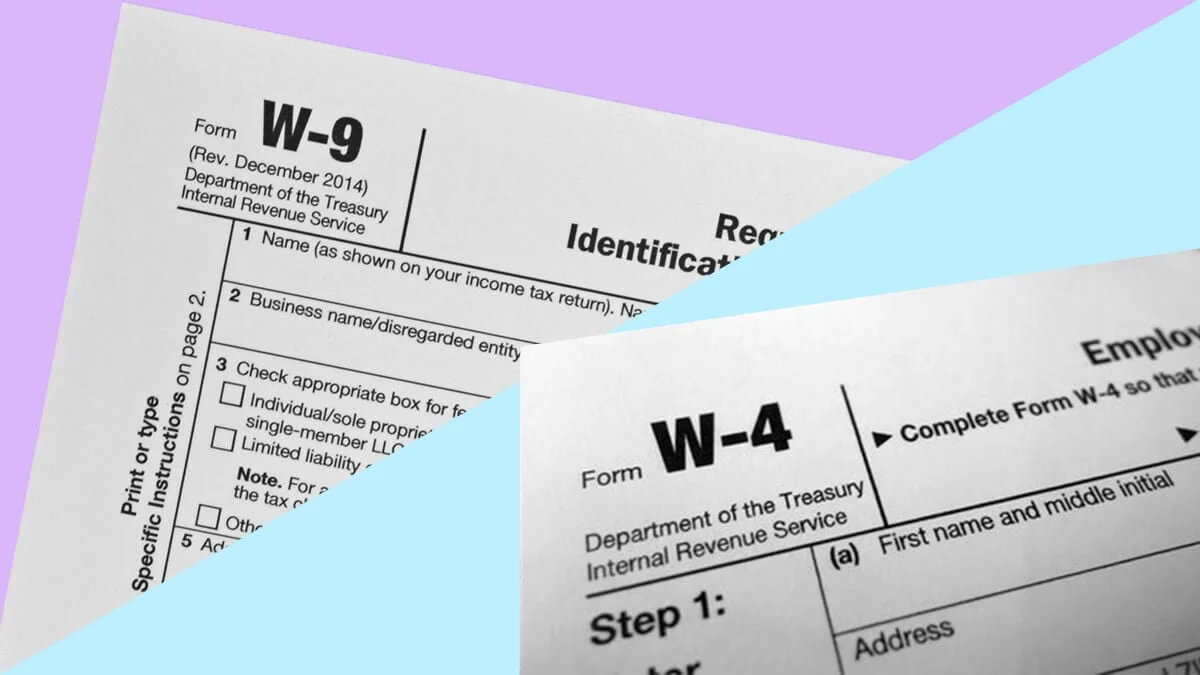
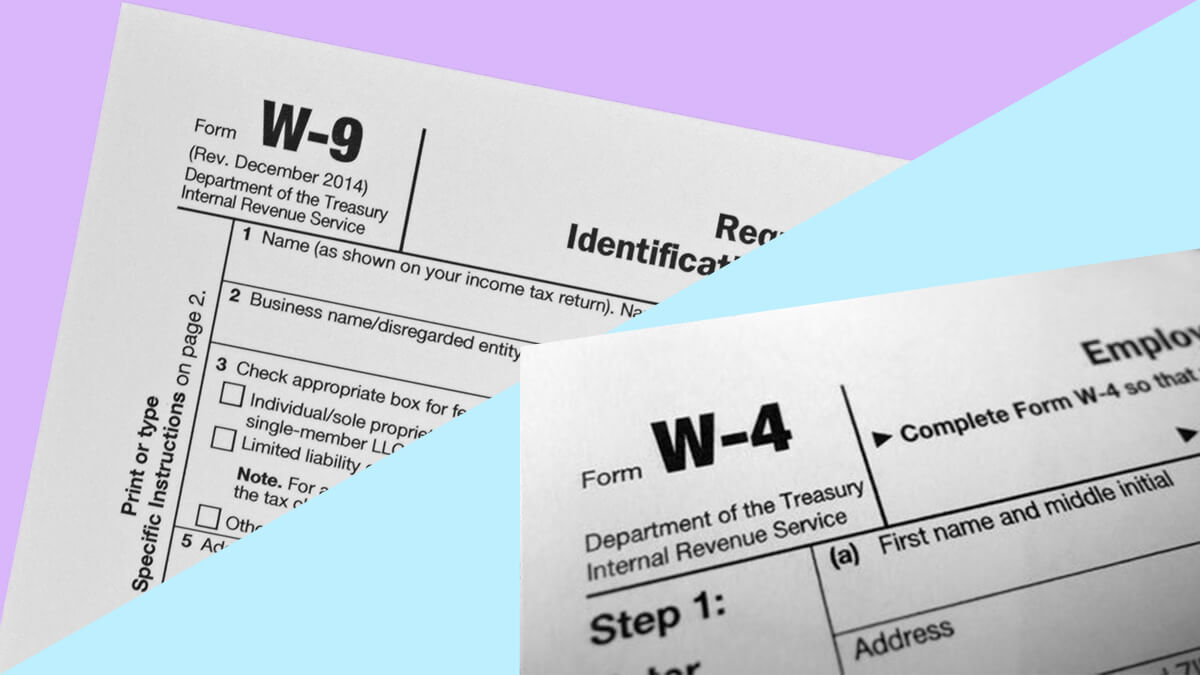
In the complex landscape of tax compliance, distinguishing between employees and independent contractors is paramount for businesses and individuals alike. The Internal Revenue Service (IRS) employs two critical forms, W-4 and W-9, as cornerstones for managing the tax implications of these distinct working relationships. Understanding the precise application and significance of each form is not merely a matter of administrative diligence but a fundamental requirement for accurate tax withholding, reporting, and avoiding potential legal and financial repercussions. While both forms gather essential taxpayer information, their purposes are uniquely tailored to the classification of the worker, impacting everything from federal income tax withholding to year-end reporting obligations. This guide delves into the specifics of Forms W-4 and W-9, providing crucial context, historical changes, and practical implications for navigating the modern workforce.
The Cornerstone of Employment: Understanding Form W-4
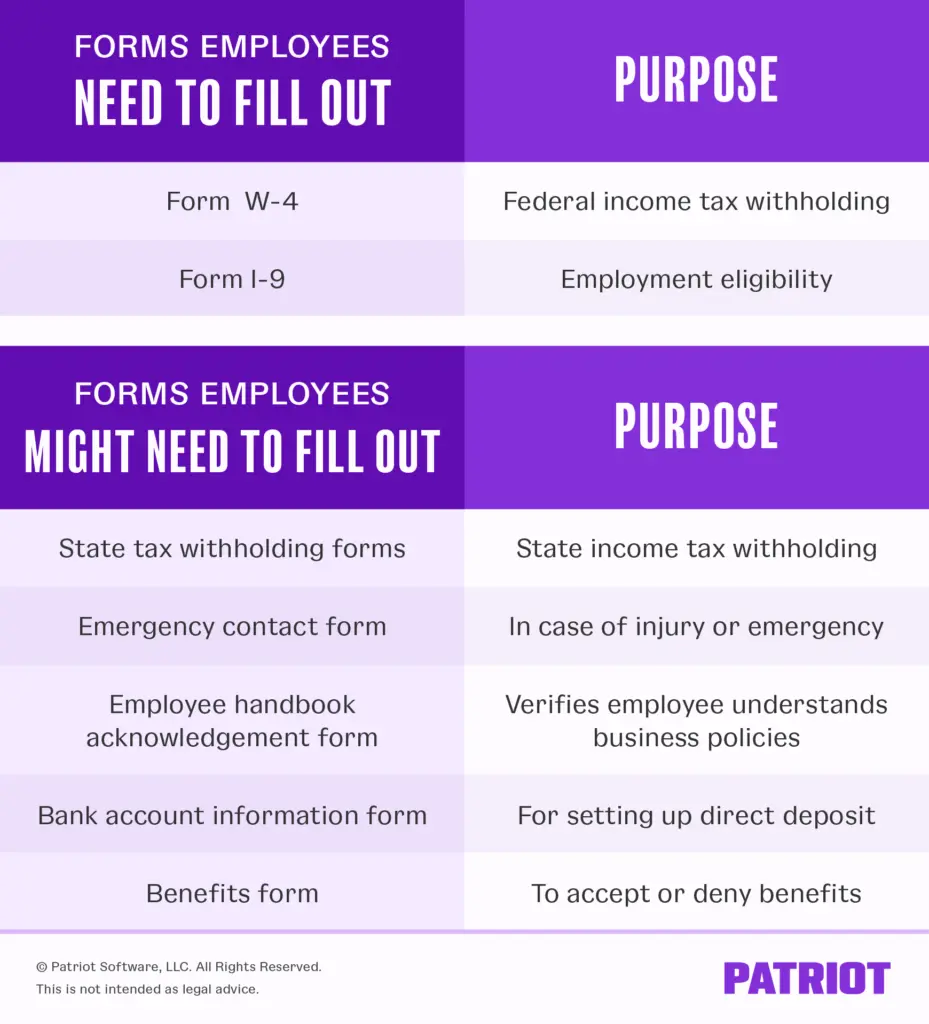
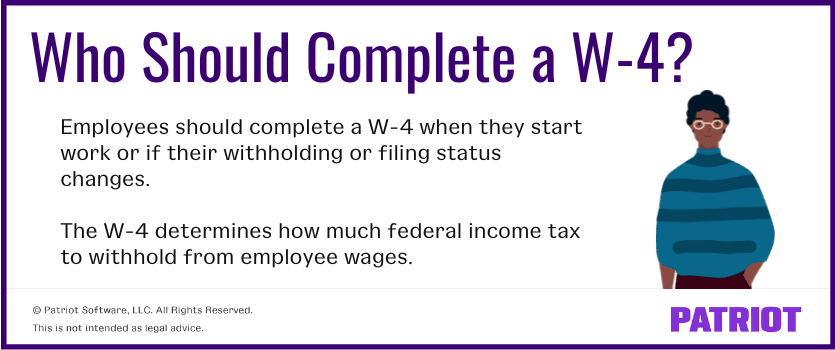
Form W-4, officially known as the Employee’s Withholding Certificate, is a mandatory document that every new employee must complete upon commencing employment. Its primary function is to enable employers to calculate the correct amount of federal income tax to withhold from an employee’s wages. This withholding is a pay-as-you-go system, designed to ensure that employees meet their tax obligations throughout the year rather than facing a large tax bill at year-end. Employees are also advised to update their W-4 form whenever their personal or financial situation changes significantly, such as marriage, divorce, birth of a child, or changes in other income sources, to maintain accurate withholding.
A Historical Shift: The Tax Cuts and Jobs Act of 2017 and the W-4 Redesign
The architecture of Form W-4 underwent a significant transformation following the enactment of the Tax Cuts and Jobs Act (TCJA) of 2017. Prior to this legislation, the W-4 system relied heavily on "withholding allowances," where employees would claim a certain number of allowances to reduce their taxable income, a system that many found opaque and confusing. The TCJA brought sweeping changes to the U.S. tax code, notably eliminating personal exemptions and significantly increasing the standard deduction. These changes rendered the old allowance-based system obsolete and prone to inaccurate withholding.
Consequently, the IRS unveiled a redesigned Form W-4 in 2020, aiming to simplify the process and improve the accuracy of tax withholding. The new W-4 moved away from allowances, instead adopting a more direct and transparent approach. It now requires employees to directly account for factors like multiple jobs, dependent credits, and other income or deductions that influence their tax liability. This redesign was a direct response to feedback from taxpayers and employers who struggled with the complexity of the previous form, with the IRS emphasizing its goal of making the form easier to understand and use, thereby minimizing instances of under-withholding or over-withholding.
Navigating the New W-4: Key Sections for Employees
The post-2020 Form W-4 is structured into five distinct steps, although not all employees need to complete every step.
- Step 1: Enter Personal Information: This foundational step requires the employee’s name, address, Social Security number, and filing status (Single/Married Filing Separately, Married Filing Jointly/Qualifying Widow(er), or Head of Household). Accurate personal details are critical for identification and proper tax processing.
- Step 2: Multiple Jobs or Spouse Works: This step is crucial for employees who hold more than one job or are married filing jointly and their spouse also works. It aims to prevent under-withholding that can occur when the standard deduction and tax brackets are effectively applied to multiple incomes separately. Employees can choose from three options: using the IRS Tax Withholding Estimator, checking a box if there are only two jobs total with similar pay, or completing the "Multiple Jobs Worksheet" provided in the instructions.
- Step 3: Claim Dependents: This section allows employees to account for the Child Tax Credit and the Credit for Other Dependents. It requires a specific calculation based on the number and type of dependents, directly reducing the amount of tax withheld. This step directly reflects changes from the TCJA regarding family tax credits.
- Step 4: Other Adjustments: This optional step provides flexibility for employees to further fine-tune their withholding. It includes three subsections:
- (a) Other income: For income not subject to withholding (e.g., interest, dividends, retirement income) that an employee wishes to have taxed through their payroll.
- (b) Deductions: For employees who plan to itemize deductions on their tax return (e.g., mortgage interest, state and local taxes, charitable contributions) and want to reduce their withholding accordingly.
- (c) Extra Withholding: Allows employees to request an additional flat dollar amount to be withheld from each paycheck, often used to account for complex financial situations or simply to ensure an anticipated tax liability is met.
- Step 5: Sign Here: The final and mandatory step requires the employee’s signature, certifying that the information provided is accurate and complete.
Employer Responsibilities and the Computational Bridge
For employers, managing the transition to the new W-4 system has presented a unique challenge. Employees hired before 2020 are not required to complete a new W-4 unless they choose to adjust their withholding. This means many businesses operate with a mix of old (pre-2020) and new (post-2020) W-4 forms. To alleviate the administrative burden, the IRS introduced the "Computational Bridge," an optional four-step process detailed in Publication 15-T, Federal Income Tax Withholding Methods. This tool allows employers to convert information from older W-4s (which relied on allowances) into a format compatible with the newer withholding tables, enabling the use of a single set of withholding tables for all employees, regardless of which W-4 form they completed. This bridge is a testament to the IRS’s efforts to facilitate compliance during periods of significant tax reform.
Beyond Federal: State-Specific Withholding Forms
It is important to note that the federal Form W-4 only addresses federal income tax withholding. Many states also levy their own income taxes and, consequently, require employees to complete a state-specific withholding form. These forms, often mirroring the structure and intent of the federal W-4, ensure that state income tax is properly withheld from wages. Businesses operating in states with income tax must be diligent in managing both federal and state withholding requirements to remain compliant.
Engaging Independent Talent: The Significance of Form W-9
In contrast to the employer-employee relationship governed by Form W-4, the engagement of independent contractors, freelancers, and other non-employee service providers necessitates the use of Form W-9, Request for Taxpayer Identification Number and Certification. This form serves as the primary mechanism for businesses to collect crucial taxpayer information from individuals or entities to whom they pay income that is not subject to standard payroll withholding. The information provided on a W-9 is essential for the business to accurately report payments to the IRS at year-end, predominantly through Form 1099-NEC (Nonemployee Compensation) or other 1099 series forms.
Defining the Independent Contractor Relationship
The distinction between an employee and an independent contractor is not merely semantic; it carries significant legal and tax implications for both parties. The IRS provides guidance through "common law rules," which examine the degree of control and independence in a working relationship across three main categories:
- Behavioral Control: Does the company control or have the right to control what the worker does and how the worker does their job?
- Financial Control: Does the company control the business aspects of the worker’s job (e.g., how the worker is paid, whether expenses are reimbursed, who provides tools/supplies)?
- Type of Relationship: Are there written contracts or employee benefits? Is the relationship expected to continue, and is the work a key aspect of the business?
Misclassifying a worker as an independent contractor when they should be an employee can lead to severe penalties for businesses, including back taxes for Social Security, Medicare, federal income tax withholding, and potential state unemployment taxes, along with interest and fines. The IRS, recognizing the complexity and potential for abuse, places significant scrutiny on worker classification. The rise of the "gig economy" has further amplified the importance of accurate classification, with millions of Americans now working as independent contractors. According to a 2017 study by the Bureau of Labor Statistics, 10.1% of workers were involved in alternative work arrangements, many as independent contractors, a figure that has likely grown since.
Form W-9: The Gateway to Contractor Tax Reporting
Form W-9 is completed by the payee (the independent contractor or vendor) and submitted to the payer (the business). The payer then uses the information from the W-9 to prepare various information returns, primarily Form 1099-NEC, which reports nonemployee compensation totaling $600 or more paid to an individual or entity during the calendar year.
Deciphering the W-9: Essential Information for Payees
The W-9 form requires the payee to provide several key pieces of information:
- Name: The legal name of the individual or entity.
- Business Name (if different from name): If the payee operates under a business name, trade name, or "doing business as" (DBA) name.
- Federal Tax Classification: The payee must select their tax classification, which can include individual/sole proprietor, C corporation, S corporation, partnership, trust/estate, or Limited Liability Company (LLC) (and how the LLC is taxed). This classification is critical for the payer to determine how to correctly report the income.
- Address: The complete mailing address.
- Taxpayer Identification Number (TIN): This is the most crucial piece of information. For individuals, including sole proprietors, the TIN is typically their Social Security Number (SSN). For businesses (corporations, partnerships, LLCs taxed as corporations or partnerships), it is their Employer Identification Number (EIN). Resident aliens, sole proprietors, or disregarded entities may have specific instructions for Part I. The accuracy of the TIN is paramount for matching income reported to the correct taxpayer.
- Certifications: The payee must certify under penalties of perjury that the TIN provided is correct, that they are not subject to backup withholding, and that they are a U.S. person (including a U.S. resident alien).
Beyond Contractors: Other Uses of Form W-9
While primarily associated with independent contractors, Form W-9 is also required for a wide array of other payments subject to information reporting. This includes:
- Interest income
- Dividend income
- Acquisition or abandonment of secured property
- Payments for real estate transactions
- Royalty payments
- Payments from brokers and barter exchange transactions
- Payments of rent
- Other income payments (e.g., prize winnings, awards)
Any business or entity that makes reportable payments to a U.S. person must obtain a W-9 from that payee to ensure proper tax reporting.
Reporting Requirements and the 1099-NEC
For many years, nonemployee compensation was reported on Form 1099-MISC. However, starting with the 2020 tax year, the IRS reintroduced Form 1099-NEC, Nonemployee Compensation, specifically for reporting payments of $600 or more to independent contractors. This change was implemented to align with the W-4’s redesign timeline and to streamline the reporting process, as the previous system often led to confusion and delayed filings. The shift underscored the IRS’s continued focus on accurate and timely reporting of income from the gig economy and other independent work arrangements.
Notably, the reporting threshold for certain digital payment transactions, often involving independent contractors, is also undergoing changes. While the general threshold for Form 1099-NEC remains $600, there have been legislative discussions and temporary delays regarding the reporting threshold for third-party payment network transactions (e.g., PayPal, Venmo, Square) via Form 1099-K. This signals a broader trend toward increasing transparency and enforcement in the independent contractor sphere. Furthermore, a significant change is on the horizon for W-9 record-keeping: beginning in 2026, the threshold for which businesses must keep a Form W-9 on file and issue a 1099-NEC will increase from $600 to $2,000 for nonemployee compensation, a move aimed at reducing the reporting burden for smaller transactions while still capturing substantial income.
Safeguarding Compliance: The Critical Role of Backup Withholding
One of the most significant consequences of an incorrectly completed or missing Form W-9 is the requirement for backup withholding. Backup withholding is not a penalty, but rather a method for the IRS to ensure that tax is collected on certain types of income when the payee has failed to provide a correct Taxpayer Identification Number (TIN) or has underreported interest and dividends.
When Backup Withholding Applies
A payer is generally required to withhold 24% of payments made to an independent contractor or other payee if:
- The payee fails to provide their TIN to the payer in the required manner.
- The IRS notifies the payer that the TIN provided by the payee is incorrect.
- The IRS notifies the payer to begin backup withholding because the payee has underreported interest or dividends on their tax returns.
- The payee fails to certify that they are not subject to backup withholding (often by not signing the W-9).
The 24% Withholding Rate and Employer’s Obligation
When backup withholding is applicable, the payer must withhold 24% of all reportable payments made to the payee and remit these funds to the IRS. This rate is fixed and applies regardless of the payee’s actual tax bracket. Employers must use Form 945, Annual Return of Withheld Federal Income Tax, to report and remit backup withholding, distinct from the Form 941 used for employee payroll taxes. This separate reporting mechanism underscores the IRS’s differentiated approach to employee and non-employee compensation. Failure to properly implement backup withholding when required can result in the payer being held liable for the uncollected tax, along with potential penalties.
Broader Implications and Strategic Considerations for Businesses
The meticulous management of Forms W-4 and W-9 extends beyond mere form-filling; it is integral to a business’s operational efficiency, financial health, and legal standing.
Operational Efficiency: Streamlining Onboarding and Payroll
Proper collection and maintenance of W-4s and W-9s streamline the onboarding process for new workers. For employees, accurate W-4s ensure correct payroll tax calculations, reducing the likelihood of end-of-year surprises for both the employee and the employer. For contractors, a complete W-9 facilitates seamless year-end 1099-NEC reporting, preventing delays and potential penalties associated with incomplete information. Many modern payroll and accounting software solutions integrate these processes, automatically flagging missing information or guiding users through the correct steps.
Legal and Financial Risks: Avoiding IRS Audits and Penalties
The IRS dedicates substantial resources to enforcing tax compliance, with worker classification and accurate income reporting being areas of particular focus. Businesses that neglect their W-4 and W-9 obligations face significant risks, including:
- Misclassification Penalties: As previously mentioned, reclassifying contractors as employees can result in substantial back taxes, interest, and penalties.
- Failure to Withhold/Deposit Penalties: For W-4s, if an employer fails to withhold or deposit federal income taxes as required, they can face significant penalties.
- Information Reporting Penalties: For W-9s and 1099-NECs, penalties can be imposed for failure to file, late filing, or filing with incorrect information.
These risks highlight the importance of robust internal controls and, when in doubt, consulting with tax professionals.
The Evolving Landscape: Gig Economy and Regulatory Scrutiny
The proliferation of the gig economy and the increasing reliance on independent contractors has placed both W-4 and W-9 forms at the forefront of regulatory discussions. Policymakers and tax authorities are continually assessing how best to adapt tax laws to a rapidly changing workforce. Businesses must remain vigilant about legislative changes and IRS guidance, as the rules governing worker classification and income reporting are dynamic.
Leveraging Technology: Payroll and Accounting Software
Modern business operations are significantly aided by technology. Online payroll software and accounting platforms have become indispensable tools for managing W-4 and W-9 compliance. These systems often provide:
- Automated Form Collection: Digital onboarding processes for W-4s and W-9s.
- Accurate Withholding Calculations: Based on W-4 inputs, ensuring correct federal and state tax deductions.
- 1099-NEC Preparation and Filing: Streamlined generation and electronic submission of contractor tax forms.
- Compliance Alerts: Notifications for missing information or potential issues.
Such tools not only reduce administrative burden but also significantly minimize the risk of human error, contributing to a more compliant and efficient operation.
In conclusion, Forms W-4 and W-9 are more than mere bureaucratic documents; they are fundamental instruments that underpin the integrity of the U.S. tax system’s approach to employment and independent contracting. For businesses, a thorough understanding and diligent application of these forms are critical for maintaining compliance, managing financial liabilities, and fostering trust with their workforce. For individuals, correctly completing these forms ensures proper tax treatment and avoids unexpected tax burdens. As the nature of work continues to evolve, staying informed and proactive regarding these essential IRS forms remains a paramount responsibility for all parties involved.