Dwi Wanna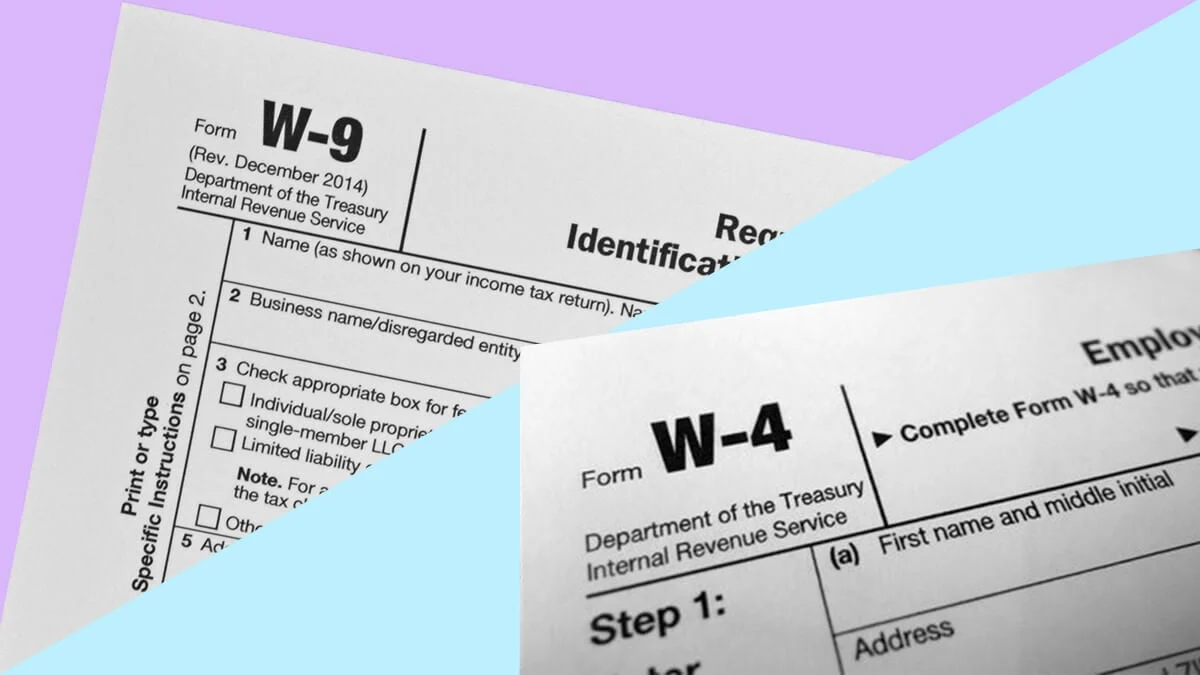
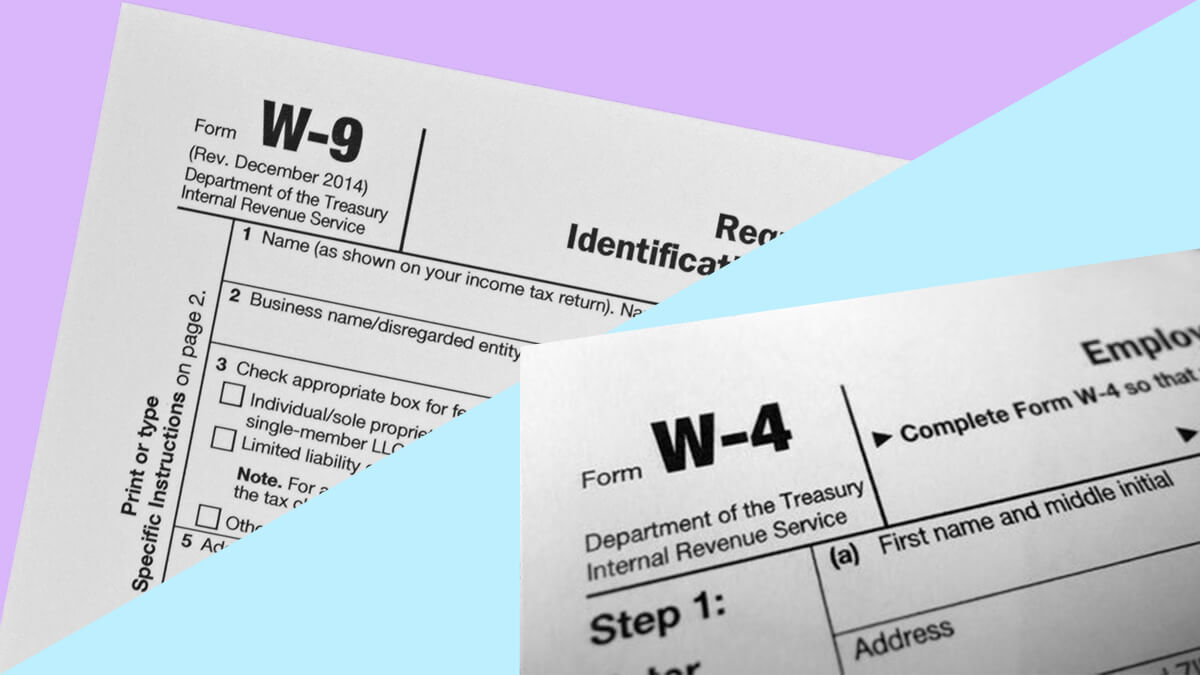
The landscape of American labor has shifted significantly over the last decade, placing an increased administrative burden on business owners to distinguish between traditional employees and independent contractors. Central to this distinction is the proper execution of Internal Revenue Service (IRS) documentation, specifically Form W-4 and Form W-9. While both forms serve as foundational tools for tax reporting, their applications, legal requirements, and implications for a company’s payroll department are fundamentally different. Misunderstanding these differences can lead to significant financial penalties, interest charges, and audits from federal and state tax authorities.
The Foundational Distinction Between Employees and Contractors
At the core of the W-4 versus W-9 debate is the legal classification of the worker. The IRS utilizes several criteria to determine whether a worker is an employee or an independent contractor, primarily focusing on the degree of control the employer exercises over the worker’s tasks.
An employee is generally subject to the employer’s control regarding when, where, and how work is performed. For these individuals, employers are required to withhold federal income tax, Social Security, and Medicare taxes, and pay unemployment taxes. Form W-4 is the vehicle through which this withholding is calculated. Conversely, an independent contractor—often referred to as a freelancer or consultant—retains control over the methods used to complete a project. Employers do not withhold taxes from payments made to contractors; instead, the contractor is responsible for their own self-employment taxes. Form W-9 is used to collect the contractor’s taxpayer information to facilitate year-end reporting.
The Evolution of Form W-4 and the Tax Cuts and Jobs Act
The history of Form W-4 underwent a landmark shift following the passage of the Tax Cuts and Jobs Act (TCJA) in 2017. Prior to 2020, Form W-4 relied on a system of "withholding allowances" tied to personal exemptions. However, the TCJA eliminated personal exemptions, rendering the old system obsolete.
In 2020, the IRS released a redesigned Form W-4, which moved away from allowances and toward a data-driven approach based on expected annual income and filing status. This change was intended to increase the accuracy of withholding, reducing the likelihood that employees would either overpay throughout the year or face a significant tax bill upon filing.
Key Components of the Modern W-4
The current version of Form W-4 requires employees to provide specific personal data, including:
- Filing Status: Whether the individual is filing as single, married filing separately, married filing jointly, or head of household.
- Multiple Jobs or Spouse Works: A section to account for additional income that might push the taxpayer into a higher bracket.
- Claiming Dependents: A direct dollar-amount calculation for the child tax credit and other dependents.
- Other Adjustments: Optional sections for reporting other income (not from jobs), deductions beyond the standard deduction, and extra withholding amounts.
For employers, managing a workforce that includes both long-term staff hired before 2020 and new hires presents a challenge. Employees hired before 2020 are not required to submit a new form unless their financial situation changes. This necessitates that payroll departments maintain two separate systems of calculation or utilize the IRS "computational bridge."
The Computational Bridge: A Transitional Tool
To alleviate the administrative strain of running two different withholding systems, the IRS introduced the "computational bridge." This optional four-step process allows employers to convert data from an "old" W-4 (2019 or earlier) into the format used by the "new" W-4 (2020 and later). By using this bridge, a business can standardize its payroll processing under a single withholding table. However, it is a temporary measure; once an employee submits a new W-4, the bridge can no longer be applied to their profile.
Form W-9: The Gateway to Non-Employee Compensation
While the W-4 is internal to the payroll process, Form W-9, Request for Taxpayer Identification Number and Certification, serves as a formal request for information from an external vendor or contractor. It is not filed with the IRS but is kept on record by the business to prepare Form 1099-NEC (Non-Employee Compensation) at the end of the fiscal year.
Requirements for Form W-9
Independent contractors must provide:
- Legal Name: As shown on their income tax return.
- Business Name: If different from their legal name (e.g., a "Doing Business As" or DBA name).
- Federal Tax Classification: Indicating whether they are an individual/sole proprietor, C Corporation, S Corporation, Partnership, or Limited Liability Company (LLC).
- Taxpayer Identification Number (TIN): This is usually a Social Security Number (SSN) for individuals or an Employer Identification Number (EIN) for business entities.
- Certification: A signature under penalty of perjury stating that the TIN provided is correct and that the individual is not subject to backup withholding.
Supporting Data and Economic Context
The importance of these forms has escalated alongside the growth of the "gig economy." According to data from the Bureau of Labor Statistics and various independent economic studies, approximately 36% of U.S. workers (roughly 57 million people) participated in the gig economy in some capacity as of 2023. This shift represents a move away from traditional W-2 employment toward 1099-based contracting.
Consequently, the IRS has increased its focus on worker misclassification. In recent years, the Department of Labor (DOL) and the IRS have strengthened their information-sharing agreements to identify businesses that categorize workers as contractors to avoid paying payroll taxes and benefits. Fines for misclassification can range from $50 per unfiled W-2 to 1.5% of the wages paid, plus the full share of unpaid Social Security and Medicare taxes.
Timeline of Key Regulatory Changes
A chronology of recent tax form adjustments highlights the tightening of federal oversight:
- December 2017: Tax Cuts and Jobs Act is signed into law.
- January 2020: The redesigned Form W-4 becomes mandatory for all new hires.
- Tax Year 2020: The IRS reintroduces Form 1099-NEC to separate non-employee compensation from "miscellaneous income" (formerly on Form 1099-MISC).
- 2024-2025: Increasing scrutiny on digital platform payments and the threshold for reporting 1099 income.
- 2026 Forecast: Legislative adjustments are expected to raise the reporting threshold for non-employee compensation from $600 to $2,000, as noted in recent fiscal policy discussions.
The Risk of Backup Withholding
One of the most critical, yet often overlooked, aspects of Form W-9 is "backup withholding." If a contractor fails to provide a correct TIN or if the IRS notifies the payer that the TIN provided does not match their records, the business is legally obligated to withhold tax from future payments to that contractor at a flat rate of 24%.
Failure to implement backup withholding when required can leave the business liable for the tax that should have been withheld. The IRS monitors this through Form 945, the Annual Return of Withheld Federal Income Tax. This creates a significant compliance risk for businesses that do not have a rigorous process for collecting and verifying W-9 forms before issuing the first payment to a contractor.
Broader Implications for Business Strategy
The distinction between W-4 and W-9 is not merely a matter of paperwork; it is a strategic business decision. Hiring employees (W-4) provides a business with more control and continuity but involves higher overhead in the form of benefits, insurance, and payroll taxes. Utilizing contractors (W-9) offers flexibility and lower immediate costs but carries the risk of legal challenges if the IRS deems those workers to be "de facto" employees.
Industry experts and legal analysts suggest that as the IRS adopts more sophisticated data-matching technology, the margin for error in tax documentation will shrink. For example, the IRS’s "Information Returns Intake System" (IRIS) now allows for faster, digital filing of 1099 forms, making it easier for the government to spot discrepancies between what a business claims to have paid and what a contractor claims to have received.
Conclusion and Official Guidance
For business owners, the mandate is clear: documentation must be proactive rather than reactive. Every new hire must complete a W-4 before their first paycheck is issued, and every independent contractor should provide a completed W-9 before any work commences.
The IRS provides comprehensive guidance through Publication 15 (Circular E), the Employer’s Tax Guide, and Publication 15-T, which details the federal income tax withholding methods. Staying abreast of these publications is essential for maintaining compliance in an era of evolving tax law. By understanding the granular differences between Form W-4 and Form W-9, businesses can protect themselves from costly audits and ensure that their contributions to the federal tax system are accurate and timely.