Candice Horbacz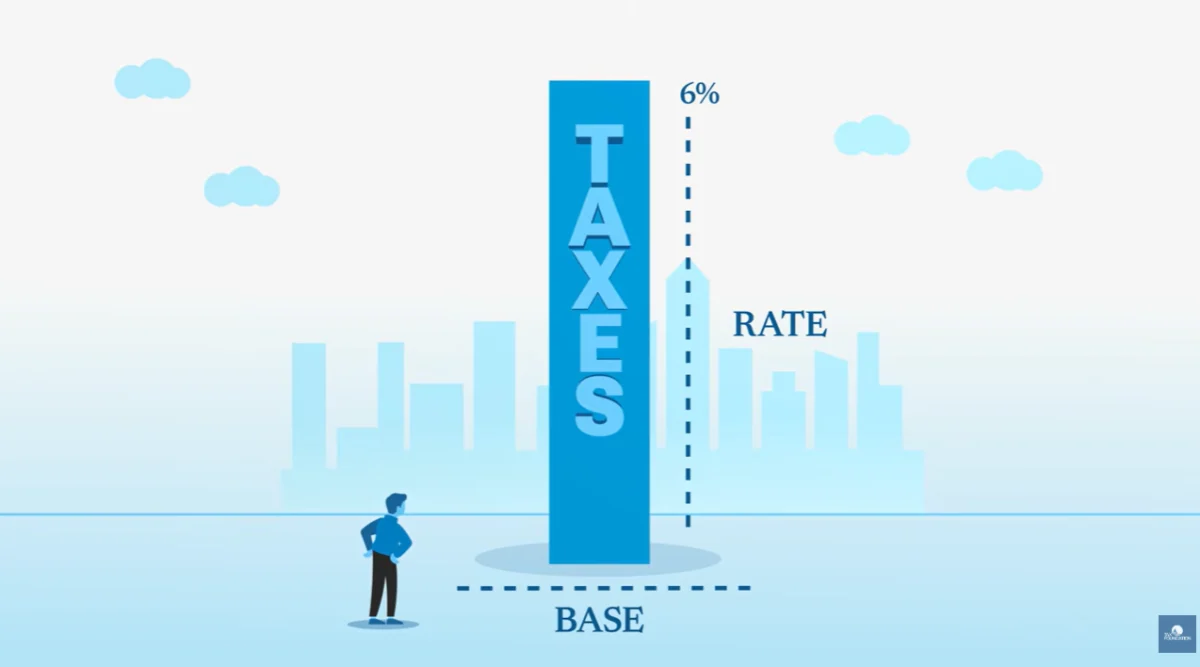
When citizens and policymakers alike delve into the complexities of a nation’s fiscal architecture, the discussion often gravitates towards a single, seemingly straightforward metric: the tax rate. While undoubtedly a critical component, determining "how high" taxes are involves a more intricate calculation that encompasses not just the percentage levied, but also the often-overlooked yet equally significant concept of the tax base – fundamentally, "what" gets taxed. This dualistic nature of taxation profoundly shapes individual economic decisions, business investment strategies, and the overall health and stability of an economy, necessitating a comprehensive understanding beyond mere percentage points.
The traditional focus on the tax rate, which dictates the proportion of income, profit, or transaction value that an individual or entity must surrender to the government, often overshadows its crucial counterpart. The tax base defines the specific economic activities, assets, or transactions that are subject to taxation. For instance, income tax rates are applied to an income base, property tax rates to a property value base, and sales tax rates to a consumption base. A robust and well-designed tax base is as vital as an appropriate tax rate in ensuring revenue stability, promoting economic neutrality, and minimizing unintended negative consequences on economic behavior.
The Anatomy of Taxation: Rate Versus Base
The distinction between the tax rate and the tax base is fundamental to understanding tax policy. Without a clear grasp of both, reforms can be misdirected, leading to suboptimal outcomes.
-
Defining the Tax Rate: The tax rate is the percentage at which a tax is applied. It can be flat (a single rate for all taxable amounts), progressive (rates increase with the taxable amount), or regressive (rates decrease with the taxable amount, or disproportionately impact lower incomes). For example, a 7% sales tax rate means that 7% of the taxable purchase price is added to the cost. Similarly, income tax brackets apply different rates to different portions of an individual’s income.
-
Unpacking the Tax Base: The tax base refers to the aggregate value of the assets, income, or consumption subject to tax. For income tax, the base is typically an individual’s or corporation’s earnings, often with deductions and exemptions. For property tax, it’s the assessed value of real estate. For sales tax, it’s the value of goods and services purchased. The breadth or narrowness of this base is a critical determinant of a tax system’s efficiency and equity. A broad tax base means more items, services, or income categories are subject to taxation, whereas a narrow base implies numerous exemptions and exclusions.
Economic Distortions: The Unintended Consequences of a Narrow Base
A tax system’s primary goal is to generate revenue for public services. However, poorly designed tax bases can inadvertently introduce "distortions" into the economy, causing individuals and businesses to make decisions primarily for tax reasons rather than for economic efficiency or market fundamentals. These distortions can manifest in various ways, undermining productivity, discouraging investment, and ultimately hurting economic growth.
-
Behavioral Economics of Taxation: When certain goods, services, or types of income are taxed at a high rate while others are entirely exempt or taxed lightly, economic actors are incentivized to shift their activities towards the untaxed or lightly taxed areas. For example, if savings income is heavily taxed while consumption is not, people might be incentivized to consume more and save less. Businesses might choose to invest in specific industries or geographies solely because of favorable tax treatment, rather than genuine market demand or comparative advantage. This misallocation of resources leads to a less efficient economy than would otherwise exist. Such decisions, driven by tax arbitrage rather than core economic logic, divert capital and labor from their most productive uses.
-
Quantifying the Cost of Inefficiency: Economists refer to the welfare loss caused by these distortions as "deadweight loss." This represents the economic benefit that could have been achieved but is lost due to inefficient resource allocation induced by taxation. Studies consistently show that narrow tax bases, coupled with high rates, tend to generate significant deadweight loss, effectively shrinking the overall economic pie. For instance, if a state exempts business inputs from sales tax but taxes final consumer goods heavily, it can create a cascading effect where businesses incur higher costs, which are then passed on to consumers, hindering competitiveness. The cumulative effect of these micro-level distortions can have a macro-level impact on a nation’s GDP, employment rates, and global competitiveness.
Sales Tax: A Case Study in Base Design
The sales tax provides a vivid illustration of how the design of the tax base directly influences economic outcomes and revenue generation. Most states in the U.S. levy a sales tax, but their approaches to what constitutes the taxable base vary significantly.
-
The Evolving Landscape of Consumption Taxes: Historically, sales taxes were primarily applied to tangible goods. However, as economies have shifted from manufacturing to services, many states have grappled with the challenge of adapting their sales tax bases. The digital age further complicates this, with new services like streaming, software subscriptions, and online marketplaces emerging rapidly. The failure to update tax bases to reflect these economic shifts means that a growing portion of consumer spending goes untaxed, eroding the revenue-generating capacity of the existing sales tax structure.
-
The Narrowing Base: Exemptions and Their Rationale: Many states exempt certain items from sales tax, such as groceries, prescription drugs, and certain services like haircuts or legal advice. The rationale behind these exemptions is often rooted in social equity or economic development. Exempting groceries, for example, is typically intended to reduce the regressive impact of sales tax, as lower-income households spend a larger proportion of their income on food. Similarly, exemptions for business inputs or manufacturing equipment might be designed to encourage local industry and job creation. However, each exemption, while potentially well-intentioned, narrows the tax base. If a state’s sales tax base becomes too narrow due to numerous exemptions, it faces a dilemma: either accept lower revenue or impose a higher sales tax rate on the remaining taxable items. This higher rate makes those specific purchases more expensive, disproportionately affecting consumers of those goods and services, and potentially driving them to seek alternatives or reduce consumption, further exacerbating distortions.
-
The Broadening Imperative: Achieving Fiscal Stability and Equity: Conversely, states or jurisdictions that broaden their sales tax base by reducing or eliminating exemptions can achieve several benefits. By including more goods and services—such as digital services, professional services, or even clothing—within the taxable base, the state can generate the same amount of revenue with a lower overall sales tax rate. This approach minimizes distortions because fewer economic activities are singled out for special tax treatment. A broader base also tends to be more stable, as it relies on a wider range of economic activity and is less susceptible to fluctuations in specific sectors. For example, some states have moved towards taxing digital streaming services, professional consulting, or even specific repair services, reflecting the evolving consumption patterns of their populations. International examples, such as Canada’s Goods and Services Tax (GST) or value-added taxes (VAT) in European Union countries, often feature much broader consumption tax bases, covering most goods and services, which allows for comparatively lower rates while generating substantial revenue. This broad-base, low-rate approach is widely endorsed by tax policy experts as a more neutral and efficient way to raise government revenue, as it interferes less with individual and business economic choices.
The Quest for Neutrality: Principles of Sound Tax Policy
The concept of "tax neutrality" is central to discussions about optimal tax base design. A neutral tax system is one that does not unduly influence economic decisions, allowing resources to flow to their most productive uses without tax considerations skewing choices.
-
Adam Smith’s Canons and Modern Application: The Scottish economist Adam Smith, in "The Wealth of Nations," laid out four canons of taxation: equity, certainty, convenience, and economy. While not explicitly defining "tax neutrality," his principles implicitly advocate for a system that minimizes interference with market forces. Modern interpretations of tax neutrality align with this, suggesting that taxes should be broad, low-rate, and uniform across similar economic activities. This approach aims to reduce the "wedge" between the pre-tax and post-tax returns on economic activities, thereby encouraging efficient resource allocation.
-
Expert Consensus on Tax Reform: Leading economists and tax policy organizations consistently advocate for tax reforms that prioritize broadening the tax base and lowering marginal rates. Organizations like the Tax Foundation in the U.S. frequently publish analyses demonstrating how states with broader sales tax bases and lower rates often exhibit more robust economic growth and greater fiscal stability. They argue that while specific exemptions might serve social or political goals, the cumulative effect of a narrow base is detrimental to overall economic efficiency and equity, as higher rates on fewer items can disproportionately burden those who consume those specific items.
Challenges and Opportunities in Tax Base Reform
Implementing broad tax base reforms is not without its challenges. Political will, public perception, and the potential impact on different economic sectors are significant hurdles.
-
Political Will and Public Perception: Removing existing exemptions, even those that lead to economic distortions, is often politically unpopular. Special interest groups that benefit from current exemptions frequently lobby against changes. The public may also perceive broadening the sales tax to include services like haircuts or legal advice as an additional burden, even if accompanied by a lower overall rate. Effective communication and transparent explanation of the long-term economic benefits are crucial for successful reform.
-
Impact on Different Economic Sectors: Broadening a sales tax base to include services can significantly impact service industries that were previously untaxed. These businesses may face new administrative burdens for tax collection and potentially higher costs for consumers, which could affect demand. Careful implementation, possibly with transitional phases, is often necessary to mitigate adverse impacts on specific sectors.
-
Balancing Revenue Needs with Economic Growth: Governments face the perpetual challenge of balancing revenue generation with the desire to foster economic growth. A broad-based, low-rate tax system offers a path to achieve both by providing a stable revenue stream with minimal economic interference. It allows governments to fund essential public services without placing undue burdens on specific economic activities, thereby supporting a more dynamic and competitive economy.
Global Perspectives on Tax Base Management
Beyond the United States, countries globally employ diverse strategies for managing their tax bases. Many developed nations, particularly those in Europe and Canada, rely heavily on value-added taxes (VAT) or goods and services taxes (GST) that inherently feature much broader consumption tax bases than the typical U.S. state sales tax. These systems generally apply to nearly all goods and services, with very limited exceptions, allowing for substantial revenue generation even at moderate rates. This international perspective underscores the viability and economic advantages of a comprehensive approach to consumption taxation.
In conclusion, understanding taxation requires looking beyond the superficiality of the tax rate to grasp the profound significance of the tax base. A properly designed tax base, characterized by its breadth and coupled with lower, more neutral rates, serves as a cornerstone of sound fiscal policy. It fosters economic efficiency by minimizing distortions, ensures revenue stability for governments, and ultimately promotes a healthier, more equitable economic environment for individuals and businesses alike. As economies continue to evolve, particularly with the growth of the service sector and digital commerce, the imperative to revisit and potentially broaden tax bases will only intensify, demanding visionary leadership and a commitment to long-term economic well-being over short-term political expediency.