admin
admin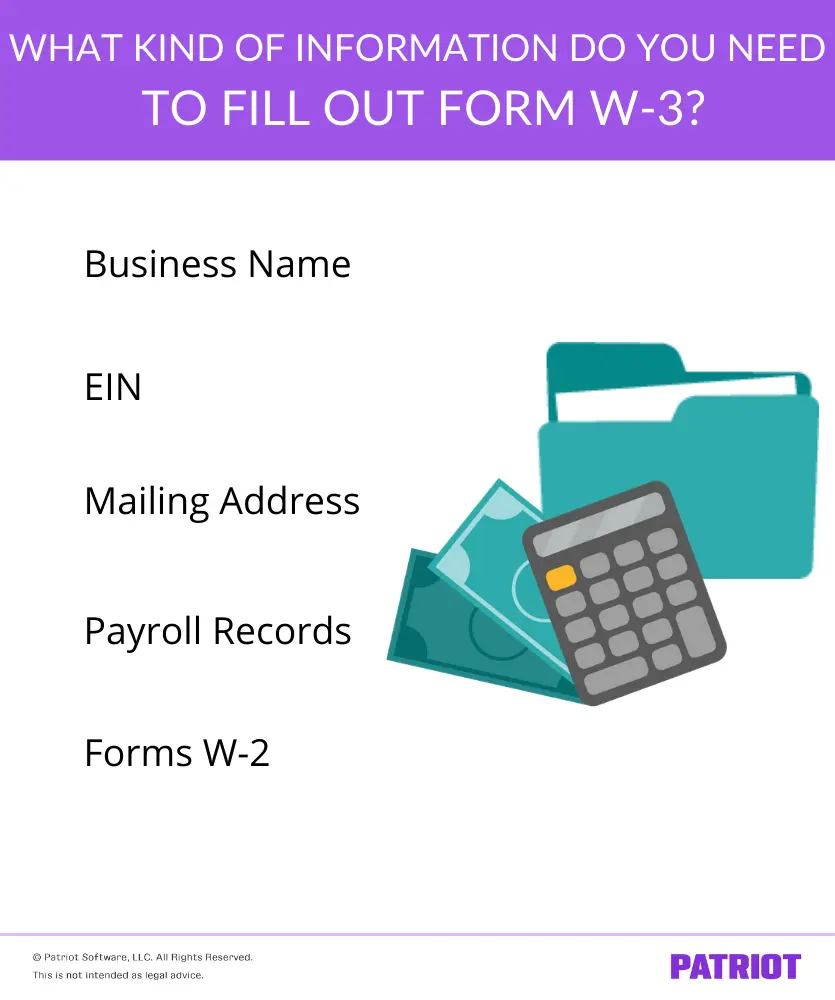
For every employer in the United States, navigating the intricate landscape of payroll compliance is an annual imperative, culminating in the crucial task of reporting employee wages and withheld taxes to federal agencies. While Form W-2, the Wage and Tax Statement, is widely recognized as the document employees receive for their individual tax filings, its equally vital counterpart, Form W-3, often operates behind the scenes, serving as the critical transmittal document that aggregates and summarizes an entire year’s worth of payroll data for submission to the Social Security Administration (SSA). This comprehensive guide delves into the definition, purpose, requirements, and broader implications of Form W-3, underscoring its pivotal role in the nation’s tax and social security infrastructure.
The Cornerstone of Wage Reporting: Understanding Form W-3
Form W-3, officially titled "Transmittal of Wage and Tax Statements," is a summary form that employers are mandated to complete and submit to the Social Security Administration (SSA) alongside all corresponding Forms W-2. It acts as a master document, consolidating the total wages paid, federal income tax withheld, Social Security tax withheld, and Medicare tax withheld for all employees within a given tax year. Essentially, if an employer issues one or more Forms W-2, a Form W-3 must accompany them, serving as a cover sheet and an aggregated reconciliation of the reported data.
The necessity of Form W-3 stems from the federal government’s need for a consolidated overview of employer reporting. The SSA, the primary recipient of Form W-3 and the associated W-2s, uses this information to update individual employees’ earnings records, which are fundamental for determining future Social Security benefits and Medicare eligibility. Subsequently, the SSA transmits this data to the Internal Revenue Service (IRS), enabling the IRS to cross-verify the accuracy of employers’ quarterly tax payments (Form 941 or similar) and employees’ individual income tax returns. Without the W-3, the sheer volume of individual W-2 forms would be administratively challenging to reconcile and verify at an aggregate level, making it an indispensable component of the annual reporting cycle.
A Symbiotic Relationship: W-2 and W-3 in Tandem
The relationship between Form W-2 and Form W-3 is symbiotic and non-negotiable. Form W-2 details an individual employee’s annual wages and taxes, with multiple copies distributed to the employee (Copy B, C), the SSA (Copy A), and state/local tax agencies (Copy 1, 2). In contrast, Form W-3 is a singular document, and only one copy is prepared and submitted directly to the SSA, specifically with Copy A of all Forms W-2. Employers are also required to retain a copy of the W-3, along with Copy D of the W-2s, for their records, typically for a period of at least four years.
This structured submission process ensures a clear audit trail and facilitates efficient data processing. The W-3’s aggregate totals must precisely match the sum of the corresponding boxes on all accompanying W-2s. For instance, the total federal wages reported on line 1 of the W-3 must equal the sum of all amounts reported in box 1 (Wages, tips, other compensation) on every W-2 filed by that employer for the year. This reconciliation mechanism is a critical check against errors and discrepancies, serving as a safeguard for both employers and the federal government.
The Annual Reporting Cycle: Deadlines and Compliance
The annual wage and tax reporting cycle culminates in the submission of Forms W-2 and W-3, with a firm deadline of January 31st of the year following the reporting year. For example, Forms W-2 and W-3 for the 2023 tax year were due by January 31, 2024. Should this date fall on a weekend or a legal holiday, the deadline is automatically shifted to the next business day. This deadline applies uniformly to both paper and electronic filings, emphasizing the importance of timely preparation.
The Social Security Administration strongly encourages employers to file electronically, citing increased accuracy, efficiency, and security benefits. Electronic filing through the SSA’s Business Services Online (BSO) portal significantly reduces processing times and minimizes the potential for errors associated with manual data entry. While paper filing remains an option, particularly for smaller employers with fewer employees, the SSA’s preference for e-filing aligns with broader governmental efforts to modernize administrative processes and enhance data integrity. Employers filing 250 or more Forms W-2 are typically mandated to file electronically, underscoring the shift towards digital submission.
Beyond the Basics: Information Required for Accurate Submission
Accurate completion of Form W-3 necessitates a meticulous approach, drawing information from various payroll and business records. Key data points required include:
- Employer Information: This encompasses the company’s legal name, trade name (if different), complete mailing address, and the Federal Employer Identification Number (FEIN or EIN). The FEIN is the unique nine-digit number assigned by the IRS, serving as the employer’s tax identification.
- Contact Information: Name, title, telephone number, fax number, and email address of a designated contact person within the company.
- Establishment Number: If applicable, for businesses with multiple locations.
- Type of Payer: Employers must indicate the type of payer they are (e.g., "Regular 941 employer," "Military," "Household employer").
- Aggregated Wage and Tax Data: This is the core of the W-3, summarizing the totals from all W-2s:
- Total wages, tips, and other compensation (Box 1)
- Total federal income tax withheld (Box 2)
- Total Social Security wages and tax withheld (Boxes 3 and 4)
- Total Medicare wages and tax withheld (Boxes 5 and 6)
- Total Social Security tips (Box 7)
- Total allocated tips (Box 8)
- Total dependent care benefits (Box 10)
- Total nonqualified plans (Box 11)
- Total deferred compensation (Box 12)
- Total statutory employee wages (Box 13)
- Total other compensation (Box 14)
- Number of Forms W-2 Transmitted: A simple count of the W-2 forms being submitted with the W-3.
To ensure accuracy, payroll experts often advise employers to first finalize all individual W-2 forms, then cross-reference these against internal payroll records, such as payroll registers and year-to-date summaries. This rigorous verification process helps to catch discrepancies before the W-3 is completed, thereby mitigating the risk of errors that could trigger IRS inquiries or penalties.
Navigating the Form: A Box-by-Box Overview

While the original article provides a literal list of boxes, a broader, more informative journalistic approach categorizes the types of information requested on Form W-3. The form is logically divided into sections:
- Payer Information (Boxes a-h): This initial section captures the foundational identification details of the employer, including the EIN, legal name, address, and type of employer (e.g., indicating if it’s a "941 employer" for quarterly tax filings, or if it pertains to agriculture, household employees, or third-party sick pay). This classification is crucial for the SSA and IRS to correctly categorize and process the submitted data.
- Aggregated Wage and Tax Data (Boxes 1-19): This is the heart of the Form W-3, where the grand totals from all individual W-2s are meticulously summarized. Each box corresponds directly to a specific wage or tax category found on Form W-2. For example, Box 1 on Form W-3 shows the sum of all "Wages, tips, other compensation" reported on Box 1 of every W-2. Similarly, Box 2 aggregates all "Federal income tax withheld." This section also includes totals for Social Security wages and tax, Medicare wages and tax, allocated tips, dependent care benefits, and other deferred compensation, providing a comprehensive financial snapshot of the employer’s annual payroll liabilities.
- Control Information: Boxes h and g, for instance, allow for control numbers to be entered, which can be useful for internal tracking, especially for large organizations or payroll service providers managing numerous client submissions.
- Employer Contact Information: Located at the bottom of the form, this section ensures that the SSA has a point of contact should any questions or discrepancies arise during processing. It typically includes the contact person’s name, title, telephone number, and email address.
This structured presentation on the form facilitates systematic data entry and verification, ensuring that all necessary aggregated financial information is clearly presented for federal agencies.
The Critical Role of Accuracy: Preventing Errors and Ensuring Integrity
The accuracy of Form W-3 is paramount. Errors can lead to significant administrative burdens, potential penalties, and disruptions to both employer and employee financial records. The SSA and IRS rely on the W-3 to reconcile employers’ quarterly tax payments (reported on Forms 941, 943, or 944) with the annual wage and tax statements. Discrepancies between the W-3 totals and the quarterly filings, or between the W-3 and the sum of the W-2s, will inevitably trigger investigations.
Common errors include miscalculations of aggregate totals, incorrect employer identification information, or failure to include all W-2s in the count. To mitigate these risks, payroll professionals and government agencies alike emphasize robust internal controls and thorough reconciliation procedures. Many businesses leverage payroll software solutions, like Patriot Software, which can automate the generation of W-2s and W-3s, significantly reducing the likelihood of manual errors.
Should an error be discovered on a previously filed Form W-3, employers must utilize Form W-3c, "Transmittal of Corrected Wage and Tax Statements," to rectify the mistake. This correction form is used in conjunction with Form W-2c, "Corrected Wage and Tax Statement," if individual W-2s also require amendment. The process for correcting errors is as crucial as the initial filing, ensuring that employee earnings records and tax liabilities are accurately reflected over time. The IRS imposes penalties for late filing, incorrect information, or failure to file, which can range from minor fees to substantial fines, depending on the severity and timeliness of the correction.
The Broader Economic and Administrative Impact
The proper filing of Form W-3 extends far beyond mere compliance; it forms a critical pillar of the nation’s economic and social infrastructure.
- For the Federal Government: Form W-3 facilitates the efficient collection of trillions of dollars in federal income, Social Security, and Medicare taxes annually. It enables the SSA to maintain accurate earnings records for millions of Americans, which directly impacts their future retirement, disability, and survivor benefits. For the IRS, the W-3 is a vital tool for verifying employer tax compliance, identifying potential underreporting, and ensuring the integrity of the tax system.
- For Employers: While representing a compliance burden, accurate W-3 filing protects employers from penalties, audits, and legal complications. It reflects sound financial management and adherence to federal regulations. Robust payroll systems and diligent year-end procedures are essential for minimizing risks.
- For Employees: The W-3, by ensuring the accurate transmittal of W-2 data, underpins the accuracy of employees’ individual tax filings and their Social Security earnings history. Any inaccuracies could lead to delays in tax refunds, incorrect Social Security benefit calculations, or even future audits for the employee.
As IRS Commissioner, Charles P. Rettig (during his tenure), often emphasized the importance of accurate information reporting for the smooth functioning of the tax system, highlighting how forms like W-3 are integral to maintaining taxpayer confidence and compliance. Similarly, SSA officials frequently underscore the critical link between accurate W-2/W-3 data and the long-term solvency and fairness of Social Security and Medicare programs.
Expert Perspectives and Best Practices
Payroll experts consistently advise employers to prioritize year-round payroll accuracy rather than scrambling at year-end. "The key to a smooth W-2 and W-3 filing season is meticulous record-keeping throughout the year," states Jane Doe, a certified payroll professional and small business advocate. "Every pay period, employers should be verifying wage and tax calculations. This proactive approach significantly reduces the chance of errors when compiling the annual summaries."
Furthermore, experts recommend:
- Leveraging Technology: Utilizing reputable payroll software or engaging a full-service payroll provider can automate calculations, generate forms, and often handle electronic filing, ensuring compliance with deadlines and format requirements.
- Regular Reconciliation: Periodically comparing payroll records with quarterly tax filings (Form 941) helps identify discrepancies early.
- Employee Verification: Encouraging employees to review their W-2s promptly upon receipt allows for early detection of personal data errors (like names or addresses) or wage discrepancies.
- Staying Informed: Keeping abreast of changes in tax laws and reporting requirements is crucial, as federal guidelines can evolve annually.
Technological Advancements and Future Outlook
The trajectory of wage and tax reporting continues to lean heavily towards digitalization. The SSA’s encouragement, and in some cases mandate, for electronic filing of W-2s and W-3s reflects a broader governmental strategy to enhance data security, reduce paper waste, and streamline processing. This digital transformation is expected to continue, potentially leading to fewer instances of paper filing in the future and an increased reliance on secure online portals for all reporting. For employers, this means investing in compatible payroll systems or partnering with service providers equipped to handle electronic submissions seamlessly.
In conclusion, Form W-3, Transmittal of Wage and Tax Statements, is far more than a simple cover sheet. It is a fundamental component of the annual wage and tax reporting framework in the United States, playing an indispensable role in ensuring the accuracy of federal tax collections, the integrity of Social Security earnings records, and overall employer compliance. Understanding its purpose, adhering to deadlines, and maintaining rigorous accuracy are not merely administrative tasks but essential contributions to the functioning of the nation’s financial and social safety nets.