Nila Kartika Wati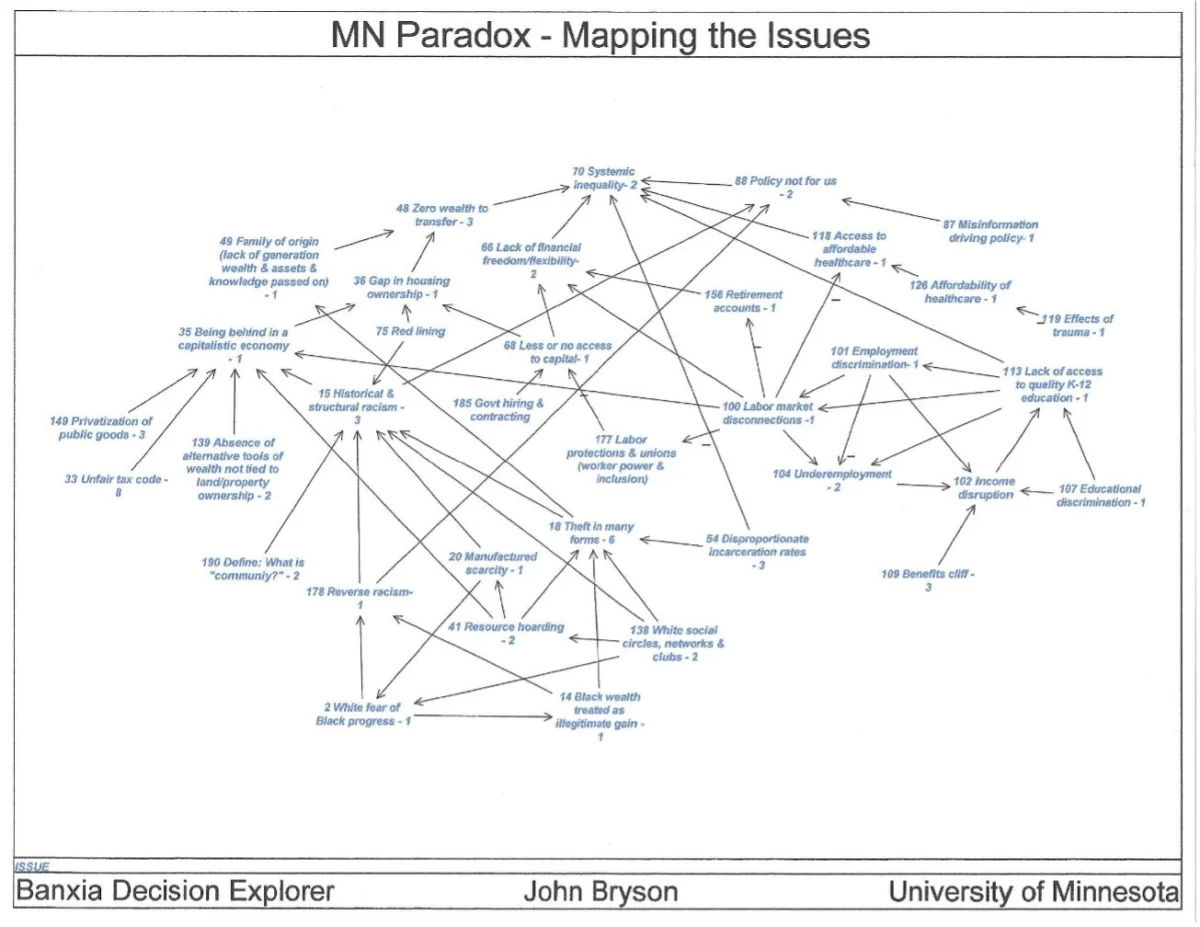
The methodology, central to the MN Paradox project, emphasizes that the tools used to diagnose these issues are not unique to Minnesota but are established strategic management practices. These methods—issue mapping and stakeholder mapping—are designed to resist the common impulse to jump to solutions before a comprehensive picture of the system is established. By requiring a working group to engage in multiple facilitated sessions, the process uncovers the "hub issues" where leverage is most concentrated and identifies the coalitions necessary to drive change.
The Diagnostic Framework: Issue Mapping vs. Stakeholder Mapping
The MN Paradox project operates on the principle that solving complex social problems requires two distinct diagnostic exercises. The first, issue mapping, seeks to answer what is producing the specific outcome the community is trying to change. This involves identifying the causal links between various social, economic, and political factors. For instance, in the context of the racial wealth gap, an issue map does not merely list "poverty" as a problem; it traces how factors like "zero wealth to transfer," "discriminatory lending practices," and "educational funding disparities" interact to create a self-reinforcing cycle of inequality.

The second exercise, stakeholder mapping, shifts the focus from the problem to the people and institutions involved. It asks who possesses the power, the interest, or the direct reason to act on the findings of the issue map. According to the project’s technical documentation, skipping either of these steps results in an incomplete diagnosis. A group that understands the system but lacks a stakeholder map will find themselves with a theoretical understanding they cannot move. Conversely, a group that convenes a coalition without an issue map may have the power to act but no clear direction on where to lead.
Chronology of the MN Paradox Mapping Project
The development of the MN Paradox mapping framework followed a structured timeline that prioritized deliberation over speed. The process began with the formation of a working group comprising public policy experts, nonprofit leaders, and community advocates.
In the spring of 2026, the project reached a critical phase with a series of intensive working sessions. On April 30, 2026, a pivotal session was held at the NorthPoint Conference Center in Minneapolis. During this meeting, participants focused specifically on analyzing the stakeholders involved with or affected by racial income and asset inequality. This session utilized the Banxia Decision Explorer software, a tool developed by John Bryson at the University of Minnesota, to visualize the complex web of causal connections identified by participants.
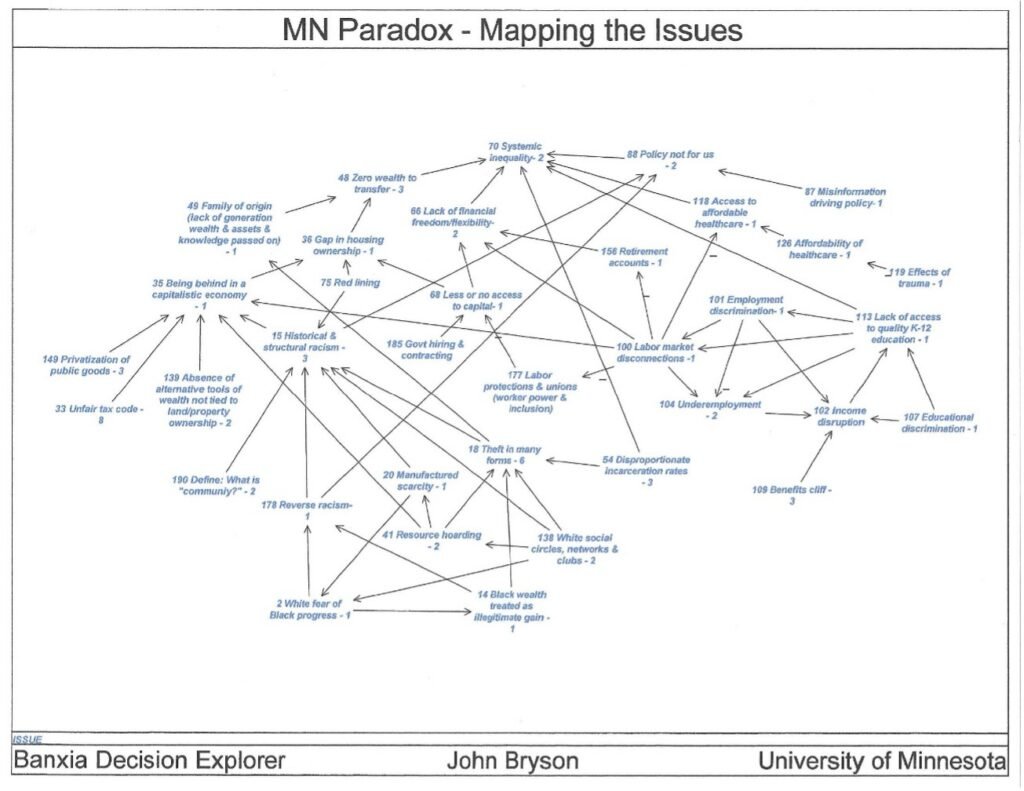
Following these sessions, the team developed a "Technical Companion" to the MN Paradox report. This document detailed the "hub issues"—nodes in the map with the highest number of connections—which represent the points of greatest leverage for systemic change. By the summer of 2026, the project had transitioned from data collection to coalition building, using the stakeholder maps to identify "unlikely coalitions" that could unite around shared goals.
Supporting Data: The Magnitude of the Minnesota Paradox
The urgency of this mapping project is underscored by stark economic data. While Minnesota frequently ranks in the top ten states for overall quality of life, business climate, and education, these rankings mask some of the widest racial disparities in the United States.
Data from the U.S. Census Bureau and the Federal Reserve Bank of Minneapolis highlight the scale of the challenge. In Minnesota, the homeownership rate for white households is approximately 77 percent, while for Black households, it is nearly 25 percent—one of the largest gaps in the nation. Furthermore, the median income for Black households in the state is roughly half that of white households. These figures are not merely symptoms of individual choices but are the results of historical and systemic factors, such as the racial covenants that once restricted housing in Minneapolis and St. Paul, and the disparate impact of highway construction on Black neighborhoods like Rondo.
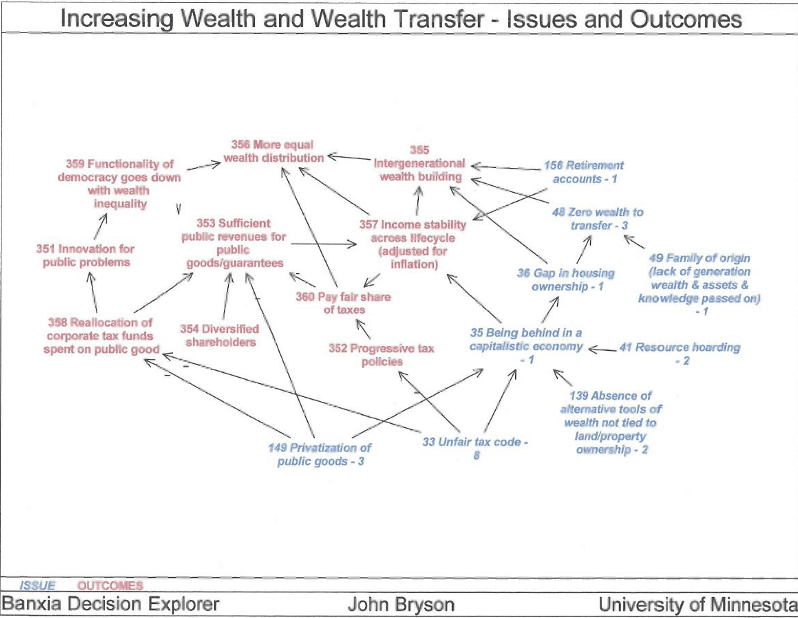
The issue maps generated by the MN Paradox project specifically highlight "zero wealth to transfer" as a primary hub issue. In a capitalist economy, the ability to transfer intergenerational wealth is a significant driver of stability and opportunity. When a segment of the population is systematically prevented from accumulating assets—through redlining, employment discrimination, or unequal access to capital—the "wealth gap" becomes a structural feature rather than a temporary condition.
Analyzing Stakeholder Dynamics and Power Bases
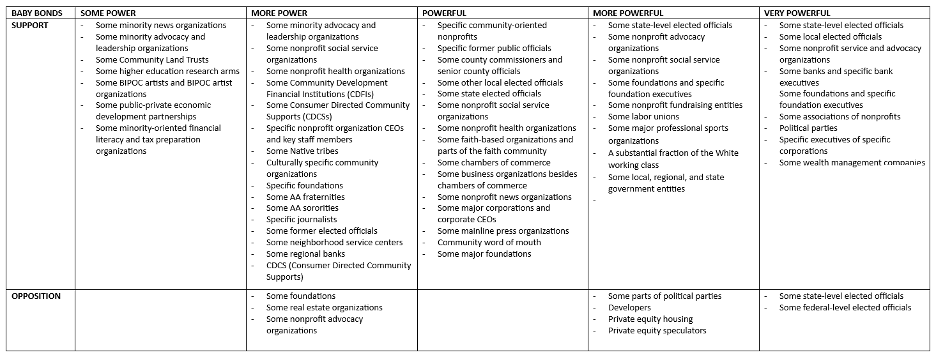
A core component of the MN Paradox methodology is the "support-versus-opposition" grid. This tool allows the working group to plot stakeholders based on their level of influence and their stance on specific policy proposals.
One case study utilized in the project involved the implementation of "baby bonds"—publicly funded trust accounts for children. By mapping the stakeholders for this policy, the group could see exactly where the opposition lay and which influential actors were currently neutral but could be moved to support the initiative.

The project goes deeper than simple grids by utilizing three additional advanced techniques:
- Stakeholder Influence Diagrams: These maps show how different stakeholders affect one another, revealing the indirect paths of influence that can be used to shift an organization’s position.
- Bases-of-Power and Directions-of-Interest Diagrams: For each key stakeholder, the group spells out where that specific actor’s leverage comes from (e.g., regulatory authority, grassroots mobilization, or financial resources) and what incentives would be required to align their interests with the project’s goals.
- Finding the Common Good: This involves searching across diverse individual interests to find a handful of shared goals that can unite a broad coalition, even among groups that traditionally disagree.
Expert Perspectives and Leadership
The MN Paradox project is led by a diverse team of experts with backgrounds in public policy, strategic management, and equity-centered design. Gary L. Cunningham, Senior Advisor at the Institute on Race, Power, and Political Economy at The New School, brings four decades of experience in nonprofit leadership and public policy. Cunningham previously led the African American Men Project at Hennepin County, which served as an early application of these stakeholder mapping methodologies.
He is joined by John M. Bryson and Barbara C. Crosby, Professors Emeriti at the University of Minnesota’s Hubert H. Humphrey School of Public Affairs. Their work on "Leadership for the Common Good" provides the theoretical foundation for the mapping tools used in the project. Other key contributors include Leah Goldstein Moses, a research and evaluation expert, and Jessica Thompson-Dixon, a design strategist at the African American Leadership Forum, who ensures that equity-centered design principles are integrated into the strategic framework.
Broader Impact and the Scalability of System Mapping
The implications of the MN Paradox project extend far beyond the borders of Minnesota. The authors of the study argue that any region facing entrenched social or economic challenges can utilize these methods. The primary requirement is not a massive budget or a large research department, but rather the "discipline of patience."
"The harder resource to secure is patience," the researchers noted, "the discipline to avoid shortcutting straight to a plan, since the method only works if you resist that pull long enough for the map to tell you something you did not already know."
By resisting the urge to implement quick-fix programs, regions can instead develop "purpose-driven coalitions." This approach acknowledges that single-issue programs, however well-designed, are often insufficient to move the needle on systemic problems like the racial wealth gap. Instead, the strategy must address the "hub issues" together, ensuring that interventions in education, housing, and finance are coordinated and mutually reinforcing.

Conclusion: From Diagnosis to Action
A region that undergoes both issue and stakeholder mapping may not always be comfortable with the findings. The MN Paradox project revealed that many existing efforts were focused on symptoms rather than causes, and that some influential stakeholders were inadvertently sustaining the very disparities they claimed to oppose.
However, the value of the map lies in its honesty. For the first time, leaders in Minnesota have a clear diagnostic tool that identifies where the power lies and where the leverage is greatest. This clarity is the prerequisite for a real strategy. As the project moves forward, the focus remains on leveraging these maps to build the broad-based coalitions necessary to finally close the racial wealth gap and move "Beyond Lake Wobegon" into a future of shared prosperity.
The methodology serves as a reminder that in the face of complex, multi-generational problems, the most effective tool is not necessarily the newest technology, but a rigorous, collaborative process that forces a community to see itself as a system. This diagnostic approach provides a roadmap for other American cities and states to follow, offering a path from fragmented advocacy to unified, systemic change.