Lana Rhoades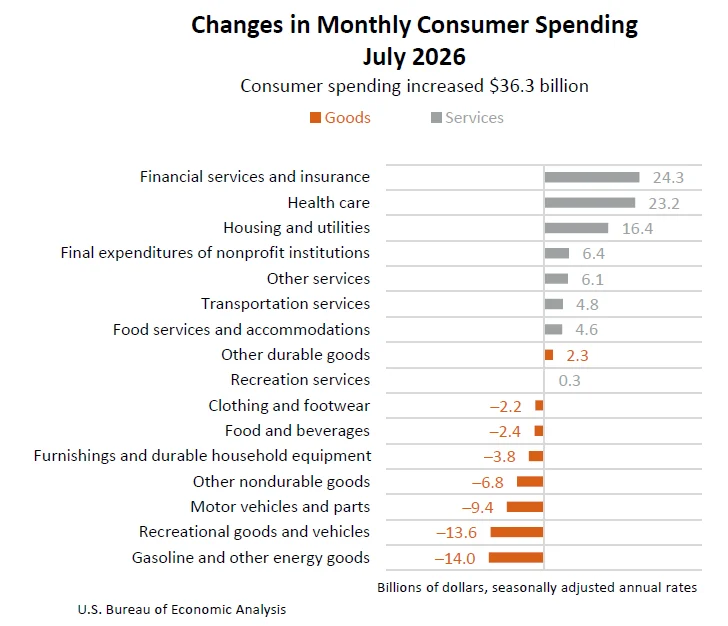
In July, the United States witnessed a notable uptick in personal income, as indicated by the latest data released by the U.S. Bureau of Economic Analysis (BEA). Personal income, a key indicator of the nation’s economic health, rose by $115.1 billion, representing a 0.4 percent increase on a monthly basis. This growth signifies a steady, albeit moderate, expansion in the earnings of American households.
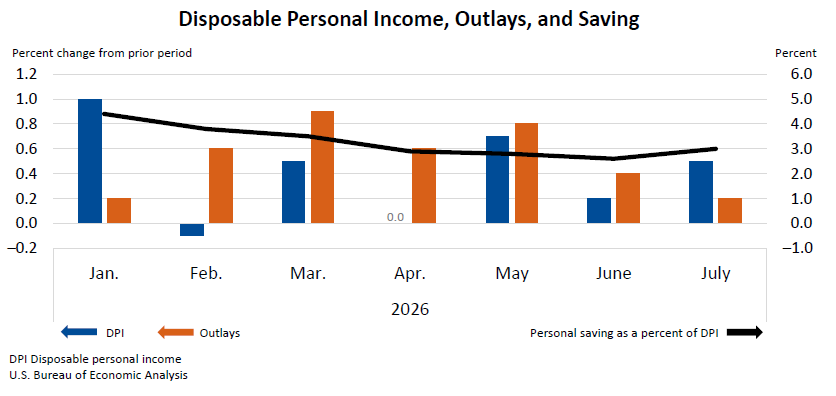
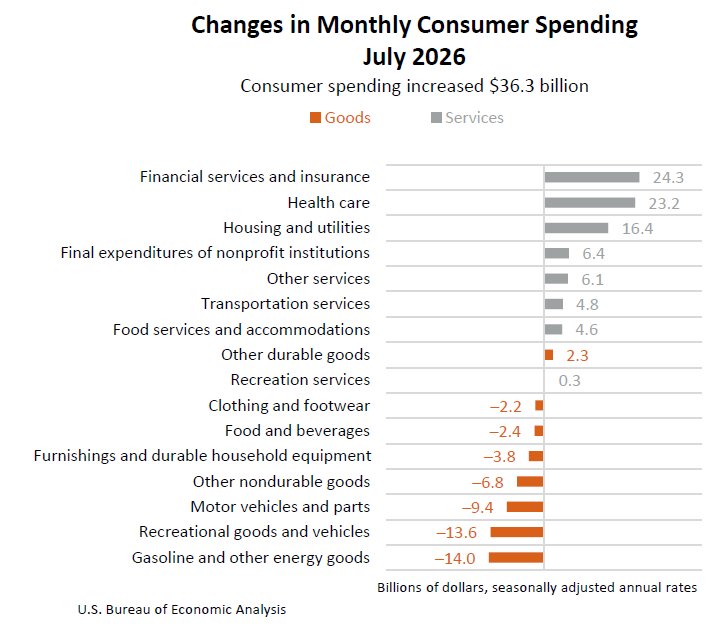
Delving deeper into the components of personal income, disposable personal income (DPI), which represents income after taxes, experienced a more robust surge of $125.9 billion, or 0.5 percent. This suggests that a larger portion of the income generated is available for consumers to spend or save. Concurrently, personal consumption expenditures (PCE), a measure of consumer spending on goods and services, also saw an increase, albeit at a more subdued pace, rising by $36.3 billion, or 0.2 percent. This differential growth between disposable income and consumption hints at a potential increase in personal savings during the month.
The overall increase in current-dollar personal income in July was primarily fueled by gains in several key areas. Compensation, which includes wages and salaries, demonstrated a healthy expansion. This was complemented by a significant rise in government social benefits, likely reflecting ongoing support programs or updated benefit disbursements. Additionally, personal income receipts on assets, such as dividends and interest, also contributed positively to the overall income growth, suggesting a potentially favorable environment for investments.
Consumer Spending Dynamics: A Mixed Picture
The landscape of consumer spending in July presented a more nuanced picture. While total personal consumption expenditures (PCE) increased by $36.3 billion, this growth was primarily driven by a substantial rise in spending on services. This segment of consumer outlays surged by $86.2 billion, indicating a continued demand for services such as healthcare, entertainment, and travel. However, this positive momentum was significantly tempered by a notable decrease in spending on goods, which fell by $49.9 billion. This decline in goods consumption suggests a potential recalibration in consumer purchasing habits, perhaps shifting away from discretionary items or facing headwinds from inflation or supply chain adjustments in specific sectors.
When accounting for inflation, the picture for consumer spending becomes even more restrained. Real personal consumption expenditures (PCE), which adjust for price changes, saw a minimal increase of $1.3 billion, translating to a growth rate of less than 0.1 percent for the month. This indicates that while consumers are spending more in nominal terms, the actual volume of goods and services purchased is not growing substantially, a trend that could be influenced by persistent inflationary pressures.
Inflationary Trends and Personal Savings
The persistent concern of inflation continued to be a focal point in July, as evidenced by the Personal Consumption Expenditures (PCE) price index. The overall PCE price index rose by 0.2 percent from the previous month. This rate of increase was mirrored in the core PCE price index, which excludes volatile food and energy prices, also climbing by 0.2 percent. This indicates that inflationary pressures are broad-based across the economy, affecting both essential and discretionary spending categories.
On a year-over-year basis, the PCE price index registered a 3.7 percent increase in July. The core PCE price index, which provides a clearer view of underlying inflation trends, saw a 3.3 percent rise compared to the same month in the previous year. While these figures suggest a potential moderation from peak inflation rates seen in prior periods, they still indicate an elevated level of price increases that continue to impact household purchasing power.
In light of these economic dynamics, personal saving habits in July also warrant attention. Personal outlays, which encompass PCE, personal interest payments, and personal current transfer payments, increased by $36.6 billion. This figure is closely aligned with the growth in PCE, reinforcing the idea that a significant portion of disposable income is being directed towards consumption. Consequently, personal saving for the month was recorded at $712.0 billion. The personal saving rate, calculated as personal saving as a percentage of disposable personal income, stood at a modest 3.0 percent. This rate suggests that while consumers are saving, the proportion of their disposable income being set aside is relatively low, a trend that could have implications for future consumer spending capacity and overall economic growth.
Contributing Factors to Income Growth
The BEA’s report highlighted several key drivers behind the rise in current-dollar personal income for July. Beyond the general increases in compensation, government social benefits played a particularly crucial role. This could encompass a range of government support programs, such as unemployment benefits, social security adjustments, or other forms of assistance that directly augment household incomes. The strength in personal income receipts on assets also signals a potentially positive environment for those with investments, benefiting from dividend payouts or interest earnings. This diversified growth in income streams suggests a relatively stable underlying economic environment, even as consumer spending shows more cautious growth.
Context and Historical Perspective
The data released today offers a snapshot of the U.S. economy in July, following a period of significant economic volatility. In the preceding months, personal income and consumer spending have been influenced by a complex interplay of factors, including pandemic-related stimulus measures, supply chain disruptions, and rising inflation. While stimulus payments have largely receded, the economy has been navigating a transition towards more organic growth patterns. The current figures suggest a continued, albeit gradual, recovery in income levels, while consumer spending adapts to evolving economic conditions.
The BEA’s release also includes a notice regarding the upcoming Annual Update of the National and Regional Economic Accounts, scheduled for September 30, 2026. This comprehensive update will incorporate revised data for GDP, gross domestic income, and other key economic indicators, providing a more refined understanding of the nation’s economic performance. The concurrent release of national, industry, and regional data aims to enhance the accuracy and comparability of BEA statistics.
Analysis and Implications
The modest increase in personal income, coupled with a more significant rise in disposable income, suggests that American households are experiencing an improvement in their financial standing. The strong growth in services spending indicates resilience in this sector, potentially reflecting a sustained consumer preference for experiences and essential services. However, the decline in spending on goods raises questions about the future trajectory of durable goods consumption and manufacturing output.
The personal saving rate of 3.0 percent, while indicating some level of saving, remains at a relatively low point historically. This could imply that households are spending a larger portion of their income to keep pace with rising prices, potentially limiting their capacity for future discretionary spending or significant wealth accumulation. The persistence of inflation, even at a moderated pace, continues to exert pressure on household budgets, influencing saving and spending decisions.
From a policy perspective, the data underscores the ongoing challenge of balancing economic growth with inflation control. While income growth is a positive sign, the impact of inflation on purchasing power remains a critical concern for policymakers and consumers alike. The BEA’s detailed breakdowns of income and spending provide valuable insights for economic analysis and forecasting, aiding in the development of informed economic strategies.
The BEA’s meticulous data collection and analysis are crucial for understanding the intricate workings of the U.S. economy. The release of monthly personal income and outlays data serves as a vital barometer, offering timely information on consumer behavior and financial well-being. As the economy continues to evolve, these statistics will remain essential for tracking progress, identifying trends, and informing policy decisions aimed at fostering sustainable and inclusive economic growth. The next release, covering August 2026 data, is anticipated on September 30, 2026, providing further updates on these key economic indicators.