Candice Horbacz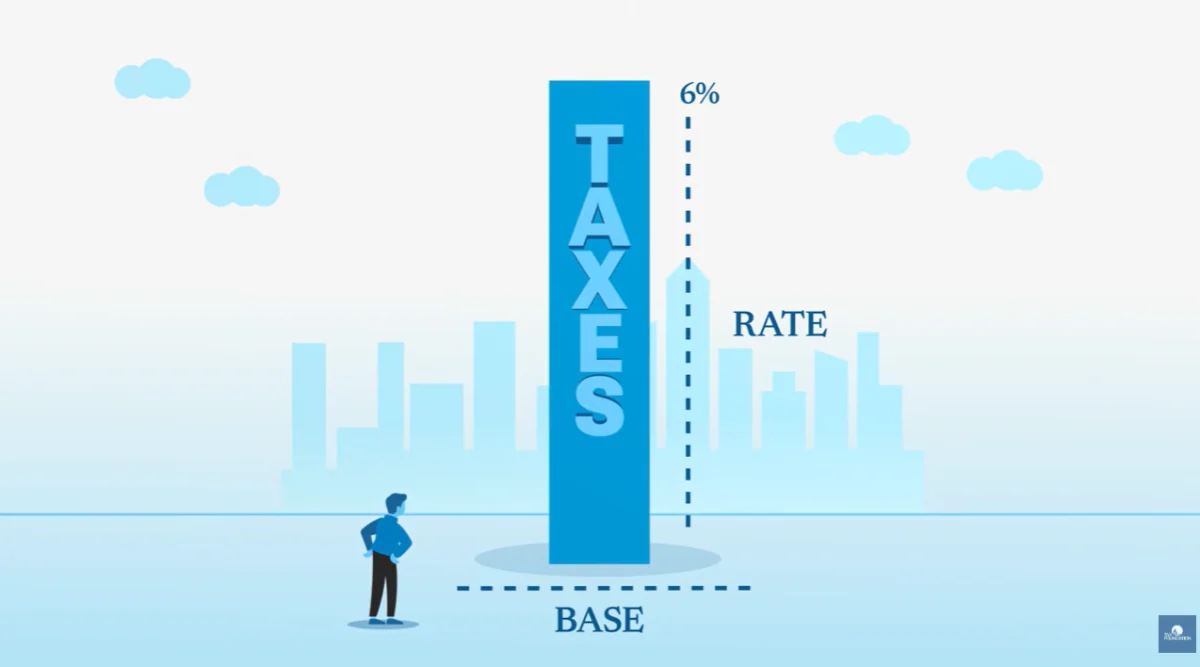
When the question, "How high are my taxes?" arises, public discourse almost invariably fixates on the tax rate—the percentage of income, property value, or transaction cost levied by the government. Yet, this singular focus often overlooks an equally, if not more, critical component of the tax system: the tax base. The tax base defines what gets taxed, encompassing the specific incomes, properties, goods, or services subject to taxation. While the rate dictates the intensity of the levy, the base determines its breadth and depth, acting as a foundational determinant of a tax system’s efficiency, equity, and overall economic impact. Understanding the interplay between these two elements is paramount for policymakers, businesses, and individuals alike, as an improperly designed tax base can introduce significant economic distortions, steering decisions away from optimal outcomes and ultimately hindering economic growth.
The Foundational Concepts: Rate, Base, and Revenue
At its core, a tax system aims to generate revenue to fund public services. This revenue is the product of the tax rate multiplied by the tax base. For instance, a 5% sales tax (rate) applied to $100 worth of taxable goods (base) yields $5 in revenue. The simplicity of this equation belies the profound complexity inherent in defining the tax base. Economists generally advocate for a broad tax base paired with a low tax rate. This approach, often termed "broad-based, low-rate" taxation, is lauded for its neutrality, stability, and minimal distortionary effects on economic behavior.
Conversely, a narrow tax base necessitates a higher tax rate to achieve the same revenue target. This can make the few items or activities that are taxed disproportionately expensive, creating incentives for individuals and businesses to alter their behavior to avoid or minimize these taxes. Such alterations—whether it’s saving less, investing differently, or making purchasing decisions based on tax implications rather than economic fundamentals—are known as tax distortions. These distortions represent a misallocation of resources, leading to what economists call "deadweight loss," a net reduction in overall economic welfare.
The Economic Harm of Tax Distortions
Tax distortions manifest in various forms, subtly influencing everyday economic choices. For example, if certain types of investment income are taxed at a high rate while others are exempt, individuals might choose less productive, tax-advantaged investments over more productive, fully taxed ones. Similarly, a business might delay hiring new employees or expanding operations if specific business activities or inputs are subject to high, non-neutral taxes. These decisions, driven by tax considerations rather than market efficiencies, result in a suboptimal allocation of capital and labor, dampening innovation, productivity, and overall economic growth.
The magnitude of economic harm from distortions is not easily quantified but is widely acknowledged by fiscal policy experts. Studies by organizations like the Tax Foundation and the Organisation for Economic Co-operation and Development (OECD) consistently highlight that tax systems designed with numerous exemptions and deductions often carry higher economic costs per dollar of revenue collected compared to those with broader bases and lower rates. These costs are borne by individuals through reduced opportunities and lower living standards, and by businesses through increased compliance burdens and reduced competitiveness.
Sales Tax as a Primary Case Study: The Broad vs. Narrow Debate
The dynamics of the tax base are particularly evident in the realm of sales taxation, which serves as a significant revenue source for most U.S. states and many local governments. A sales tax base traditionally includes tangible consumer goods. However, over decades, many states have introduced a multitude of exemptions, significantly narrowing this base. Common exemptions include groceries, prescription drugs, residential utilities, and certain services. While some exemptions, like those for groceries, are often justified on equity grounds to mitigate the regressive impact of sales taxes on lower-income households, they invariably lead to a narrower base.
Consider the landscape of state sales taxes across the United States. While the average combined state and local sales tax rate hovers around 7.5%, the effective tax burden can vary wildly depending on what items are included in the base. States like New Mexico and South Dakota, for instance, are known for having relatively broad sales tax bases that include many services, allowing them to maintain moderate rates. In contrast, states like Pennsylvania and Massachusetts exempt a wide array of goods and services, including most food items and clothing, which often necessitates higher rates on the remaining taxable items to meet revenue needs.
The ongoing shift in modern economies from goods consumption to services consumption further exacerbates the issue of a narrow sales tax base. As services like streaming subscriptions, digital downloads, personal care services (haircuts, massages), and professional services (legal, accounting) become a larger portion of household spending, many states find their sales tax revenue growth lagging behind economic expansion because these services are typically not included in the traditional sales tax base. This structural challenge forces states to either repeatedly raise rates on an shrinking base of goods or explore politically challenging reforms to broaden the base to include services.
Beyond Sales Tax: Base Considerations in Income and Property Taxation
The principle of the tax base extends equally to other major forms of taxation. In income taxation, the tax base is typically defined as an individual’s or corporation’s income, but this base is often narrowed by various deductions, exemptions, and credits. For example, deductions for mortgage interest, state and local taxes (SALT), and charitable contributions, while serving specific policy goals, reduce the taxable income base. Similarly, preferential tax treatment for certain types of income (e.g., capital gains versus ordinary income) also shapes the effective income tax base. A complex income tax code with numerous carve-outs can lead to significant economic distortions, encouraging tax planning over productive economic activity.
Property taxation, a cornerstone of local government finance, also grapples with base definition. The property tax base is generally the assessed value of real estate. However, exemptions for certain types of properties (e.g., agricultural land, properties owned by religious or non-profit organizations, or homestead exemptions for primary residences) narrow this base. When a significant portion of property value is exempt, the burden falls more heavily on the remaining taxable properties, potentially leading to higher property tax rates and disincentives for investment in taxable real estate.
The Economic Imperative: Why Broad Bases Foster Growth
A broad tax base, coupled with lower rates, serves several vital economic functions:
- Minimizing Economic Deadweight Loss: By taxing a wider range of activities or goods at a lower, more uniform rate, the incentive to alter behavior purely for tax reasons is diminished. This allows market forces to guide resource allocation, leading to greater efficiency and higher overall economic output.
- Fostering Neutrality and Fairness: A broad base treats similar economic activities more uniformly, promoting tax neutrality. This means that the tax system is less likely to favor one industry, type of consumption, or investment over another, creating a more level playing field. While exemptions are often introduced for perceived fairness (e.g., necessities), they can complicate the system and introduce unintended inequities.
- Enhancing Revenue Adequacy and Stability: A broad base provides a more stable and resilient revenue stream for governments. It diversifies the tax burden across a wider array of economic activities, making government finances less susceptible to fluctuations in specific sectors. During economic downturns, a broad base can cushion the blow to revenue collections more effectively than a narrow base reliant on a few taxable categories.
- Reducing Administrative and Compliance Costs: A simpler, broader tax base generally means fewer rules, exemptions, and special provisions. This reduces the complexity of tax codes, lowering administrative costs for tax authorities and compliance costs for businesses and individuals. Businesses spend countless hours navigating intricate tax regulations; simplifying the base can free up resources for more productive endeavors.
Policymaker Perspectives and Reform Efforts
The consensus among economists regarding the benefits of broad-based, low-rate tax systems is strong. Organizations like the Congressional Budget Office (CBO) and the International Monetary Fund (IMF) frequently recommend tax reforms that involve base broadening as a means to improve economic efficiency and fiscal sustainability. Policymakers, however, face significant political challenges when attempting to implement such reforms. Eliminating popular exemptions—whether for groceries, professional services, or specific business deductions—often encounters fierce opposition from affected industries, advocacy groups, and the public.
Historically, major tax reform efforts in the United States, such as the Tax Reform Act of 1986, aimed to broaden the income tax base while lowering rates. This act significantly reduced individual income tax brackets and eliminated many deductions and credits, demonstrating a commitment to the broad-based, low-rate principle. More recently, discussions around comprehensive tax reform at both federal and state levels often revolve around similar goals, balancing the economic benefits of base broadening with the political realities of maintaining public support. State legislatures, in particular, frequently debate proposals to extend sales taxes to services, driven by the need to stabilize revenue and adapt to modern consumption patterns. These debates are often contentious, pitting economic efficiency arguments against concerns over affordability and specific industry impacts.
The Quest for a Balanced Tax System: Equity vs. Efficiency
The debate over the tax base is often framed as a tension between efficiency and equity. Exemptions for necessities like groceries are typically implemented to make the tax system more progressive or less regressive, recognizing that lower-income households spend a larger proportion of their income on such items. While these exemptions may enhance perceived equity, they introduce distortions and necessitate higher rates on other goods or services.
A critical analytical challenge for policymakers is to determine whether the equity benefits of a particular exemption outweigh the efficiency costs. Some economists argue that direct spending programs (e.g., food assistance) are more efficient and transparent ways to address equity concerns than carving out exemptions within the tax code, which can complicate administration and distort economic signals. This perspective suggests that maintaining a broad tax base for efficiency and then using targeted social programs to address equity might be a more effective overall approach.
Global Trends and Comparative Approaches
Internationally, there’s a growing recognition of the importance of a broad tax base. Many European countries, for instance, apply Value Added Taxes (VATs), which are a form of consumption tax, to a much broader array of goods and services, often including professional services and utilities, though sometimes with reduced rates for essentials. This broader application allows these countries to generate substantial revenue with relatively lower standard rates compared to what would be required with a highly fragmented base. The global trend towards a service-based economy is pushing more jurisdictions to re-evaluate their tax bases, particularly for consumption taxes, to ensure their fiscal systems remain robust and responsive to evolving economic structures.
Conclusion: The Enduring Importance of Tax Base Design for Fiscal Health
The question of "How high are my taxes?" is fundamentally incomplete without considering "What, precisely, is being taxed?" The tax rate and the tax base are two sides of the same fiscal coin, inextricably linked in their impact on economic behavior, government revenue, and overall societal welfare. A tax system designed with a broad base and correspondingly lower rates is generally more efficient, neutral, and stable, fostering an environment conducive to economic growth and minimizing unintended distortions. While the political challenges of broadening a tax base are substantial, the economic imperative to do so remains a critical consideration for policymakers striving to build resilient and equitable fiscal foundations for the future. As economies continue to evolve, particularly with the rise of the service sector and digital goods, ongoing vigilance and thoughtful reform of the tax base will be essential to ensure tax systems remain relevant, efficient, and capable of funding the public services societies demand.