Candice Horbacz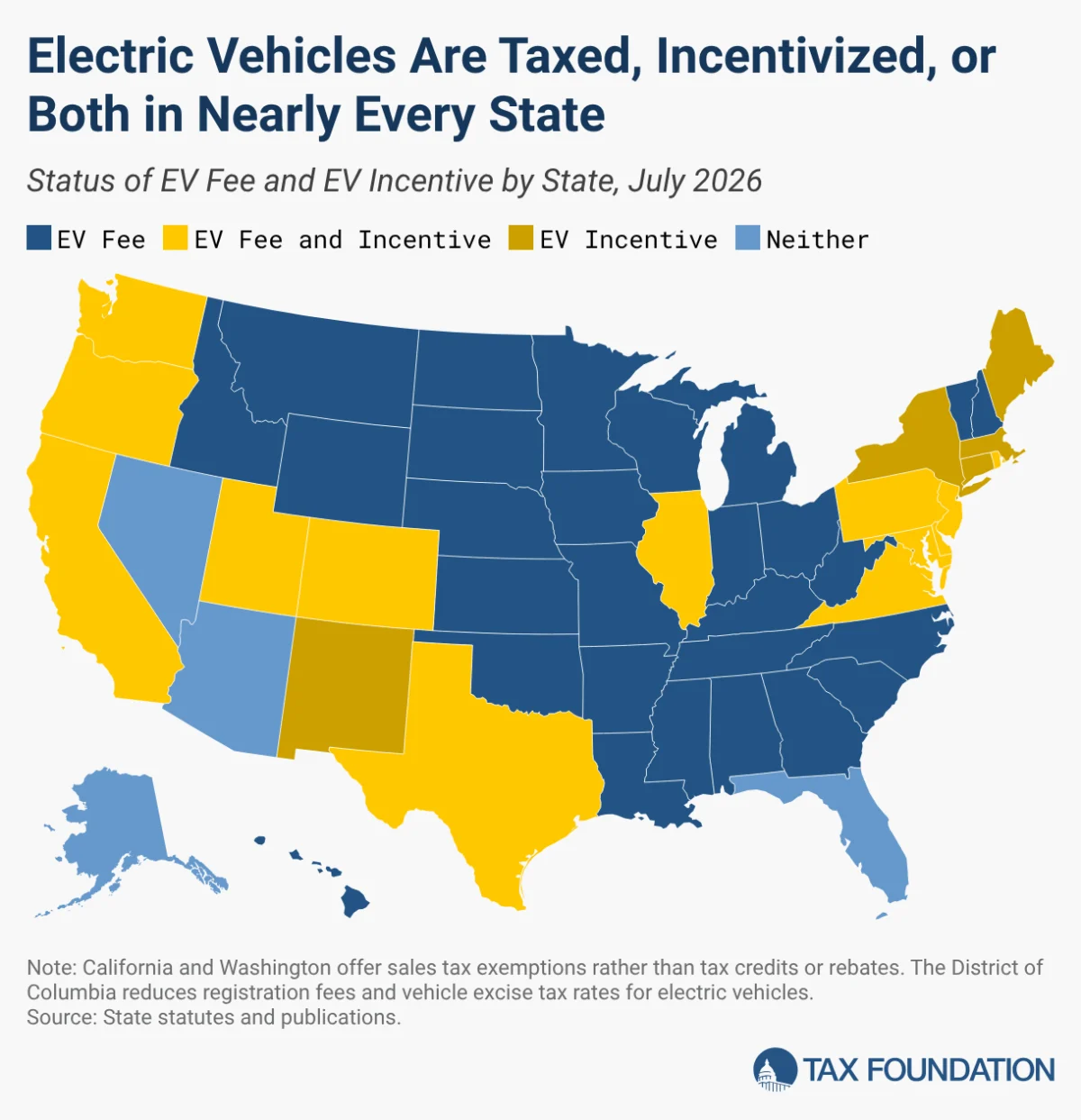
As the electric vehicle (EV) market continues its rapid expansion across the United States, state legislatures are grappling with the complex task of integrating these transformative technologies into existing fiscal and regulatory frameworks. A comprehensive review of policies as of July 2026 reveals a highly varied landscape, characterized by a patchwork of annual fees designed to compensate for declining gasoline tax revenues and diverse purchase incentives aimed at accelerating consumer adoption. This intricate web of state-specific regulations underscores a nationwide balancing act between funding critical infrastructure and fostering environmental sustainability, creating a dynamic and often inconsistent environment for EV owners and prospective buyers.
The Evolving Landscape of EV Taxation and Incentives
The transition to electric vehicles presents a significant fiscal challenge for states, many of which rely heavily on gasoline taxes to fund road construction and maintenance. As more drivers switch from internal combustion engine (ICE) vehicles to EVs, the traditional revenue stream from fuel sales diminishes, necessitating new mechanisms to ensure equitable contributions to infrastructure upkeep. This fundamental shift has led many states to introduce annual registration fees specifically for electric and plug-in hybrid electric vehicles (PHEVs), effectively creating a user-fee system for non-gasoline consumers of public roadways.
Concurrently, a substantial number of states continue to offer purchase incentives, reflecting a broader policy objective to reduce carbon emissions and promote clean transportation. These incentives, which range from direct rebates and tax credits to sales tax exemptions, are crucial in mitigating the often higher upfront cost of EVs compared to their gasoline-powered counterparts, thereby encouraging wider adoption. The interplay between these revenue-generating fees and market-stimulating incentives forms the core of state-level EV policy, illustrating a nuanced approach that seeks to both support the electric transition and maintain fiscal solvency.
Historically, the initial wave of EV policies largely focused on incentives to kickstart market growth, often without corresponding fees. However, as EV penetration increased, concerns about infrastructure funding grew, prompting a second phase where states began implementing or increasing annual fees. This chronological progression highlights a maturation of EV policy, moving from pure promotion to a more balanced approach that acknowledges the fiscal realities of maintaining public infrastructure in an electrified future.
A Patchwork of Fees: State-by-State Analysis
The data from July 2026 reveals a wide disparity in annual fees for electric vehicles and plug-in hybrids across the nation. Forty-one states currently levy some form of annual fee on EVs, with thirty-seven also imposing a fee on PHEVs. The rates vary dramatically, reflecting differing state budget priorities, road maintenance needs, and political climates regarding EV taxation.
High-Fee States:
States like Georgia stand out with the highest combined annual fee, reaching $273.59 for both EVs and PHEVs, which also includes an additional Alternative Fuel Vehicle license plate fee and an initial license plate manufacturing fee. Michigan follows with a significant $267 annual fee for EVs and $113 for PHEVs, though its actual rate may vary by vehicle weight. New Jersey also imposes a substantial $270 fee for both EV and PHEV owners, while Indiana charges $242 for EVs and $81 for PHEVs. Other states with notable EV fees include Alabama ($203), Arkansas ($200), Ohio ($200), Pennsylvania ($250), Tennessee ($200), Washington ($225), and West Virginia ($200). These higher fees often face criticism from EV advocates who argue they could deter adoption, but state treasurers frequently defend them as essential for replacing lost gasoline tax revenue, emphasizing the principle that all road users should contribute to infrastructure maintenance.
No-Fee States:
Conversely, a significant minority of states — nine in total — impose no annual fees on either electric vehicles or plug-in hybrids. These include Alaska, Arizona, Connecticut, Florida, Massachusetts, Nevada, New Mexico, New York, and the District of Columbia. In these jurisdictions, the emphasis remains heavily on incentivizing EV adoption, often deferring the discussion of direct EV taxation or exploring alternative revenue models. For example, Connecticut waives its Clean Air Act and Emissions Exemption fees for EV drivers, further sweetening the deal. The District of Columbia, while not levying a specific EV fee, does offer reduced registration and excise tax rates for electric vehicles compared to their combustion counterparts, demonstrating a less direct but still favorable tax treatment.
Variable and VMT-Based Systems:
Several states have adopted more nuanced approaches. Some, like Hawaii, Oregon, Utah, and Virginia, offer drivers the option to enroll in a Vehicle Miles Traveled (VMT) tax program. This innovative system charges drivers based on the actual distance traveled rather than a flat annual fee, offering a potentially more equitable approach to road funding that directly correlates usage with contribution. For instance, Utah’s EV fee is $187.50, but drivers can opt for a VMT program. Virginia’s EV fee is $135.63, with PHEV fees varying, and it also offers a VMT option. This model, while promising, requires robust technological infrastructure for mileage tracking and raises privacy concerns that are still being debated. Other states, such as Iowa, Kentucky, Oklahoma, Wisconsin, and Wyoming, also subject electricity used for EV charging to an excise tax, further diversifying revenue collection methods.
Furthermore, several states, including Delaware, Kansas, Michigan, Minnesota, Montana, Oklahoma, and Utah, note that their fees represent a standard or minimum rate, with the actual amount potentially varying by vehicle weight, MPG, age, MSRP, or other factors. This complexity adds another layer of consideration for consumers and policymakers alike, highlighting the ongoing experimentation in tax policy. Kansas, for example, levies an increased registration fee on EVs and PHEVs rather than a separate surcharge, effectively integrating the EV tax into the existing registration structure.
Driving Adoption: The Role of Purchase Incentives
Beyond fees, a critical component of state EV policy is the provision of purchase incentives, designed to make electric vehicles more accessible and attractive to consumers. The array of incentives is as diverse as the fee structures, reflecting varying state budgets, environmental targets, and social equity considerations.
Leading the Incentive Charge:
Some states have particularly robust incentive programs. Maine offers one of the most generous rebates, with qualifying purchasers of new EVs potentially receiving up to $6,000, or $3,000 for used EVs. Low-income applicants in Maine can receive an additional rebate, totaling up to $8,000 for a new EV or $4,000 for a used EV, though a $1,000 bonus rebate is set to expire in September 2026. Utah’s Electric Vehicle Replacement Assistance Program stands out with grants ranging from $4,000 to $10,000 for low-income applicants who trade in older gasoline or diesel vehicles for new or used EVs, demonstrating a strong commitment to both environmental improvement and social equity.
Oregon provides substantial rebates, offering $1,500 to $2,500 for new EVs or PHEVs depending on battery capacity, with low-income applicants qualifying for an increased rebate of $5,000 for a used vehicle or $7,500 for a new vehicle. Massachusetts offers rebates from $3,500 to $6,000 for new or used Zero Emission Vehicles, with additional incentives for low-income applicants and those trading in qualified vehicles, and a special $6,500 to $17,500 rebate for taxi, livery, or rideshare drivers.
Tax Credits and Rebates:
Colorado provides income tax credits ranging from $750 to $3,250 for purchases or leases of EVs or PHEVs, with higher credits for lower-MSRP vehicles. Illinois offers rebates of $2,000 for qualifying EV purchases, increasing to $4,000 for low-income applicants. New York’s rebate program varies from $500 to $2,000 based on vehicle range and MSRP. New Mexico provides income tax credits from $2,000 to $3,000 for new or used EVs and PHEVs.
Sales Tax Exemptions and Other Benefits:
California and Washington offer sales tax exemptions for EV purchases, a significant saving given the typically higher price point of electric vehicles. Connecticut, in addition to its rebates, exempts EV drivers from the state’s Clean Air Act fee and Emissions Exemption fee biennially, offering a continuous financial benefit. Maryland provides a $3,000 credit against its 6.5% vehicle fair market value tax.
Incentive Program Status:
It is important to note that while some incentive programs technically exist, several, including Maryland, Oregon, Texas, and Virginia, are reported as operational but currently lack funds to accept new applicants as of July 2026 (marked ‘m’ in the table). This highlights a challenge in consistent funding for these programs, which can fluctuate with state budgets and legislative priorities, leading to periods where incentives are unavailable despite statutory authorization.
The Balancing Act: Revenue Generation vs. Environmental Goals
The diverse state policies underscore a fundamental tension between two critical objectives: maintaining state transportation infrastructure and accelerating the transition to a clean energy economy. States that prioritize revenue generation tend to implement higher annual fees, sometimes at the risk of slowing EV adoption. Conversely, states with generous incentives and no fees are clearly signaling a stronger commitment to environmental goals, often relying on other revenue sources or accepting a temporary dip in transportation funding.
This dichotomy creates a complex environment for consumers and manufacturers alike. A consumer considering an EV purchase might face significantly different financial landscapes depending on their state of residence. This inconsistency can influence purchasing decisions, potentially concentrating EV adoption in states with more favorable policies and creating barriers in others.
The broader implications extend to national climate targets. While federal incentives, such as the Clean Vehicle Tax Credit, provide a baseline, the fragmented state-level policies can either amplify or diminish their effectiveness. A coordinated national strategy or clearer federal guidance on EV taxation and incentives could help standardize policies, reduce market distortions, and ensure a more uniform pace of EV adoption across the country.
Economic Implications and State Budgets
The financial health of state transportation departments is intrinsically linked to these evolving EV policies. Gasoline taxes have historically been a stable and significant source of funding for roads, bridges, and public transit. As ICE vehicle sales decline and EV adoption accelerates, this revenue stream is projected to shrink considerably over the coming decades. The annual EV fees are a direct attempt to mitigate this fiscal gap.
However, the revenue generated by these fees is often a fraction of what would be collected through gasoline taxes for an equivalent mileage. For example, a state charging a $200 EV fee might be losing hundreds more per year from a driver who previously consumed hundreds of gallons of gasoline annually. This necessitates a continuous reassessment of fee structures and a search for additional revenue streams. The VMT tax, though still in early stages of implementation, represents a promising long-term solution that could more accurately reflect road usage across all vehicle types.
State budgets must also account for the cost of incentive programs. While these programs stimulate economic activity and contribute to environmental health, they represent direct expenditures or foregone tax revenues. The sustainability of these incentives depends on consistent legislative support and robust funding mechanisms, which, as seen with some "out of funds" programs, can be precarious.
Stakeholder Perspectives and Reactions
The varied state policies elicit diverse reactions from key stakeholders:
- State Transportation Officials: Often advocate for higher or more widespread EV fees, emphasizing the need to maintain funding for critical infrastructure projects. They argue that all road users, regardless of fuel source, should contribute equitably to the system they utilize.
- Environmental Advocacy Groups: Generally support robust incentive programs and oppose high fees, viewing them as potential barriers to climate goals. They push for policies that accelerate the transition to zero-emission vehicles, highlighting the public health and environmental benefits.
- Automotive Manufacturers: Favor consistent, predictable, and supportive policies that encourage EV sales. They often express concerns about fragmented state regulations creating market inefficiencies and increasing the complexity of their sales strategies.
- Consumer Advocacy Organizations: Advocate for transparency and fairness in EV taxation. They push for incentives, especially those targeting low-income individuals, to ensure equitable access to clean transportation. They also raise concerns about the administrative burden or potential privacy issues associated with VMT programs.
- State Treasury Departments: Are primarily focused on fiscal stability and finding sustainable revenue models. They often champion the introduction of EV fees as a necessary measure to balance budgets and ensure the long-term solvency of transportation funds.
The dialogue among these groups is ongoing and often contentious, reflecting the multifaceted challenges and opportunities presented by the EV revolution.
The Future of EV Policy
Looking ahead, the landscape of EV taxation and incentives is likely to continue evolving. Several trends are emerging that could shape future policies:
- Increased Adoption of VMT Taxes: As the limitations of flat annual fees become more apparent, VMT programs could gain traction. Technological advancements in telematics and secure data management could make these systems more practical and acceptable to the public.
- Standardization Efforts: There may be growing calls for greater standardization across states, potentially driven by federal initiatives or interstate compacts. This could lead to more uniform fee structures and incentive programs, simplifying the market for consumers and manufacturers.
- Equity-Focused Policies: The emphasis on low-income incentives, as seen in states like Connecticut, Illinois, Maine, Massachusetts, New Jersey, Oregon, Pennsylvania, Rhode Island, Utah, and Virginia, is expected to grow. Ensuring that the benefits of EV ownership are accessible to all socioeconomic groups will be a key policy objective.
- Focus on Charging Infrastructure: While not directly addressed in the fee/incentive table, state policies are increasingly integrating support for charging infrastructure development. This will be critical for alleviating range anxiety and facilitating long-distance EV travel, further boosting adoption.
- Dynamic Fee Structures: Some states may explore more dynamic fee structures that adjust based on factors like vehicle efficiency, battery size, or even real-time road usage and congestion.
The transition to electric vehicles is not merely a technological shift but a profound economic and societal transformation. State policies, as observed in July 2026, are at the forefront of navigating this change, attempting to strike a delicate balance between fostering innovation, ensuring environmental stewardship, and maintaining fiscal responsibility. The varied approaches across the United States highlight the experimental nature of this period, with states serving as laboratories for policies that will ultimately define the future of transportation funding and sustainable mobility.