Lana Rhoades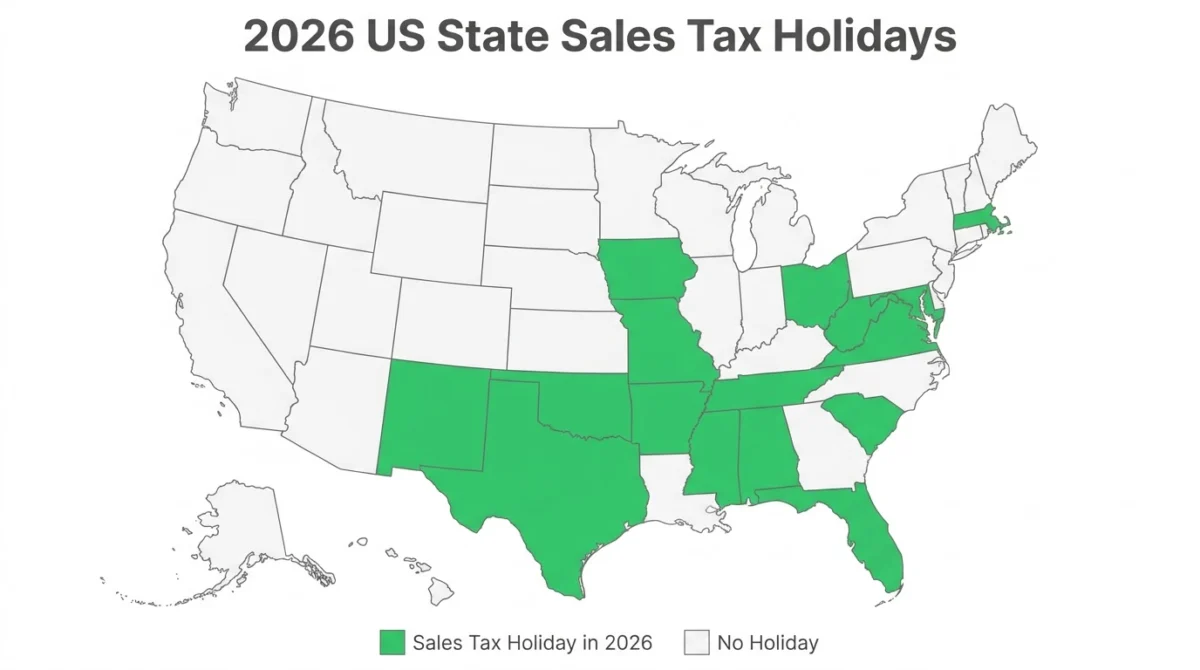
As the 2026 fiscal year approaches, state legislatures across the United States have finalized a complex patchwork of sales tax holidays designed to provide consumer relief and stimulate retail activity. While these events are framed as significant wins for household budgets—offering rare exemptions on back-to-school gear, emergency supplies, and energy-efficient appliances—they present a formidable challenge for the retail sector. For businesses operating in multiple jurisdictions, these "holidays" represent a period of high-stakes administrative burden, requiring precise adjustments to tax engines to avoid compliance failures, audit risks, and customer dissatisfaction.
The landscape of American sales tax is notoriously fragmented, and the introduction of temporary exemptions adds a layer of volatility to an already intricate system. Because many states require annual legislative approval to renew these holidays, or adjust their specific dates to align with shifting academic calendars, staying compliant requires constant vigilance and sophisticated automation. In 2026, the calendar features a diverse array of exemptions ranging from traditional apparel and school supplies to more specialized categories like firearms, water-efficient products, and severe weather preparedness gear.
The Strategic Intent and Economic Context of Tax Holidays
Sales tax holidays emerged in the late 20th century as a popular political and economic tool. Proponents argue that these events provide essential relief to low-income families during high-expense periods, such as the start of a new school year. Economists, however, often view these holidays through a more nuanced lens. While they undeniably trigger a spike in retail traffic, some data suggests that these holidays do not necessarily create new economic activity but rather shift the timing of purchases that would have occurred anyway.
For the 2026 season, state revenue departments are balancing the need to support local economies with the reality of state budget requirements. In states like Florida and Texas, where there is no state income tax, sales tax revenue is the primary lifeblood of public services. Consequently, the rules governing these holidays are often rigid, featuring strict price caps and granular product definitions. For example, a $100 price cap on clothing typically means that an item priced at $101 is fully taxable, creating a "cliff effect" that retailers must navigate at the point of sale.
Chronological Master Calendar of 2026 Sales Tax Holidays
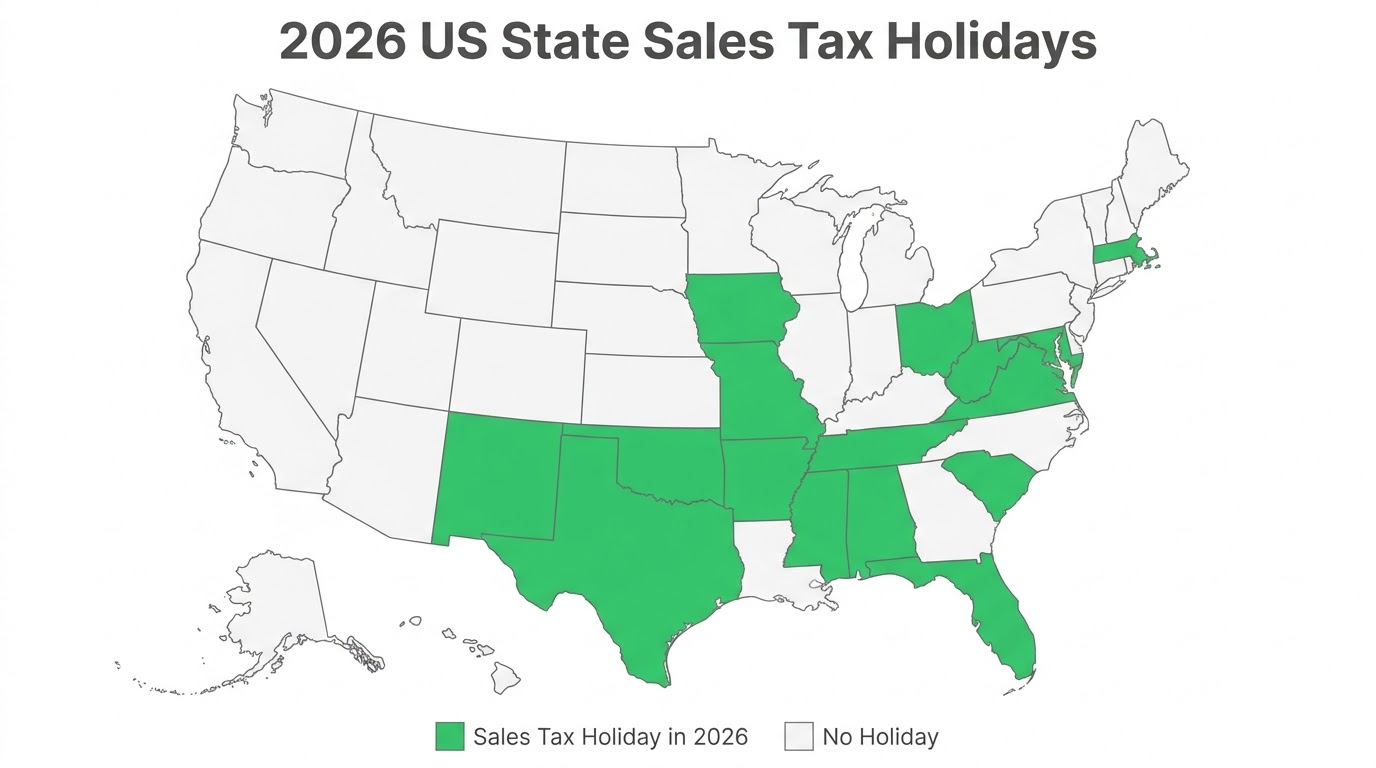
The following schedule represents the confirmed and projected dates for sales tax holidays across the United States and its territories for the 2026 calendar year.
First Quarter: Energy Efficiency and Disaster Preparedness
The year begins with a focus on conservation and safety, particularly in the Mid-Atlantic and the Gulf Coast.
- Maryland (February 14–16): The "Shop Maryland Energy" weekend focuses on Energy Star-certified appliances. Consumers can purchase qualifying refrigerators, washers, and heat pumps without the state’s 6% sales tax.
- Alabama (February 21–23): The Severe Weather Preparedness holiday allows residents to stock up on essential safety items. Exemptions apply to batteries, tarps, first-aid kits, and portable generators (up to a $1,000 limit).
Second Quarter: Environmental Sustainability and Hurricane Readiness
As spring arrives, states like Texas and Missouri incentivize green energy and disaster readiness.
- Missouri (April 19–25): The "Show Me Green" holiday provides a week-long exemption for Energy Star-certified appliances, with a cap of $1,500 per appliance. This is a critical window for retailers specializing in home improvement and white goods.
- Texas (April 25–27): This weekend focuses on emergency preparation. Like Alabama, Texas exempts generators and first-aid kits, but with specific Texas-sized thresholds for portable units.
- Puerto Rico (May 22–25): Ahead of the Atlantic hurricane season, the territory offers a four-day window for hurricane preparedness supplies, ensuring citizens can access life-saving equipment tax-free.
- Texas (May 23–25): A dual-purpose weekend featuring both Energy Star and WaterSense products. This holiday is unique in its focus on water-efficient products, including showerheads and irrigation controllers, reflecting the state’s ongoing focus on resource conservation.
Third Quarter: The Back-to-School Peak
The most active period for sales tax holidays occurs between July and August. This "Peak Season" is a critical revenue driver for apparel, electronics, and stationery retailers.
- Mississippi (July 10–12): One of the earlier back-to-school windows, focusing on clothing and footwear priced under $100.
- Alabama (July 17–19): A comprehensive holiday covering clothing (under $100), school supplies (under $50), and computers/software for educational use.
- Florida (July 20–August 20): Florida’s month-long back-to-school event is one of the longest in the nation. It covers a vast range of items, from $100 clothing to $1,500 personal computers.
- New Mexico, Tennessee, and West Virginia (July 31–August 2/3): This weekend marks a massive multi-state push for school readiness. Tennessee’s holiday is notable for its $1,500 computer exemption, while West Virginia includes sports equipment up to $150.
- Arkansas (August 1–2): A short but impactful window for clothing and electronics.
- Virginia (August 1–3): A "super holiday" that combines back-to-school, hurricane preparedness, and Energy Star items into a single three-day event.
- Iowa, Missouri, Ohio, Oklahoma, South Carolina, and Texas (August 7–9): The busiest weekend of the year. Retailers must manage simultaneous holidays across six major states, each with differing price caps. Ohio, for instance, caps clothing at $75, whereas South Carolina offers no specific price cap on many qualifying items, making it one of the most generous holidays in the country.
- Illinois (August 7–16): A ten-day window focusing on clothing and school supplies with a $125 threshold.
- Massachusetts (August 8–9): Known for its broad "Sales Tax-Free Weekend," this holiday applies to most retail items for personal use up to a $2,500 limit, excluding motor vehicles and tobacco.
- Maryland (August 9–15): A week-long event for apparel and footwear under $100, plus the first $40 of a backpack’s price.
- Connecticut (August 16–22): The late-August window focuses on clothing and footwear under $100, capturing the "last-minute" shopper demographic.
Fourth Quarter: Niche Exemptions and Outdoor Recreation
The year concludes with specialized holidays that cater to specific regional interests.
- Mississippi (August 28–30) and Louisiana (September 4–6): Both states host "Second Amendment" weekends, exempting firearms, ammunition, and various hunting supplies.
- Florida (September 1–December 31): The "Freedom Summer" extension often includes a long-term holiday for hunting, fishing, and camping supplies, encouraging outdoor tourism and recreation through the end of the year.
The Compliance Trap: Why Automation is Essential
For e-commerce businesses, the primary danger of sales tax holidays lies in the "granular trap." Tax compliance is no longer a matter of simply knowing a state’s base rate. In 2026, compliance is defined by three factors: product mapping, timing, and jurisdiction.
In Alabama, for example, the state-level holiday is optional for local governments. A retailer shipping a laptop to Birmingham might find the state tax is exempt, but the local city or county tax still applies. Without real-time, destination-based tax calculations, a seller might inadvertently under-collect or over-collect tax, both of which carry legal and reputational consequences.
Furthermore, product categorization is vital. Is a "backpack" a school supply or a piece of luggage? In some states, the distinction depends on the intended use or the presence of wheels. In Maryland, only the first $40 of a backpack is exempt. Managing these nuances manually across thousands of SKUs is an invitation for audit failure.
Expert Perspectives and Official Responses
Compliance experts from firms like Stripe and TaxJar emphasize that the "hidden chaos" of these holidays is often found in the returns and exchanges. If a customer buys a tax-exempt shirt in August but returns it in September for a different size, the retailer must determine if the exchange is a "continuation of the sale" or a new taxable event.
"Sales tax holidays are a policy tool with a high administrative cost for the private sector," notes a senior tax policy analyst. "The burden of implementation falls squarely on the retailer. If your system isn’t programmed to flip the switch at midnight on the start date and flip it back at midnight on the end date, you are looking at a massive reconciliation project."
Many state revenue departments have moved toward digital-first communication, releasing "Industry Bulletins" or "Taxpayer Alerts" just weeks before a holiday begins. These late-breaking updates can include changes to qualifying item lists, making it imperative for retailers to use tax engines that update automatically in the cloud.
Broader Impact and Implications for the Retail Industry
The proliferation of sales tax holidays in 2026 reflects a broader trend of states using the tax code to influence consumer behavior. By exempting WaterSense or Energy Star products, states like Texas and Maryland are using fiscal policy to advance environmental goals. By exempting firearms and ammunition, states like Mississippi and Louisiana are signaling cultural and political priorities.
For the consumer, these holidays remain a psychological "nudge" that drives traffic to both brick-and-mortar and e-commerce stores. For the retailer, they are a double-edged sword: a period of high volume that demands flawless execution. As e-commerce continues to dominate the retail landscape, the ability to handle these holidays seamlessly will separate the market leaders from those struggling with the weight of regulatory complexity.
To thrive in this environment, businesses must move beyond spreadsheets and manual entries. The 2026 sales tax holiday calendar is not just a list of dates; it is a roadmap for a sophisticated technological strategy. By leveraging API-driven tax solutions, retailers can ensure that they honor every exemption, protect their margins, and provide a frictionless experience for the millions of Americans looking for a break at the checkout counter.