Pevita Pearce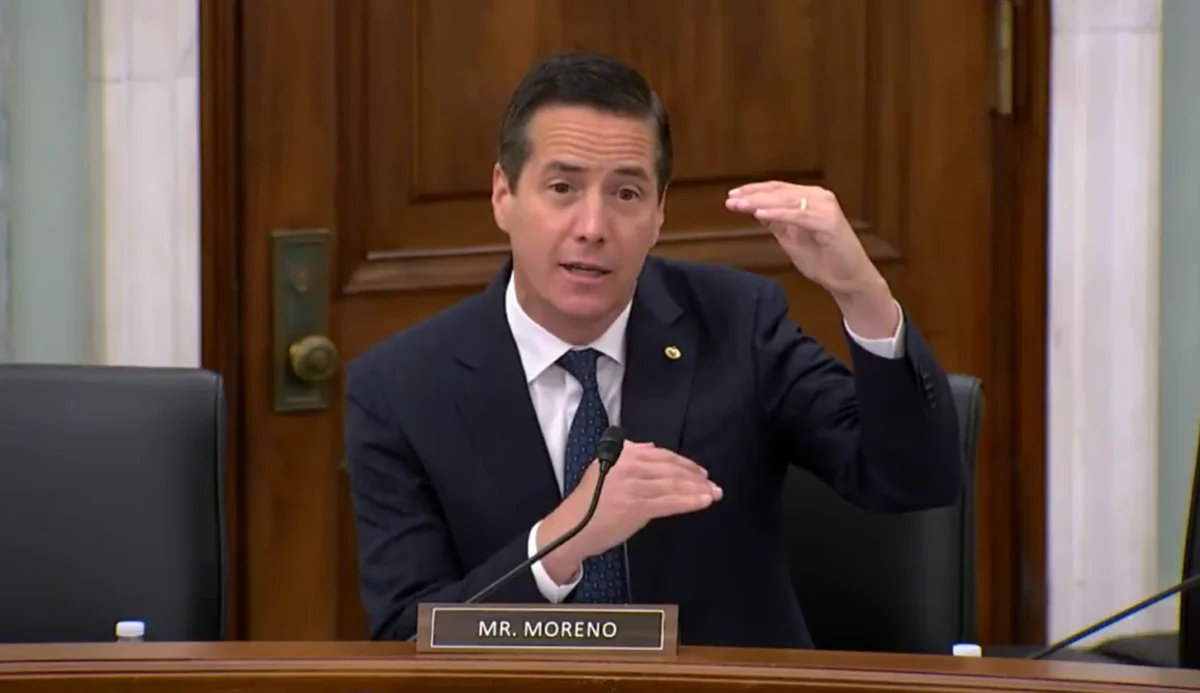
COLUMBUS, Ohio – U.S. Senator Bernie Moreno, an Ohio Republican, announced plans to introduce federal legislation that would effectively eliminate the financial benefits of state and local tax breaks currently offered to data centers. The proposed bill aims to impose a 100% federal tax on any tax incentive provided by state or local governments to these facilities. This move signals a significant potential shift in the landscape of economic development incentives for the burgeoning data center industry in Ohio and across the nation.
Moreno articulated his stance during the Ohio Energy Affordability Summit, an event co-hosted by Arnold Ventures and Club for Growth on Thursday. "I don’t want a single taxpayer dollar going to support these data centers," Moreno declared, underscoring his belief that such incentives do not represent a prudent use of public funds.
The proposed legislation would not prohibit states or their subdivisions – cities, counties, and townships – from continuing to offer tax breaks to data center companies. Instead, it would create a federal tax mechanism designed to offset the savings these companies would realize from such incentives. In essence, any tax break granted at the state or local level would be matched by an equivalent federal tax liability, thereby nullifying the financial advantage for the businesses. Specific details regarding the precise implementation of this federal tax have not yet been released, as the legislation has not been formally introduced.
The potential ramifications of Senator Moreno’s proposal are substantial, particularly for Ohio, a state that has actively leveraged tax incentives to attract significant investments in the data center sector. Over recent years, billions of dollars have flowed into the state for the development and expansion of these facilities, largely driven by attractive tax policies.
Ohio’s existing incentive structure for qualifying data centers includes exemptions from sales taxes on crucial components such as equipment, construction materials, and power infrastructure. As the data center industry has experienced exponential growth, the cost associated with these exemptions has escalated considerably. This trend prompted Governor Mike DeWine to place a temporary moratorium on the consideration of new data center incentive agreements earlier this year, a move that signaled growing concerns within the state administration about the long-term fiscal impact of these policies.
Senator Moreno has consistently voiced his opposition to these types of tax incentives, viewing them as overly generous and disproportionately benefiting large corporations at the expense of ordinary taxpayers. His critique of such policies was further exemplified in March when he penned a letter to the Ohio Tax Credit Authority. In this correspondence, he strongly criticized the authority’s decision to grant Ark Data Centers a state sales tax break valued at $4.5 million for a $136 million expansion project spanning Akron and Independence.
According to data from the Ohio Department of Development, the Ark Data Centers project was projected to create 10 full-time positions, with an estimated annual payroll ranging between $1.1 million and $1.5 million. In return for this job creation, Ark received a decade-long, 50% sales tax exemption on qualifying data center equipment. Moreno’s letter sharply questioned the value proposition of this deal, stating, "That’s not economic development. That’s a sweetheart deal for Wall Street while everyday Ohioans are forced to foot the bill."
Background on Data Center Incentives in Ohio
The proliferation of data centers in Ohio has been a notable trend in recent years, driven by the increasing demand for digital infrastructure to support cloud computing, artificial intelligence, and vast data storage needs. States across the U.S. have recognized the potential for job creation and economic growth associated with these facilities and have actively competed to attract them. Tax incentives, particularly sales tax exemptions on equipment and electricity, have become a standard tool in this competitive landscape.
Ohio’s approach has been to offer significant sales tax abatements to lure these capital-intensive projects. These incentives are often justified by proponents as necessary to offset the substantial upfront investment required for data center construction and the ongoing costs of power and cooling. The argument is that even with the incentives, the state benefits from new construction jobs, permanent operational roles, increased electricity consumption, and a broader boost to the technology ecosystem.
However, the sheer scale of these projects and the longevity of some tax breaks have led to mounting scrutiny. Critics argue that the jobs created are often fewer in number than initially projected and that the compensation for these roles may not always align with the significant tax revenue foregone. Furthermore, the energy consumption of data centers is substantial, raising questions about the environmental impact and the burden placed on the power grid, which can indirectly affect the energy affordability for other consumers.
Timeline of Events and Growing Concerns
The debate surrounding data center incentives in Ohio has been building for some time. While specific dates for individual incentive approvals are numerous, Governor DeWine’s decision to pause new agreements earlier in 2024 marked a significant point of public acknowledgment of the growing concerns. This pause likely stemmed from a combination of factors, including rising costs of the tax exemptions, increasing public discourse about the fairness of these deals, and potentially, an internal review of the economic impact and return on investment for the state.
Senator Moreno’s public criticism, including his letter to the Ohio Tax Credit Authority in March, predates the Governor’s pause but highlights the specific nature of his objections. His focus on the disparity between the incentives offered and the perceived limited benefit to "everyday Ohioans" resonates with a broader populist sentiment that questions the efficacy and fairness of corporate tax breaks.
The Ohio Energy Affordability Summit, where Moreno made his announcement, provides further context. Such summits often bring together policymakers, industry representatives, and advocacy groups to discuss issues related to energy policy, economic development, and consumer costs. Moreno’s participation and his specific announcement at this forum suggest an intention to frame his proposal within the broader context of ensuring affordable energy and responsible taxpayer spending.
Supporting Data and Economic Analysis
The economic impact of data centers is a complex subject, with varying analyses depending on the metrics used. On one hand, data center investments can be substantial, often running into hundreds of millions or even billions of dollars for a single facility. These investments typically involve significant spending on construction, specialized equipment, and ongoing operational costs, including power, cooling, and maintenance. The direct and indirect job creation, while sometimes debated in terms of quantity and quality, is a key argument for incentive proponents.
However, the cost of tax exemptions needs careful consideration. In Ohio, for example, sales tax exemptions on electricity, equipment, and construction materials for data centers have, according to some reports, amounted to hundreds of millions of dollars in foregone state revenue over several years. As the industry grows, these costs will continue to rise. A report by the Ohio Department of Taxation, for instance, might detail the projected revenue loss from these exemptions over a 10-year period for a given project.
The argument against broad incentives often centers on the concept of "deadweight loss" – where incentives subsidize investments that would have happened anyway. Critics also point to the opportunity cost: the tax revenue forgone could have been used for other public services such as education, infrastructure, or healthcare.
The specific case of Ark Data Centers highlights these trade-offs. A $4.5 million sales tax break for 10 jobs, even with a decent payroll, is a significant subsidy per job. When these incentives are aggregated across multiple projects, the cumulative impact on state and local budgets becomes a pressing concern, which appears to be at the heart of Governor DeWine’s recent pause and Senator Moreno’s proposed federal intervention.
Official Responses and Industry Reactions (Inferred)
While direct statements from all relevant parties may not be immediately available, some reactions can be inferred based on the context.
Governor Mike DeWine’s Administration: The Governor’s decision to pause new data center incentive agreements suggests a receptiveness to the concerns about the cost and efficacy of these incentives. His administration is likely to be closely monitoring Senator Moreno’s legislative efforts, as a federal solution could preempt or significantly alter Ohio’s current incentive strategies. While they may not publicly endorse Moreno’s specific approach, the pause indicates a shared concern about the current trajectory.
Ohio Department of Development and Local Economic Development Agencies: These bodies are typically tasked with attracting businesses and negotiating incentive packages. They would likely express concerns about Moreno’s proposal, arguing that it could severely hamper Ohio’s ability to compete for data center investments. They would likely emphasize the economic benefits, job creation, and technological advancement that these projects bring, and argue that state-level incentives are crucial for attracting such industries.
Data Center Industry Representatives and Trade Associations: It is highly probable that industry groups, such as the Data Center Coalition or similar organizations, would strongly oppose Senator Moreno’s proposal. They would likely argue that federal intervention in state and local economic development policies is an overreach and that these incentives are essential for fostering innovation and growth in a globally competitive sector. They might also highlight the significant capital investments, the high-skilled jobs created, and the essential role data centers play in the modern digital economy. They could argue that the federal government should be encouraging, not penalizing, investments in critical digital infrastructure.
Taxpayer Advocacy Groups: Groups that align with Senator Moreno’s viewpoint, such as those focused on fiscal conservatism and reduced government spending, would likely applaud his initiative. They would see it as a necessary step to ensure that taxpayer dollars are not being used to subsidize private corporations, particularly when those corporations are already highly profitable.
Broader Impact and Implications
Senator Moreno’s proposed legislation, if enacted, would have far-reaching implications beyond Ohio. It would create a national framework that could significantly alter how states and localities incentivize data center development.
Increased Competition for Other Industries: If data center incentives are effectively neutralized at the federal level, states might shift their focus and incentive strategies towards other industries that are also seeking investment, such as advanced manufacturing, biotechnology, or renewable energy. This could lead to a more diversified approach to economic development incentives.
Federal Overreach Concerns: The proposal raises questions about the balance of power between federal and state governments in economic development. Critics might argue that the federal government should not be dictating how states manage their local tax policies, even if the intent is to achieve a national objective.
Impact on Digital Infrastructure Development: The long-term availability and cost of digital infrastructure could be affected. If the incentives that have driven significant investment in data centers are removed, the pace of development might slow, potentially impacting the growth of cloud services, AI capabilities, and other data-intensive technologies. However, proponents of Moreno’s plan would argue that the market itself, driven by demand, would still lead to investment, albeit without the taxpayer subsidy.
Shift in Investment Criteria: Data center companies might need to re-evaluate their investment decisions, placing greater emphasis on factors beyond tax incentives, such as access to reliable and affordable power, skilled labor, robust network connectivity, and favorable regulatory environments.
Senator Moreno’s legislative gambit represents a significant challenge to the established practices of economic development for data centers. The coming months will reveal the specifics of his proposal and the extent of support it garners in Congress, setting the stage for a potentially transformative debate on the role of government in fostering technological growth.