Nila Kartika Wati
Over the last decade, the concept of "repair" has moved from the fringes of social justice theory to the center of philanthropic strategy. Major foundations and civic institutions are increasingly investing in healing initiatives, restorative frameworks, and programs designed to address the generational harms inflicted upon marginalized communities. However, as the philanthropic sector attempts to formalize these "cultures of repair," a significant disconnect has emerged between institutional definitions of progress and the lived realities of those who have sustained these practices for centuries. For Black women, the recent institutional interest in repair is not the discovery of a new framework, but the belated recognition of a survival strategy that has functioned as a vital, though often invisible, social infrastructure since the nineteenth century.
The Historical Foundations of Community Repair
The genealogy of repair in the United States is inextricably linked to the history of Black women’s organizing. During the late nineteenth and early twentieth centuries, as the legal architecture of Jim Crow segregation systematically excluded Black Americans from public resources, Black women developed a parallel network of institutions. According to historian Paula Giddings, Black women’s clubs and mutual aid societies were not merely social groups; they were the primary providers of essential services that the state refused to offer.

These organizations established schools, libraries, settlement houses, and childcare initiatives. They launched voter education campaigns and created mutual aid networks that functioned as informal insurance systems. In this context, repair was not a theoretical exercise in restorative justice but a practical necessity. By building what was missing—from hospitals to cemeteries—Black women were repairing the consequences of systemic exclusion in real-time. This historical timeline demonstrates that the "innovation" currently sought by philanthropy has a century-long precedent in the "lifting as we climb" philosophy of the National Association of Colored Women’s Clubs (NACWC) and similar entities.
Defining Social Infrastructure Beyond Pavement and Power Lines
To understand the depth of these repair cultures, it is necessary to redefine the concept of infrastructure. While traditional definitions focus on physical assets like roads, bridges, and broadband networks, sociologist Eric Klinenberg argues in Palaces for the People that "social infrastructure" is equally vital. This includes the relationships, organizations, and shared spaces—such as libraries, parks, and athletic fields—that determine how people connect and solve problems collectively.
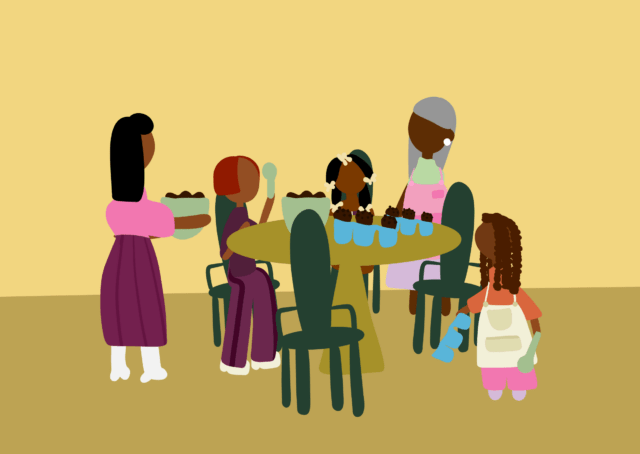
In Black communities, this social infrastructure has historically been anchored in less formal spaces: the grandmother’s kitchen, the beauty salon, and the church basement. These sites serve as nodes for information exchange, resource redistribution, and emotional labor. When formal institutions fail to provide safety or economic stability, these informal networks absorb the shock. Philanthropic analysts suggest that these systems are often categorized as "volunteerism" or "community engagement," which diminishes their status as sophisticated organizational structures that manage collective life during crises.

The Data of Disparity: Funding the Architects of Repair
Despite the central role Black women play in sustaining community stability, data consistently highlights a profound gap in institutional support. According to research from the Ms. Foundation for Women, Black women and girls receive less than 0.5 percent of total philanthropic giving in the United States, despite their disproportionate role in leading social change movements.
This funding gap is often exacerbated by a philanthropic preference for "novelty" and "scalability." Grant guidelines frequently prioritize new, unproven models over the long-term, relationship-based work that characterizes community-led repair. Data from the Black Equity Index suggests that organizations led by Black women are often subjected to more rigorous "proof of concept" requirements than their white-led counterparts, even when they possess decades of established trust and community impact. This focus on innovation can unintentionally erase the existing infrastructures that have already demonstrated the capacity to sustain communities through historical trauma.
Global Perspectives: The Colombian Case Study
The practice of repair as an infrastructure for survival is not limited to the North American context. In Colombia, the work of Black women within the Proceso de Comunidades Negras (PCN) offers a compelling model of how cultural and territorial rights are intertwined with the concept of repair. For decades, Afro-Colombian women have organized to protect their ancestral lands and cultural identities, culminating in the landmark Law 70 of 1993, which recognized Afro-Colombians as a distinct people with collective territorial rights.

Within this movement, the Sistema Integral de Protección y Cuidado de la Vida y los Territorios (SIPVIDA-PCN) serves as a modern manifestation of repair. This system does not wait for state intervention to address violence or displacement; instead, it creates internal mechanisms for the protection and care of life. By integrating territorial defense with the specific safety needs of women and girls, SIPVIDA-PCN demonstrates that repair is a proactive, rather than reactive, process. It is the act of strengthening existing community bonds to ensure that more people can belong and survive within them.
Cultural Labor and the Archive as Restorative Justice
A critical, yet frequently overlooked, component of repair is cultural labor—specifically the work of storytelling and archiving. Institutional harm is often compounded by erasure; when the histories of marginalized communities are not preserved in official archives, the harm remains "invisible" to the public record.
Black women have historically functioned as "community archivists," preserving family photographs, recording oral histories of elders, and maintaining neighborhood records in the face of urban redevelopment and historical neglect. Scholars of community archives argue that this is a form of "archival activism." By documenting their own lives, Black women challenge dominant narratives that render their experiences as peripheral.

This cultural work is a fundamental act of repair because it addresses the "symbolic annihilation" of Black history. When philanthropy treats storytelling as a secondary "communications" task rather than a core "infrastructure" project, it fails to recognize that a community’s ability to remember its own strength is a prerequisite for long-term healing and political mobilization.
Reimagining Resourcing: From Innovation to Recognition
The current trend toward "cultures of repair" in philanthropy necessitates a shift in how expertise is defined and resourced. If institutions are serious about restorative justice, the focus must move from asking communities to "invent" new solutions to asking them what they have already built.
This requires a move toward "alternative resourcing," a framework that values community knowledge and cultural labor as equal to technical or academic expertise. Reimagining resourcing involves several key shifts in philanthropic behavior:
- Trust-Based Philanthropy: Moving away from restrictive, project-based grants toward general operating support that allows leaders to sustain the "invisible" labor of relationship-building.
- Valuing Longevity Over Novelty: Recognizing that organizations with deep roots in a community often have more effective "repair" mechanisms than newer, more "innovative" startups.
- Investing in Social Infrastructure: Funding the spaces and networks—such as community centers, oral history projects, and mutual aid hubs—that facilitate collective action.
The Broader Impact and Future Implications
The future of the "repair" movement will likely be determined by whether philanthropy can move beyond the language of healing and into the practice of structural support. If institutions continue to treat repair as a new trend to be "managed" or "designed," they risk replicating the very paternalistic structures they seek to dismantle.
However, if philanthropy recognizes that Black women have already provided the blueprint for restorative infrastructure, the sector can begin to function as a true partner in social change. The implications of this shift are profound: it would mean a redistribution of power that acknowledges community-led systems as the primary drivers of stability and progress.
In conclusion, the "cultures of repair" that philanthropy is currently discovering have been operational for generations. They are found in the sophisticated mutual aid networks of the 1900s, the territorial defense systems of Afro-Colombian activists, and the digital archives of contemporary Black storytellers. The challenge for the modern philanthropic sector is not to invent repair, but to resource it with the same urgency and scale with which it has historically funded physical infrastructure. Only by recognizing and trusting the architects who have long been doing the work can a truly equitable and restorative future be realized.