Nila Kartika Wati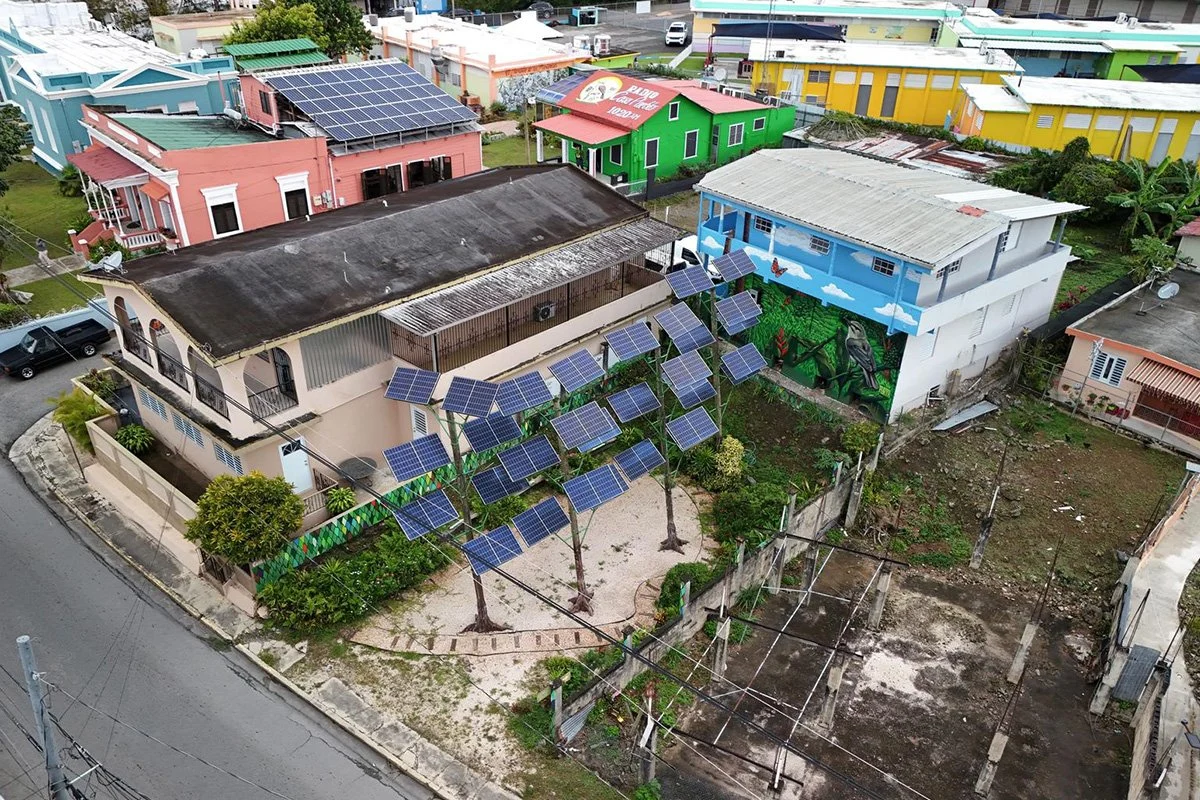
In the immediate aftermath of Hurricane Maria in September 2017, the mountain municipality of Adjuntas, located west of San Juan, became a microcosm of the systemic vulnerabilities facing Puerto Rico. Landslides had effectively severed the town’s connection to the rest of the island, burying roads and isolating thousands of residents. As the centralized power grid collapsed island-wide, plunging millions into darkness, one establishment remained a beacon of activity: Lucy’s Pizza. For two weeks, it was the only restaurant open in the region. Its owner, Gustavo Irizarry, managed to maintain operations through the use of a diesel generator. The cost of this survival was high—not only in the $15,000 spent on fuel over six months but in the physical and mental toll of maintaining a loud, exhaust-heavy machine that required midnight restarts to prevent food spoilage.
The experience of Adjuntas during that period was not an anomaly but a precursor to a radical shift in how the community viewed its relationship with energy. While mainland U.S. blackouts are typically measured in hours, the residents of Adjuntas faced a reality where tens of thousands lived without electricity for six to eleven months. This prolonged crisis exposed a fundamental truth: in a territory where the grid is both fragile and prohibitively expensive, electricity is often treated as a privilege rather than a human right. In response, a grassroots movement led by the nonprofit Casa Pueblo has spent the last decade constructing a decentralized, solar-powered alternative that offers a blueprint for energy independence and decolonial practice.
Historical Context and the Colonial Grid
To understand the energy crisis in Adjuntas, one must examine the broader political status of Puerto Rico. An unincorporated territory of the United States since 1898, the island’s 3.2 million residents are U.S. citizens who lack voting representation in Congress and cannot vote for the president. This "belonging to but not being part of" status, as defined by the U.S. Supreme Court, has resulted in decades of infrastructure neglect.
The Puerto Rico Electric Power Authority (PREPA) was already bankrupt and its infrastructure dilapidated when Hurricane Maria struck, destroying 80 percent of the island’s transmission lines. The disaster served as a catalyst for privatization. In 2021, a private consortium known as LUMA Energy took over operations. Despite the influx of billions of dollars in federal recovery funds, the transition has not led to stability. Instead, blackouts have become more frequent and longer in duration. Puerto Ricans currently pay more than double the average U.S. mainland price for electricity that is statistically the least reliable in the country. Furthermore, the island’s reliance on imported coal and gas contributes to disproportionately high rates of respiratory conditions, such as asthma, among its residents.
The Genesis of Casa Pueblo and the Microgrid Movement
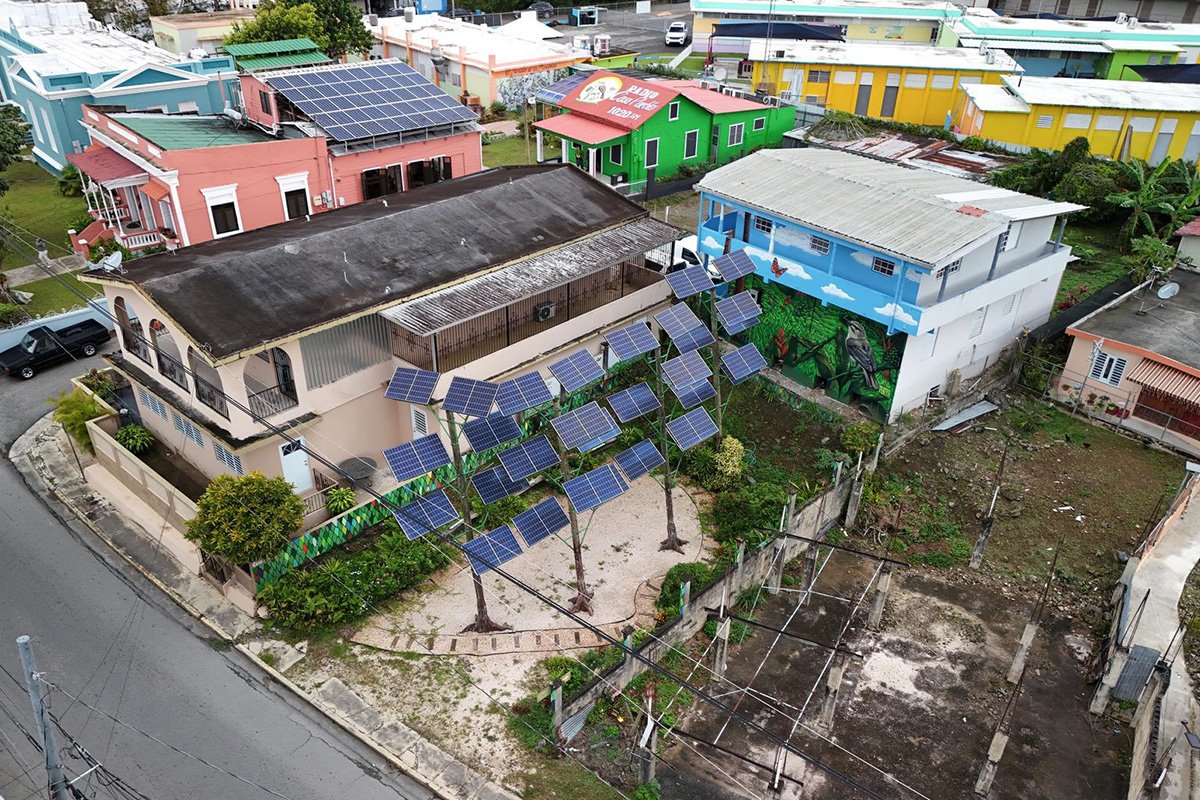
The movement toward energy sovereignty in Adjuntas did not begin with Hurricane Maria, but it was accelerated by it. Casa Pueblo, founded by Alexis Massol González and Tinti Deyá Díaz, had been exploring solar solutions since 1999. Their headquarters was one of the few buildings that did not lose power during Maria, thanks to a small microgrid installed months earlier. In the weeks following the storm, the site became a critical hub where neighbors could charge medical devices, refrigerate insulin, and receive solar lamps.
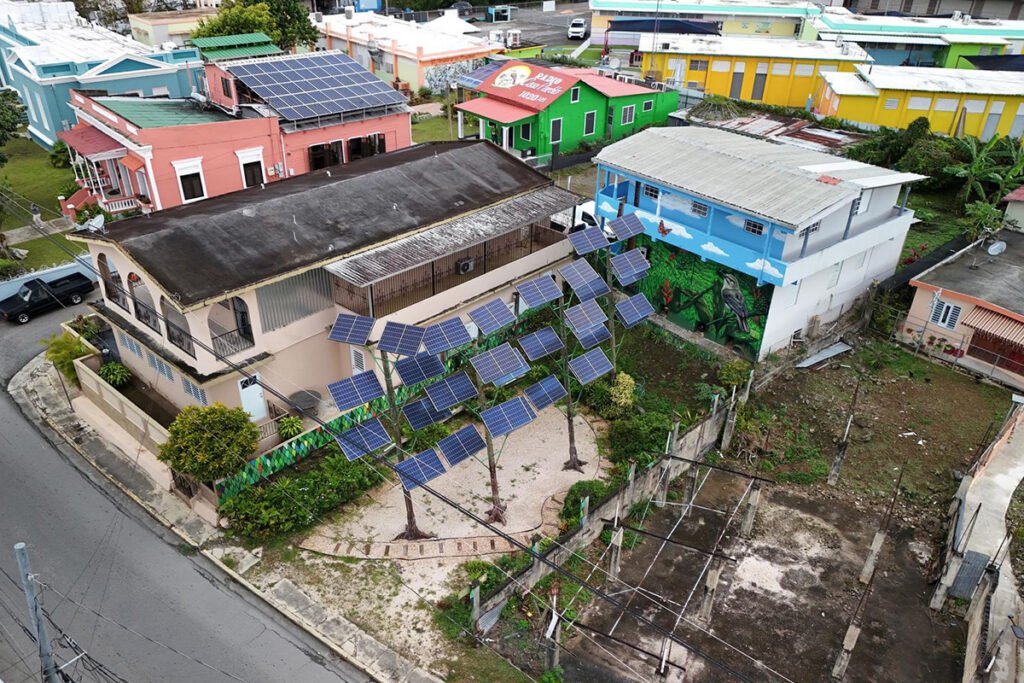
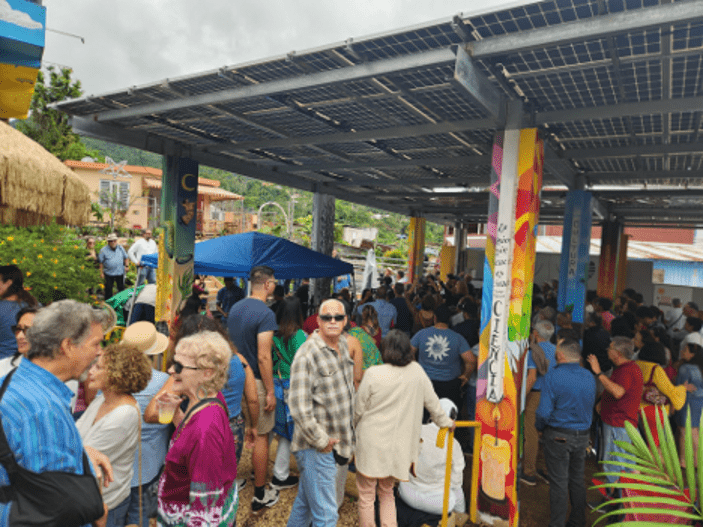
By 2018, the success of Casa Pueblo’s internal system attracted the attention of the Honnold Foundation, a philanthropic organization focused on solar energy and community resilience. Unlike traditional top-down aid models, the partnership was built on community-led design. Casa Pueblo insisted that the funders "come here first and learn what the community needs." The resulting vision was the Plaza de la Independencia Energética—a community-owned microgrid designed to anchor the local economy and provide a refuge during future disasters.
A Chronology of Transition: 2017 to 2026
The development of the Adjuntas microgrid serves as a timeline of resilient infrastructure building:
- September 2017: Hurricane Maria destroys the grid; Casa Pueblo provides emergency solar power to the community.
- 2018–2019: Planning and community meetings take place. Local business owners form the Community Solar Energy Association of Adjuntas (ACESA).
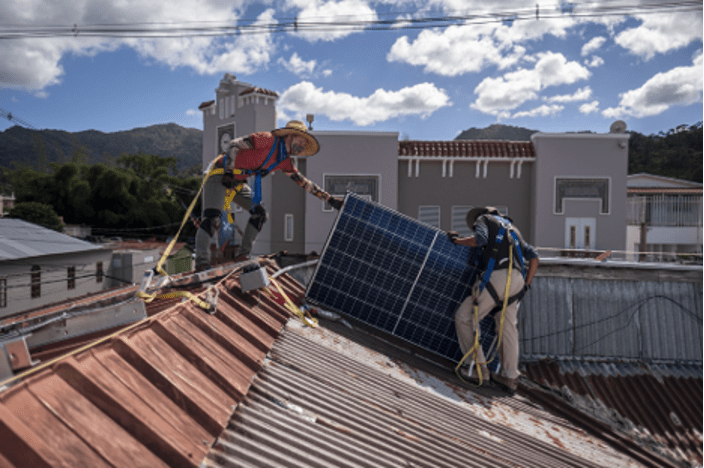
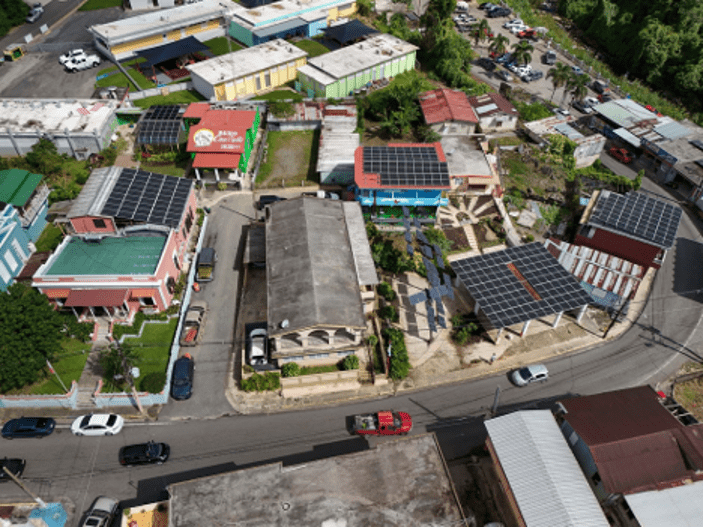
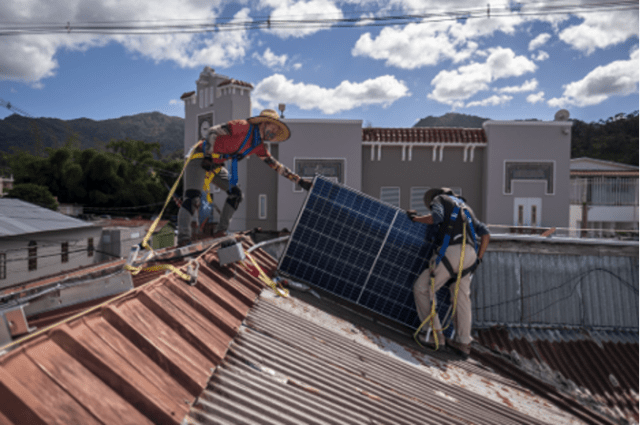
- February 2020: The first rooftop panels are installed on commercial buildings around the town square, using racking systems engineered to withstand Category 5 winds (up to 165 mph).
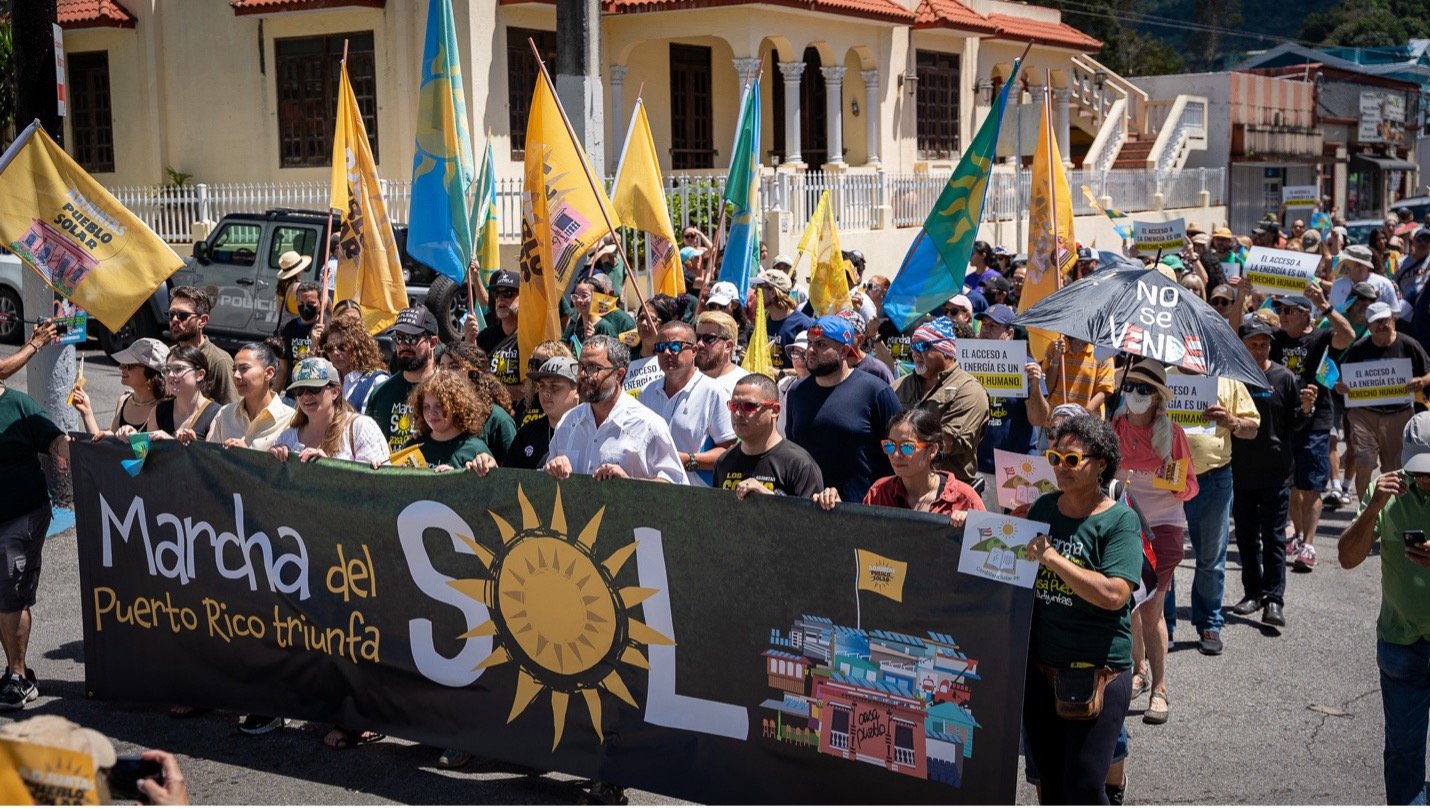
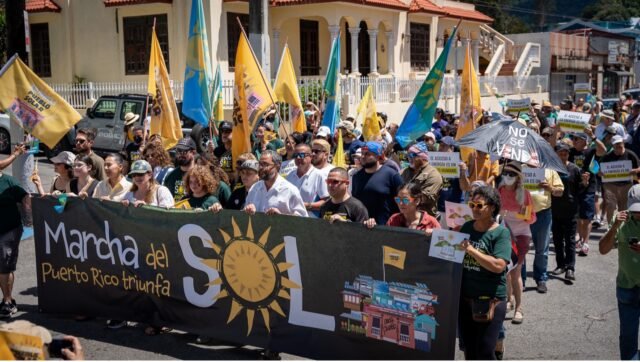
- March 2023: The island’s first community-owned microgrid is officially inaugurated. Thousands of residents participate in a march celebrating energy self-determination.
- September 2022 – April 2025: Successive tests occur during Hurricane Fiona and a major island-wide blackout in 2025. While the rest of Puerto Rico waited 24 hours for power, Adjuntas remained lit.
- 2026: The project expands into a "Community Laboratory for the Energy Transition," serving as a research and training hub for other nations in the Global South.
Technical Architecture and Social Ownership
The technical specifications of the Adjuntas microgrid are as groundbreaking as its social model. The system consists of two independent but interconnected microgrids totaling approximately 228 kilowatts of solar power and 1.2 megawatt-hours of battery storage. This capacity is sufficient to run 15 connected businesses and 150 homes for several days without sunlight or connection to the main grid.
The social innovation lies in the ownership structure. The ACESA association, composed of local hardware store owners, bakers, and restaurateurs, manages the grid. Members pay the association for their power, and the surplus revenue is used to fund solar installations for low-income residents with high-priority medical needs. This "inverted model" ensures that the wealth generated by the infrastructure stays within Adjuntas rather than flowing to external private shareholders. It transforms energy from a commodity into a common good.
Public Health and Economic Implications
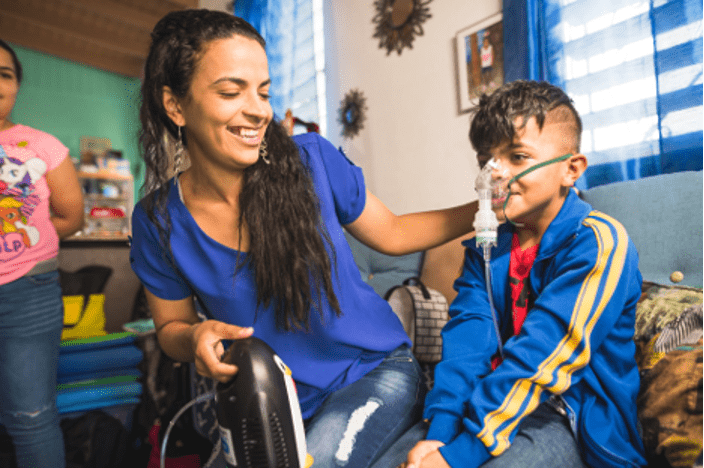
The reliability of the microgrid is a matter of life and death for many residents. During the 2025 blackout, Nery Torres, a local resident, reported that her daughter was able to continue life-sustaining dialysis treatments because of the solar panels installed by the community. In a region where nebulizers, respirators, and refrigerated medications are essential, the failure of the centralized grid is a direct threat to public health.
Economically, the microgrid provides a stabilization mechanism for small businesses. By eliminating the need for expensive diesel generators and reducing exposure to LUMA’s volatile energy rates, local entrepreneurs can reinvest in their workforce. The project also addressed a critical gap in local expertise; since there were no solar installers in Adjuntas at the start of the project, Casa Pueblo trained local residents—primarily women—to install and maintain the systems.
Federal Policy Reversals and the Philanthropic Response
The success of Adjuntas stands in stark contrast to federal energy policy. In 2022, Congress appropriated $1 billion to the Puerto Rico Energy Resilience Fund, intended to provide rooftop solar and battery backups for 30,000 vulnerable households. However, recent reports indicate that the Department of Energy (DOE) redirected approximately $815 million of these funds toward grid-level repairs, effectively canceling solar access for an estimated 12,000 households that had already qualified.
This policy reversal has been met with significant backlash. Nearly 200 disability rights and community organizations have demanded the restoration of the fund, arguing that the decision prioritizes a failing centralized system over the lives of those with "energy-dependent disabilities."
For the philanthropic sector, the Adjuntas model offers several key lessons. It suggests that effective giving should:
- Fund the community’s vision, not the donor’s.
- Provide flexible, unrestricted support to allow for the "false starts" inherent in innovative projects.
- Invest in social capital by amplifying local leaders rather than claiming ownership of their successes.
- Prioritize decolonization by putting resource control directly into the hands of those most affected by infrastructure failure.
Cultural Resonance and Global Impact
The movement for energy independence has gained significant cultural momentum. In 2025, global music icon Bad Bunny invited Casa Pueblo to his residency in San Juan to discuss renewable energy. His performance of "El Apagón" (The Blackout) at the Super Bowl, viewed by 128 million people, further brought the issue of Puerto Rico’s energy struggle to the international stage.
Beyond culture, Adjuntas has become a site of scientific exchange. The Community Laboratory for the Energy Transition now collaborates with community efforts in Mexico, Guatemala, Honduras, and Colombia. By documenting the science of microgrids under real-world climate conditions, Adjuntas is generating knowledge that simulations cannot reproduce.
Conclusion: A Rebuttal to Injustice
As the United States reflects on its 250th anniversary and its historical promises of equality and justice, the town of Adjuntas offers both a rebuttal and an alternative. The "official story" of progress often excludes the residents of territories who live under the shadow of colonial neglect. However, the solar-powered plaza of Adjuntas demonstrates that when a community refuses to wait for a centralized savior, it can build its own path to security.
The transition to clean, endogenous energy in Puerto Rico is more than a technical upgrade; it is a step toward the decolonization of the island. By treating reliable electricity as a human right and mobilizing philanthropic power behind the power of the people, Adjuntas has redefined resilience. It has moved from a vision of individual survival to one of collective strength, proving that energy independence is the cornerstone of true sovereignty.