Pevita Pearce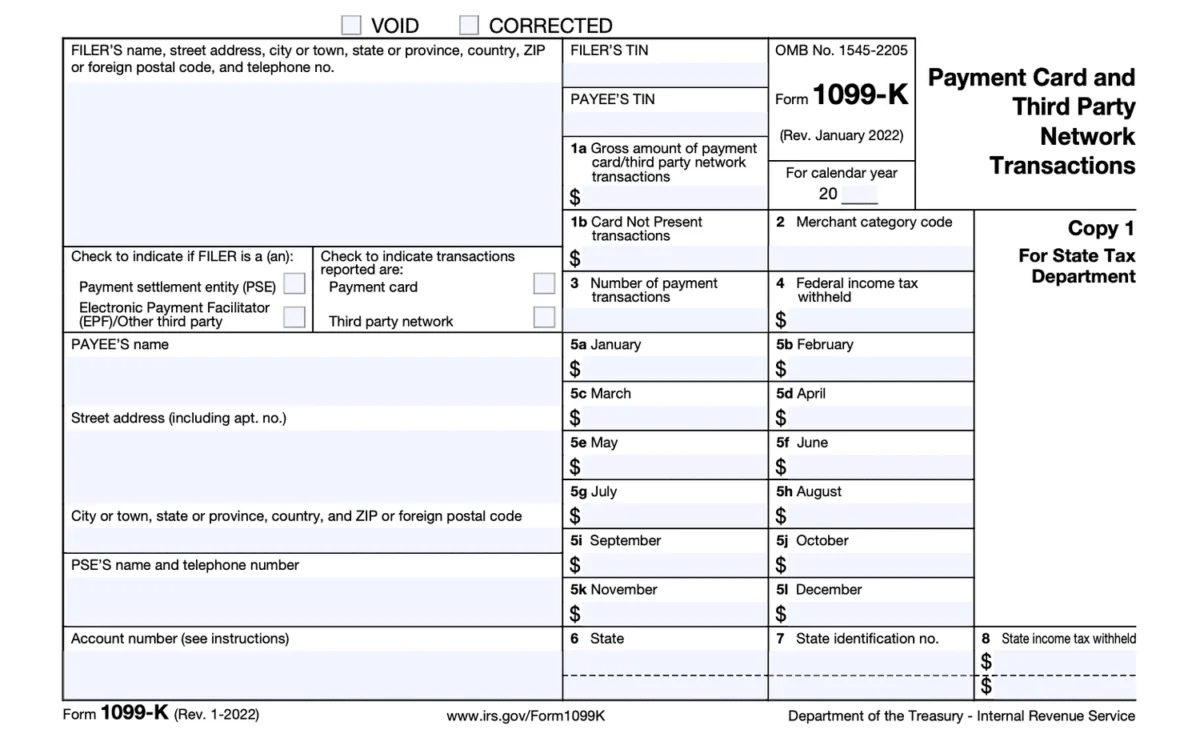
The upcoming 2026 tax year marks a pivotal moment for tax professionals and businesses, introducing substantial alterations to federal information reporting requirements, primarily driven by the Working Families Tax Cuts (WFTC) legislation, also known as H.R. 1. While the WFTC garnered significant attention for its provisions creating new federal income tax deductions for qualified tips and qualified overtime compensation, a less publicized but equally impactful consequence is the overhaul of the information reporting landscape. The Internal Revenue Service (IRS) has consequently updated key tax forms, including Forms 1099-NEC, 1099-MISC, and 1099-K, to separately capture and report these new categories of income. Concurrently, a significant shift in reporting thresholds is set to alter the volume of information returns issued by businesses. These changes extend beyond mere form revisions, fundamentally impacting the data businesses must meticulously track, the documentation taxpayers will receive, and the critical review processes tax preparers undertake when finalizing tax returns for the 2026 tax year.
The Genesis of Information Reporting Overhaul: The Working Families Tax Cuts
The impetus behind these extensive information reporting modifications stems directly from the legislative framework established by the Working Families Tax Cuts. Enacted with the aim of providing targeted financial relief, the WFTC introduced temporary deductions designed to benefit workers in tipped and overtime-compensated roles. These deductions, generally applicable for tax years 2025 through 2028, are contingent upon meeting specific eligibility criteria and adhering to established limitations.
The effective administration of these newly created deductions is intrinsically linked to robust information reporting. For qualified tips, the Internal Revenue Code (IRC) Section 224 directly ties the deductibility to amounts explicitly reported on specified information statements or voluntarily declared by the taxpayer on Form 4137, Social Security and Medicare Tax on Unreported Tip Income. Similarly, IRC Section 225 establishes a parallel dependency for qualified overtime compensation, linking the deduction to the information furnished to the taxpayer.
The 2025 tax year presented a unique challenge. The WFTC was enacted on July 4, 2025, a date after many payroll and reporting systems had already been operational for the entire year. Recognizing this timing anomaly, the IRS provided transition relief, opting not to revise Forms W-2, 1099-NEC, 1099-MISC, or 1099-K for that year to accommodate the separate reporting of this new information. However, this transitional period concludes with the 2026 tax year, necessitating a comprehensive update to these critical information returns. The revised forms are now designed to enable payors to distinctly identify information that taxpayers will require to accurately determine their eligibility for and the amount of these new deductions.
Enhanced Reporting on Forms 1099-NEC and 1099-MISC
For the 2026 tax year, Forms 1099-NEC (Nonemployee Compensation) and 1099-MISC (Miscellaneous Information) will feature new data fields specifically designed to capture information related to tips and qualified overtime compensation.
Form 1099-NEC Enhancements:
- Box 15: Qualified Tips: This new box will allow for the separate reporting of qualified tips earned by nonemployee service providers.
- Box 16: Qualified Overtime Compensation: This addition will detail the amount of qualified overtime compensation paid to independent contractors.
Form 1099-MISC Enhancements:
- Box 18: Qualified Tips: Similar to Form 1099-NEC, this box will report qualified tips received by recipients of miscellaneous income.
- Box 19: Qualified Overtime Compensation: This new field will document qualified overtime compensation provided to individuals reporting miscellaneous income.
The precise distinction between total compensation and the "qualified" portion of overtime pay is a critical nuance for tax preparers. The IRS guidance clarifies that the overtime amount reported on these forms is not necessarily the entirety of compensation earned during overtime hours. Qualified overtime compensation is generally defined as the portion of pay exceeding a worker’s regular rate, specifically when overtime is mandated under Section 7 of the Fair Labor Standards Act (FLSA). In typical scenarios involving time-and-a-half compensation, this refers to the additional "half" component, rather than the full time-and-a-half rate.
This clarification presents a significant review point for tax preparers. A taxpayer might identify a figure for "overtime pay" on their pay statement, but this amount may not precisely align with the definition of "qualified overtime compensation" for federal deduction purposes. Diligent review of pay stubs, employer-issued documentation, and IRS guidance will be paramount to ensure accurate reporting and deduction claims.
Form 1099-K Undergoes Significant Revisions
Form 1099-K, which reports payment card and third-party network transactions, also experiences notable changes for the 2026 tax year. The revised form will include:
- Box 13: Qualified Tips: This new box is designed to report qualified tips processed through payment platforms and third-party networks.
- Box 14: Treasury Tipped Occupation Code (TTOC): This code will be used to identify the specific occupation in which the taxpayer received tips. The Treasury Department and the IRS finalized regulations in April 2026 (effective June 12, 2026) that delineate over 70 occupations where workers customarily and regularly receive tips.
The inclusion of the TTOC is particularly relevant for taxpayers who receive tips via modern payment platforms and other reportable transactions. This code serves as an important data point in determining whether a taxpayer’s tips may qualify for the new deduction established by the WFTC. For tax preparers, the occupation code offers an additional layer of information to scrutinize. The mere presence of an amount labeled as a tip on a Form 1099-K does not automatically validate a taxpayer’s eligibility for the deduction. Eligibility remains tethered to the specific requirements outlined in the legislation and subsequent IRS guidance.
The Shifting Landscape of the $600 Reporting Threshold
Beyond the introduction of new reporting fields, a fundamental alteration to information reporting thresholds is set to impact the volume of tax forms issued. Section 70433 of the OBBB legislation increased the information-reporting threshold under IRC Section 6041 from $600 to $2,000 for payments made after December 31, 2025. This elevated threshold generally applies to remuneration for services covered by IRC Section 6041A as well.
Consequently, for payments made in 2026, the reporting threshold for Form 1099-NEC, for instance, will be $2,000, a substantial increase from the previous $600. This threshold is slated for adjustment for inflation following 2026. This adjustment is anticipated to result in a reduction in the number of Forms 1099 issued by certain businesses and received by individuals.
However, tax preparers must exercise caution when inferring taxability from the absence of a Form 1099. A reporting threshold dictates when a payor is generally obligated to issue an information return; it does not definitively determine whether the underlying payment is taxable to the recipient. This underscores the enduring importance of thorough client interviews and the maintenance of comprehensive financial records, irrespective of whether a Form 1099 is received.
Form 1099-K: A Distinct Reporting Framework
It is crucial to note that third-party network transactions, as reported on Form 1099-K, operate under a separate and distinct reporting framework. The OBBB legislation reinstated the de minimis exception for these transactions, largely reverting to the rules that were in place prior to the changes introduced by the American Rescue Plan Act. Under IRC Section 6050W, a third-party settlement organization (TPSO) is generally not required to report a participating payee’s third-party network transactions unless the gross amount exceeds $20,000 and the number of transactions exceeds 200.
These federal thresholds are not universally applicable to all Form 1099-K scenarios. Payment-card transactions are subject to different reporting rules, and TPSOs may issue Forms 1099-K below the federal threshold. Furthermore, state-level reporting requirements can diverge significantly from federal mandates. For example, Massachusetts imposes a requirement on TPSOs to report payments of $600 or more to payees with a Massachusetts address, regardless of the number of transactions.
This divergence highlights the importance of clearly communicating these distinctions to clients. There is no single, overarching "$2,000 1099 rule" that applies uniformly across all information returns. Forms 1099-NEC, 1099-MISC, and Form 1099-K each function under distinct statutory provisions and reporting requirements, necessitating a nuanced understanding by both payors and preparers.
Proactive Strategies for Tax Practices
For tax firms, the critical question is not merely "What has changed on the forms?" but rather, "What adjustments are necessary in our operational processes?" To effectively navigate these impending changes and ensure a seamless transition for the 2027 filing season, tax practices should undertake several key reviews and strategic adjustments well in advance:
1. Client Intake and Data Collection:
- Enhanced Questionnaires: Revise client intake questionnaires to specifically inquire about tipped income and overtime compensation. This should include details on how such compensation is paid, tracked, and reported by the employer.
- Tip Reporting Procedures: For clients in tipped occupations, develop protocols to understand their tip reporting practices, including the use of tip allocation systems and adherence to IRS guidelines for reporting unreported tips.
- Overtime Compensation Verification: Implement procedures to verify the nature of overtime pay, distinguishing between regular overtime rates and the specific "qualified" portion eligible for deductions under the WFTC. This may involve requesting detailed payroll reports or summaries.
2. Staff Training and Education:
- Comprehensive Training: Conduct thorough training sessions for all tax preparers and support staff on the intricacies of the WFTC deductions, the revised information reporting forms, and the new reporting thresholds.
- IRS Guidance Review: Ensure staff are well-versed in the latest IRS publications, notices, and forms related to tipped income, overtime compensation, and information reporting requirements.
- Software Proficiency: Confirm that tax preparation software is updated to accurately process the new fields and calculations related to these changes.
3. Review of Business Client Engagements:
- Proactive Communication: Reach out to business clients, particularly those in service industries or with significant hourly workforces, to inform them of the upcoming changes in information reporting.
- Clarify Payer Responsibilities: Educate clients on their new obligations for reporting qualified tips and overtime compensation, and provide guidance on updating their payroll and accounting systems accordingly.
- Threshold Impact Analysis: Discuss the implications of the increased reporting threshold, advising clients on their obligations for payments that may now fall below the $2,000 threshold but are still taxable to the recipient.
4. Internal Process Re-engineering:
- Data Verification Protocols: Establish robust protocols for verifying the accuracy and completeness of information reported on Forms 1099-NEC, 1099-MISC, and 1099-K, paying close attention to the new fields.
- Client Document Review: Enhance the review process for client-provided tax documents, specifically looking for discrepancies or missing information related to tipped and overtime income.
- Audit Trail Maintenance: Ensure that all client interactions, data collected, and tax return preparation decisions are meticulously documented to create a clear audit trail.
Looking Beyond the New Boxes: A Strategic Imperative
The changes to information reporting for the 2026 tax year represent more than a simple procedural update or the addition of a few new boxes on annual forms. These revisions are a direct consequence of legislative efforts to provide targeted tax relief, fundamentally altering how businesses must track and report compensation, and how taxpayers will receive documentation of their income.
The introduction of new deductions for tips and overtime compensation has necessitated the creation of new reporting requirements. Simultaneously, a higher reporting threshold is redefining the circumstances under which certain Forms 1099 are mandated, while Form 1099-K operates under its own distinct set of thresholds. The IRS’s ongoing modernization efforts, including changes to electronic filing procedures, further add to the evolving landscape.
Collectively, these developments extend their influence far beyond mere compliance. They shape how tax firms gather essential information, how they communicate with their business clientele, the diligence required in reviewing taxpayer documents, and the overall efficiency and accuracy of tax return preparation. Firms that proactively address these evolving requirements and strategically adapt their processes before the commencement of the 2027 filing season will be far better positioned to minimize disruptions, avoid potential penalties, and provide their clients with accurate and timely tax services during the critical deadlines.
For continued insights into tax law changes and best practices, the Drake Software blog, "Taxing Subjects," offers a valuable resource.
This article was compiled and enriched based on information provided by Drake Software and insights relevant to the tax professional community.