Candice Horbacz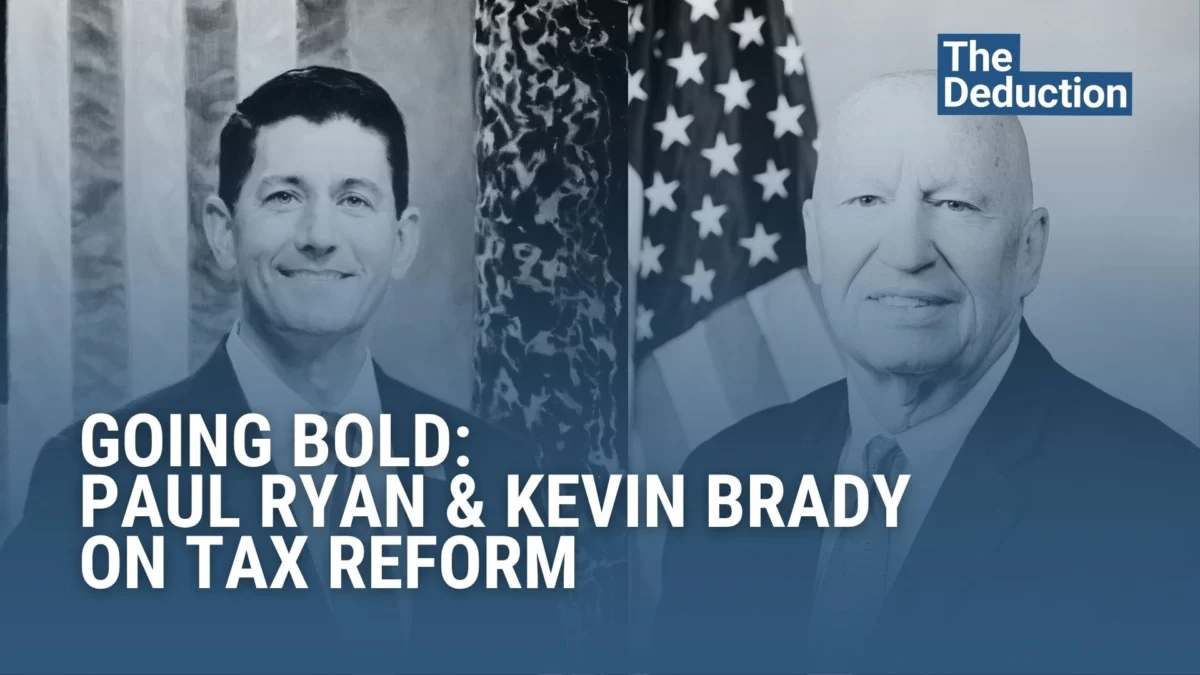
Ten years ago, a seminal moment in American fiscal policy unfolded with the unveiling of the "Better Way" Tax Plan by then-Speaker Paul Ryan and Ways and Means Chairman Kevin Brady. This comprehensive blueprint served as the foundational architecture for what would become the Tax Cuts and Jobs Act (TCJA) of 2017, marking the most significant overhaul of the U.S. tax code in over three decades. As the nation grapples with escalating national debt, the looming insolvency of Social Security, and a global economy increasingly shaped by tariffs and geopolitical shifts, the insights gleaned from a decade of the TCJA’s influence are proving invaluable for charting the course of future economic reforms.
The anniversary of this ambitious reform is being commemorated through a special episode of The Deduction podcast, where hosts Erica York and Kyle Hulehan engage in a deep dive with the original architects of the plan. This retrospective offers a unique opportunity to understand the intricate process of its formulation, the bold strategic decisions made—and those that ultimately did not materialize, such as the proposed border adjustment tax—and to critically evaluate its economic impact with the clarity of hindsight. The discussions underscore the enduring complexities and trade-offs inherent in any large-scale tax reform, particularly as the nation confronts a new era demanding equally audacious, yet carefully considered, policy solutions.
The Genesis of "A Better Way": A Response to Economic and Political Imperatives
The "Better Way" Tax Plan emerged from a period of intense Republican focus on economic growth and regulatory reform following years of perceived stagnation and a complex, uncompetitive tax system. Released in June 2016, the plan was the culmination of extensive internal deliberations within the House Republican caucus, driven by a desire to simplify the tax code, stimulate domestic investment, and enhance American competitiveness on the global stage.
At the heart of the "Better Way" proposal was a dual objective: to make the United States a more attractive place for businesses to operate and to provide tax relief for individuals and families. Proponents argued that the existing U.S. corporate tax rate of 35% was among the highest in the industrialized world, incentivizing companies to move profits and even operations overseas. The individual tax code, conversely, was criticized for its complexity, numerous loopholes, and perceived burden on middle-income earners.
The political backdrop was equally significant. Following the 2008 financial crisis and a period of slow recovery, there was a strong political appetite, particularly within conservative circles, for policies aimed at spurring job creation and economic expansion. The "Better Way" plan sought to articulate a clear, conservative vision for economic renewal, positioning itself as a stark alternative to the existing tax structure. It laid out a comprehensive framework that included significant reductions in corporate and individual income tax rates, the elimination of many deductions and credits, and a shift towards a more territorial international tax system.
The Tax Cuts and Jobs Act of 2017: Key Provisions and Legislative Journey
Following the election of President Donald Trump in November 2016, who had campaigned on a platform of tax cuts and deregulation, the "Better Way" plan gained significant momentum. It formed the bedrock for the Tax Cuts and Jobs Act (TCJA), which was swiftly navigated through Congress in late 2017. The legislative process was marked by rapid drafting, intense partisan debate, and ultimately, passage along largely party-line votes.
Key Provisions of the TCJA:
- Corporate Tax Rate Reduction: The most significant change was the permanent reduction of the corporate income tax rate from 35% to a flat 21%. This was a central pillar of the argument for increased business investment and competitiveness.
- International Taxation: The U.S. shifted from a worldwide tax system to a modified territorial system. This meant that U.S. corporations would generally no longer pay U.S. tax on most foreign-earned profits, aiming to reduce the incentive for companies to hold profits offshore. It also included a one-time repatriation tax on accumulated foreign earnings.
- Pass-Through Business Deduction: A new 20% deduction for qualified business income from pass-through entities (such as sole proprietorships, partnerships, and S corporations) was introduced, subject to various limitations.
- Individual Income Tax Changes:
- Rate Reductions: Most individual income tax rates were lowered, though the number of brackets remained at seven.
- Standard Deduction Increase: The standard deduction was nearly doubled, aiming to simplify filing for many taxpayers.
- Personal Exemptions Eliminated: Personal exemptions were eliminated.
- Child Tax Credit Expansion: The Child Tax Credit was doubled from $1,000 to $2,000 per child, with a portion becoming refundable.
- State and Local Tax (SALT) Deduction Cap: The deduction for state and local taxes was capped at $10,000, a contentious provision particularly impacting high-tax states.
- Mortgage Interest Deduction Limitation: The deduction for new mortgage interest was limited to loans up to $750,000.
- Estate Tax Exemption Increase: The estate tax exemption was significantly increased.
- Individual Mandate Repeal: The penalty for not having health insurance under the Affordable Care Act’s individual mandate was effectively repealed.
- Expensing: Businesses were allowed to immediately expense 100% of the cost of certain qualified new and used business property, aiming to stimulate capital investment.
Crucially, many of the individual tax provisions were set to expire at the end of 2025, a fiscal maneuver designed to comply with Senate budget rules (the Byrd Rule) and avoid adding to the deficit beyond a 10-year window, at least on paper. This sunset provision has set the stage for a significant future debate over whether to extend, modify, or allow these provisions to lapse.
Economic Impact and Hindsight: A Decade of Data
A decade provides sufficient time to begin assessing the true economic footprint of the TCJA, allowing for a comparison of initial projections against actual outcomes. Proponents argued the tax cuts would unleash a wave of investment, job creation, and wage growth, leading to a self-financing expansion that would largely offset the revenue loss. Critics, conversely, warned of ballooning deficits, increased income inequality, and limited benefits for average Americans.
Gross Domestic Product (GDP) Growth:
Following the TCJA’s passage, the U.S. economy did experience robust growth. Real GDP growth reached 2.9% in 2018 and 2.3% in 2019, exceeding the roughly 2% average seen in the years prior. While proponents attributed this acceleration directly to the tax cuts, economists often point to a combination of factors, including robust global growth, deregulation efforts, and increased government spending, making it challenging to isolate the TCJA’s precise contribution. The Congressional Budget Office (CBO) and other non-partisan analyses generally concluded that the TCJA provided a modest boost to GDP in the short term but projected a diminishing effect over the long run.
Business Investment and Repatriation:
One of the primary goals was to encourage domestic investment. Business investment (nonresidential fixed investment) did see an uptick in 2018, growing by 6.4%, but this momentum largely tapered off in subsequent years, and some analyses suggested that the increase was not as substantial or sustained as predicted.
The repatriation of foreign profits was significant, with hundreds of billions of dollars brought back to the U.S. However, a substantial portion of these funds was often used for share buybacks, dividend payments, and debt reduction rather than exclusively for new capital expenditures or wage increases, leading to debate over the effectiveness of the repatriation incentive.
Wages and Employment:
The unemployment rate continued its downward trend, reaching a 50-year low of 3.5% prior to the COVID-19 pandemic. Wage growth also saw some acceleration, particularly for lower-income workers, though it remained relatively modest compared to historical expansions and some initial projections by proponents of the tax cuts. Many economists observed that while the labor market was strong, a direct, substantial, and sustained surge in wages directly attributable to the TCJA proved difficult to definitively quantify beyond broader economic trends.
National Debt and Revenue:
Perhaps the most contentious impact has been on the national debt. The CBO initially projected the TCJA would add approximately $1.9 trillion to the national debt over the 2018-2027 period. In reality, the revenue collections after the TCJA’s implementation fell short of what might have been expected without the cuts, and coupled with increased government spending, the national debt accelerated significantly. The federal deficit surpassed $1 trillion in 2019, even before the pandemic, a phenomenon rarely seen during periods of economic expansion. The argument that the tax cuts would "pay for themselves" through dynamic scoring and economic growth largely did not materialize to the extent predicted by the most optimistic forecasts. By the end of 2023, the national debt had climbed to over $33 trillion, with the TCJA widely cited as a contributing factor to the widening fiscal gap.
Perspectives from Architects, Proponents, and Critics
The architects of the "Better Way" plan, Paul Ryan and Kevin Brady, reflect on its enduring impact with a mix of satisfaction and realism. In the anniversary podcast, they would likely emphasize the successes: the enhanced competitiveness of American corporations, which now operate under a more favorable tax regime, and the simplification of the code for many individuals due to the increased standard deduction. They might point to the robust pre-pandemic economy as evidence of its positive effects.
However, they would also candidly acknowledge the "bold bets that didn’t pan out." The most prominent example is the border adjustment tax, a highly ambitious proposal designed to tax imports and exempt exports, which was ultimately dropped due to fierce opposition from various industries and consumer groups. This particular failure highlights the immense political challenges of fundamental tax reform. They might also concede that while the corporate rate cut was successful, the full extent of the anticipated domestic investment and wage growth may not have materialized as rapidly or substantially as initially hoped, or that other economic headwinds and global factors complicated a clean assessment.
Proponents of the TCJA, often from conservative think tanks and business associations, continue to argue that the law successfully spurred economic activity, repatriated capital, and made U.S. companies more competitive globally. They might contend that any increase in the national debt was more a result of unchecked government spending rather than the tax cuts themselves, or that the long-term benefits outweigh the short-term fiscal costs. They also highlight the benefits for small businesses through the Section 199A deduction.
Critics, primarily from Democratic circles and progressive economic groups, maintain that the TCJA disproportionately benefited corporations and wealthy individuals, exacerbating income inequality while adding trillions to the national debt. They would point to data showing that the largest share of the tax cuts flowed to the top income brackets and that corporate stock buybacks often took precedence over new investment or significant wage increases for the majority of workers. They argue that the promised trickle-down effects largely failed to materialize for average Americans, and that the law was a fiscally irresponsible giveaway.
Social and Distributional Effects
An essential aspect of assessing the TCJA’s legacy is its impact on different segments of the population. Analyses from organizations like the Tax Policy Center consistently show that the benefits of the TCJA were not evenly distributed. In the initial years, while most income groups saw some tax reduction, the largest percentage cuts in federal taxes went to high-income households. Corporations, of course, saw their statutory rate drop significantly.
The cap on the State and Local Tax (SALT) deduction was particularly impactful for high-income earners in high-tax states, generating significant political backlash and becoming a recurring point of contention. Conversely, the increased standard deduction and expanded Child Tax Credit provided tangible relief for many middle-income families, simplifying their tax filing and reducing their liability, even as personal exemptions were eliminated.
The long-term distributional effects remain a subject of debate, particularly as the individual provisions are set to expire. If these provisions are allowed to lapse, millions of Americans could face higher tax bills, while the permanent corporate tax cut would remain, further shifting the burden or benefits.
The Lingering Shadow: National Debt and Fiscal Challenges
The most significant and enduring challenge posed by the TCJA is its contribution to the nation’s burgeoning national debt. While the tax cuts were not the sole driver of increased deficits—government spending also rose significantly during this period—they undeniably reduced federal revenue at a time when spending commitments were already substantial and projected to grow.
The current fiscal landscape, characterized by a national debt exceeding GDP and mounting entitlement obligations (Social Security, Medicare), intensifies the pressure for future fiscal prudence. The insolvency projections for Social Security, as highlighted in the original text, are particularly concerning, necessitating difficult policy choices that will likely involve either revenue increases, benefit reductions, or a combination of both. The TCJA’s impact on revenue capacity complicates these future negotiations, as any new reforms will start from a lower baseline.
Looking Ahead: The Future of Tax Reform
As the 2025 sunset date for many TCJA individual provisions approaches, the stage is set for an intense political battle over the future of U.S. tax policy. This upcoming debate will occur against a backdrop of complex economic realities: persistent inflation, potential economic slowdowns, and the continuing need to fund critical government services and address the national debt.
The next round of reforms, as the original article implies, will indeed demand "bold ideas and a serious look at the trade-offs they carry." Policymakers will face a stark choice:
- Extend the expiring provisions: This would maintain the current tax structure for individuals but would add trillions more to the national debt over the next decade.
- Allow provisions to expire: This would result in higher taxes for many Americans but would provide some relief to the national debt trajectory.
- Undertake a new comprehensive reform: This could involve re-evaluating both corporate and individual rates, exploring new revenue sources, and addressing the fiscal challenges posed by entitlements.
The experience of the TCJA underscores the difficulty of achieving bipartisan consensus on tax reform. The border adjustment tax, a major component of the original "Better Way" plan, exemplifies how politically unfeasible even economically sound (in theory) ideas can be when they face strong opposition from vested interests. Future reforms will need to contend with powerful lobbying efforts, deep partisan divides, and the inherent complexity of balancing economic growth, fiscal responsibility, and distributional equity.
The anniversary of the "Better Way" plan is not merely an occasion for historical reflection; it is a critical juncture for policymakers to learn from the past decade’s successes and shortcomings. The insights from its architects, combined with objective data and diverse economic analyses, offer a crucial foundation for navigating the formidable tax and fiscal challenges that lie ahead for the United States. The path forward will undoubtedly require courage, compromise, and a clear-eyed understanding of the profound implications of any proposed changes to the nation’s economic bedrock.