Layla Zulfa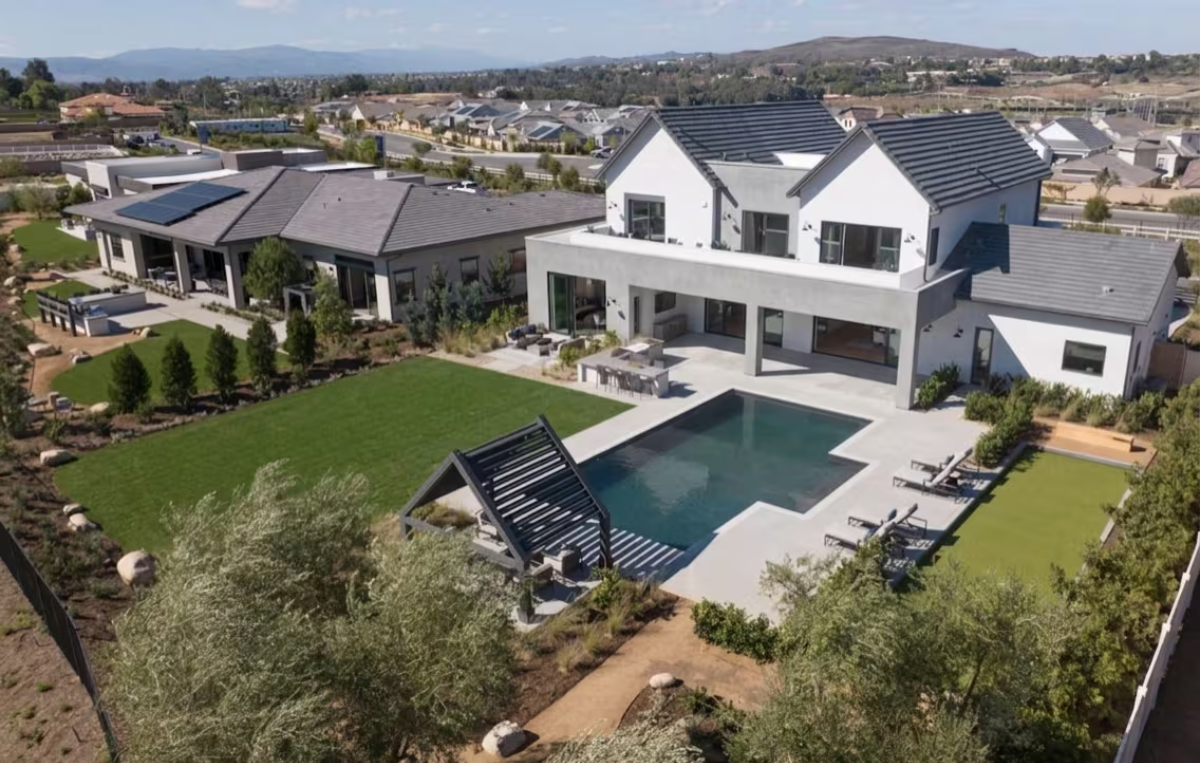
Sommers Bend, the pioneering SHAWOOD community developed by Japan-based Sekisui House Ltd. in the United States, has been honored with the Award of Excellence in the Construction and Development Project category at the 9th JAPAN Construction International Award. This significant accolade, announced on Thursday, underscores the innovative approach and high standards Sekisui House is bringing to the U.S. housing market. The award, conferred by Japan’s Ministry of Land, Infrastructure, Transport and Tourism (MLIT), represents a landmark achievement, marking the first time a detached-home community development has received this distinguished honor. Launched in fiscal year 2017, the JAPAN Construction International Award aims to recognize and promote "Quality Infrastructure" projects involving Japanese companies operating globally, thereby supporting their international expansion efforts.
A New Benchmark in U.S. Residential Development
Located in the picturesque city of Temecula, California, Sommers Bend is a meticulously planned 57-lot detached-home community that commenced sales of its SHAWOOD homes in early 2024. This project represents a strategic extension of Sekisui House’s comprehensive, Japan-honed integrated system, which encompasses every stage from initial research and development, through design, production, procurement, and ultimately to construction management. By applying this robust framework to the U.S. market, Sekisui House is introducing a new paradigm for residential construction.
The homes at Sommers Bend are a testament to Sekisui House’s engineering prowess, featuring the company’s proprietary S-MJ construction system. This innovative system is an evolution of Japan’s time-tested post-and-beam method, ingeniously combined with locally sourced 2×4 framing. This hybrid construction approach has been lauded for creating a highly replicable framework that consistently delivers high-quality homes. Crucially, it enables larger interior openings and seamless indoor-outdoor connections, features highly sought after by Western buyers. The result is a living environment that harmonizes Japanese precision with American lifestyle preferences.
The innovative design and construction of Sommers Bend have not gone unnoticed within the U.S. homebuilding industry. In 2024 alone, the community garnered significant recognition, receiving a prestigious SoCal MAME Award and the highest honor at the PCBC Gold Nugget Awards. The accolades continued into 2025, with Sommers Bend securing Gold Awards – the top recognition in their respective categories – in four key areas at The Nationals: for the community as a whole, for two meticulously designed model homes, and for its state-of-the-art sales center. These awards collectively highlight the project’s exceptional quality, design, and market appeal.
Focus on Resilience and Decarbonization: A Forward-Thinking Approach
The MLIT’s evaluation committee specifically cited Sommers Bend for its exceptional combination of environmental performance, structural durability, and disaster resilience. This holistic approach aligns with global efforts to create sustainable and secure living environments. A key feature of every home at Sommers Bend is its adherence to net-zero energy home (ZEH) specifications. As standard, each residence is equipped with integrated solar power generation systems and advanced battery storage solutions, significantly reducing its carbon footprint and enhancing energy independence for homeowners.
The project’s emphasis on durability is rooted in Sekisui House’s extensive experience, particularly its disaster-response initiatives in Japan. Highly durable structural components and materials, developed and rigorously tested at Sekisui House’s dedicated research facilities, were highlighted by the award committee. This commitment to robust construction aims to deliver homes that are not only long-lasting but also exceptionally capable of withstanding natural hazards, while simultaneously reducing lifecycle emissions. The careful selection and application of certified timber, sourced with strict attention to legality and biodiversity, further underscores the project’s environmental stewardship.
Furthermore, Sekisui House promotes efficient construction practices, including pre-cutting and pre-setting of components in controlled factory environments. This method significantly minimizes construction waste on-site, contributing to a more sustainable building process. For U.S. builders and developers, especially those navigating increasingly stringent state and local energy codes, notably in California, the Sommers Bend model offers a compelling blueprint. It demonstrates how factory-prepared assemblies and standardized ZEH features can be effectively deployed at a community scale, providing a replicable solution for high-performance housing.
Technology Transfer and Workforce Development: Building Capacity for the Future
Beyond the tangible aspects of the homes themselves, the JAPAN Construction International Award recognized Sekisui House’s profound commitment to technology transfer and the development of a skilled workforce. Recognizing the critical need for expertise in their advanced construction methods, the company has invested in comprehensive training programs. This includes the production of English-language construction manuals and instructional videos, alongside hands-on training opportunities conducted directly in the United States. To foster a deeper understanding and mastery of precision construction, select individuals are also offered training opportunities in Japan. This multi-faceted approach is designed to build local capacity and ensure the consistent delivery of high-quality homes.
This dedication to repeatable quality is particularly significant at a time when U.S. builders are grappling with chronic labor shortages, especially in high-cost Western markets. A more standardized building system, bolstered by detailed and accessible training, has the potential to reduce reliance on a limited pool of highly specialized trades while concurrently maintaining stringent quality control. This approach can lead to greater efficiency and predictability in project timelines and outcomes.
Sekisui House has managed the Sommers Bend project comprehensively, overseeing every phase from initial land development through vertical construction and sales. The community itself serves as a full-scale showroom, featuring beautifully appointed model homes, an interactive Experience Center, guided site tours, and open-day events. These initiatives are designed to educate and engage buyers, policymakers, and industry partners, providing them with a firsthand introduction to SHAWOOD’s innovative structural system, the aesthetic appeal and performance of Bellburn ceramic exterior wall panels, and the company’s overarching environmental initiatives.
Implications for U.S. Builders and the Housing Market
The Japan Construction International Award program, which focuses on overseas architectural, civil engineering, and development projects involving Japanese companies in planning, design, construction, or technology provision, signals a significant endorsement of Sekisui House’s U.S. strategy. The recognition for Sommers Bend suggests that the company’s U.S. SHAWOOD platform is rapidly gaining credibility, not merely as a novel design concept, but as a robust, exportable, and scalable delivery system for modern housing.
For U.S. builders, land developers, and investors, Sommers Bend presents a compelling case study. It illustrates how an industrialized building approach – one anchored in factory-prepared components, a high-performance building envelope, and standardized rooftop solar-plus-storage solutions – can be effectively applied to the for-sale detached housing sector. Importantly, this can be achieved without the product being exclusively positioned at the ultra-luxury price point, making high-quality, sustainable housing more accessible.
The project also aligns seamlessly with broader policy trends and market demands. California’s stringent energy code mandates solar installations on most new homes, and jurisdictions across the Western United States are progressively tightening resilience standards in response to escalating concerns about wildfires, extreme heat events, and grid reliability. A master-planned community like Sommers Bend, where every home is inherently equipped with generation and storage capabilities, directly addresses these evolving regulatory requirements and market pressures, offering a proactive solution for future-proof living.
SHAWOOD’s Ambitious Expansion Plan
Sekisui House first introduced the SHAWOOD concept to U.S. audiences with "Chōwa," a groundbreaking concept home showcased at the International Builders’ Show in Las Vegas in 2020. This was followed by Talon Ridge in 2021, a six-home pilot project that served as a crucial testing ground for their innovative construction methods in the American context. Sommers Bend represents a significant leap forward, marking the company’s first master-planned SHAWOOD community in the U.S. designed for mass production, with a focus on scale and market accessibility.
Looking ahead, Sekisui House has ambitious plans for expansion, primarily targeting the West Coast in collaboration with local builders. The company has set an ambitious goal of delivering 3,000 SHAWOOD homes annually in the United States by 2031. This projected level of output would elevate SHAWOOD from a niche demonstration product to a meaningful contender in select Western metropolitan areas. This expansion is particularly strategic in regions where land constraints, seismic risks, and high energy prices make quality, performance, and sustainability key differentiators for homebuyers.
Sekisui House articulates its global vision as "Make Home the Happiest Place in the World," a mission it aims to achieve by contributing to the development of high-quality housing stock and fostering disaster-resilient, sustainable communities. For professionals in the U.S. housing sector, the recent recognition for Sommers Bend serves as a strong indicator that Japanese building technologies and delivery practices are poised to make a more significant impact on mainstream American subdivisions over the next decade, with coastal states likely to be at the forefront of this adoption. The award is not just a recognition of past achievement but a clear signal of future innovation and influence in the American residential construction landscape.