Nila Kartika Wati
The State of Colorado is preparing for a landmark dual anniversary in 2026, marking both the 250th anniversary of United States independence and the 150th anniversary of Colorado’s statehood. This "Sesquisemiquincentennial" celebration arrives at a pivotal moment in the American sociopolitical landscape, where the interpretation of national history has become a subject of intense debate. While federal narratives have faced criticism for the perceived "whitewashing" of historical exhibitions, Colorado officials have launched a comprehensive effort to ensure the state’s commemoration is defined by inclusivity, equity, and a rigorous examination of both its triumphs and its darker chapters.
Central to this effort is the America 250–Colorado 150 Commission, a body established to oversee the festivities and legacy projects associated with the anniversaries. Unlike many historical commissions of the past, this group was founded with explicit commitments to diversity, equity, and inclusion (DEI). The commission’s mandate is to foster a commemorative environment where all residents can find a personal and cultural connection to the state’s narrative. Jason Hanson, a commissioner and Chief Creative Officer at History Colorado, emphasized that the guiding principle is to create conditions for a commemoration that feels authentic to every participant, whether they choose to celebrate unity or reflect on the complexities of a shared, sometimes painful, history.
History Colorado, a state agency and 501(c)(3) charitable organization founded in 1879, serves as the primary engine for these initiatives. The agency operates regional museums, manages the flagship History Colorado Center in Denver, and oversees the state’s historic preservation efforts. Through the commission and its advisory council—which includes educators, business leaders, elected officials, and representatives from Native American tribes—the state has embarked on 13 "Signature Initiatives" designed to reshape the public’s understanding of what constitutes Colorado’s heritage.
Reevaluating the Registry: The Colorado Heritage for All Project
One of the most significant pillars of the 2026 commemoration is the "Colorado Heritage for All" project. This initiative was born from a data-driven realization: the current state and national registers of historic places do not accurately reflect the diversity of the people who built Colorado. An internal analysis conducted by History Colorado revealed that less than 4 percent of the state’s registered historic sites were associated with underrepresented communities, including people of color, the LGBTQ+ community, women, and individuals with disabilities.
Damion Pechota, Senior National and State Register Historian at History Colorado, noted that this disparity is not unique to Colorado but reflects a nationwide trend in historic preservation. Historically, the criteria for "significance" leaned heavily toward architectural merit—grand mansions, unique engineering, or high-style aesthetics. This "building-first" approach often ignored the cultural and social history of sites that might be architecturally modest but were central to the lives of marginalized groups.
The Colorado Heritage for All project has set an ambitious goal: to add 150 new sites representing underrepresented communities to the State Register of Historic Properties by the end of 2026. As of late 2024, the project has already successfully added 106 sites, indicating a rapid acceleration in the state’s efforts to diversify its official history.
Among the sites being reevaluated is the Denver home of Margaret "Molly" Brown. While the property is already on the register, its listing originally focused on its architectural style. Current efforts aim to amend the documentation to center on Brown’s legacy as a social activist, philanthropist, and survivor of the Titanic, providing a more "people-centered" historical context. Similarly, the project is working to include the last remaining home of Black American homesteaders in the Dearfield area. Despite being a "kit house" from a catalog with little architectural flair, its rarity and its connection to the history of Black settlement in the West make it an invaluable piece of the Colorado story.
A Chronology of Statehood: The Struggle for the 38th Star
The path to Colorado’s statehood, often presented as a straightforward progression of Western expansion, is being reexamined through the "38th Star" exhibition. Developed by History Colorado historian Katherine Mercier, the project highlights the fact that Colorado’s admission to the Union was a fraught process that took multiple attempts over several decades.
The research reveals that those excluded from the political process were often the most influential in shaping the state’s eventual formation. In the mid-19th century, the Hispano population—comprising Spanish settlers and Indigenous people of Mexico who became U.S. citizens following the Mexican-American War—found themselves caught in a bureaucratic shift. When a portion of the New Mexico Territory was incorporated into the new Colorado Territory, the center of government moved to Denver. The new territorial government initially refused to translate legal documents or laws into Spanish, leading many Hispano residents to vote against early statehood referendums in protest of their lack of representation.
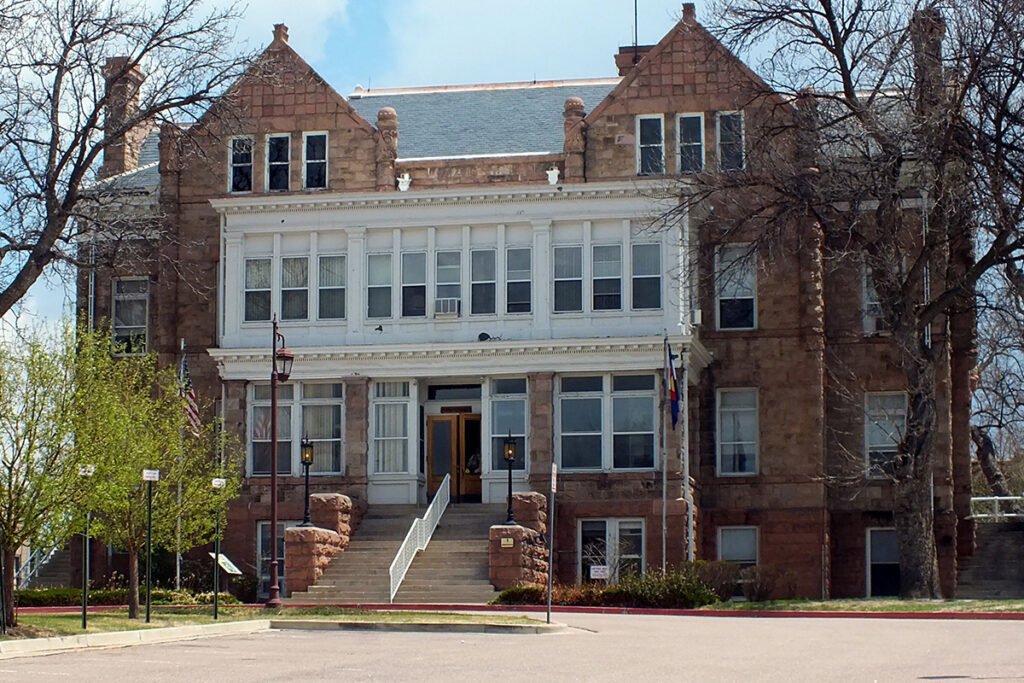
Simultaneously, Black Coloradans were engaged in their own struggle for enfranchisement. In the 1860s, a proposed state constitution specified that only white men over the age of 21 would be allowed to vote. In response, Black residents organized and signed petitions against statehood, preferring to remain a territory under federal oversight rather than enter a statehood that codified their exclusion. It was not until 1875, when the local government finally agreed to translate official documents into Spanish and German, that enough support was garnered to pass the statehood measures, leading to Colorado’s admission as the 38th state in 1876.
However, this progress did not extend to everyone. Indigenous populations, including the Ute, Cheyenne, and Arapaho peoples, remained disenfranchised and were largely removed from their ancestral lands as statehood was solidified. The 38th Star initiative includes direct consultation with tribal representatives to acknowledge that for many, statehood was a force of displacement rather than a cause for celebration.
Preserving Living History: The Portrait of Colorado at 150
While the state register documents physical buildings, the "Portrait of Colorado at 150" project focuses on the intangible: the voices and memories of living residents. This oral history initiative provides community partners across the state with recording kits and technical training to collect stories in their own words.
Project lead Kim Kennedy White emphasizes that community members are the primary experts on their own histories. By moving away from a rigid, top-down interviewing style, the project allows narrators to define what is important about their experiences. This grassroots approach ensures that the state’s archives will include the perspectives of rural farmers, urban activists, immigrant families, and blue-collar workers whose stories might otherwise be lost to time.
One such story involves the Lung family, long-time residents of Denver’s historic Chinatown. Linda Lung, a descendant of the family, worked with History Colorado to get her family’s home on Vine Street—which housed generations of Chinese Americans from 1949 to 1977—recognized on the register. For the Lung family, the plaque on the building is more than a marker; it is a public acknowledgment of the contributions Chinese American families made to Denver’s development during an era of significant racial tension.
Implications and the Future of Preservation
The proactive stance taken by Colorado officials stands in contrast to recent federal trends where DEI programs have faced budget cuts and political opposition. In some jurisdictions, terms like "diversity" and "equity" have been removed from government websites and educational curricula.
In Colorado, however, the momentum appears to be moving in the opposite direction. Historians like Damion Pechota argue that this work is a necessary form of "corrective preservation." By actively seeking out suggestions from the public rather than waiting for formal applications, the state is attempting to build trust with communities that have historically been skeptical of government institutions.
The economic implications of these initiatives are also noteworthy. Inclusive historic preservation has been shown to bolster heritage tourism, drawing visitors who are interested in a more complete and diverse American narrative. By broadening the scope of what is considered "historic," Colorado is positioning itself as a leader in a more modern, culturally relevant form of tourism and education.
As the 2026 deadline approaches, the America 250–Colorado 150 Commission maintains that these projects are not temporary celebratory gestures. The goal is to fundamentally change how preservation and history are conducted in the state. Even after the anniversary banners are taken down, the expanded state register, the archived oral histories, and the updated museum exhibitions will remain as a permanent infrastructure for a more inclusive state identity.
The work of the commission serves as a reminder that history is not a static collection of facts, but a continuous process of discovery and reinterpretation. By asking "Whose Colorado is being celebrated?" the state is moving toward a future where the answer is, for the first time, truly everyone.