Layla Zulfa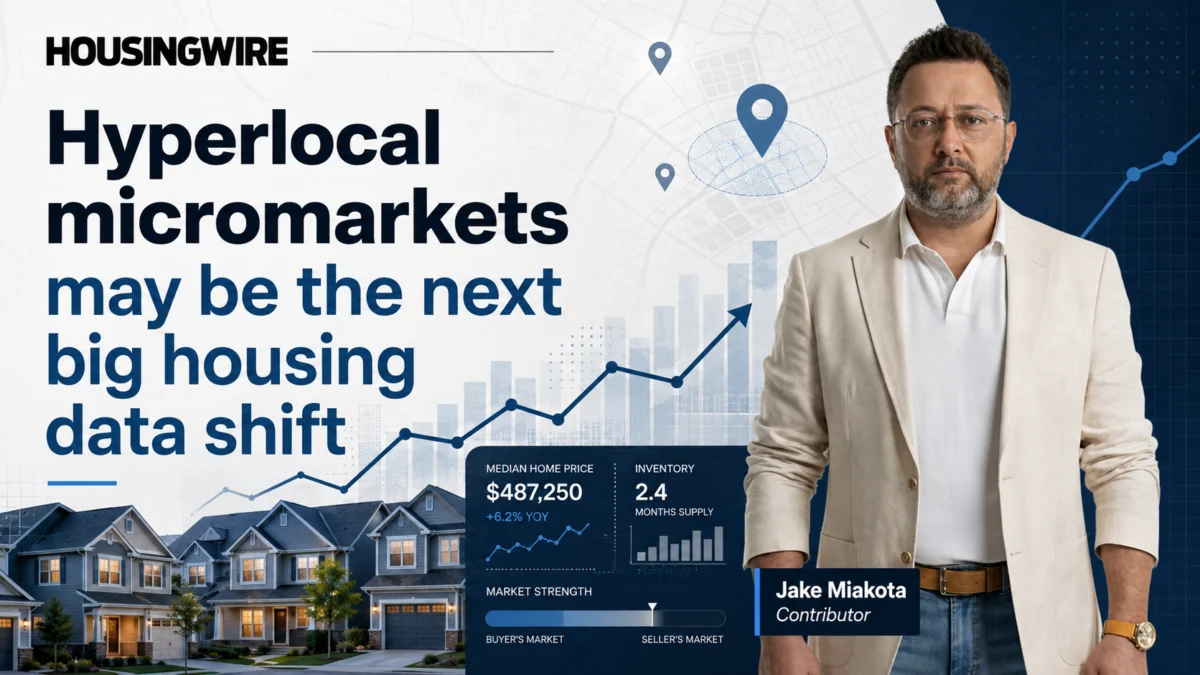
The real estate industry’s enduring mantra, "real estate is local," rings true, yet the definition of "local" often proves to be remarkably broad, obscuring the granular data crucial for accurate property valuation and decision-making. While cities are segmented into ZIP codes, and ZIP codes can encompass multiple neighborhoods, the true competitive landscape for an individual property often lies within even finer distinctions: subdivisions, specific developments, individual buildings, and closely competing sets of properties. This shift from broad geographic averages to a hyper-localized view presents a significant, yet increasingly vital, data challenge for residential real estate.
Beyond ZIP Codes: The Nuance of Housing Markets
ZIP codes, while convenient for aggregation and broad communication, were never designed to delineate housing markets. Established by the U.S. Postal Service primarily for efficient mail sorting and delivery, they can inadvertently group disparate housing types and buyer demographics. Similarly, neighborhoods, while offering more recognizable local context, are not synonymous with housing markets. A neighborhood might contain a mix of single-family homes, townhouses, condominiums, and even gated communities, each serving distinct buyer pools and experiencing unique inventory, pricing, and competitive dynamics.
Fannie Mae and Freddie Mac, key players in the mortgage industry, have explicitly recognized this distinction. Their definitions of a property’s "market area" focus on the origin of demand and the location of its primary competition. Fannie Mae acknowledges that even adjacent properties can possess different market areas if their characteristics appeal to varied market segments. This emphasis on competition, rather than mere proximity, underscores the shift toward a more nuanced understanding of real estate value. As one industry insider noted, "Local describes proximity, but a market describes competition. The real challenge is accurately identifying that competition."
Defining Hyperlocal: Not Just a Smaller Circle
The common misconception is that achieving hyperlocal market resolution simply involves drawing a smaller geographic circle around a property. This is an oversimplification. Consider a condominium unit in a high-rise building. While the ZIP code offers a broad overview, and the neighborhood provides closer context, the building itself may be the most relevant unit of analysis. However, even within a single tower, variations in floor, unit layout, exposure, view, condition, and ownership costs can significantly influence which units buyers consider as direct alternatives.
Furthermore, the analysis may need to extend beyond the immediate building. A buyer contemplating a condo in one tower might simultaneously be evaluating units in two or three competing buildings in the vicinity. Consequently, the relevant market can paradoxically become both narrower and broader: narrower in its precise understanding of the subject property’s unique attributes and broader in its identification of where its true competitive set resides.
This complexity highlights why a residential "micromarket" should not be viewed as merely a tiny geographical space. Housing researchers have long studied "submarkets"—groups of dwellings that function as closer substitutes for one another than for properties outside their group. These relationships are influenced by location, property characteristics, price points, neighborhood quality, and prevailing buyer preferences. The term "micromarket" serves as practical industry language for applying this concept at a finer resolution, encompassing subdivisions, specific developments, condominium projects, individual buildings, or any concentrated segment where meaningful market relationships emerge.
The Data Challenge: From Records to Relationships
The real estate sector is not wanting for property records. The more arduous task lies in extracting meaningful insights from this wealth of data. While standards like the RESO Data Dictionary provide valuable structure, such as a "SubdivisionName" field, the inherent ambiguity of textual data can hinder true market understanding. For instance, a field might contain "Palm Beach Towers" or "Palm Beach Tower." Are these the same development? Does a named project comprise multiple distinct buildings? Are two phases of a subdivision to be considered a single market or separate entities? Identifying which nearby communities are direct competitors and which specific homes within a development are truly comparable requires more than just standardized fields.
This is where entity resolution, normalization, classification, and sophisticated modeling of relationships between properties, buildings, communities, and competitive alternatives become paramount. The underlying infrastructure for true hyperlocal market intelligence is built upon these less visible, yet critical, data processing capabilities. As one data scientist observed, "A schema can tell software where to store a name, but it doesn’t automatically imbue that name with meaning in relation to its surroundings. That requires advanced analytical techniques."
The AI Imperative: Enhancing Market Definition
The accelerating integration of Artificial Intelligence (AI) into real estate analysis amplifies the importance of accurate market definition. AI models can process vast quantities of property data in mere seconds, summarizing listings, identifying patterns, and generating detailed explanations far faster than any human analyst could manually review the underlying datasets. However, the efficacy of these powerful AI tools is fundamentally contingent on the quality of the input data and the way the market context is defined.
An AI model might analyze every sale within a given ZIP code, but this does not automatically mean every sale represents a comparable transaction within the same market. Similarly, comparing every listing within a one-mile radius does not guarantee that all those listings compete for the same buyer. The risk is that sophisticated AI models, operating on poorly defined market parameters, can produce highly polished analyses of fundamentally flawed market assumptions.
Conversely, AI can also be instrumental in discovering market structures. A 2025 study published in EPJ Data Science, which utilized millions of online listings and network analysis, successfully identified spatial housing submarkets without relying solely on predefined administrative boundaries. This research suggests that market segmentation can be inferred from data relationships, rather than being exclusively imposed by geographical constraints. The crucial takeaway is the sequence of operations: market context must be defined first, and then interpreted. Without this foundational step, even the most advanced AI may lead to sophisticated misinterpretations of a poorly understood market.
2026: A Pivotal Year for Appraisal Data
The appraisal sector of the housing market is concurrently undergoing a significant data transition. The widespread adoption of Uniform Appraisal Dataset (UAD) 3.6, which entered broad production in January 2026 and became mandatory for all new appraisal reports submitted through the Uniform Collateral Data Portal (UCDP) by November 2, 2026, signifies a move towards a more flexible and dynamic structure for appraisal reporting. Fannie Mae has described this redesign as a key component of its strategy to modernize appraisal data.
While UAD 3.6 does not directly solve the challenge of defining residential micromarkets, it represents a broader trend in housing technology: the push towards richer, more structured, and increasingly machine-readable property information. The next frontier in this evolution lies not just in structuring data for individual properties but in effectively structuring the complex relationships that exist between them.
The Future of Real Estate Data: Relevance Over Proximity
Traditional metrics, such as city-wide, ZIP code, and neighborhood statistics, will continue to hold value, offering insights into broader housing market conditions. However, decisions concerning individual properties—whether for investment, valuation, or purchase—increasingly demand a higher level of resolution. For decades, real estate technology has excelled at answering the question of "where" a property is located. The next evolution in data will focus on answering a more complex and crucial question: "What does this property belong with?"
The fundamental truth that "real estate is local" remains. However, when the focus narrows to a single home, the definition of "local" often expands to encompass the specific competitive set that truly influences its value and market performance. This necessitates a deeper dive into the intricate web of relationships that define a property’s true market context, moving beyond simplistic geographic boundaries to understand the nuanced dynamics of hyperlocal real estate. The journey toward more accurate and actionable real estate intelligence hinges on mastering this granular level of data analysis.
Jake Miakota, CEO of Subdivisions.com, emphasizes this point, stating, "The next useful data layer for the housing industry is hyperlocal. It moves beyond broad geographic averages to understand the specific competitive sets that truly impact an individual property’s value. This granular understanding is becoming increasingly critical as technology advances." The implications of this shift are far-reaching, impacting everything from appraisal accuracy and mortgage underwriting to investment strategies and consumer decision-making. As the industry navigates this data evolution, the ability to accurately define and analyze these hyperlocal markets will become a significant competitive advantage.