Lina Irawan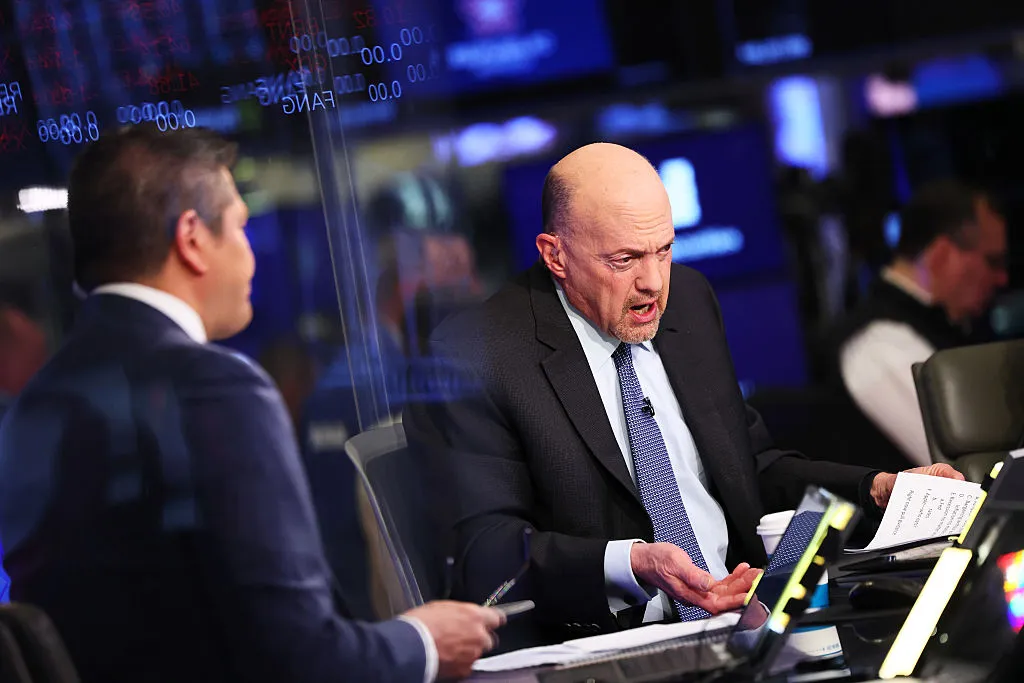
Jim Cramer, the prominent host of CNBC’s "Mad Money," has cultivated a significant following by offering frequent buy and sell recommendations to investors. While his approach has, at times, highlighted successful investments, it fundamentally embodies an active investing strategy—a methodology that extensive financial research suggests may not be optimal for the vast majority of individual investors. The efficacy of active stock picking, especially when compared to passive investment strategies, remains a critical topic for financial education, with robust data indicating that consistently outperforming market benchmarks is an exceedingly challenging endeavor, even for seasoned professionals.
The debate between active and passive investment management has been a cornerstone of modern financial theory for decades. Active management involves a portfolio manager or team making specific investment decisions, such as buying, selling, and holding individual stocks, with the goal of outperforming a particular market index. This approach often entails in-depth research, market timing, and a belief in the manager’s ability to identify mispriced securities. Conversely, passive investing seeks to replicate the performance of a market index, such as the S&P 500, by investing in all or a representative sample of the securities within that index. This strategy typically involves lower fees and minimal trading, relying on the long-term upward trend of the broader market.
Compelling evidence from S&P Global’s SPIVA (S&P Indices Versus Active) reports consistently underscores the difficulty of active management. For instance, data over the last 15 years reveals that approximately only 12% of U.S. large-cap active funds managed to outperform the S&P 500. This trend is not isolated to large-cap equities; similar patterns of underperformance are observed across various asset classes and market capitalizations, including mid-cap, small-cap, and international equities, and even fixed income. The SPIVA report, a semi-annual publication, serves as a benchmark for assessing the performance of active funds against their respective S&P Dow Jones benchmarks, offering a clear, data-driven perspective on the persistent challenge active managers face. The findings are often attributed to factors such as higher management fees, trading costs, and the inherent efficiency of financial markets, which make it difficult for any single investor or fund manager to consistently identify undervalued assets or predict market movements.
Jim Cramer, a former hedge fund manager, brings a dynamic, often theatrical style to financial commentary, making complex market discussions accessible and engaging for a wide audience. His recommendations frequently focus on identifying stocks with perceived momentum, often fueled by retail investor excitement, or conversely, advising selling when that enthusiasm appears to wane. This approach, while captivating, aligns with a short-term, sentiment-driven trading philosophy rather than a long-term, fundamentals-based investment strategy. The inherent risk in such an approach is that it often leads to buying assets when their prices are inflated due to speculative fervor and selling them precisely before a potential rebound, missing out on subsequent gains.
1. Navigating Market Hype and the Perils of Momentum Investing
The first crucial lesson gleaned from the challenges of active trading, particularly those highlighted by approaches like Cramer’s, is the imperative to exercise caution regarding market hype and short-term momentum. A prime example of this dynamic played out with the artificial intelligence infrastructure stock, IREN. In mid-December, after IREN had already experienced a significant downturn, losing more than half its value from its all-time high, Cramer advised investors to sell. This recommendation was seemingly based on a perception of fading retail investor excitement and momentum. However, the subsequent market performance of IREN sharply diverged from this advice, with the stock surging approximately 70% by the end of January. This illustrates a common pitfall: selling into a dip that later proves to be a temporary correction rather than a sustained decline.
Such instances highlight the influence of behavioral economics on investment decisions. Concepts like the "fear of missing out" (FOMO) often drive investors to chase rapidly rising assets, pushing prices to unsustainable levels. Conversely, panic selling during downturns, driven by loss aversion, can lock in losses and prevent participation in subsequent recoveries. For the typical investor, a more prudent strategy involves prioritizing fundamental analysis over speculative fervor. This entails evaluating a company’s intrinsic value, its business model, financial health, competitive landscape, and long-term growth prospects, rather than relying on transient market sentiment.
Furthermore, adopting a dollar-cost averaging strategy can significantly mitigate the risks associated with market timing and hype. Dollar-cost averaging involves investing a fixed amount of money at regular intervals, regardless of the stock’s price. This disciplined approach means that more shares are purchased when prices are low and fewer when prices are high, effectively averaging out the cost of investment over time. This strategy not only removes emotional decision-making from the investment process but also allows investors to capitalize on market downturns by accumulating more shares at reduced prices, while continuing to build their position during rallies. Over extended periods, dollar-cost averaging has proven to be a robust method for wealth accumulation, smoothing out market volatility and fostering consistent growth.
2. The Indispensability of Diversification in Portfolio Construction
A second critical takeaway from the challenges of following specific investment gurus or concentrating heavily on individual stocks is the paramount importance of diversification. While the allure of picking a single "winner" that yields astronomical returns is strong, the reality is that such outcomes are rare and incredibly difficult to predict consistently. Even highly experienced financial professionals, equipped with extensive resources and real-time market data, struggle to consistently beat the market. The inherent volatility and unpredictability of individual stock performance underscore the significant risk associated with concentrated portfolios.
Diversification, at its core, is a risk management strategy that involves spreading investments across a variety of assets, industries, and geographical regions. The goal is to minimize the impact of any single investment’s poor performance on the overall portfolio. A well-diversified portfolio ensures that one’s financial well-being is not overly reliant on the fortunes of a single company or sector. For instance, if an investor holds shares in multiple companies across technology, healthcare, consumer goods, and energy, a downturn in the technology sector might be offset by positive performance in healthcare, thereby stabilizing the overall portfolio’s returns.
Index fund investing offers a straightforward and highly effective means of achieving broad diversification. These funds are essentially baskets of securities designed to mirror the performance of a specific market index. By investing in an S&P 500 index fund, for example, an investor gains exposure to 500 of the largest U.S. companies, instantly diversifying across numerous industries and mitigating the idiosyncratic risk associated with individual stock picking. Exchange-Traded Funds (ETFs) offer similar diversification benefits, often providing exposure to broader market segments, international markets, or specific sectors, all while typically maintaining lower expense ratios than actively managed funds. The academic consensus overwhelmingly supports diversification as a cornerstone of sound investment strategy, emphasizing its role in risk reduction without necessarily sacrificing long-term returns.
3. Aligning Investment Strategy with Time Horizon and Financial Goals
The third fundamental lesson in prudent investing revolves around aligning one’s strategy with their individual risk tolerance, financial goals, and, most critically, their investment time horizon. Jim Cramer’s recommendations frequently gravitate towards short-term market movements and immediate stock performance. However, this short-term focus often diverges significantly from the needs of most long-term investors whose financial objectives, such as retirement planning, saving for a home, or funding education, span decades.
An investor’s time horizon dictates the appropriate level of risk they can comfortably undertake. Young investors, perhaps with 30-40 years until retirement, typically possess a longer time horizon, which allows them to absorb greater market volatility. They can afford to invest more aggressively in growth-oriented stocks and equity funds, as any short-term downturns have ample time to recover before the funds are needed. This allows them to harness the power of compounding over extended periods, maximizing their potential returns. For instance, historical data shows that over any 20-year rolling period, the S&P 500 has never posted a negative return, underscoring the benefits of a long-term equity allocation.
Conversely, investors approaching or already in retirement have a much shorter time horizon for drawing upon their investments to cover living expenses. For this demographic, capital preservation and income generation become paramount. Their portfolios should typically be structured with a greater allocation to lower-risk assets such as bonds, certificates of deposit (CDs), and other income-generating securities. While these assets may offer lower growth potential compared to equities, they provide greater stability and predictability, protecting the nest egg from significant market downturns just when funds are most needed. The "glide path" approach in target-date funds, for example, automatically adjusts asset allocation to become more conservative as an investor nears their retirement date, reflecting this principle.
Cramer’s frequent discussion of high-risk growth stocks, while potentially exciting, underscores a critical mismatch for retirees’ portfolios, which require a fundamentally different risk profile. Understanding one’s time horizon is not merely an academic exercise; it is a critical component of portfolio construction that directly influences asset allocation decisions and ensures the investment strategy remains aligned with personal financial realities.
The Broader Landscape of Investment Education and Financial Media
The prevalence of high-profile financial commentators like Jim Cramer highlights the complex relationship between financial entertainment and sound investment advice. While such personalities can engage audiences and raise awareness about the stock market, it is crucial for individual investors to differentiate between informative entertainment and actionable, personalized financial planning. The fast-paced, often sensationalized nature of live market commentary can inadvertently encourage speculative behavior and an overemphasis on short-term gains, distracting from the proven principles of long-term, diversified investing.
The challenges posed by active investing and the allure of market hype underscore the vital importance of financial literacy. Educating oneself on fundamental investment principles—such as compounding, diversification, risk management, and the difference between investing and speculating—is arguably the most valuable asset an individual investor can acquire. This knowledge empowers investors to make informed decisions that are tailored to their unique circumstances, rather than blindly following recommendations from any single source.
Moreover, the evolution of the financial advisory landscape offers more resources for individual investors. The rise of fee-only financial advisors, fiduciary standards, and robo-advisors provides avenues for obtaining objective, personalized investment guidance that prioritizes the client’s best interests. These resources often emphasize long-term financial planning, diversified portfolios, and strategies that align with an investor’s specific goals and risk tolerance, moving away from the short-term trading mentality.
In conclusion, while the world of active stock picking, as exemplified by figures like Jim Cramer, can be captivating, the broader financial landscape, supported by decades of data and academic research, consistently points towards the enduring power of disciplined, long-term, and diversified investment strategies. For the vast majority of investors, focusing on fundamentals, embracing dollar-cost averaging, ensuring broad diversification through vehicles like index funds, and meticulously aligning investment choices with their specific time horizon and financial goals offers a more reliable and less stressful path to wealth accumulation than attempting to beat the market through speculative, momentum-driven trading. Prudence, patience, and a well-informed approach remain the most potent tools in an investor’s arsenal.