admin
admin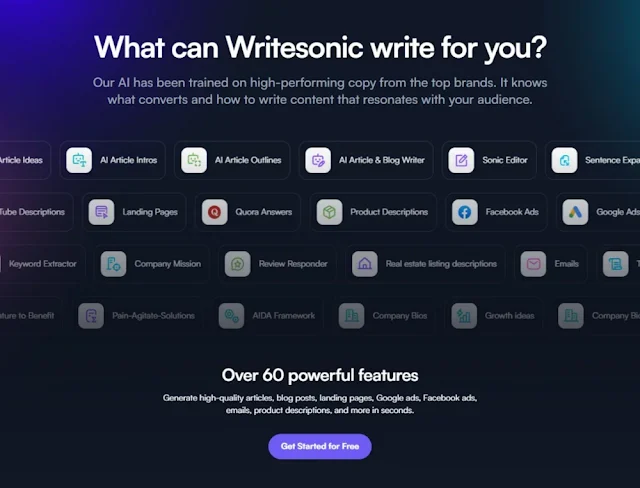
The digital landscape continues to evolve at an unprecedented pace, with content serving as the lifeblood of online presence, marketing, and communication. In this demanding environment, businesses and creators are constantly seeking methods to produce high-quality, engaging content both effectively and efficiently. This pursuit has propelled artificial intelligence (AI) content generators from niche tools to essential components of modern content strategies. These sophisticated platforms leverage advanced algorithms to assist in, or even automate, the creation of diverse content types, from marketing copy and social media posts to extensive blog articles and product descriptions. This report delves into the capabilities of leading AI content generation tools available in 2022, examining their features, operational nuances, and broader implications for the content industry.
The Paradigm Shift: AI’s Role in Content Creation

The integration of AI into content creation marks a significant paradigm shift, addressing long-standing challenges faced by content creators: time constraints, budget limitations, and the ever-increasing demand for personalized and SEO-optimized material. Historically, content generation was a labor-intensive process, requiring extensive research, drafting, and editing. The advent of sophisticated Natural Language Processing (NLP) models, such as those powering many contemporary AI tools, has democratized content production, enabling users with varying levels of writing expertise to generate coherent and contextually relevant text.
The evolution of AI in language processing can be traced back decades, from early rule-based systems to statistical models and, more recently, deep learning architectures like neural networks and transformer models. These advancements have allowed AI to understand context, generate human-like text, and even adapt to specific writing styles. The market for AI content tools has witnessed explosive growth, with industry reports indicating a compound annual growth rate (CAGR) that underscores the increasing reliance on these technologies across various sectors, from e-commerce and digital marketing to publishing and education. This surge is driven by the promise of enhanced productivity, consistency in brand voice, and the ability to scale content production without proportional increases in human resources.
Key Players in the AI Content Generation Arena (2022)
The market offers a diverse array of AI content generators, each with unique strengths tailored to specific needs. Below is an examination of some of the most prominent tools that defined the landscape in 2022.
1. Jasper AI (Formerly Jarvis)
Jasper AI, previously known as Jarvis, established itself as a frontrunner in the AI content generation space. It is designed to assist users in identifying optimal words and sentence structures, facilitating efficient, quick, and accessible content creation across various writing styles and mediums. Its rebranding reflected an expansion of capabilities and a focus on being a comprehensive AI writing assistant.

- Operational Philosophy: Jasper operates on a foundation of sophisticated AI models, guiding users through the content creation process. Instead of simply generating raw text, it aims to augment human creativity, helping users overcome writer’s block and refine their output.
- Notable Features: Jasper’s "Boss Mode" plan, priced at $99 per month, was particularly lauded for allowing users to directly command the AI within a document editor, significantly accelerating long-form content generation. Its extensive library of templates catered to diverse needs, from blog post outlines and introductions to ad copy and social media captions. The tool also boasted integration with SEO platforms, aiming to help content rank higher.
- Advantages: Users frequently cited Jasper’s ability to produce high-quality, coherent long-form content as a major benefit. Its adaptability to various tones and styles made it versatile for different brands and purposes. The platform’s active community and continuous updates further solidified its position.
- Considerations: While powerful, Jasper’s pricing structure could be a barrier for individual users or small businesses with limited budgets. The learning curve, though manageable, required some investment of time to fully leverage its advanced features.
2. Copy AI
Copy.ai positioned itself as a robust content writing tool, particularly adept at generating short-form marketing copy. Its extensive template library, featuring over 90 formats, allowed users to create diverse content types such as marketing copy, social media posts, and Facebook Ads with considerable ease.
- Operational Philosophy: Copy.ai focuses on speed and variety, offering quick generation of multiple copy options for a given input. It’s particularly useful for brainstorming and generating variations for A/B testing in marketing campaigns.
- Notable Features: The platform excelled in producing snippets for product descriptions, website copy, and various advertising formats. Its free trial, offering 100 runs per day, provided a substantial opportunity for users to explore its capabilities. The Pro Plan, at $49 monthly or $420 annually, offered unlimited access.
- Advantages: Its strength lay in generating a wide range of short-form content quickly, making it invaluable for marketers and businesses needing to produce high volumes of promotional text. The user-friendly interface contributed to its accessibility.
- Considerations: While excellent for short-form content, Copy.ai might require more human oversight for crafting complex long-form articles that demand deep research or intricate narrative structures.
3. Frase AI
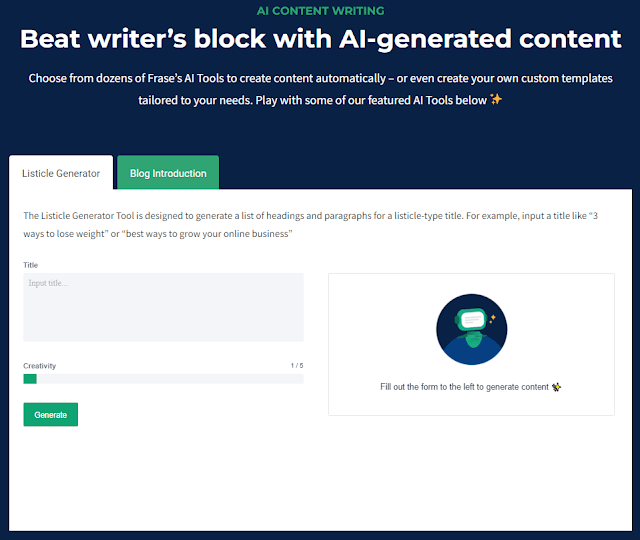
Frase AI distinguished itself by focusing on the research and optimization aspects of content creation, aiming to produce high-quality, SEO-optimized content rapidly. It integrated content generation with robust SEO capabilities, making it a powerful tool for digital marketers and content strategists.
- Operational Philosophy: Frase functions as an end-to-end content workflow solution. It analyzes top-ranking content for target keywords, extracts key topics and questions, and then assists in generating content that addresses these elements, thereby improving search engine visibility.
- Notable Features: Its core strength was in its ability to research topics, create detailed content briefs, and then allow users to generate content within an environment optimized for SEO. Pricing varied from a Solo Plan ($14.99/month) for individual users to a Team Plan ($114.99/month) for multiple users, with an optional SEO Add-on for premium features.
- Advantages: Frase’s integrated SEO features were a significant draw, helping users create content that was not only well-written but also designed to rank. Its ability to quickly summarize competing content and identify key themes saved considerable research time.
- Considerations: The full potential of Frase was often unlocked with its SEO Add-on, which came at an additional cost, potentially making it pricier for users seeking a complete solution. Some users noted that the AI writing capabilities, while good, were secondary to its research and optimization features.
4. Article Forge
Article Forge offered a distinctive approach by generating complete articles from a single keyword input, aiming for maximum efficiency and automation. This set it apart from tools requiring more detailed briefs or iterative input.

- Operational Philosophy: The tool’s unique selling proposition was its ability to produce entire, coherent articles with minimal user input. It focused on generating content that could pass plagiarism checks and be directly publishable.
- Notable Features: Article Forge offered various plans, including a Basic Plan ($27/month) for up to 25k words, a Standard Plan ($57/month), and an Unlimited Plan ($117/month). A 30-day money-back guarantee underscored confidence in its output. A crucial feature was its guarantee that all generated content would pass Copyscape, indicating a focus on originality.
- Advantages: Its capacity to generate full articles from a single keyword made it incredibly efficient for users needing to produce large volumes of content quickly, especially for niche blogs or content farms. The plagiarism-free guarantee was a significant assurance.
- Considerations: While highly automated, the quality and depth of articles generated by a single keyword might vary, potentially requiring human editing for accuracy, nuance, or specific stylistic requirements. It may be less suitable for highly specialized or complex topics.
5. Rytr
Rytr positioned itself as a superb AI content writing assistant, particularly appealing to small businesses, bloggers, and students due to its accessibility and a free plan. It focused on generating SEO-friendly blog posts, articles, and various other content formats.
- Operational Philosophy: Rytr emphasizes user-friendliness and versatility, offering a wide range of content types and tones. Its free plan provided an entry point for users to test its capabilities before committing to a paid subscription.
- Notable Features: The free plan covered up to 5,000 characters per month and included access to a built-in plagiarism checker. Paid plans like the Saver Plan ($9/month) and Unlimited Plan ($29/month) offered expanded character limits and features, including access to a dedicated account manager in the latter.
- Advantages: Its affordability, combined with a generous free plan, made it highly attractive to budget-conscious users. The intuitive interface and range of content types contributed to its widespread adoption.
- Considerations: While effective for general content, some users might find the output for highly specialized or creative writing needs to be somewhat generic, requiring more human refinement.
6. Writesonic

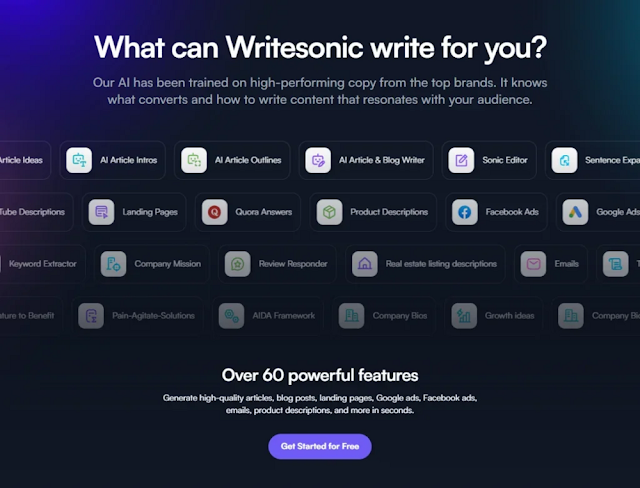
Writesonic presented itself as a versatile AI article writing software, notable for its integrated grammar and plagiarism checker. It aimed to assist in creating diverse copy for marketing content, websites, and blogs, catering to both small businesses and solopreneurs.
- Operational Philosophy: Writesonic combined content generation with quality assurance tools, striving to produce polished and error-free content. Its tiered pricing model allowed users to select plans based on their content volume needs.
- Notable Features: The platform offered a free trial providing ten credits, allowing users to test its capabilities. Paid plans included a Short-form plan ($15/month) for specific content types and a Long-Form plan ($19/month) for more extensive articles.
- Advantages: The inclusion of a grammar and plagiarism checker directly within the platform streamlined the content creation workflow, reducing the need for external tools. Its ease of use and variety of templates were also frequently praised.
- Considerations: The credit-based system, even in paid plans, sometimes required users to carefully manage their usage, which could be a minor constraint for heavy content producers.
7. CopySmith
CopySmith focused on producing quality content in seconds, offering capabilities for creating personal and professional documents, blogs, and presentations. It aimed to simplify content creation through a user-friendly interface and a selection of templates.
- Operational Philosophy: CopySmith emphasized speed and versatility, providing tools for various content formats. Its target audience ranged from individual professionals to larger teams.
- Notable Features: A free trial was available without credit card requirements. Paid plans included a Starter Plan ($19/month) and a Professional Plan ($59/month), with an Enterprise option for custom solutions.
- Advantages: Its ability to generate diverse document types, including presentations, alongside traditional text-based content, made it a comprehensive solution for some users. The rapid generation speed was a key benefit.
- Considerations: While effective, the quality of highly specialized or nuanced content might require human refinement. The platform’s overall features might be less extensive than some of its more specialized competitors in certain areas.
8. Hypotenuse.ai
Hypotenuse.ai carved a niche for itself as an excellent AI writing software for e-commerce and product descriptions. It aimed to be beginner-friendly, facilitating the creation of videos, articles, and infographics.
- Operational Philosophy: Hypotenuse.ai streamlined the process of generating product-centric content, leveraging AI to craft compelling descriptions and marketing copy tailored for e-commerce platforms.
- Notable Features: Although it did not offer a free plan, a free trial allowed users to test the software. Pricing included a Starter Plan ($29/month) and a Growth Plan ($59/month), with custom enterprise options. Its special features often included robust integrations for e-commerce platforms.
- Advantages: Its specialization in e-commerce content, particularly product descriptions, made it highly valuable for online retailers. The easy-to-use interface catered well to beginners.
- Considerations: While strong in its niche, its broader content generation capabilities for long-form articles or complex narratives might be less developed compared to general-purpose AI writers.
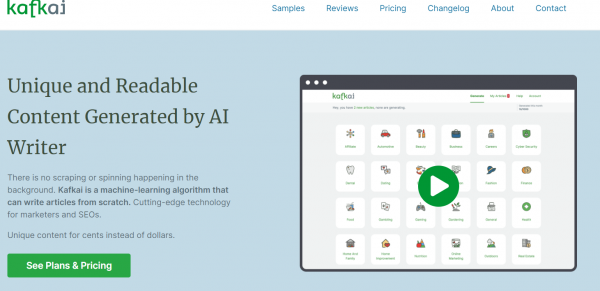
9. Kafkai

Kafkai positioned itself as a leading AI writing tool specifically for SEOs and marketers, specializing in niche-specific content across a wide variety of topics. It offered a user-friendly interface with a high degree of personalization.
- Operational Philosophy: Kafkai aimed to assist users in generating large volumes of unique content for specific niches, often catering to those managing multiple websites or large content strategies.
- Notable Features: A free trial was available. Paid plans were structured around the number of articles generated: Writer Plan ($29/month for 100 articles), Newsroom Plan ($49/month for 250 articles), Printing Press Plan ($129/month for 1000 articles), and Industrial Printer Plan ($199/month for 2500 articles).
- Advantages: Its ability to generate niche-specific content was a significant benefit for SEO professionals targeting diverse markets. The volume-based pricing model made it cost-effective for mass content production.
- Considerations: The quality of niche content, while tailored, might still require human review to ensure factual accuracy and specific industry jargon is used appropriately.
10. Peppertype.ai
Peppertype.ai was presented as an easy-to-use online AI content generator, best suited for small business owners seeking a powerful tool to craft and generate various content for multiple purposes, particularly blogging.

- Operational Philosophy: Peppertype.ai focused on providing a comprehensive suite of tools for various marketing and content needs, with an emphasis on ease of use for small businesses.
- Notable Features: While not free, it offered a free trial. Pricing included a Personal Plan ($35/month) and a Team Plan ($199/month), with enterprise solutions available. It provided a wide array of content types suitable for blogs, social media, and advertising.
- Advantages: Its user-friendly interface and broad range of content types made it a versatile choice for small businesses and individual creators needing a single platform for diverse content needs.
- Considerations: The absence of a permanent free plan might deter some users, and the pricing, while competitive, could still be a consideration for very small operations.
Broader Implications and Future Outlook
The proliferation of AI content generators has profound implications for the content industry. For individual creators and small businesses, these tools offer an unprecedented opportunity to scale content production, maintain consistency, and reach wider audiences without incurring prohibitive costs. Marketing agencies can leverage AI to accelerate campaign launches and personalize messaging at scale.
However, the rise of AI in content also presents challenges and necessitates careful consideration. Concerns about the originality and authenticity of AI-generated content persist. While many tools boast plagiarism checkers, the nuanced understanding of context, human emotion, and complex arguments often still requires human oversight. The ethical implications of AI-generated content, including potential biases embedded in training data and the risk of misinformation, are subjects of ongoing debate among industry experts and policymakers.
Furthermore, the integration of AI is reshaping job roles within the content ecosystem. Rather than replacing human writers entirely, AI tools are increasingly seen as augmentative technologies. Content creators are evolving into "AI whisperers" or "AI content strategists," focusing on guiding the AI, refining its output, and infusing the human touch that distinguishes truly compelling narratives. The future of content creation likely involves a synergistic relationship between human creativity and AI efficiency, where humans provide strategic direction and critical oversight, while AI handles the heavy lifting of generation and optimization.
Looking ahead, AI content generators are expected to become even more sophisticated, offering deeper integration with other marketing tools, more nuanced understanding of brand voice, and enhanced capabilities for multimodal content creation (e.g., text, images, and even video). The competitive landscape will likely drive further innovation in terms of accuracy, creativity, and ethical safeguards. As the digital realm continues its expansion, AI content generation will remain a critical, evolving technology at the forefront of how information is produced and consumed.