Lina Irawan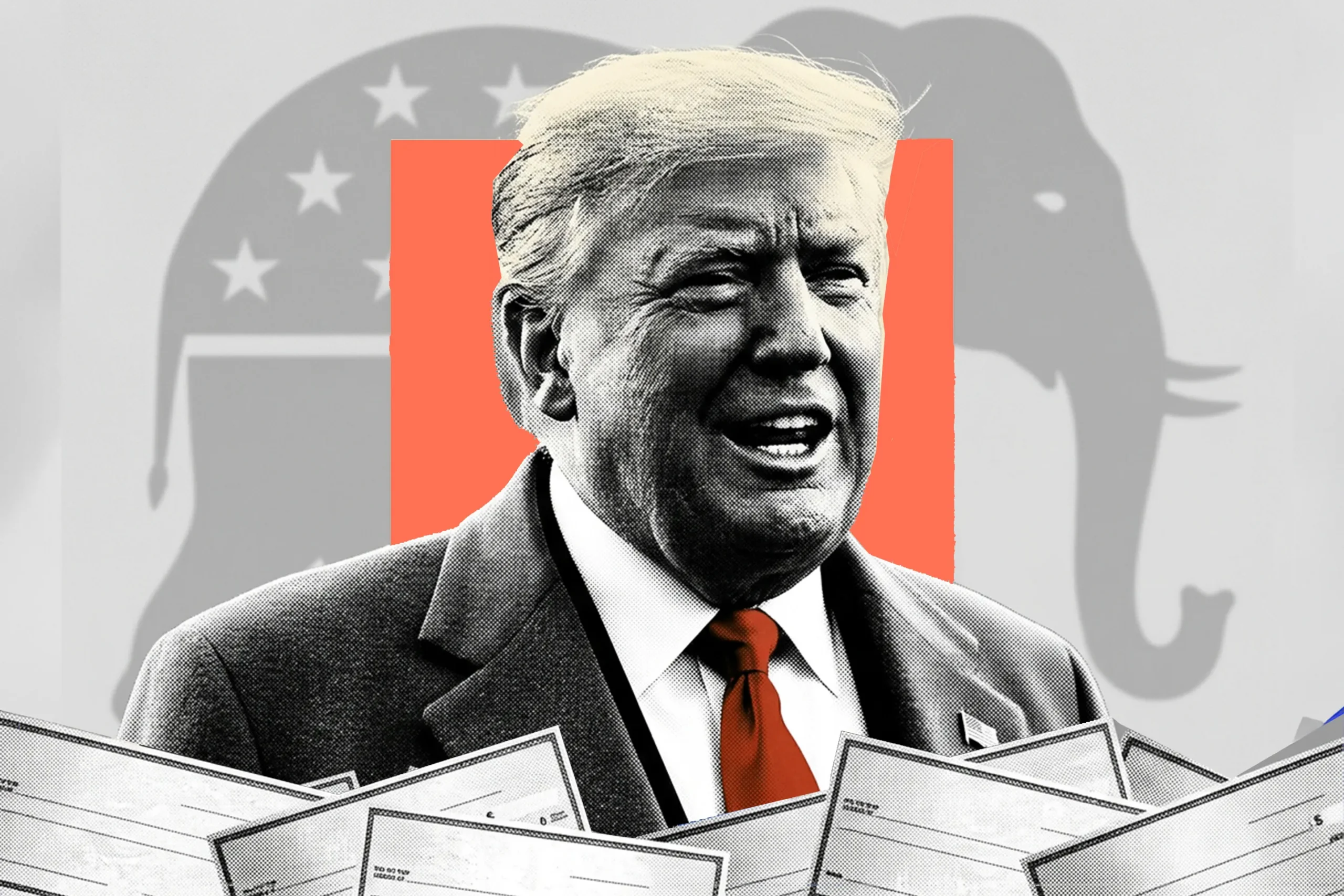
Former President Donald Trump has reignited a contentious debate surrounding direct cash payments to American citizens, vowing to distribute $5,000 "dividends" to every adult if the Republican Party secures control of both chambers of Congress in the upcoming midterm elections. The audacious proposal, announced during a speech at the Republican National Committee’s midterm convention in Dallas, Texas, on Wednesday, immediately sparked widespread discussion and skepticism across the political spectrum, raising profound questions about its feasibility, economic implications, and legality.
The Proposal: A "Trump Dividend" Contingent on Electoral Success
Addressing a gathering of Republican loyalists, Trump articulated his vision for a substantial cash payout, framing it as a reward for the nation’s economic strength under Republican leadership. "Here is my promise," Trump declared. "If the Republicans win the House of Representatives and the United States Senate, both of them… because of our tremendous strength and success economically, I will issue a dividend to every adult citizen in the United States of America for $5,000, very much like a successful company will do a cash distribution to its shareholders."
The former president stipulated one crucial "caveat" to his generous offer: the funds must be spent exclusively within the United States. As of Thursday afternoon following the announcement, details regarding the practical implementation of this spending restriction, or the overall distribution mechanism, remained conspicuously absent from the administration’s public statements. The lack of specifics fueled immediate doubt, echoing previous unfulfilled promises of direct payments that have characterized political discourse in recent years.
A History of Unfulfilled Promises and Direct Payment Precedents
Trump’s latest proposal arrives against a backdrop of several previous pledges for direct financial relief, many of which never materialized. During the unprecedented economic disruption of the COVID-19 pandemic, the U.S. government indeed issued three rounds of stimulus checks totaling thousands of dollars per eligible individual. These payments, enacted through bipartisan legislation like the CARES Act, provided critical financial lifelines to millions of Americans. However, subsequent promises from politicians, particularly from Trump, have largely gone unfulfilled.
For instance, last year saw approximately 1.5 million military members receive $1,776 "Warrior Dividends," a targeted payment. Yet, broader, more ambitious proposals have faltered. Recall the $5,000 "DOGE checks" floated in February 2025, or the earlier concept of "tariff checks" intended to redistribute revenue from import duties. These ideas, while generating significant public interest, failed to gain legislative traction or even concrete implementation plans. This pattern of high-profile announcements followed by legislative inertia or abandonment contributes significantly to the current skepticism surrounding the "Trump dividend."
Political Hurdles: The Steep Path to a Republican Congressional Majority
The most immediate and fundamental hurdle for Trump’s $5,000 dividend promise is the electoral condition itself: a Republican sweep of both the House of Representatives and the Senate in the upcoming midterms. Political analysts and prediction markets currently indicate that this outcome is a significant long shot. Leading prediction markets like Polymarket and Kalshi, which aggregate probabilities based on real-money betting, placed the odds of a Republican House and a Republican Senate emerging from November’s elections at a mere 14% and 16%, respectively, at the time of the announcement.
Historically, midterm elections often see the party out of power make gains. However, the current political landscape is complex, marked by a highly polarized electorate, ongoing debates over inflation, economic performance, and various social issues. While Republicans are expected to perform strongly in the House, securing a majority in the Senate remains a more formidable challenge, with several key races projected to be exceptionally close. Trump himself acknowledged the uphill battle facing his party, stating, "We might not win. You win with us, and you get $5,000." He later adopted a more optimistic tone, asserting, "We’re going to give you that Trump dividend of $5,000 if we win — and we’re going to win." Despite this rhetorical shift, the arithmetic of electoral politics presents a formidable barrier.
Legislative Obstacles: The Power of the Purse and Congressional Resistance
Even assuming the highly improbable scenario of Republican majorities in both chambers, the path to actualizing a $5,000 payout remains fraught with legislative difficulties. The U.S. Constitution explicitly grants Congress the "power of the purse," meaning that all federal spending, including direct payments to citizens, requires the approval of both the House and the Senate. A presidential decree alone, regardless of the party in power, cannot unilaterally appropriate such massive funds.
Historically, congressional Republicans, particularly fiscal conservatives, have expressed significant reservations about direct cash payments, viewing them as inflationary and an undue expansion of government spending that exacerbates the national debt. Proposals like the DOGE checks and tariff checks stalled precisely because they faced opposition from key GOP congressional leaders, including figures like Speaker Mike Johnson, R-La., as well as a substantial number of rank-and-file Republicans. Moreover, such a proposal would face near-universal opposition from Democrats, who would likely criticize it as fiscally irresponsible and politically motivated.
The estimated price tag for a $5,000 payment to "every adult citizen" is staggering, projected to be approximately $1 trillion. This figure, while an estimate given the lack of official details on potential exclusions for the wealthy (a possibility hinted at by Vice President JD Vance), would represent a monumental addition to the nation’s already burgeoning $34 trillion national debt. Such an expenditure would require significant legislative maneuvering, potentially through a budget reconciliation process, which itself has strict rules and limits.
Despite these headwinds, some Republican lawmakers have expressed support. Senator Bernie Moreno, R-Ohio, for instance, took to social media platform X to announce his intention to introduce a bill aimed at delivering Trump’s promised $5,000 checks. While such a bill would demonstrate an alignment with the former president’s vision, its chances of advancing through a Congress, even one controlled by Republicans, would depend heavily on leadership support and the willingness of a critical mass of members to override their traditional fiscal conservative principles.
Economic Implications: Inflationary Concerns and Funding Mechanisms
The potential economic ramifications of a $1 trillion direct cash injection into the economy are a central point of contention. Economists on both sides of the aisle often debate the impact of such large-scale fiscal stimuli. Critics argue that distributing $1 trillion could fuel inflation, especially in an economy already grappling with elevated price levels. Injecting a massive amount of new money into the system without a corresponding increase in goods and services could drive up demand and prices, effectively eroding the purchasing power of the very dividend it seeks to provide.
Proponents, however, might argue that such a dividend could stimulate consumer spending, boost economic activity, and provide much-needed relief to households struggling with cost-of-living increases. The caveat that the money must be spent in the U.S. is intended to ensure domestic economic benefit, though enforcing such a restriction would present an unprecedented logistical challenge.
Regarding funding, Vice President JD Vance, when pressed on the issue by Fox News’ Bret Baier, suggested that the checks could be paid for with revenue generated from the Trump administration’s tariffs. "If you keep us in power," Vance stated, "then you’re going to share in some of the benefit of this incredible wealth that we’re creating." While tariffs do generate revenue, they typically do not approach the scale required to fund a $1 trillion payout. In 2023, U.S. Customs and Border Protection collected approximately $80 billion in duties and tariffs. To fund a $1 trillion dividend solely through tariffs would require an astronomically higher and economically unsustainable level of import taxation, or a significant reliance on increased national debt, which runs counter to the fiscal conservative stance. The idea of funding such a massive program through tariffs alone is widely considered economically unrealistic by most experts.
Legal Scrutiny: A Potential Challenge to Electoral Integrity
Beyond the political and economic challenges, Trump’s proposal faces significant legal scrutiny, particularly concerning laws designed to prevent the buying of votes. U.S. Code Title 18, Section 597 explicitly states that it is against the law "to make an expenditure to any person, either to vote or withhold his vote, or to vote for or against any candidate." This statute is designed to safeguard the integrity of the electoral process by prohibiting direct financial inducements tied to voting behavior.
Democrats and legal scholars were quick to highlight this legal provision. Rep. Daniel Goldman, D-N.Y., responded on X, stating, "Actually, only Congress can make that promise since it must appropriate those funds. And Congress would never do it because it is corrupt and blatantly illegal." California Governor Gavin Newsom accused Trump of attempting to "buy your vote," while economist Peter Schiff bluntly labeled the move a "bribe."
The unprecedented nature of a sitting or former president tying such a massive financial promise directly to a specific electoral outcome raises complex legal questions. While direct payments like stimulus checks have been distributed, they have typically been framed as broad economic relief measures, not explicitly conditioned on the election of a particular party. How courts might view Trump’s $5,000 dividend proposal, especially if legal challenges arise linking it directly to the federal statute on vote-buying, remains uncertain. The intent behind such a promise, and its direct correlation with electoral success, could place it in a legally precarious position.
Broader Implications: The Weaponization of Fiscal Policy
Trump’s $5,000 dividend promise underscores a growing trend in modern politics: the weaponization of fiscal policy as a direct tool for electoral persuasion. By framing a massive cash payment as a "dividend" for economic success contingent on Republican victory, the proposal blurs the lines between policy incentive and electoral inducement. This strategy could set a precedent for future elections, where promises of direct cash payments become a more explicit feature of campaign platforms, potentially leading to an environment where elections are increasingly influenced by pledges of immediate financial gain rather than long-term policy vision.
The discourse surrounding the "Trump dividend" also highlights the ongoing national debate about the role of government in providing direct financial support to citizens, the management of the national debt, and the balance between economic stimulus and fiscal responsibility. As the midterm elections draw closer, this proposal will undoubtedly remain a significant talking point, forcing candidates to articulate their positions on direct payments, government spending, and the future direction of the American economy. However, given the myriad political, legislative, economic, and legal obstacles, the probability of the $5,000 "Trump dividend" ever materializing appears exceedingly low.