Lana Rhoades
The financial burden of higher education in the United States has reached unprecedented levels, with the cost of instructional materials serving as a significant component of student expenditures. While tuition and housing often dominate the conversation regarding college affordability, the cumulative cost of textbooks remains a persistent hurdle for many families. To mitigate these costs, several state legislatures have implemented specific sales tax exemptions for textbooks, though the application of these laws varies significantly across jurisdictional lines. As of late 2026, the taxability of educational materials is governed by a patchwork of state-level statutes, administrative rulings, and local ordinances that create a complex environment for both retailers and consumers.
The Economic Context of Educational Material Costs
The push for textbook tax exemptions is rooted in broader economic trends within the education sector. According to data from the College Board and various student advocacy groups, the average undergraduate student spends between $600 and $1,200 annually on books and supplies. In states with high sales tax rates—some reaching upwards of 9% when accounting for local surcharges—the added tax burden can represent an additional $100 per year. For students already stretching budgets to cover rising tuition, this "hidden cost" has prompted legislative action in approximately half of the U.S. states.
Tax compliance experts note that the definition of a "textbook" is rarely uniform. Some states define it strictly as a bound volume used for a course of study, while others have expanded definitions to include digital access codes, workbooks, and electronic media. The evolution of these definitions often lags behind the technological shifts in the classroom, leading to confusion during the checkout process at both physical and online bookstores.
Chronology of Legislative Shifts and Tax Policy Evolution
The history of textbook taxation in the United States reflects a tension between the need for state revenue and the desire to promote educational attainment. In the mid-20th century, most states treated textbooks as general tangible personal property, subject to the same sales tax rates as clothing or electronics. However, starting in the 1970s and 1980s, a movement led by educational advocacy groups began to frame textbooks as essential tools rather than discretionary purchases.
By the early 2000s, several states had enacted permanent exemptions. The landscape shifted again with the rise of e-commerce; the 2018 Supreme Court decision in South Dakota v. Wayfair, Inc. allowed states to require out-of-state online retailers to collect sales tax. This decision placed a spotlight on textbook exemptions, as students increasingly turned to online marketplaces to find lower prices. Most recently, between 2022 and 2026, several states have moved to clarify their statutes to ensure that digital versions of textbooks receive the same tax-exempt status as their physical counterparts.
Comprehensive State-by-State Analysis of Taxability
The current regulatory environment can be categorized into four distinct groups: states with broad exemptions, states with institutional-specific exemptions, states with conditional rules, and states where textbooks remain fully taxable.
States Providing Broad Exemptions
In these jurisdictions, textbooks are generally recognized as tax-exempt for most students, regardless of the seller’s affiliation with a specific school.
- Arizona: Both the purchase and rental of textbooks are exempt from sales tax, providing one of the most consumer-friendly environments for students.
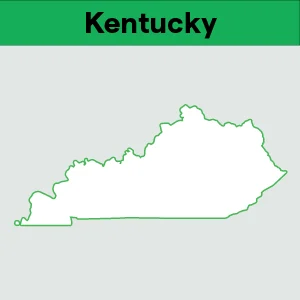
- Kentucky: The state maintains a consistent exemption for textbooks, viewing them as a core educational necessity.
- Massachusetts: Known for its high concentration of higher education institutions, the Commonwealth exempts textbooks from its sales tax.
- Minnesota and Mississippi: Both states provide a statutory exemption for textbooks, aiming to lower the barrier to educational resources.
- New Jersey: Textbooks are exempt, reflecting a long-standing policy to support the state’s extensive student population.
- North Dakota and South Carolina: These states offer broad exemptions that apply to the majority of textbook transactions.
- Tennessee and West Virginia: Both states have codified exemptions that specifically target instructional materials.
States with Institutional or Grade-Level Restrictions
Many states limit exemptions based on where the book is purchased or the educational level of the student.
- Alabama: Taxation depends on the nature of the seller. Books sold by public K-12 schools or private elementary/secondary schools (where proceeds benefit the school) are exempt. However, books sold at institutions of higher learning are generally taxable.
- Connecticut: A dual-rule system exists. Books sold to students at higher education institutions are exempt, but for K-12 students, the exemption only applies if the book costs less than $20 and is sold by the school.
- Florida: The exemption is strictly limited to students in grades K-12.
- Indiana and Michigan: Similar to Florida, these states provide exemptions for K-12 students while maintaining taxability for college-level materials.
- Missouri: Textbooks are exempt when sold by K-12 schools or postsecondary bookstores. However, a critical nuance exists: the exemption often applies only to the state portion of the sales tax, meaning local taxes may still be collected.
- Wisconsin and Wyoming: Both states focus their exemptions on the K-12 sector, often linking the tax-free status to school-led fundraising or direct sales.
States with Complex or Conditional Requirements
Several states have implemented "fine print" rules that require careful documentation by retailers.
- Nevada: Exemption status is tied to the specific university system. Materials sold within the University of Nevada System are exempt from state and local school support taxes, while those in the Community College System are only exempt from the local school support tax.
- New Mexico: Sales are exempt if the bookstore is on-campus and operated under a specific contract with a public post-secondary institution.
- New York: While many items are taxable, a specific exemption exists for textbooks purchased by college students, often requiring the student to present a valid ID or proof of enrollment.
- Pennsylvania: The exemption is valid only if the bookstore has been officially designated by a school or university to sell on its behalf.
- Rhode Island: The state offers a unique provision where all "used" textbooks are exempt regardless of the seller, while new textbooks are only exempt if sold by an educational institution.
- Virginia: To qualify for an exemption at a non-institutional dealer, the books must be certified by the school as "required" for the course.
States Where Textbooks are Generally Taxable
In a significant portion of the country, textbooks are treated as standard taxable goods. This list includes California, Colorado, Georgia, Idaho, Illinois, Iowa (with minor nonprofit exceptions), Kansas, Maine, Maryland, North Carolina, Ohio, South Dakota, Texas, and Washington, as well as the District of Columbia. In these regions, students must rely on "Sales Tax Holidays"—temporary windows usually occurring in August—to purchase books tax-free. Arkansas, for example, maintains taxability year-round except during its annual holiday.
Data and Market Reactions
The disparity in tax treatment has led to measurable shifts in consumer behavior. Data from retail analysts suggest that students in taxable states are 15% more likely to utilize rental services or "gray market" international editions to offset the cost of sales tax. Furthermore, the rise of Open Educational Resources (OER)—free, openly licensed materials—has been more aggressive in states where high sales tax adds to the already high cost of traditional publishing.
University administrators have expressed varying views on these policies. While many advocate for total exemptions to support student retention, state budget offices often resist these measures. In a 2025 report from a non-partisan legislative budget committee, analysts estimated that a full textbook exemption in a state like Texas or California could result in a revenue loss of $40 million to $60 million annually. This fiscal impact remains the primary hurdle for expanding exemptions in states currently facing budget deficits.
Broader Implications for the Future of Educational Content
As the educational landscape transitions toward digital-first models, the definition of a "textbook" continues to be a point of legal contention. Many state revenue departments are currently debating whether a subscription to a digital learning platform—which may include videos, quizzes, and interactive labs alongside a digital text—qualifies for the same exemption as a traditional printed book.
Advocacy groups such as the Student Public Interest Research Groups (PIRGs) continue to lobby for the "Tax-Free Textbook Act" in several state legislatures. Their argument hinges on the fact that if tuition is not taxed, the essential tools required to complete that education should similarly be exempt. Conversely, some economists argue that sales tax exemptions are an inefficient way to help low-income students, suggesting that targeted grants or subsidies would be more effective than a broad-based tax cut that also benefits students who can afford the full price.
In the coming years, it is expected that more states will move toward "technology-neutral" tax laws. These laws would ensure that whether a student buys a physical book, rents a digital copy, or pays for an access code, the tax treatment remains consistent. Until such uniformity is achieved, students and retailers must remain vigilant in navigating the diverse and often confusing array of state-specific regulations that define the cost of learning in America.