Lana Rhoades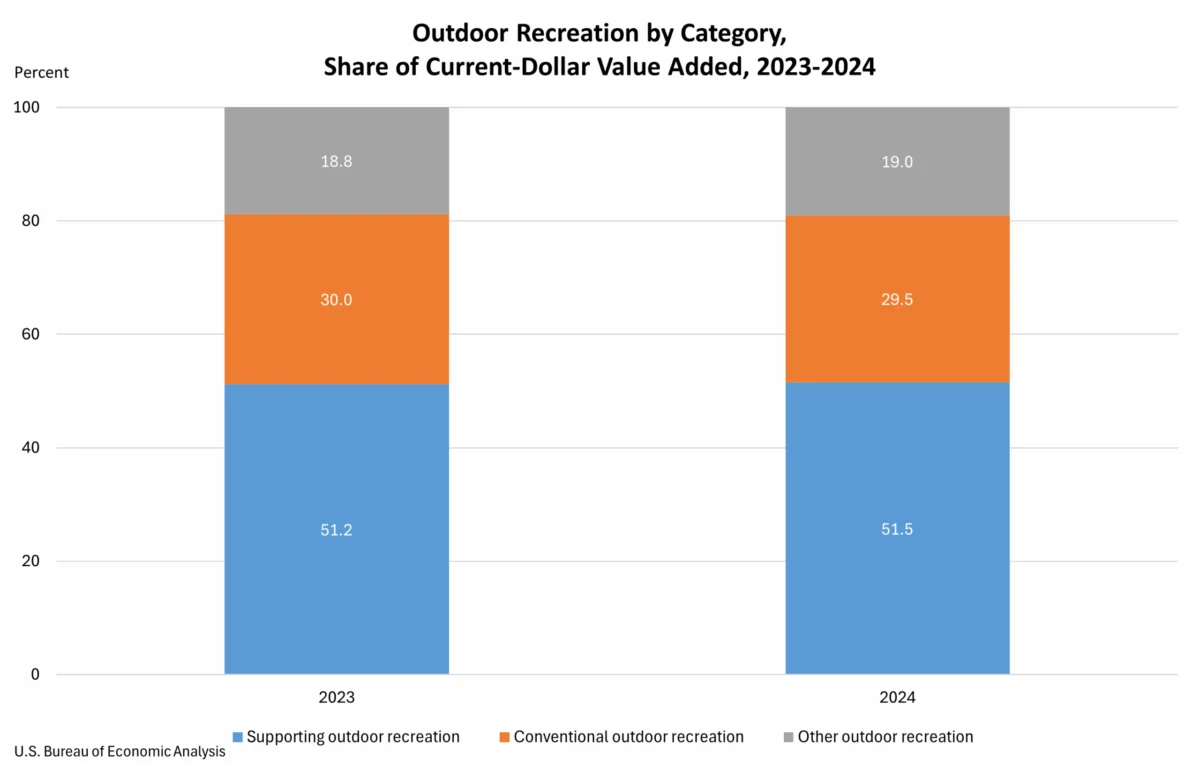
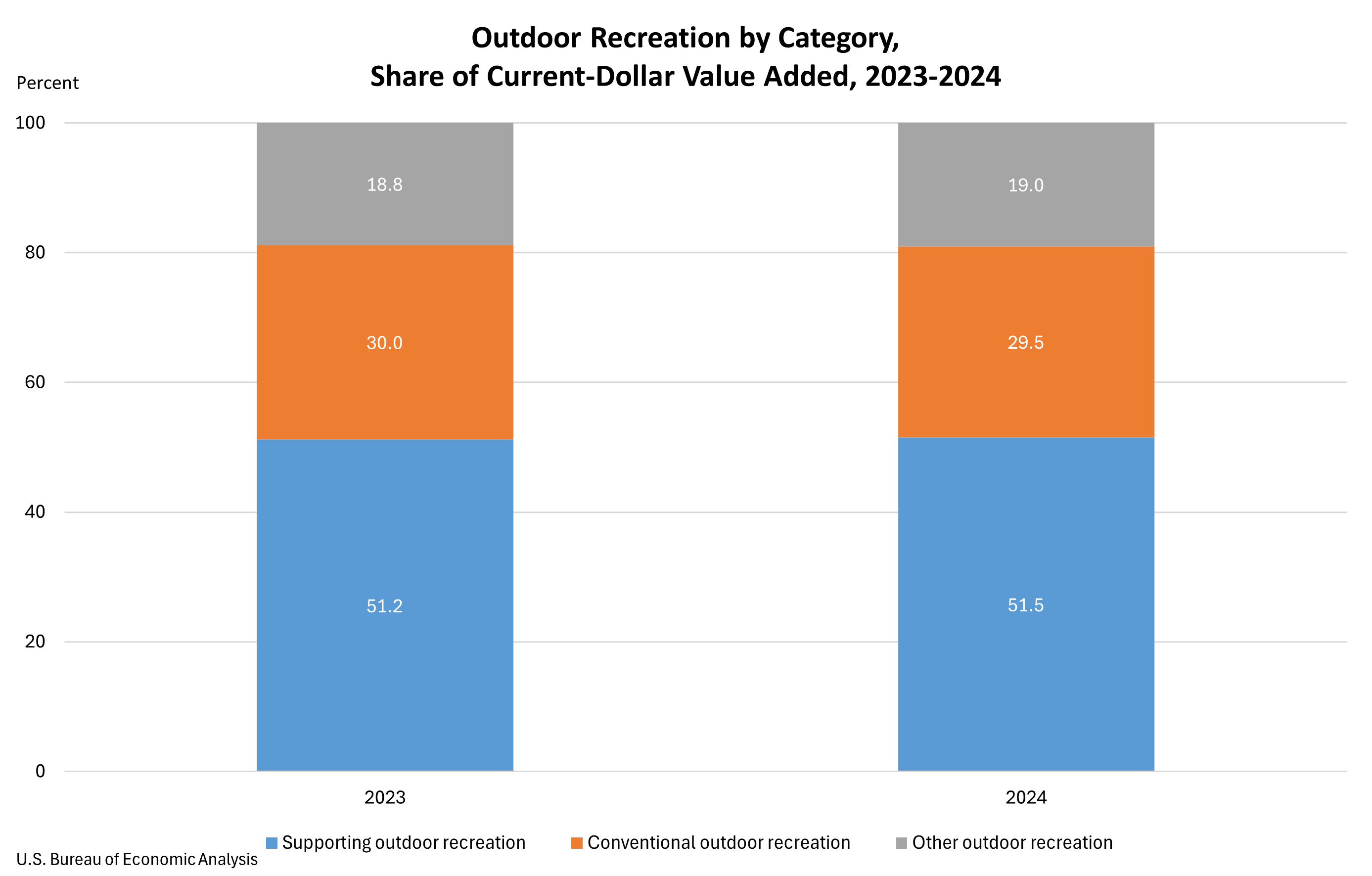
The United States Bureau of Economic Analysis (BEA) has released its latest comprehensive report detailing the significant economic impact of the outdoor recreation sector, revealing a robust contribution of $696.7 billion to the nation’s Gross Domestic Product (GDP) in 2024. This figure represents 2.4 percent of the total current-dollar GDP, underscoring the sector’s substantial and persistent role in the American economy. The data, which provides a granular view across all 50 states and the District of Columbia, also indicates varying levels of reliance on outdoor recreation among different regions, with Hawaii leading the nation at 6.1 percent of its state GDP.
National Economic Performance of Outdoor Recreation
In 2024, the "real" (inflation-adjusted) GDP of the outdoor recreation economy experienced a growth of 2.7 percent. While this marks a slight deceleration from the impressive 5.3 percent increase observed in 2023, it still outpaces the overall U.S. economy’s 2.8 percent growth for the year. This sustained growth trajectory highlights the resilience and increasing importance of outdoor activities in driving economic output.
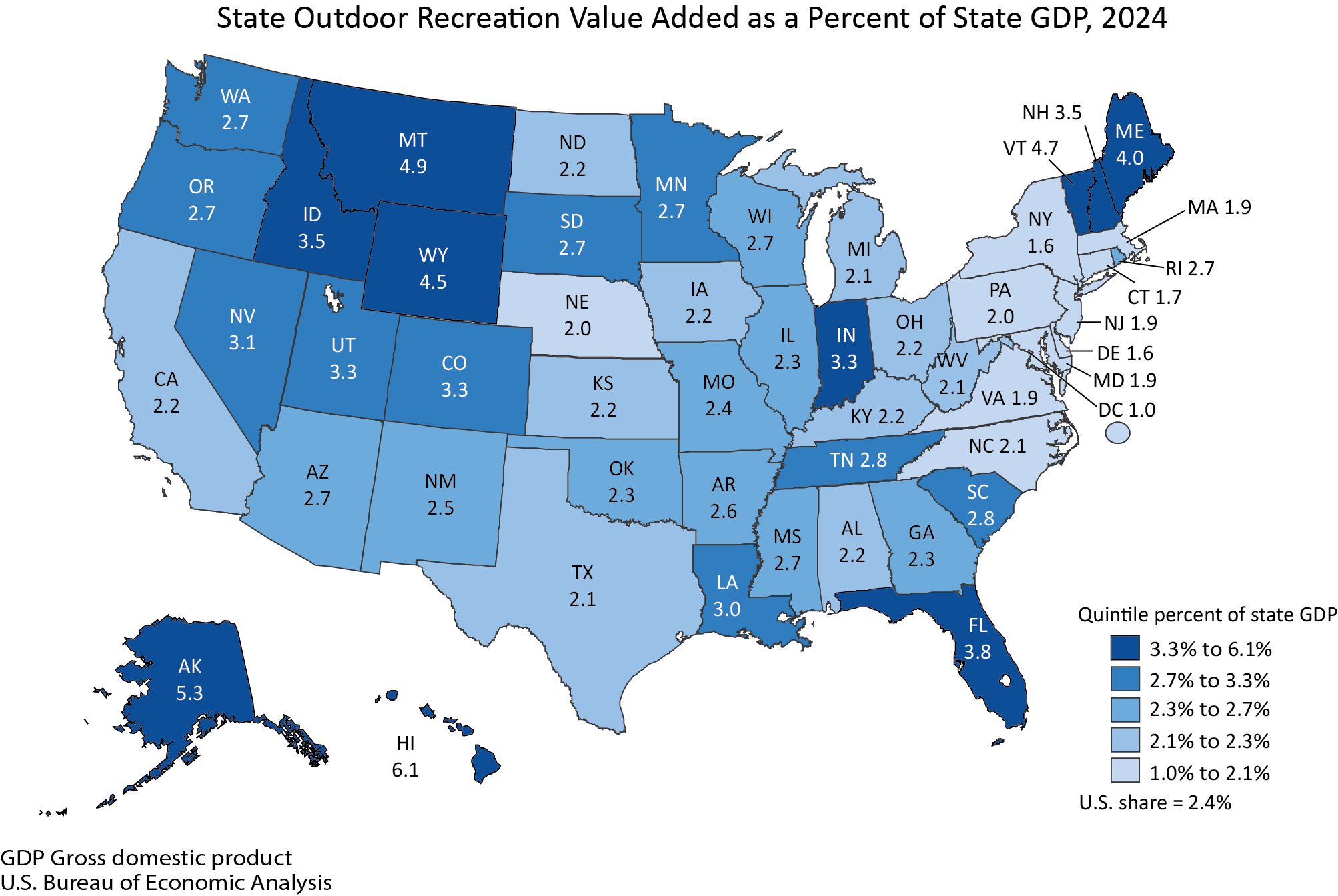
Further bolstering the picture of a healthy sector, real gross output for outdoor recreation saw an increase of 2.0 percent. Compensation within the industry also demonstrated strong performance, rising by 5.2 percent, while employment within the sector grew by 1.1 percent. These figures collectively suggest that the outdoor recreation economy is not only expanding in value but also creating jobs and providing increasing financial returns to its workforce.
The BEA’s annual update, which incorporates revised national and regional data, provides a more accurate and refined understanding of the outdoor recreation economy’s performance. These updates reflect the ongoing efforts by the BEA to capture the full economic contributions of various sectors, including those that have experienced significant shifts in consumer behavior and economic activity in recent years.
State-Level Economic Variations
The economic footprint of outdoor recreation varies considerably across the United States. While Hawaii leads with 6.1 percent of its state GDP derived from outdoor recreation, other states also show significant contributions. The District of Columbia, conversely, registered the lowest share at 1.0 percent. This disparity underscores the diverse economic landscapes and natural resource endowments that influence the prominence of outdoor recreation in different states.
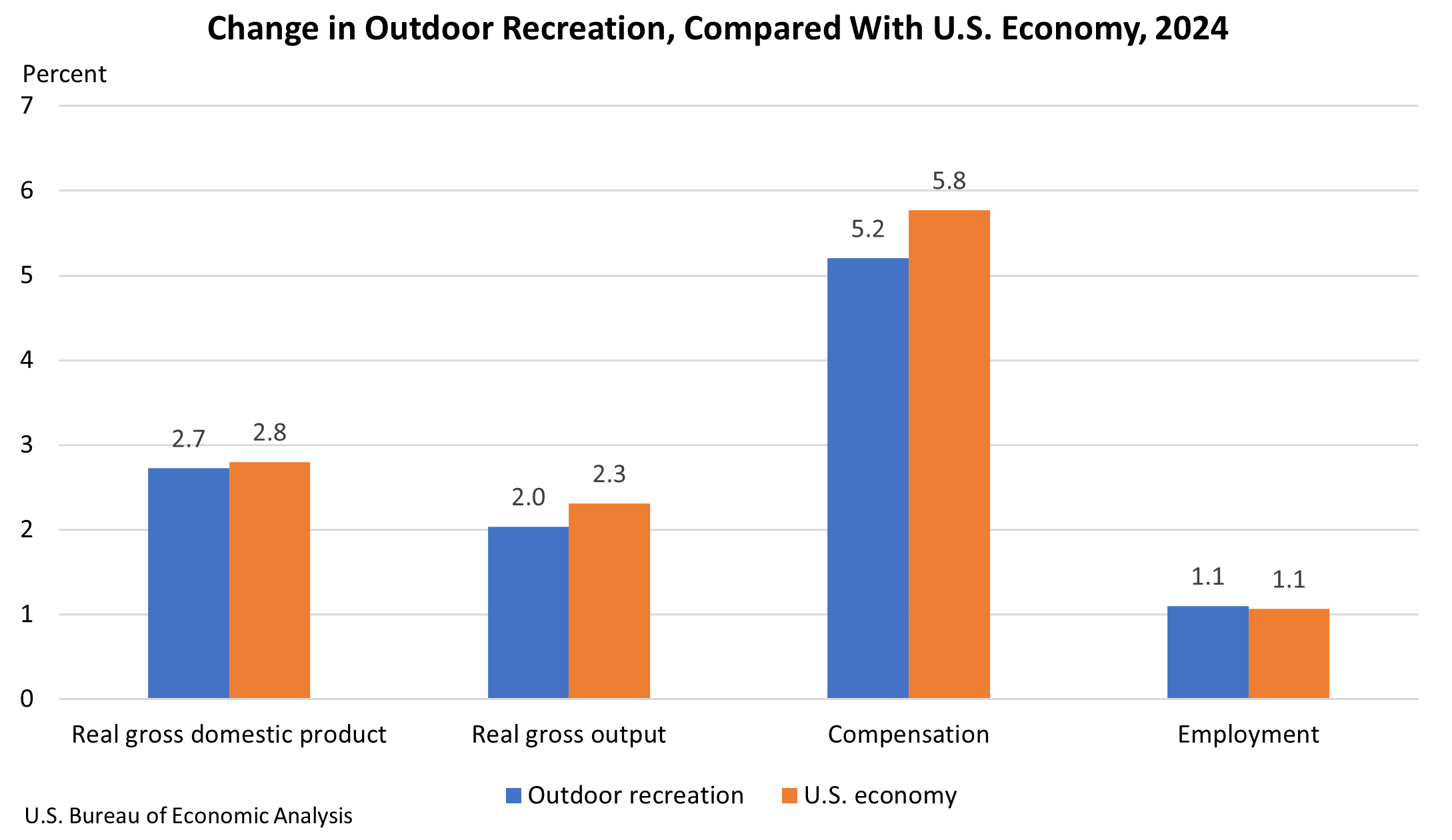
Employment trends in outdoor recreation also show a mixed pattern at the state level. In 2024, 36 states and the District of Columbia experienced an increase in outdoor recreation employment. North Dakota led this growth with a 4.3 percent increase in employment, indicating a burgeoning sector in that region. Conversely, Hawaii saw a decline of 4.0 percent in outdoor recreation employment, a notable contrast to its leading position in value added as a share of GDP. These fluctuations can be attributed to a complex interplay of factors, including seasonal employment, local economic conditions, and specific industry dynamics within each state.
Shifting Preferences in Outdoor Activities
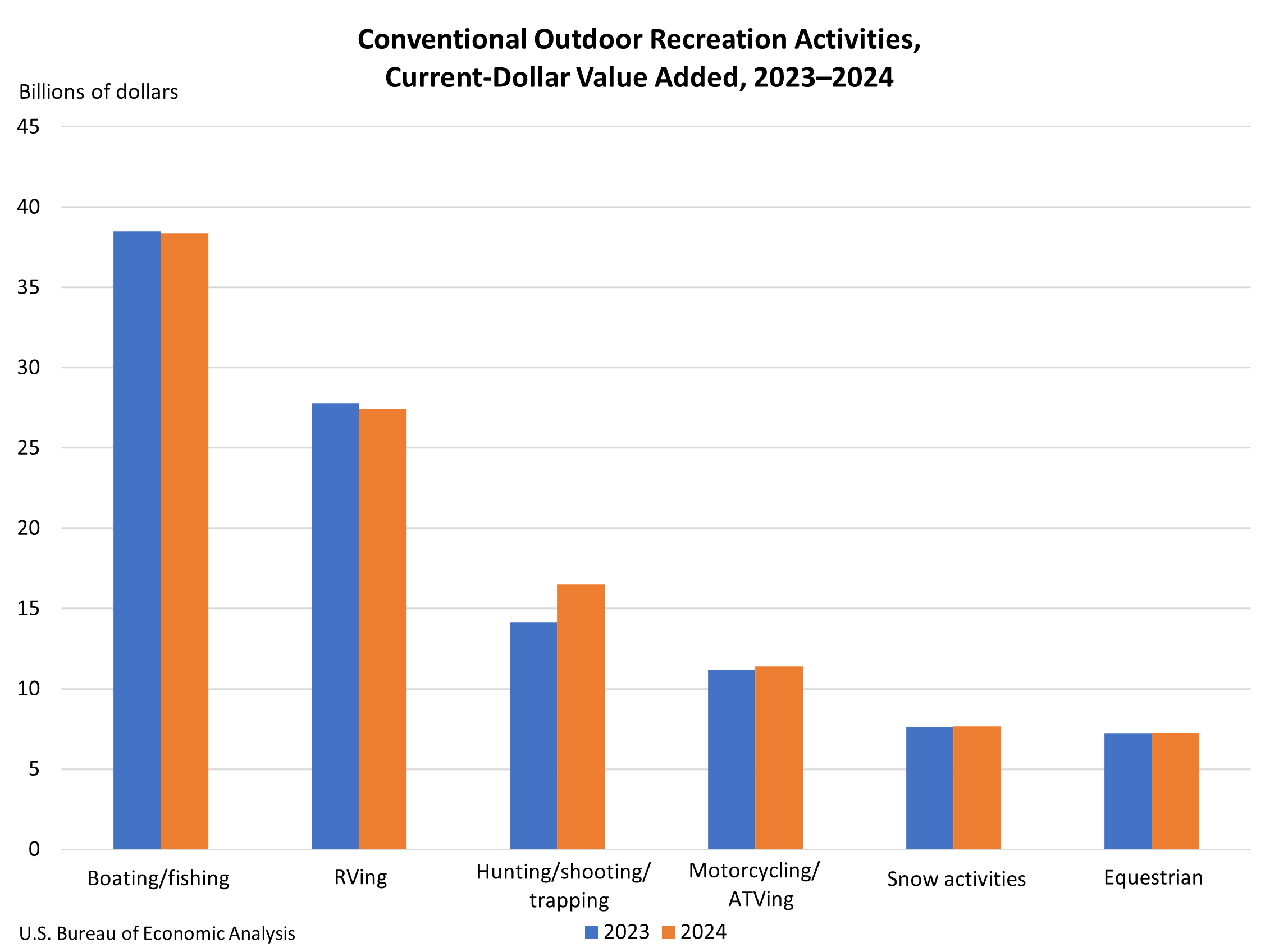
The BEA categorizes outdoor recreation activities into three broad groups: conventional activities (e.g., bicycling, boating, hiking, hunting), other activities (e.g., gardening, outdoor concerts), and supporting activities (e.g., construction, travel and tourism, local trips, government expenditures).
In 2024, conventional outdoor recreation accounted for 29.5 percent of the U.S. outdoor recreation value added, a slight decrease from 30.0 percent in 2023. "Other outdoor recreation" activities saw a marginal increase, representing 19.0 percent of value added in 2024, up from 18.8 percent in the previous year. The largest share, however, continues to be held by supporting activities, which comprised 51.5 percent of value added in 2024, a slight increase from 51.2 percent in 2023.
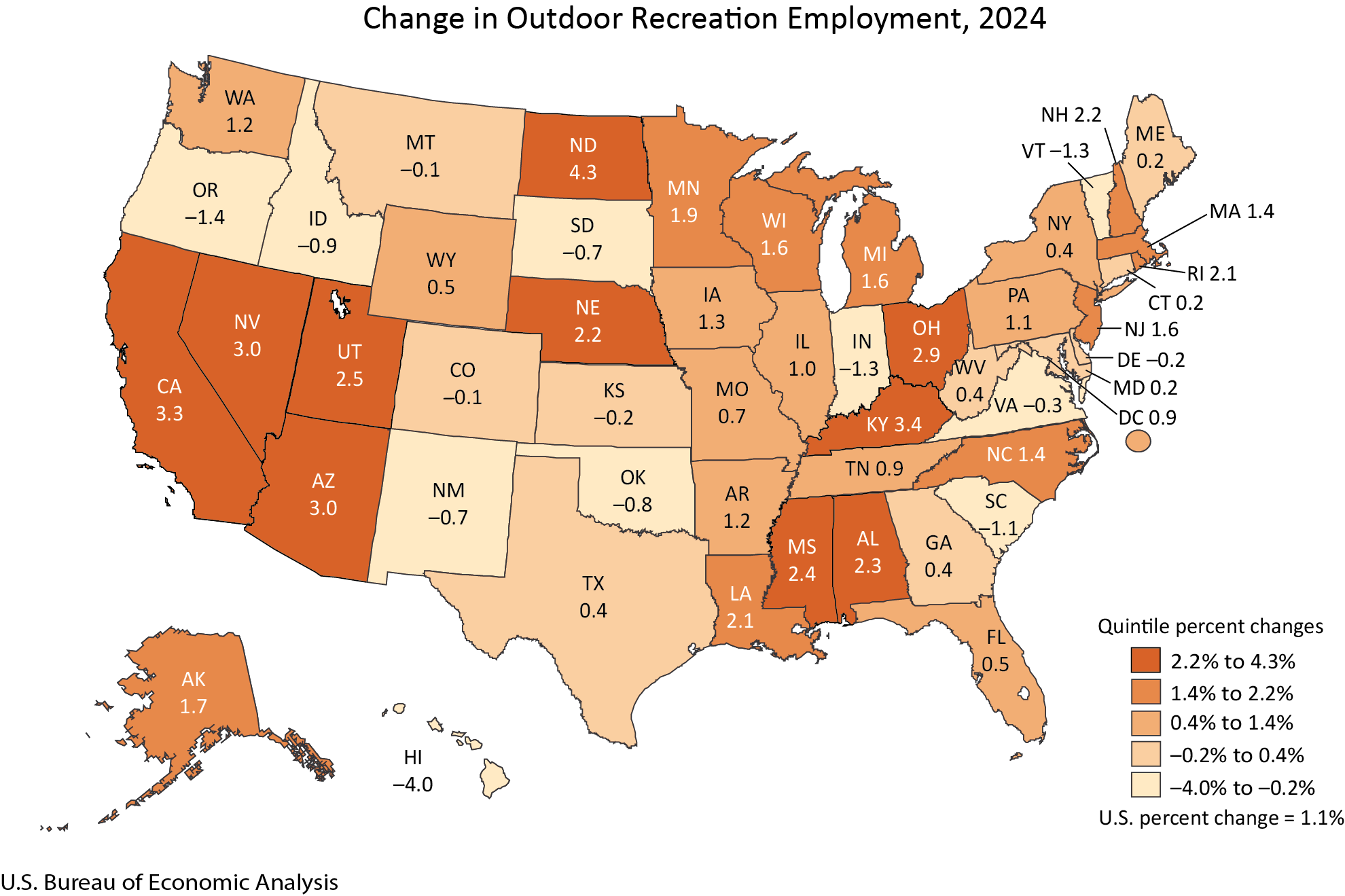
The growth in supporting activities was predominantly driven by travel and tourism, reflecting increased spending on transportation, accommodation, and dining. This indicates that while direct participation in outdoor activities remains vital, the broader ecosystem that enables and enhances these experiences, such as hospitality and transportation services, is a significant economic engine. This trend suggests a maturing outdoor recreation market where the ancillary services play an increasingly critical role in overall economic contribution.
Industry Contributions to the Outdoor Recreation Economy
The BEA’s analysis also breaks down the economic impact by industry. The "arts, entertainment, recreation, accommodation, and food services" sector emerged as the largest contributor to the U.S. outdoor recreation value added in 2024, accounting for $174.4 billion, or 25.0 percent of the total. This sector’s dominance is particularly evident at the state level, where it served as the largest contributor in 23 states and the District of Columbia. California, Florida, and New York led the nation in this category, with substantial contributions of $24.1 billion, $22.7 billion, and $11.8 billion, respectively.
The "retail trade" sector followed as the second-largest contributor, generating $169.1 billion, or 24.3 percent of the value added. This sector proved to be the primary driver of outdoor recreation value added in 24 states. California again showed strong performance in retail trade, with $19.3 billion, followed by Texas ($14.4 billion) and Florida ($13.4 billion). This highlights the significant role of outdoor gear and equipment sales in the overall economic picture.
"Manufacturing" secured the third position nationally, contributing $91.3 billion, or 13.1 percent of the value added. This sector was the largest contributor to outdoor recreation value added in two states: Indiana and Louisiana. Texas led in manufacturing contributions with $13.1 billion, followed by California ($11.6 billion) and Indiana ($9.1 billion). The manufacturing sector’s contribution underscores the production of goods essential for various outdoor pursuits, from sporting equipment to recreational vehicles.
Context and Implications of the BEA Report
The Bureau of Economic Analysis has been tracking the economic impact of outdoor recreation since 2016, with annual updates providing valuable insights into the sector’s evolution. The 2024 data reflects the BEA’s continuous efforts to refine its methodologies and incorporate new data sources, offering an increasingly accurate portrayal of this dynamic economic segment. The inclusion of updated national and regional data from the National Income and Product Accounts and the Regional Economic Accounts ensures that the statistics are as current and reliable as possible.
The findings from the BEA report carry significant implications for policymakers, businesses, and communities. The substantial contribution of outdoor recreation to GDP underscores its potential as a driver of economic growth, job creation, and regional development. As consumer interest in health, wellness, and nature-based experiences continues to rise, investments in outdoor recreation infrastructure, conservation efforts, and related industries are likely to yield significant economic returns.
The detailed breakdown by activity and industry also offers strategic guidance. For instance, the robust performance of supporting activities, particularly travel and tourism, suggests opportunities for enhancing visitor experiences, improving transportation networks, and promoting local businesses that cater to outdoor enthusiasts. Similarly, the strong showing from retail trade and manufacturing points to the importance of supporting these industries to ensure a consistent supply of quality gear and equipment.
Furthermore, the state-level data can inform targeted economic development strategies. States with a high reliance on outdoor recreation can leverage this data to attract investment, develop relevant workforce training programs, and advocate for policies that support conservation and sustainable tourism. Conversely, regions with lower contributions can identify opportunities to tap into the growing outdoor recreation market by developing unique offerings and improving accessibility.
The BEA’s commitment to providing annual updates ensures that these insights remain relevant in a rapidly evolving economic landscape. As the outdoor recreation sector continues to adapt to new trends and challenges, such as the increasing demand for sustainable tourism and the impact of climate change, these statistics will be crucial for informed decision-making and strategic planning. The next release, scheduled for Fall 2026, will provide data for 2025, offering further insights into the ongoing trajectory of this vital economic sector.