admin
admin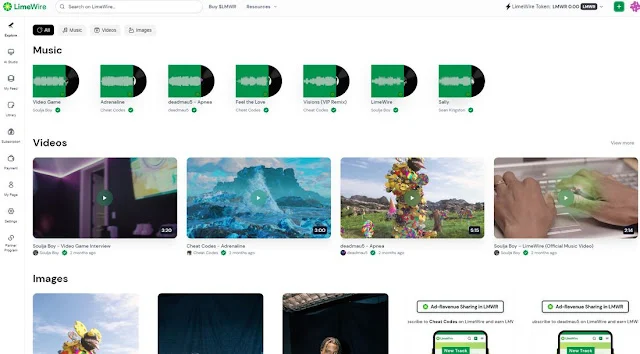
In a significant pivot from its controversial past as a peer-to-peer file-sharing service, LimeWire has re-emerged as a cutting-edge platform at the intersection of generative artificial intelligence (AI) and Web3 technologies. This transformation positions LimeWire not merely as another AI tool, but as a comprehensive ecosystem designed to empower creators to generate, share, and monetize digital content, starting with AI-generated images and with ambitious plans for music and video. The platform offers a unique proposition in the rapidly expanding landscape of AI innovation, distinguishing itself by integrating direct monetization channels and robust ownership frameworks through Non-Fungible Tokens (NFTs) and its native cryptocurrency, LMWR.
The Phoenix from the Ashes: LimeWire’s Strategic Rebirth
The name LimeWire evokes a strong sense of nostalgia and, for many, legal controversy from the early 2000s. Originally a dominant player in the file-sharing arena, the platform gained notoriety for enabling the free exchange of digital media, often without regard for copyright. This ultimately led to widespread legal battles with the music industry, culminating in its shutdown in 2010. For over a decade, the brand remained dormant, a relic of the internet’s wild west era.
However, the current iteration of LimeWire is an entirely different entity, built from the ground up to address contemporary digital content creation and ownership challenges. Its re-emergence is not just a rebranding but a strategic repositioning within two of the most disruptive technological trends of the decade: generative AI and Web3. The decision to resurrect the brand with such a radical new direction underscores a calculated move to capitalize on evolving digital paradigms, leveraging a recognizable name to re-enter the market with a fresh, forward-looking vision. This strategic pivot aligns with a broader industry trend where legacy brands seek relevance in new technological frontiers, often by completely reinventing their core business model. The project officially announced its comeback in early 2022, signaling a clear intention to build a mainstream-friendly Web3 platform.
Navigating the Generative AI Revolution
LimeWire’s re-entry coincides with an unprecedented explosion in generative AI capabilities. Tools like OpenAI’s DALL-E, Midjourney, and Stability AI’s Stable Diffusion have democratized content creation, allowing users with minimal artistic skill to produce high-quality images, text, and even code from simple text prompts. The market for generative AI is projected to grow exponentially, with some reports estimating it could reach hundreds of billions of dollars within the next decade. This growth is driven by increasing demand for personalized content, efficiency in creative workflows, and the sheer accessibility of these powerful tools.
LimeWire aims to carve out a significant niche in this competitive landscape by focusing on an integrated creator experience. Unlike many standalone AI tools, LimeWire offers a comprehensive "Studio" environment where creation, sharing, and monetization are seamlessly linked. This holistic approach is designed to attract a broad spectrum of creators, from hobbyists experimenting with AI art to professional artists and musicians seeking new distribution and revenue streams. The platform’s initial focus on image generation serves as an accessible entry point, with the promise of expanding into more complex media types like music and video, reflecting the multi-modal future of generative AI.
LimeWire AI Studio: A Hub for Digital Creation
At the heart of LimeWire’s new offering is the LimeWire AI Studio, a user-friendly interface designed for intuitive content generation. Currently, the platform emphasizes AI image generation, providing creators with a robust toolkit to bring their visual concepts to life. The Studio supports leading generative AI models, including Stable Diffusion 2.1, Stable Diffusion XL, and DALL-E 2. These models represent the vanguard of text-to-image technology, capable of producing diverse and high-quality visuals based on user prompts. Stable Diffusion, known for its open-source nature and versatility, allows for extensive customization and fine-tuning, while DALL-E 2, developed by OpenAI, is celebrated for its ability to understand complex prompts and generate highly creative and realistic images.
The creative process within LimeWire Studio is designed to be highly flexible. Users can input prompts ranging from a few descriptive words to intricate, detailed instructions, allowing for precise control over the generated output. Beyond simple prompting, the platform integrates various design styles, enabling creators to explore different aesthetic visions effortlessly. Options such as cinematic, digital art, pixel art, anime, and analog film styles allow for immediate transformation of generated images, imparting distinct visual identities. This stylistic versatility is crucial for creators looking to experiment and develop unique visual signatures for their work.
Furthermore, LimeWire Studio enhances the user experience with advanced features like samplers, which allow for fine-tuning the quality and detail levels of creations, and comprehensive prompt guidance. These tools are invaluable for both novice users, providing assistance in crafting effective prompts, and experienced artists, offering granular control over their AI-generated masterpieces. The platform’s commitment to continuous innovation is also evident in its active development of a proprietary AI model, signaling future enhancements and expansion of its image generation capabilities, aiming to offer even more unique features and potentially better performance tailored to the LimeWire ecosystem.
Web3 Integration: Ownership and Monetization
A cornerstone of LimeWire’s renewed vision is its deep integration with Web3 technologies, particularly Non-Fungible Tokens (NFTs) and its native cryptocurrency, LMWR. This integration addresses a critical challenge in the digital age: proving ownership and enabling direct monetization for creators.
Upon completing a creative endeavor within LimeWire Studio, creators have the option to publish their content. A standout feature is the automated NFT minting process. Once published, the creation is automatically minted as an NFT on either the Polygon or Algorand blockchain. This transformative step imbues the digital artwork with a unique, immutable digital signature, securing its authenticity and verifiable ownership in a decentralized ledger. Polygon, a leading Ethereum scaling solution, offers fast and low-cost transactions, making it attractive for high-volume NFT minting, while Algorand provides a secure, scalable, and environmentally friendly blockchain infrastructure.
Creators on LimeWire retain significant control over the accessibility and distribution of their NFT creations. They can opt for a public release, making their content discoverable by anyone within the LimeWire community and beyond. This public visibility fosters engagement and opens avenues for enthusiasts to trade the NFTs on secondary markets. Crucially, creators earn a 2.5% royalty each time their content is traded, providing a continuous revenue stream from their popular works. This model fundamentally shifts the power dynamic from platforms to creators, ensuring they benefit directly from the ongoing value of their art.
Alternatively, creators can choose to share their posts exclusively with premium subscribers, creating an intimate and personalized experience for dedicated fans. This flexibility allows artists to build tiered access models, offering exclusive content to their most loyal supporters and cultivating a deeper connection within the LimeWire community. This dual approach to content distribution — public and exclusive — underscores LimeWire’s commitment to empowering creators with diverse strategies for audience engagement and revenue generation.
Beyond NFTs, LimeWire offers an additional direct monetization avenue: ad revenue sharing. When content is published on the platform, creators receive a substantial 70% of all ad revenue generated from other users viewing their images, music, and videos. This revenue model is particularly beneficial for designers and artists who generate a high volume of content and seek to earn a passive income from their creations. It encourages continuous creation and engagement, rewarding artists directly for the popularity and reach of their work.
All earnings on LimeWire are paid out in LMWR tokens, the platform’s native cryptocurrency. LMWR serves multiple purposes within the ecosystem: it is the primary medium for creator payouts, and it can also be used to pay for prompts when utilizing LimeWire’s generative AI tools. The tradability of LMWR tokens on popular crypto exchange platforms like Kraken, ByBit, and UniSwap provides liquidity and allows creators to convert their earnings into other cryptocurrencies or fiat currency, seamlessly integrating their digital income into the broader financial ecosystem. This direct link to the crypto market reinforces LimeWire’s Web3 foundation and its commitment to a decentralized creator economy.
Accessibility and Premium Offerings
LimeWire embraces a freemium model to maximize accessibility while offering enhanced benefits for dedicated creators. Users can sign up for free and immediately begin experimenting with its AI tools. The free tier provides 10 credits per month, allowing for the generation of up to 20 AI images per day, along with a 50% share of ad revenue from their content. This low barrier to entry is critical for attracting a wide user base and allowing individuals to explore the potential of generative AI without initial financial commitment.
For creators seeking more extensive capabilities and greater earning potential, LimeWire offers a tiered subscription model:
- Basic Plan ($9.99/month): Includes 1,000 credits per month (up to 2,000 image generations), early access to new AI models, and a 50% ad revenue share.
- Pro Plan ($29/month): Offers 3,750 credits per month (up to 7,500 image generations), early access to new AI models, and a 60% ad revenue share.
- Premium Plan ($49/month): Provides 5,000 credits per month (up to 10,000 image generations), early access to new AI models, and a 70% ad revenue share.
- Elite Plan ($99/month): Delivers 11,250 credits per month (up to 22,500 image generations), early access to new AI models, and a 70% ad revenue share.
All premium plans come with additional perks, including a Pro profile badge, full creation history, faster image generation speeds, and an ad-free experience. These benefits are designed to cater to serious creators who rely on efficiency, advanced features, and maximum earning potential, providing a compelling upgrade path from the free tier.
Statements, Reactions, and Broader Implications
LimeWire’s re-entry into the digital landscape has garnered attention from various stakeholders. A spokesperson for LimeWire, in outlining the platform’s vision, emphasized its commitment to "democratizing creative expression and empowering artists with true ownership and new revenue streams in the digital age." This reflects a broader industry sentiment favoring creator-centric models, especially in the wake of centralized platforms often dictating terms and revenue shares.
The platform has already attracted high-profile early adopters from the music industry, including acclaimed artists and musicians such as Deadmau5, Soulja Boy, and Sean Kingston. Their use of LimeWire to publish NFT music, videos, and images lends significant credibility to the platform’s Web3 and monetization capabilities, demonstrating its appeal to established figures seeking innovative ways to connect with fans and diversify their income streams. This early adoption by recognizable names signals a growing acceptance of AI-generated content and Web3 ownership within mainstream creative circles.
Industry analysts suggest that LimeWire’s integrated approach, combining cutting-edge generative AI with robust Web3 monetization, positions it uniquely in the market. "By offering an end-to-end solution for creation, ownership, and earnings, LimeWire is addressing key pain points for digital artists," noted one analyst specializing in Web3 creative economies. "Its ability to leverage both AI’s creative power and Web3’s ownership principles could attract a significant segment of the creator economy looking for more equitable and transparent platforms."
However, the platform operates within a dynamic and evolving regulatory and technological landscape. Challenges include the ongoing debate around intellectual property rights for AI-generated content, the inherent volatility of cryptocurrency markets impacting LMWR token value, and intense competition from other generative AI tools and Web3 platforms. Ensuring user trust, maintaining platform security, and continually innovating to stay ahead of technological advancements will be critical for LimeWire’s long-term success.
Conclusion
LimeWire’s metamorphosis from a contentious file-sharing service to a pioneering generative AI and Web3 content platform represents one of the more audacious rebranding efforts in recent tech history. By seamlessly integrating powerful AI creation tools with robust NFT-based ownership and diverse monetization models, LimeWire is positioning itself as a democratizing force in the creative landscape. It offers an inclusive platform where anyone, from nascent enthusiasts to established artists, can unleash their artistic potential, effortlessly share their work, and earn revenue with unprecedented ease.
The platform’s ongoing commitment to innovation, particularly with plans to expand into AI music and video generation, promises to unlock even more possibilities for creators across different media. This strategic expansion sparks anticipation about the diverse and innovative ways in which artists will leverage these tools to produce and publish their unique creations, potentially reshaping how digital content is made, owned, and valued. As LimeWire continues to evolve, its trajectory will be closely watched as a case study in how legacy brands can successfully reinvent themselves for the future, demonstrating the transformative potential of combining artificial intelligence with the principles of decentralization and true digital ownership.