Lina Irawan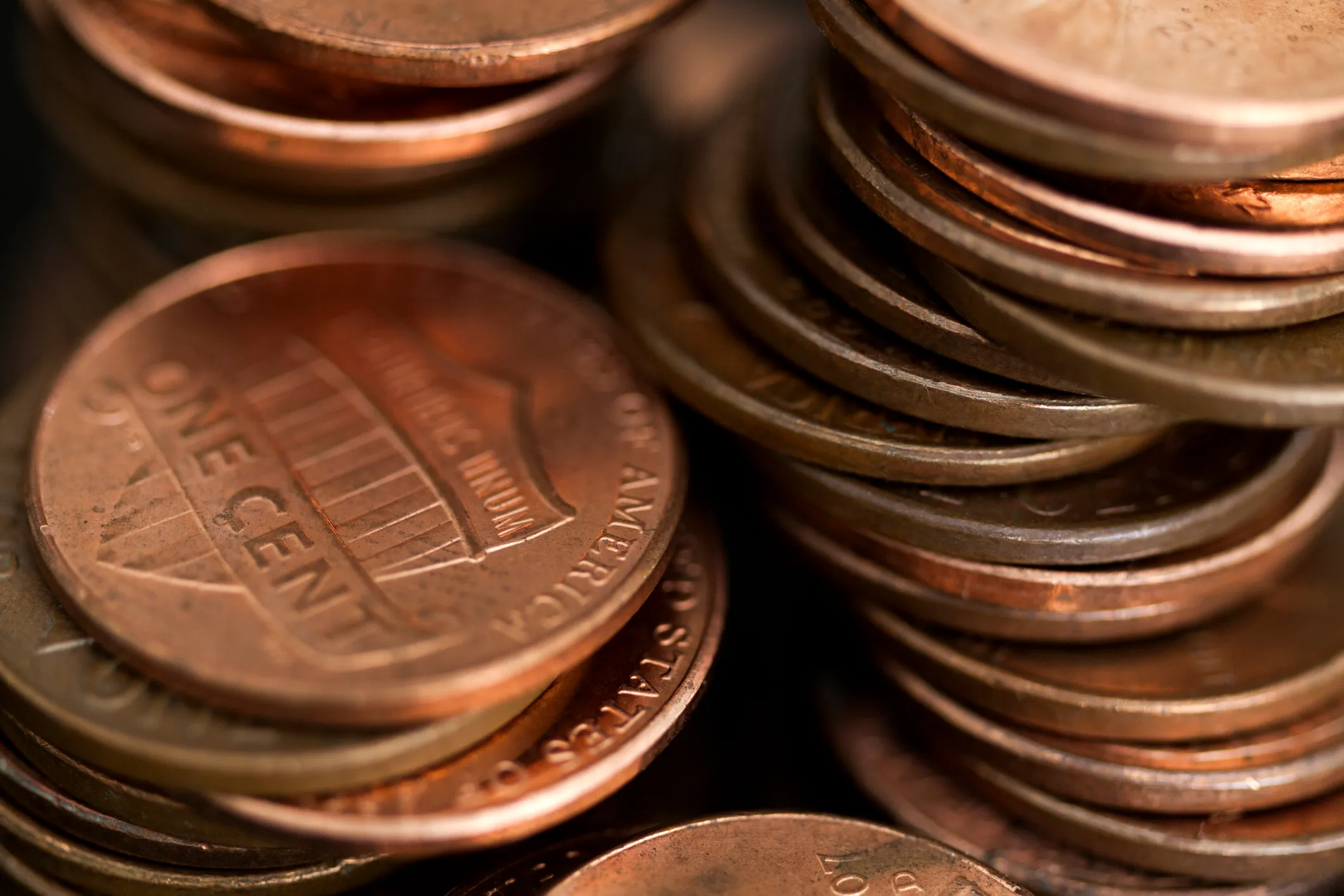
The United States Mint officially ceased the production of new 1-cent coins in November 2025, marking the end of an enduring debate surrounding the nation’s lowest-denomination currency. This pivotal decision, driven primarily by the economic reality of negative seigniorage—the phenomenon where the cost of manufacturing a coin exceeds its face value—has left billions of existing pennies in circulation, prompting a national conversation on their future utility. While these copper-plated zinc coins remain legal tender, their continued existence as a ubiquitous yet often disregarded form of currency is now finite, compelling consumers and businesses alike to reconsider their approach to the humble penny.
A Deep Dive into the Penny’s Demise: Background and Chronology
The journey to the penny’s production halt has been a long and contentious one, rooted in economic inefficiencies and evolving consumer habits. The U.S. penny, first minted in 1793, boasts a rich history intertwined with American commerce and culture. Initially made of pure copper, its composition changed several times, most notably during World War II (steel cents) and, more permanently, in 1982, when it shifted from 95% copper to 97.5% zinc with a thin copper plating. This change was an early attempt to mitigate rising production costs as copper prices surged.
For over two decades leading up to the 2025 decision, the U.S. Mint consistently reported that the cost to produce a single penny exceeded its one-cent value. In fiscal year 2022, for example, it cost approximately 2.1 cents to mint each penny, a loss of 1.1 cents per coin. With billions of pennies produced annually—over 7 billion in 2022 alone—this represented a cumulative loss of tens of millions of dollars to taxpayers each year. This persistent negative seigniorage became the primary economic argument for discontinuing production.
The debate intensified in the early 21st century, with various legislative proposals introduced to Congress advocating for the penny’s elimination. Proponents, including economists and fiscal conservatives, argued that the penny had lost its purchasing power due to inflation, was a nuisance in transactions, and represented an unnecessary expenditure for the government. They often cited a 2006 study by the advocacy group Americans for Common Cents, which paradoxically argued for the penny’s retention by emphasizing its charitable contributions and consumer price stability, but which also inadvertently highlighted the persistent public discussion. Critics, however, pointed to the environmental impact of mining and processing metals for a coin that was immediately discarded or hoarded.
Consumer behavior also played a significant role. Studies consistently showed that a substantial portion of pennies did not actively circulate. They accumulated in jars, drawers, and car cup holders, effectively removed from the economic system. This "breakage" meant that the Mint had to produce even more pennies to meet demand, exacerbating the production cost problem.
The formal timeline leading to the halt began with increasing pressure from congressional committees and public policy think tanks. The U.S. Mint, under the Department of the Treasury, conducted several studies on coinage costs and viability. While a full legislative abolition of the penny proved challenging due to public sentiment and lobbying efforts, the Mint ultimately leveraged its administrative authority to cease new production, citing long-term financial unsustainability. The official announcement in late 2024, followed by the cessation in November 2025, provided a clear signal of the government’s intent to phase out the coin from active circulation over time.
Economic Implications and Global Context
The economic rationale behind the penny’s production halt is multifaceted. Beyond the direct cost of minting, economists highlight "transaction costs"—the time and effort spent by businesses and consumers handling pennies. This includes counting, rolling, and making change, which, when aggregated across millions of transactions daily, amounts to a substantial economic drag. Studies by economists like Greg Mankiw have estimated that the cumulative time spent dealing with pennies could be worth billions of dollars annually in lost productivity.
Inflation has steadily eroded the penny’s purchasing power since its inception. A penny in 1913, the year the Federal Reserve was established, had the purchasing power equivalent to approximately 30 cents today. This diminished value means that items once bought for a penny now cost significantly more, rendering the coin largely irrelevant for individual purchases.
The United States is not alone in its decision to move away from low-denomination coinage. Many countries worldwide have successfully phased out their lowest-value coins without significant economic disruption. Canada, for instance, ceased production of its penny (the "loonie") in 2012, formally withdrawing it from circulation in 2013. Retailers in Canada now round cash transactions to the nearest five cents. Similar moves have been made in Australia (1- and 2-cent coins eliminated in 1992), New Zealand (1- and 2-cent coins in 1990, 5-cent coin in 2006), and various European countries. These precedents offer a roadmap for how the U.S. transition is expected to unfold, with cash transactions likely to be rounded to the nearest nickel. Electronic transactions, of course, will remain unaffected by this change.
Reactions and Anticipated Impacts
The decision to halt penny production has elicited a range of reactions from various stakeholders.
- Consumers: Many consumers express relief at the prospect of not having to deal with small change, viewing pennies as a nuisance. However, some harbor nostalgic sentiments, viewing the penny as a symbol of thrift ("a penny saved is a penny earned") and an integral part of American identity. Consumer advocacy groups have raised concerns about potential "round-up" inflation, where retailers might systematically round up prices to the nearest nickel, disproportionately affecting low-income individuals. While economic studies on countries that have eliminated similar coins generally show no significant inflationary impact, these concerns persist.
- Businesses: Retailers and financial institutions generally welcome the move, anticipating reduced costs associated with cash handling, counting, and transporting low-value coins. Small businesses, in particular, may see a slight increase in efficiency. However, they will need to adjust point-of-sale systems and train staff on rounding policies for cash transactions. The National Retail Federation, while acknowledging the operational benefits, has also emphasized the need for clear guidance from the Treasury on rounding rules to ensure fairness and consistency.
- Banks and Credit Unions: These institutions are expected to continue accepting pennies for deposit and exchange as long as they remain legal tender. However, the volume of penny transactions will likely decrease over time, reducing the need for coin-counting services.
- Numismatists and Collectors: Coin collectors view the production halt as a significant event. While common pennies are unlikely to become highly valuable, the cessation of minting could increase interest in rare or error pennies, potentially driving up their market value over time. This group anticipates a surge in public interest in numismatics as people examine their loose change more closely.
What to Do With Your Pennies: Practical Strategies for a Post-Production Era
With billions of pennies still in circulation and no new ones being made, individuals are presented with several options for managing their accumulated change. The key is to make a conscious decision rather than letting them continue to sit idle.
-
Cash In Your Pennies:
- Banks and Credit Unions: The most straightforward method. Most financial institutions accept rolled coins for deposit or exchange. Some may offer coin-counting machines, while others require pre-rolled coins. It is advisable to check with your specific bank for their policies and any associated fees.
- Coin-Counting Kiosks (e.g., Coinstar): These machines, often found in grocery stores, offer a convenient way to convert loose change into cash, gift cards, or charitable donations. However, they typically charge a fee (around 11-12% for cash, though gift card options may be fee-free), which can significantly reduce the total value of your pennies. For a large collection, this fee might be acceptable for the convenience.
-
Spend Them While They’re Still Accepted:
- Pennies remain legal tender indefinitely. Gradually incorporating them into everyday cash transactions is a simple way to reduce your stash without extra effort. While some businesses and consumers already eschew pennies, many still accept them, particularly for exact change or to break larger bills. Using them at self-checkout machines, where human interaction is minimal, can be particularly effective. This method aligns with the principle of keeping money in circulation until it naturally phases out.
-
Save Your Pennies for the Future: A Collector’s Perspective:
- The cessation of production inherently makes existing pennies a finite resource. While the vast majority of pennies will never hold significant numismatic value beyond their face value, certain coins could become collectible. These include:
- Key Date Pennies: Coins from specific years with low mintage numbers (e.g., 1909-S VDB, 1914-D, 1931-S).
- Error Coins: Pennies with minting mistakes, such as double dies, off-center strikes, or repunched mint marks (e.g., 1955 Double Die Obverse, 1969-S Double Die Obverse).
- Proof Coins: Special strike coins produced for collectors.
- Wheat Pennies (1909-1958): These older copper pennies are generally worth more than face value, especially in good condition.
- Pre-1982 Copper Pennies: Pennies minted before 1982 contain 95% copper, a metal whose scrap value can sometimes exceed one cent, though melting coins is illegal.
- For those interested, exploring coin collecting can transform a pile of spare change into an engaging hobby with potential for future financial reward, albeit a long-term one.
- The cessation of production inherently makes existing pennies a finite resource. While the vast majority of pennies will never hold significant numismatic value beyond their face value, certain coins could become collectible. These include:
-
Put Them Toward Savings or Investing:
- Traditional Savings Jar: The classic "piggy bank" method, while old-fashioned, remains an effective way to accumulate savings. Regularly adding loose pennies, alongside other change, can result in a surprising sum over time. This fosters a tangible saving habit.
- Modern Round-Up Apps: For a more contemporary approach, financial technology apps (e.g., Acorns, Chime) allow users to round up everyday purchases to the nearest dollar and invest the difference. While these apps typically focus on digital transactions, the underlying principle of aggregating small amounts for long-term growth is similar to saving pennies. Although pennies themselves aren’t directly invested, the mindset of valuing small amounts for future gain is reinforced.
-
Donate Your Pennies:
- Charitable organizations frequently accept spare change. Even a seemingly small jar of pennies, when combined with contributions from others, can significantly impact fundraising efforts. Many charities have collection boxes at retail locations, or you can directly donate rolled pennies to your preferred organization. This option allows individuals to convert otherwise idle assets into support for meaningful causes, aligning with the philanthropic spirit often associated with small change drives.
-
Get Creative with Practical Uses:
- Pennies possess physical properties that make them surprisingly versatile around the home and for DIY projects.
- Home Repair: Use them as shims to stabilize wobbly furniture, as temporary spacers for tiling, or to add weight to curtains.
- Tools: A penny can serve as a makeshift screwdriver for slotted screws in a pinch.
- Tire Tread Gauge: The depth from Lincoln’s head to the top of the penny can be used to roughly gauge tire tread wear (if Lincoln’s head is fully visible, your tread is likely too shallow).
- Crafts and Decor: Pennies are popular in mosaic art, tabletop finishes, coaster designs, and other decorative elements. Their copper sheen can add a unique aesthetic to various projects, transforming loose change into functional or artistic pieces.
- Pennies possess physical properties that make them surprisingly versatile around the home and for DIY projects.
-
Hold Onto Your Pennies for Nostalgia and Historical Value:
- For many Americans, the penny is more than just currency; it’s a tangible piece of history, an object that has been handled by generations. Keeping a small collection as a keepsake or teaching tool can preserve this cultural connection. It offers a tangible reminder of a coin that, despite its low monetary value, has played a significant role in the nation’s economic and social fabric for over two centuries. As pennies become less common in everyday transactions, their sentimental and historical value may appreciate for some.
Broader Impact and the Future of Small Change
The phasing out of penny production represents a subtle but significant shift in American currency. While the immediate impact on the average consumer may be minimal, particularly given the prevalence of digital payments, it underscores a broader trend towards demonetization of low-value physical currency. The transition will likely normalize rounding cash transactions to the nearest nickel, a practice already common in many other developed nations.
The environmental implications are also noteworthy. The cessation of penny production means a reduction in the demand for zinc and copper, metals whose extraction and processing carry environmental costs. While the individual impact of a single penny is negligible, the cumulative effect of billions of coins over decades can be substantial.
Looking ahead, the penny’s fate may foreshadow the future of other low-denomination coins. The nickel, which also frequently costs more to produce than its face value, could become the next target for review if current trends continue. The broader trajectory of currency appears to be moving towards higher denominations for physical cash and an increasing reliance on electronic payment methods.
In conclusion, the U.S. Mint’s decision to halt penny production is a pragmatic response to economic realities and evolving societal habits. While billions of pennies remain legal tender, their future is largely in the hands of the public. Whether individuals choose to cash them in, spend them down, save them, donate them, creatively repurpose them, or hold them for sentimental value, the moment calls for a conscious decision. The era of the newly minted penny is over, but its legacy and its existing presence offer diverse opportunities for engagement, turning what was once a financial burden into a potential asset or a historical artifact.