Candice Horbacz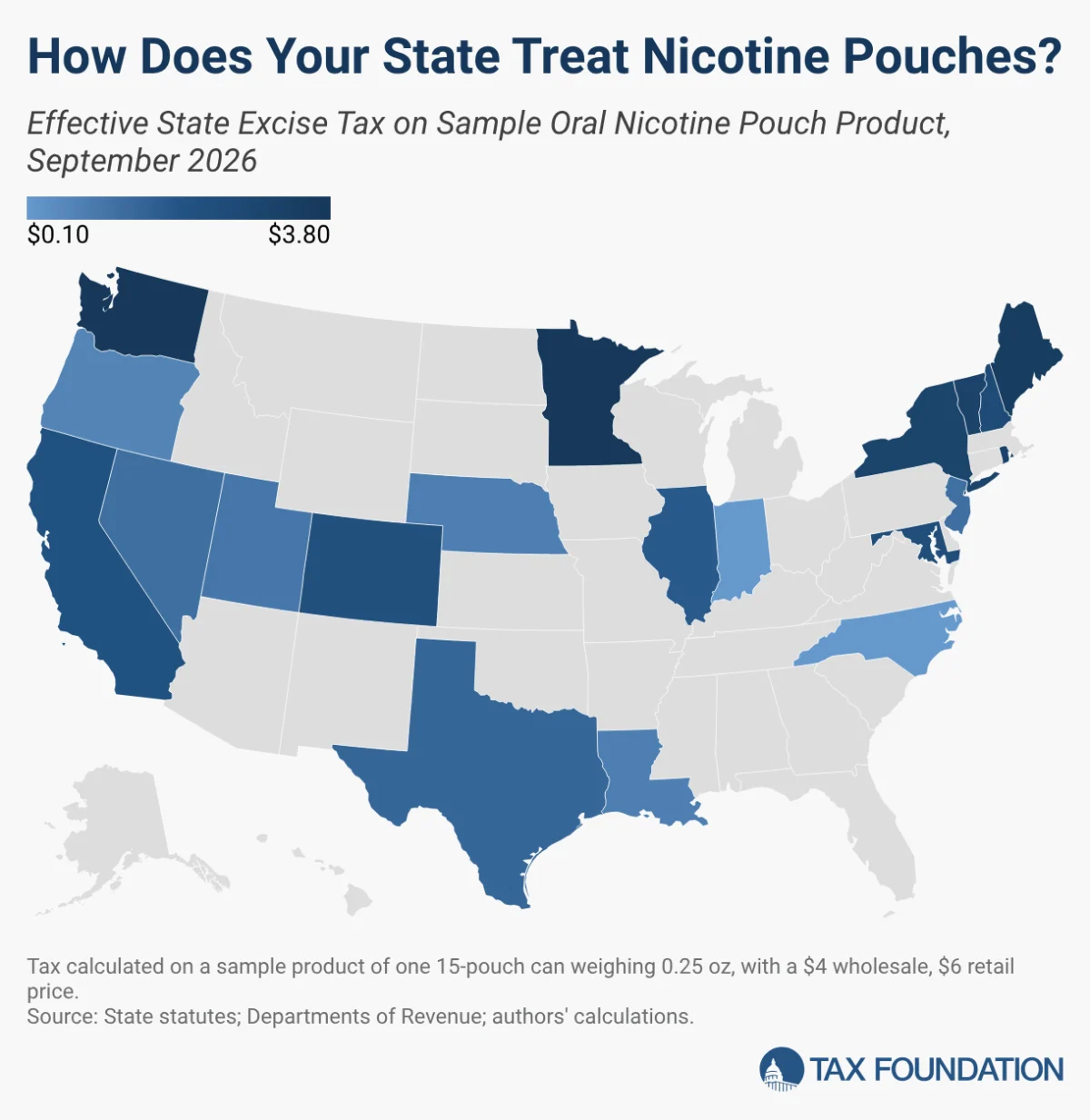
Oral nicotine pouches have rapidly emerged as a significant disruptor in the nicotine market, offering consumers an alternative to the harmful combustion and myriad chemicals found in traditional cigarettes. As these innovative alternative nicotine products (ANPs) successfully steer smokers towards non-combustible nicotine consumption, state governments across the United States are grappling with the complex challenge of integrating these novel products into their existing tax frameworks. This shift presents a nuanced trade-off between securing state revenues and advancing public health goals, a dilemma that demands careful consideration and a principled approach to taxation.
The Genesis of a New Nicotine Landscape
The rise of oral nicotine pouches is part of a broader revolution in nicotine delivery, driven by technological advancements and a growing public health emphasis on harm reduction. Unlike traditional tobacco products, which have been consumed for centuries, modern oral nicotine pouches are a relatively recent innovation. They typically contain synthetic or tobacco-derived nicotine, plant-based fibers, flavorings, and sweeteners, all packaged in small, discreet pouches designed to be placed between the gum and lip. Crucially, most do not contain tobacco leaf at all, distinguishing them significantly from traditional smokeless tobacco products like snuff or chewing tobacco. Their appeal lies in their discretion, lack of smoke, and perception as a less harmful alternative to smoking, aligning with the public health strategy of reducing the overall burden of tobacco-related diseases by offering less hazardous options to those unable or unwilling to quit nicotine entirely.
This rapid adoption has not gone unnoticed by policymakers. The market for ANPs, including e-cigarettes and nicotine pouches, has seen explosive growth over the past decade. Data from market research firms indicate a consistent upward trend in sales, suggesting a substantial consumer base shifting away from combustible products. This trend, while promising for public health, has created an unforeseen fiscal challenge for states.
The Fiscal Chasm: Shrinking Cigarette Tax Revenues
For decades, cigarette taxes have been a reliable and, at times, lucrative stream of revenue for state budgets. These excise taxes, levied per pack, have historically contributed billions of dollars annually, funding a wide array of public services from education to infrastructure. However, the very success of public health campaigns aimed at reducing smoking, coupled with the emergence of less harmful nicotine alternatives, has led to a sustained and significant decline in cigarette consumption. The Centers for Disease Control and Prevention (CDC) consistently reports declining smoking rates among adults and youth, a monumental public health achievement.
This triumph, however, has a fiscal consequence: the shrinking cigarette consumption has inevitably decreased the tax base for cigarette taxes. States now confront the stark reality that the once robust stream of cigarette tax revenue is drying up, leaving a substantial "revenue crater" within state budgets. This predicament forces states to reconcile their commitment to public health with their ongoing need for stable funding. On one hand, the decline in smoking is an enormous win for public health, signaling fewer smoking-related illnesses and deaths. On the other, the resulting fiscal void compels states to seek alternative revenue sources, often turning their gaze towards the very products that are facilitating this public health improvement.
The Current Patchwork of Taxation: A Snapshot as of September 2026
As of September 2026, the legislative response to oral nicotine pouches has been varied and, in many cases, reactive rather than proactive. Twenty states and the District of Columbia have already incorporated nicotine pouches into their tax systems, but the methods and rates applied reveal a broad spectrum of approaches, often characterized by a lack of tailored policy.
The most prevalent method for taxing nicotine pouches has been to lump them into a state’s broad, existing tax category for "Other Tobacco Products" (OTP). This category traditionally includes products such as cigars, loose leaf tobacco, snuff, and chewing tobacco. However, this approach is increasingly being identified by tax policy experts as a fundamental mistake. Oral nicotine pouches are fundamentally different from most products typically found in the OTP category. As highlighted, many modern oral pouches do not contain tobacco leaf at all, utilizing synthetic or extracted nicotine. Furthermore, and critically from a public health perspective, oral pouches are widely considered to be substantially less harmful than many, if not all, of the other products in most states’ OTP categories, particularly combustible cigarettes.
By treating less harmful products the same as combustible tobacco or traditional smokeless tobacco, these states inadvertently undermine the very health benefits that alternative products offer. This undifferentiated taxation removes a crucial price incentive for smokers to switch to less hazardous options, thereby impeding the public health objective of reducing overall harm. It suggests a missed opportunity to align tax policy with harm reduction principles.
Toward a Principled Tax Policy: Ad Quantum vs. Ad Valorem
A more effective and principled tax policy, as advocated by tax economists and public health strategists, would be to tax oral nicotine pouches with their own specific rate, distinct from traditional tobacco products. Furthermore, the type of tax matters significantly. An ad quantum tax, levied per can or per ounce, is generally considered a better tax base than an ad valorem tax, which is based on the product’s price.
An ad quantum tax provides greater stability in revenue collection and is less susceptible to market fluctuations in product pricing. It also ensures that the tax burden is consistent across products of similar quantity, regardless of brand or marketing. Conversely, an ad valorem tax can penalize premium products or lead to less revenue if manufacturers reduce prices. States that embrace a harm reduction philosophy can strategically implement ad quantum taxes at reduced rates relative to combustible cigarettes. This approach can generate necessary revenues while simultaneously enabling growth in the market for innovative, less harmful products, thereby maximizing public health benefits.
The Spectrum of State Taxation: A Comparative Analysis
To illustrate the wide range of tax treatments, consider a hypothetical sample product: one can containing 15 pouches, sold for $4 wholesale and $6 at retail.
The states with the highest tax burden on nicotine pouches include Minnesota and Washington, both imposing a staggering $3.80 tax on the sample product due to their 95 percent wholesale tax rates. This means nearly the entire wholesale price is added in tax. They are closely followed by Maine, where a weight-based tax with a one-ounce minimum results in an estimated $3.54 tax. Rhode Island levies $3.20 from its 80 percent wholesale tax, and Vermont imposes $3.08, also from a weight-based tax with a 1.2-ounce minimum. These high tax rates significantly increase the final retail price, potentially making these less harmful alternatives almost as expensive, or even more expensive in some cases, than traditional cigarettes in those states.
At the other end of the spectrum, North Carolina stands out with the lowest tax on nicotine pouches, at $0.005 per pouch, equating to a mere $0.10 per standard can of 20 pouches. This minimal tax maintains a significant price differential between pouches and cigarettes. Indiana follows with an estimated $0.13 tax on the sample product, based on a $0.50 per ounce tax with no minimum weight. Oregon applies a $0.65 per standard can tax. Finally, Louisiana and Nebraska both tax the sample product at $0.80, derived from a 20 percent wholesale tax. These lower tax rates are more aligned with a harm reduction strategy, making the less harmful options more economically attractive to consumers seeking to switch from combustible tobacco.
The vast disparity in tax treatment across states is even wider than the jurisdictional differences seen in the excise tax treatment of combustible cigarettes. This creates fertile ground for economic distortions.
Economic Implications: Cross-Border Trade and Illicit Markets
The wide range of tax rates on oral nicotine pouches carries significant economic implications, mirroring issues long observed with cigarette taxes. Substantial jurisdictional disparities in cigarette taxes are well-documented drivers of cross-border smuggling and illicit trade. There is no reason to believe oral nicotine pouches would be any different.
Consider the vivid example of Washington and its neighbors. Consumers in Washington, facing a $3.80 tax on a sample can of pouches, would save approximately $3.15 in taxes if they crossed the border into Oregon to purchase the same product. Even more dramatically, these consumers could avoid excise taxes entirely by shopping in Idaho, where oral nicotine pouches are not currently taxed. Such substantial savings inevitably spur behavioral patterns that range from casual cross-border shopping trips to more organized, lucrative illicit enterprises designed to arbitrage these tax differentials.
The emergence of such illicit markets undermines legitimate businesses, deprives states of potential tax revenue, and makes it harder for regulators to monitor product safety and sales to minors. High taxes, while intended to deter consumption or raise revenue, can inadvertently create an environment where the untaxed illicit market flourishes, offering products at lower prices and often outside regulatory oversight. This outcome runs counter to both revenue generation and public health objectives.
The Path Forward: A Principled Framework for Future Taxation
As oral nicotine pouches continue to grow in popularity and market share, more states are expected to incorporate them into their tax frameworks. Iowa, for instance, has already established a $0.05 per can tax on alternative nicotine pouches, set to go into effect in January 2027, demonstrating the ongoing legislative activity in this area. It is imperative that policymakers approach this task in a principled way that embraces, rather than undermines, the harm reduction benefits these products offer.
Harm reduction is a pragmatic public health strategy. It focuses on viable solutions that reduce harms, acknowledging that complete elimination of a behavior (such as nicotine consumption) through prohibitions or excessive taxation is often unrealistic and can lead to unintended consequences. In the context of nicotine, this means encouraging smokers to switch to substantially less harmful options.
From a policy standpoint, taxes on alternative products should be designed to incentivize this transition. This implies reduced tax rates for less harmful options, proportionate to their reduced risks relative to combustible cigarettes. The rationale for levying excise taxes on nicotine products ostensibly stems from the associated harms; therefore, tax rates should align logically with those harms. Oral nicotine pouches are drastically less harmful than combustible cigarettes. Nicotine itself is not carcinogenic; it is the myriad other chemicals and the combustion process in traditional cigarettes that cause the vast majority of harm. Alternative nicotine products thus play a vital role in facilitating smoking cessation by offering a less harmful method of consuming nicotine for those who cannot or will not quit entirely.
The Tax Foundation, among other policy organizations, has established a framework for taxing less harmful alternative products according to their relative potential harms. This framework suggests that since oral nicotine pouches are substantially less harmful than combustible cigarettes, excise taxes on pouches should be limited to a fraction of the taxes imposed on cigarettes. By creating a significant price differential, lower taxes on ANPs encourage smokers to switch to the less harmful option. Moderate taxes also help to prevent distortions from cross-border trade and allow the legal, taxed market to effectively compete with untaxed illicit markets.
Unfortunately, many states currently undermine the potential of these less dangerous alternative nicotine products by taxing them in excess of their relative harms, or by lumping them in with far more dangerous traditional tobacco products. This approach misses the opportunity to leverage fiscal policy as a tool for public health improvement.
Stakeholder Perspectives
The debate over ANP taxation involves various stakeholders, each with distinct priorities:
- Public Health Advocates: While a consensus exists on the need to reduce overall nicotine addiction, many public health organizations acknowledge the role of harm reduction. However, some still advocate for high taxes on all nicotine products to deter initiation, particularly among youth. A more nuanced view within the public health community increasingly supports differentiated taxation to encourage switching from combustible products.
- State Revenue Departments: Their primary concern is fiscal stability. Faced with declining cigarette tax revenues, they are under pressure to find replacement sources. The temptation to tax new, growing markets like ANPs heavily is strong, as it offers a seemingly straightforward solution to budget shortfalls.
- Alternative Nicotine Product Industry: Manufacturers of oral nicotine pouches consistently advocate for lower taxes, emphasizing the harm reduction potential of their products. They argue that excessive taxation stifles innovation, discourages smokers from switching, and unfairly categorizes their tobacco-free products with traditional tobacco. They often point to the potential for illicit markets if legal products are too expensive.
- Consumers: Smokers seeking to quit or reduce harm are directly impacted by tax policies. High taxes on ANPs reduce the affordability and attractiveness of these alternatives, potentially prolonging their use of more harmful combustible cigarettes. Conversely, reasonable taxes make switching more financially viable.
Conclusion
States that have yet to incorporate nicotine pouches into their tax schemes face a critical decision point. Theoretically, not taxing the less harmful products at all would maximize the tax differential, providing the strongest incentive for smokers to switch and thus maximizing the harms reduced. However, given the steady decline in smoking rates and the resulting erosion of traditional cigarette tax revenue, it is likely that many states will eventually seek to tax new alternative nicotine products like pouches to compensate for lost revenue.
When they do, the imperative is to implement principled tax policies that encourage, rather than hinder, the transition to less harmful alternatives. This means establishing specific, ad quantum tax rates for oral nicotine pouches that are significantly lower than those for combustible cigarettes, reflecting their reduced harm profile. Such an approach balances the legitimate need for state revenue with the paramount goal of public health, ensuring that fiscal policy serves as a catalyst for a healthier future rather than an impediment to progress. The decisions made today regarding the taxation of oral nicotine pouches will profoundly shape both state budgets and public health outcomes for years to come.