Candice Horbacz
Negotiations between sovereign governments frequently involve the strategic deployment of leverage to influence the behavior of counterparties or to compel compromise. While economic tools such as sanctions and tariffs have long been recognized as instruments of geoeconomic statecraft, tax policies have historically been overlooked in this strategic toolkit. However, the proposed US legislation in 2025, specifically Section 899, widely dubbed the "retaliatory tax," emerged as a seminal example of employing tax policy threats against allies. This bold maneuver aimed to secure exemptions for US multinational corporations from the most contentious provisions of the global minimum tax framework. Concurrently, on the trade front, Canada notably rescinded its digital services tax, which had primarily targeted US tech giants, while the US forged numerous new agreements with nations committing to forgo such taxes in the future. These combined developments have led some policymakers in Washington to a potentially precarious conclusion: the immense power of the American economy, particularly its market access, can be effectively leveraged to alter the governmental policies of other nations. This article delves into the intricate dynamics behind Section 899’s success, examining its theoretical underpinnings, contrasting it with other geoeconomic tools, and evaluating the potential for its replication in future policy endeavors.
The Evolving Landscape of International Taxation
The foundation of this geoeconomic shift lies in the global effort to reform international tax rules for multinational companies, primarily spearheaded by the Organisation for Economic Co-operation and Development (OECD). In October 2021, over 130 member jurisdictions endorsed an ambitious outline for new tax regulations, known as the Two-Pillar Project. Pillar One, if implemented, sought to reallocate taxing rights to countries where customers reside, affecting approximately $200 billion in corporate profits. While a draft multilateral treaty for Pillar One was released in October 2023, the June 2024 deadline for a final agreement passed without resolution, and existing agreements between the US and nations imposing discriminatory digital services taxes have since lapsed. Canada, initially planning its own digital services tax, reversed course in June 2025, largely due to US pressure. This suggests the window for Pillar One to resolve digital services tax disputes may have closed.
In stark contrast, Pillar Two, which introduces a global minimum corporate tax rate of 15 percent, has seen rapid progress. Implementation began in 2024, with over 65 countries having either drafted or enacted legislation to incorporate Pillar Two’s model rules into their national laws. Pillar Two applies to companies with revenues exceeding €750 million and encompasses three primary taxes: the Qualified Domestic Minimum Top-Up Tax (QDMTT), the Income Inclusion Rule (IIR), and the Undertaxed Profits Rule (UTPR). QDMTTs ensure that domestic income is taxed at a minimum of 15 percent within the country where the economic activity occurs, preserving taxing rights. The IIR requires parent companies to include foreign income in their taxable income at a minimum 15 percent rate, with foreign tax crediting. The UTPR, however, is a more aggressive mechanism, allowing countries to impose additional taxes on a business if it is part of a larger group paying less than 15 percent in another jurisdiction, even if the group is not headquartered or generates profits in the UTPR-implementing country. This extraterritorial reach of the UTPR was a significant point of contention for the United States.
US Non-Alignment and the Threat of UTPR
On July 1, 2021, the OECD announced the broad agreement on a 15 percent global minimum tax. The initial intention was for countries to amend their national laws by 2023. However, the Biden administration was unable to secure the necessary legislative changes in the US Congress, particularly after losing control of the House in the 2022 midterms. This lack of US alignment with the global minimum tax framework left the American tax base exposed to its rules, meaning foreign governments could levy higher taxes on US companies based on their effective tax rate paid in the US, primarily through the UTPR mechanism. This situation presented a perceived threat to American tax sovereignty, as foreign jurisdictions could effectively "extract taxes from U.S. companies on their U.S. earnings" without Congressional approval.
Throughout this period, House Ways and Means Chairman Jason Smith (R-MO) emerged as a vocal critic of the OECD process, signaling that a future Republican administration would view the deal as discriminatory and extraterritorial, vowing corrective action. In May 2023, Smith introduced a bill proposing increased US withholding and income taxes on citizens, corporations, and partnerships tied to foreign countries that enacted extraterritorial or discriminatory taxes. The rates would escalate by 5 percentage points annually, capped at 20 points, 180 days after a Treasury report identified such a country. Separately, in July of the same year, Rep. Ron Estes (R-KS) proposed a "Super BEAT," which would make the existing Base Erosion and Anti-Abuse Tax (BEAT) more stringent for foreign-owned entities operating in the US that were subject to extraterritorial tax regimes. Both bills shared the objective of raising costs for entities from jurisdictions imposing digital services taxes or the OECD’s UTPR against American firms, albeit through different retaliatory tax mechanisms.
The Genesis and Evolution of Section 899
The political landscape shifted dramatically following the 2024 presidential election. On his first day back in office, President Trump issued a Presidential Memorandum declaring the OECD’s Global Tax Deal to have "no force or effect" in the US. He directed the Treasury Department to investigate discriminatory foreign tax rules and develop protective measures, specifically referencing Section 891, a retaliatory measure enacted in 1934 against discriminatory taxes on US firms. The very next day, Chairman Smith reintroduced H.R. 59, the "Defending American Jobs and Investment Act," which mandated Treasury reports on foreign countries with extraterritorial or discriminatory taxes and provided for enforcement remedies. This marked the official commencement of the congressional process to develop what would become Section 899.
On May 20, House Budget Committee Chairman Jodey Arrington (R-TX) introduced H.R. 1, later known as the "One Big Beautiful Bill Act" (OBBBA), which incorporated a retaliatory tax provision blending concepts from the initial Smith and Estes proposals. The House’s version of Section 899 proposed significant increases in US withholding and income tax rates on "applicable persons" from targeted countries by 5 percentage points annually, up to a 20-point cap on top of statutory rates, beginning as early as January 2026. This version also introduced a "Super BEAT" that would raise the BEAT rate from 10 percent to 12.5 percent, eliminate the $500 million gross-receipts threshold, and remove the base-erosion-percentage floor for inbound corporations tied to "applicable persons." Crucially, it explicitly targeted any country imposing a digital services tax, the UTPR, or a diverted profits tax.
The Senate’s version of Section 899 maintained a similar structure but introduced several modifications. It capped the rate increase at 15 percentage points (instead of 20) and applied it against the treaty rate rather than the statutory rate, making it a ceiling rather than a de facto treaty override. The effective date was pushed back to January 2027, and portfolio interest was specifically carved out, mitigating the impact on foreign holders of US debt. The Senate’s "Super BEAT" proposed a 14 percent rate (higher than the House’s 12.5 percent), eliminated the $500 million gross-receipts threshold, but kept a reduced base erosion percentage threshold of 0.5 percent (down from 3 percent). It also turned off the newly proposed high-tax exception, focusing BEAT more squarely on low-tax jurisdictions.
The Diplomatic Resolution: The Pillar Two Side-by-Side Agreement
While Congress advanced the OBBBA with Section 899, the US Treasury was concurrently engaged in high-stakes negotiations with other G7 countries. The US sought to exclude US-parented groups from Pillar Two’s IIR and UTPR, viewing these rules as extraterritorial and an infringement on American sovereignty, particularly given that the US already possessed its own minimum tax regime (including net CFC-tested income, the corporate alternative minimum tax, and Subpart F) established by the 2017 Tax Cuts and Jobs Act (TCJA). The US system had, in fact, been considered for grandfathering into the global minimum tax framework in the 2020 OECD Blueprint before the Biden administration shifted negotiating objectives. Treasury Secretary Bessent explicitly threatened the adoption of Section 899 if a deal acknowledging the equivalence of the US system for Pillar Two purposes was not reached.
This diplomatic pressure yielded results. On June 28, 2025, the G7 nations finalized a statement on a "side-by-side solution" (SbyS). This agreement stipulated that US-parented groups would be exempt from the IIR and UTPR, provided Congress removed Section 899 from the OBBBA. Congress complied, and the OBBBA was signed into law on July 4, 2025, without the retaliatory tax provision. The SbyS agreement was later adopted by the OECD’s Inclusive Framework, with the US being the sole jurisdiction to receive this unique qualification. This outcome raised a critical question: why was Section 899 so successful in compelling G7 countries to alter their policies, and what lessons can policymakers glean for future tax-based geoeconomic tools?
Analyzing Section 899’s Success: Three Theories
The success of Section 899 can be understood through several lenses, each rooted in established academic literature on economic statecraft and international relations.
Theory One: The Prevailing View in Washington – Leveraging Market Access
The dominant perspective in Washington posits that access to the vast US financial market is simply too vital for the citizens and firms of targeted countries to risk increased tax rates on their capital. This aligns with the "chokepoint" logic, where control over critical nodes in global economic networks confers coercive power. Once Section 899 entered legislative drafting, the prospect of its implementation galvanized affected foreign firms to lobby their home governments effectively for a side-by-side solution. This theory combines Drezner’s observation that allies are often more amenable to credible threats and Maggiori, Clayton, and Schreger’s framework, which suggests targets comply when the "inside option" (compliance) outweighs the "outside option" (refusal). A crucial factor was the existence of a clear "off-ramp"—the explicit condition that the threat would be withdrawn upon concessions—which significantly contributed to its credibility and success.
Theory Two: The "Make It Right" Idea – A Pre-existing Understanding
This theory suggests that countries involved in the BEPS/IF process understood from the outset that the US system had adopted the first global minimum tax, and the OECD’s initial objective was to build a framework around existing US rules. The 2020 OECD Blueprint had, in fact, envisioned grandfathering the US rules with an equivalence determination. While the Biden administration adopted a more conciliatory approach, the consistent messaging from Republicans in Congress signaled a return to the 2020 logic if they regained power. This created a public relations challenge for other G7 countries, making it appear they were succumbing to "Trump threats." However, at a technical level, the SbyS was arguably a pre-planned contingency that allowed them to "make right" an earlier deviation from the intended path, thereby preserving face while achieving a mutually acceptable outcome.
Theory Three: The EU (Over)playing Its Geoeconomic Hand – Preserving Pillar Two
Rasmus Corlin Christensen’s work on "weaponized interdependence" suggests that the EU’s market access can also generate network effects in global tax policy. With 80 percent of the world’s largest multinationals having a legal presence in the EU (despite only 20 percent being headquartered there), the EU wields significant influence. This theory posits that policymakers from other countries, particularly the EU, negotiated for US firms to remain subject to QDMTTs as part of the SbyS. More importantly, the SbyS left the UTPR in place as an enforcement tool for non-US-headquartered companies. For the EU, the UTPR’s continued existence, even if not applicable to US firms, provided a vital mechanism to reshape tax competition dynamics. Therefore, from the EU’s perspective, accepting the SbyS and foregoing a direct UTPR application to US firms was a strategic compromise worth the economic cost of Section 899, as it preserved the integrity and enforcement potential of the broader Pillar Two system for domestic European audiences and global tax reform objectives. The EU might have overplayed its hand by initially asking for more than it could achieve, then accepting QDMTTs as a sufficient compromise.
The Peril of Misinterpretation: Costs for the US Economy
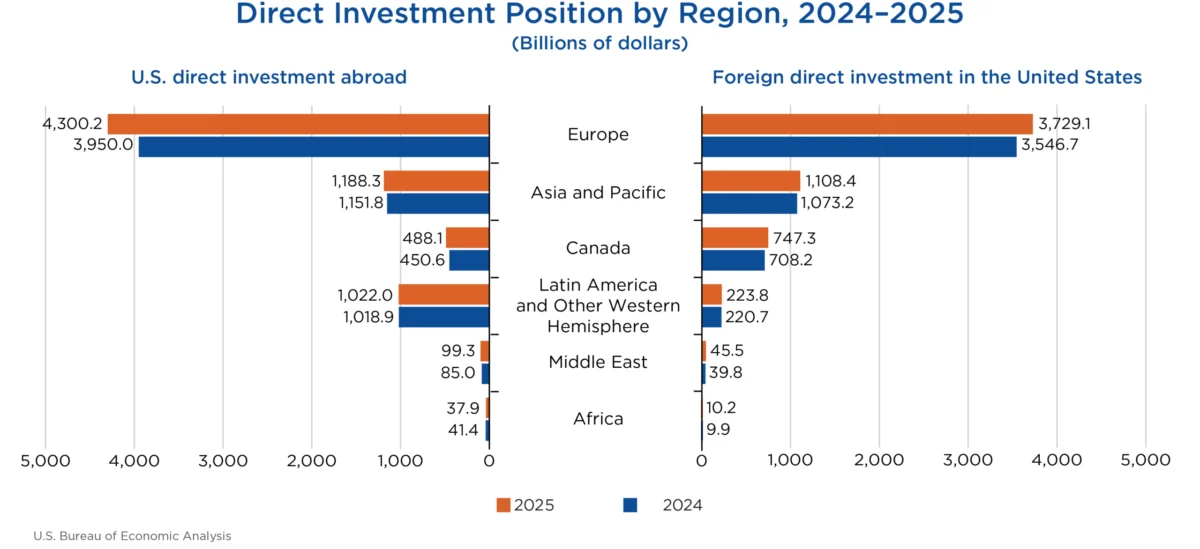
Misinterpreting the underlying reasons for Section 899’s success could have profound and negative long-term consequences for the US economy if future policies are designed as iterations of this model. Tax Foundation research indicated that a fully implemented Section 899 would have impacted inbound investment from countries representing over 80 percent of the US inbound Foreign Direct Investment (FDI) stock. Such a measure could trigger a significant outflow of capital, undermining investment and economic growth.
Furthermore, over-leveraging the US financial system and its dollar-based infrastructure risks incentivizing other countries, including traditional allies, to actively seek dependency-reducing alternatives. Even a marginal reduction in global demand for dollars could destabilize the bond market, potentially rendering US debt unsustainable over the medium term. The "exorbitant privilege" afforded by the dollar’s status as the global reserve currency, which allows the US to sustain larger deficits, is predicated on significant capital inflows. Overusing this "chokepoint" can diminish its efficacy and credibility over time, eroding a fundamental pillar of American economic power.
Lessons from Europe: Mixed Results in Geoeconomic Statecraft
While the EU lacks a direct analogue to Section 899 due to its fragmented tax policy landscape, it has similarly attempted to leverage its market access with tax and trade tools to influence behavior in other jurisdictions. Anu Bradford’s "Brussels Effect" argues that the EU, through its extensive regulatory framework, can shape firm behavior globally without resorting to coercive practices on other governments. Joanne Scott similarly describes this as "action-forcing" through "territorial extension," galvanizing global action on internationally agreed objectives. While primarily observed in regulatory and environmental standards, this template has expanded into tax and trade policy.
A prominent example is the EU’s Carbon Border Adjustment Mechanism (CBAM), designed to enforce international climate commitments. CBAM mandates payments at the EU border for imported products from jurisdictions lacking a domestic carbon price equivalent to the EU’s Emissions Trading System (ETS) price. This mechanism positions EU decision-makers to negotiate from strength, as firms seeking access to the EU market must comply. However, major economies like the US, China, and India have not adopted equivalent domestic carbon prices. The US Ambassador to the EU has publicly labeled CBAM a tariff, while China and India have criticized it in the WTO, and BRICS nations have denounced it as "unilateral, punitive, discriminatory and protectionist." Despite the strong rhetoric, only Russia has formally lodged a WTO complaint. Optimists argue CBAM simply needs more time; skeptics contend that market access alone provides insufficient leverage to alter third-country policies unless domestic politics align.
Another pertinent EU example is the UTPR under the Pillar Two Directive. As a first mover, the EU is leveraging its market to enforce internationally agreed tax rules, even if third jurisdictions have not adopted them domestically. While over 65 jurisdictions have adopted some Pillar Two rules, economic rivals like China and India have not. The EU clearly has the strongest interest in maintaining and enforcing these rules.
Finally, the EU’s List of Non-Cooperative Jurisdictions for Tax Purposes exemplifies leveraging market access to enforce international standards on tax transparency, harmful preferential tax regimes, and anti-abuse measures. Listed jurisdictions face uncoordinated defensive measures from EU Member States, such as non-deductibility of costs or stricter withholding taxes, and may be cut off from EU funding. Critics highlight the list’s geopolitical bias, noting that EU Member States are exempt regardless of compliance. A World Bank report found that while the review process increased the likelihood of jurisdictions joining the OECD/G20 Inclusive Framework, blacklisting had no discernible impact on offshore wealth or profit shifting because the primary hosts of such activities were not targeted. This suggests "coercive efforts… will struggle without better targeting and enforcement."
The EU’s track record demonstrates that merely restricting access to a large economy does not guarantee compliance from other countries. While it may facilitate discussions, the EU Single Market, much like the US market, cannot universally function as a global "chokepoint" to dictate policy. These actions also impose real economic costs on European consumers and firms that must be carefully considered.
Section 899 vs. Tariffs and Digital Services Taxes: A Critical Distinction
At first glance, European digital services taxes (DSTs) and US tariffs appear analogous to Section 899, as they are all forms of economic coercion, often against allies, offering a path to removal upon policy change. European states have consistently stated their DSTs are temporary proxies for value created in their jurisdictions and would be removed upon a global agreement on taxing rights reallocation. Similarly, US tariffs often aim to leverage access to the US economy to create power asymmetries with smaller countries.
However, DSTs and many US tariffs suffer from fundamental flaws that distinguish them from Section 899. They are unilateral actions, often lacking underlying international consensus, attempting to rewrite established norms through public coercion. European states aiming to unilaterally reform 100 years of international tax norms via DSTs, or US policymakers seeking to unravel decades of supply chain interdependencies through erratic tariffs, misinterpret the academic literature on economic statecraft. The elements that rendered Section 899 successful—a clear off-ramp, an underlying willingness to negotiate, and an obvious fallback position (the 2020 OECD Blueprint logic)—are largely absent in these other tools. This makes them less credible and often counterproductive.
Future Templates for Geoeconomic Tax Policy: Key Questions for Policymakers
Before contemplating future Section 899-style templates, policymakers must critically address a series of questions:
- Distinct Coercive Dynamics: Did Section 899 generate unique coercive dynamics different from a conventional tariff or sanction? While extensive literature exists on sanctions and tariffs, domestic tax policy as a coercive tool remains understudied. Understanding its specific mechanisms is crucial.
- Lobbying Power of Targeted Firms: Was a key to Section 899’s success the lobbying power of foreign companies that would have been directly impacted by the policy? Similar to the "Brussels Effect," where foreign firms advocate for domestic changes to align with EU standards, weaponizing targeted firms against their own governments can be a potent, albeit coercive, strategy.
- Effectiveness Against Adversaries: Would a Section 899 tactic have worked if the counterparties were adversaries rather than allies? Drezner’s "sanctions paradox" suggests that such threats are less likely to succeed against adversaries. Policymakers must assess whether tax-based coercion carries similar probabilities of success and consider the long-term impact on relationships with traditional allies.
- Reshaping International Systems: Is reforming international systems, such as trade or tax, a realistic goal for economic powers like the US or EU without broad-based consensus? Unilateral approaches, as seen with DSTs or tariffs aimed at WTO reform, are significantly more challenging without widespread agreement. Transatlantic cooperation offers a powerful engine for global reform, but it necessitates compromise and a shared vision.
- Costs of Enacting Section 899: What would have been the actual costs of enacting Section 899 to US economic growth, US debt exposure risk, and the dollar’s global reserve currency status? If foreign investors had sought safer havens, it could have exacerbated pressures on investment, growth, and the US bond market. These potential domestic economic costs must be weighed against foreign policy benefits.
- Credibility of the Threat: Did G7 countries perceive Section 899 as a credible threat, and if so, why? Understanding the factors that contributed to its credibility (e.g., asymmetric information during the US legislative process, the specific economic costs to targets, domestic political costs for foreign governments, and the impact on foreign US bondholders) is vital for future success.
- Costs of Non-Action: When evaluating coercive tools, policymakers must consider the costs of inaction. In the UTPR case, the costs of non-action for the US were significant, including potential fiscal implications, double taxation of US firms, and a fundamental redefinition of US tax sovereignty without congressional consent. Sometimes, the costs of not using a coercive tool can outweigh the costs of deploying it.
Conclusion
Section 899 represents a fascinating new geoeconomic template for US policymakers to consider. Leveraging access to the US financial system is a foundational tenet of American economic statecraft, and in the specific context of the UTPR, the costs of US inaction were substantial. However, future decisions to employ similar tools must be carefully weighed against potential domestic economic costs, long-term damage to allied relationships, and the broader geopolitical benefits of such foreign policy changes.
It is reasonable to conclude that Section 899 achieved the side-by-side solution because the US effectively weaponized one of its most powerful chokepoints—access to its financial market—against allies who ultimately determined that adjusting their approach to international tax reform was in their domestic and international best interest. The US demand was clear, manageable, and provided an unambiguous path to dispose of the threat once policy was changed. This nuanced conclusion is far more plausible than the simplistic assertion that the US, as a hegemon, automatically commands compliance.
As policymakers contemplate the use of other geoeconomic tools, such as tariffs or enforcement mechanisms that leverage market access, they must recognize that simply possessing a larger economy is insufficient to achieve complex international policy goals in an increasingly interdependent world. What proves effective in coercing one trading partner may fail with another. A one-size-fits-all approach is unlikely to yield consistent success. Instead, G7 countries should prioritize identifying focused areas of cooperation to achieve strategic international outcomes. Section 899 demonstrated that economic leverage against allies can successfully alter damaging policies with relatively low costs to the US. The ongoing challenge for policymakers will be to discern precisely when, under what conditions, and at what cost, such coercion can truly succeed.