Candice Horbacz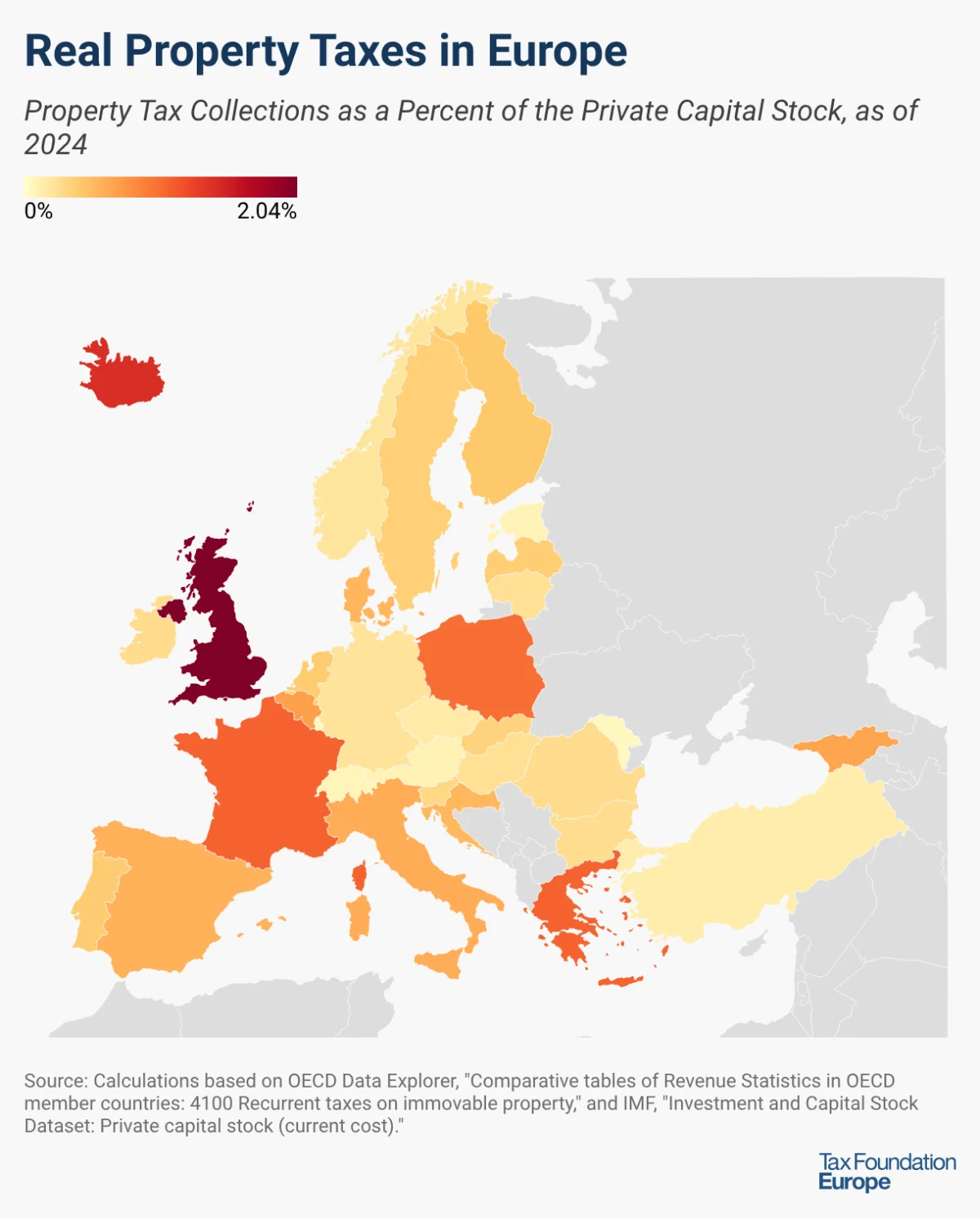
The intricate tapestry of property taxation, a fiscal cornerstone for governments worldwide, reveals a landscape shaped by historical precedent, economic theory, and contemporary policy choices. Dating back to feudal times, early property taxes were predominantly levied on land, with farmers bearing the brunt of these obligations. This foundational concept has evolved dramatically into modern systems where recurrent taxes are applied not only to land but also to a vast array of assets, primarily real estate, and are paid by individuals and legal entities alike. This evolution underscores a continuous balancing act between revenue generation, economic efficiency, and social equity, constantly adapting to the changing economic realities of nations.
The Genesis of Property Taxation: A Historical Overview
The origins of property taxation are deeply embedded in the feudal systems of medieval Europe. Land, being the primary source of wealth and power, naturally became the subject of levies. Lords collected tributes from their vassals, who in turn extracted payments from serfs and farmers working the land. These early taxes were often in kind – a share of the harvest or labor – before gradually monetizing. The Magna Carta, signed in 1215, while primarily limiting royal power, indirectly influenced the development of taxation by establishing principles that would later contribute to representative consent for taxation, laying some groundwork for future fiscal accountability. As societies industrialized and urbanized, the concept of taxable property expanded beyond agricultural land to encompass buildings, factories, and other fixed assets, reflecting a fundamental shift in economic activity and wealth accumulation. The transition from often arbitrary feudal levies to structured, recurrent property taxes marked a critical step in the development of public finance, providing a stable and localized revenue stream for nascent administrative bodies. This historical trajectory highlights the enduring role of property as a tangible and relatively immobile tax base, making it an attractive and reliable target for governments seeking consistent income.
Economic Theory and the Efficiency Debate
Ideally, a well-structured property tax system serves as a powerful fiscal incentive for local governments. By generating revenue directly from property, municipalities are encouraged to permit new development, as an increase in the property tax base directly translates to enhanced public coffers. This revenue, in turn, can be channeled into funding vital local public services such as education, infrastructure, public safety, and sanitation. The value of these improved services is often capitalized directly into property prices, creating a virtuous cycle: better services increase property values, which expands the tax base, allowing for further investment in public services. This localized feedback loop is often cited as a key strength of property tax systems.
However, the efficacy and fairness of property taxes are heavily debated among economists, particularly concerning their design and scope. When property taxes are levied not only on the intrinsic value of land but also on improvements like buildings and structures, they can inadvertently discourage investment in these assets. Businesses, facing additional annual tax burdens on new constructions or significant renovations, may find such investments less attractive. This disincentive can stifle economic growth, reduce the supply of new housing and commercial spaces, and lead to suboptimal land use, as property owners might delay improvements to avoid higher tax assessments. The core economic argument here revolves around tax incidence and efficiency. Taxes on land value (often referred to as ‘land value tax’ or LVT) are generally considered highly efficient because the supply of land is perfectly inelastic; taxing it does not distort economic behavior or reduce the amount of land available. Proponents of LVT, drawing from the Georgist tradition, argue that it captures the "unearned increment" in land value, which arises from community-created infrastructure and amenities rather than individual effort, thereby creating a more equitable system.
The Land-Only Ideal: Estonia’s Model
Estonia stands as a unique and often-cited case study within Europe, being the sole country among the 34 surveyed to levy recurrent taxes exclusively on land. This approach aligns closely with the principles of efficient taxation by focusing on a tax base that is immutable and whose supply cannot be reduced by taxation. By not taxing buildings and structures, Estonia effectively removes a significant disincentive for investment in construction and property improvements. This policy choice is believed to foster a more dynamic real estate market, encourage urban development, and promote efficient land use without penalizing capital investment. While the specific economic impacts are complex and multifactorial, Estonia’s model is frequently cited by economists as a benchmark for property tax efficiency, demonstrating a clear commitment to leveraging land value as a primary tax base without impeding capital formation. Advocates suggest this encourages denser, more efficient development and reduces speculative land hoarding.
The Disincentive of Building Taxes
Conversely, countries that impose substantial property taxes on both land and improvements face potential economic headwinds. For example, if a business invests millions in constructing a new factory or office building, the annual property tax burden on that new structure adds directly to its operational costs. This can make the investment less attractive compared to locations where such taxes are lower or non-existent, especially in competitive global markets. Over time, this can lead to slower capital accumulation, deferred maintenance on existing structures, and a general drag on economic productivity. The phenomenon of businesses choosing to locate away from high-tax areas, or even delaying expansion within them, is well-documented in economic literature, highlighting the competitive pressures between jurisdictions to create an attractive fiscal environment for investment. This can lead to a ‘race to the bottom’ in tax rates, or conversely, a ‘race to the top’ in service provision that must be funded by these taxes.
A Pan-European Tax Landscape
The diversity of approaches to property taxation across Europe underscores varying national priorities, historical legacies, and economic structures. Of the 34 European countries analyzed in the study, two — Liechtenstein and Malta — stand out for not levying any recurrent taxes on property at all. This unusual stance for developed economies suggests alternative, robust revenue streams or unique economic models that mitigate the need for such taxes, perhaps relying more heavily on corporate taxes, financial services sectors, or tourism-generated income. For instance, Liechtenstein’s robust financial sector provides substantial tax revenue, while Malta’s small size and tourism focus may allow for different fiscal strategies.
Divergent Approaches: From No Tax to Double Taxation
Beyond these exceptions, the remaining 32 countries do implement recurrent property taxes. A significant mitigating factor for businesses in many of these nations is the ability to deduct property or land taxes from their corporate income. This practice, allowed in 28 of the 32 countries, significantly reduces the effective tax burden on businesses and is widely seen as an incentive for investment. By allowing deductions, governments effectively acknowledge property taxes as a legitimate business expense, preventing them from unduly eroding corporate profits and supporting capital allocation.
However, a quartet of European nations—Austria, Iceland, Italy, and Slovenia—prohibit the deduction of property taxes from business income. This policy choice results in what is known as "double taxation," where a portion of a business’s income is taxed once as property tax (a local or regional levy) and again as corporate income tax (a national levy), without the former being deductible from the latter. This can significantly increase the overall tax burden on businesses in these countries, potentially making them less competitive for both domestic and foreign direct investment. Businesses operating in these jurisdictions may face higher operational costs, which could lead to reduced profitability, slower expansion, or a reluctance to invest in new property and infrastructure, ultimately affecting their long-term growth prospects.
Revenue Generation: A Spectrum Across Europe
The fiscal significance of recurrent property taxes varies dramatically across the continent, particularly when measured as a share of a country’s private capital stock. At the lower end of the spectrum, Luxembourg and Moldova generate the lowest property tax revenues, at approximately 0.05 percent of their private capital stock. Switzerland and Estonia follow closely, with 0.08 percent and 0.09 percent, respectively. These figures suggest that while property taxes exist, they constitute a relatively minor component of the overall tax burden on private capital in these nations. This might be due to low statutory rates, specific exemptions, or a narrow tax base, reflecting a policy choice to rely more on other forms of taxation, such as income or consumption taxes, or to keep the tax burden on capital low to attract investment.
In stark contrast, the United Kingdom leads with the highest property taxes as a share of private capital stock, at a substantial 2.04 percent. Iceland follows with 1.43 percent, and France with 1.08 percent. These high figures indicate a significant reliance on property taxes as a revenue source, potentially reflecting higher property values, more comprehensive tax bases (including both land and improvements at substantial rates), or a greater fiscal need for local government funding. For instance, the UK’s high rate is often attributed to its Council Tax (residential) and Business Rates (commercial), which are critical for funding local services and have seen significant increases over the years. France’s "taxe foncière" (land and buildings) and "taxe d’habitation" (occupancy tax, though being phased out for primary residences) also represent considerable burdens, deeply embedded in the French local finance system. Iceland’s high rate might be linked to its specific economic structure and public service funding model.
On average, across the 32 European countries that levy recurrent property taxes, the revenue generated amounts to 0.45 percent of their private capital stocks. This average provides a continental benchmark against which individual country performances can be measured, highlighting the varied fiscal priorities and economic structures at play.
The American Exception: A Higher Reliance
When compared to this European average, the United States presents a striking contrast. The U.S. raises a significantly higher proportion of its private capital stock in property taxes, at 1.88 percent. This figure is nearly four times the European average and second only to the UK among the surveyed entities. This disparity is largely attributable to the highly decentralized nature of the American fiscal system. In the U.S., property taxes are overwhelmingly a local government revenue source, primarily funding public education, local infrastructure, police, and fire services. States and thousands of local jurisdictions independently set their property tax rates and assessment methods, leading to wide variations but generally a much heavier reliance on this tax compared to European counterparts, where national governments often play a larger role in funding public services or where other taxes contribute more to local budgets. The strong link between property taxes and local school funding in the U.S. is a particularly distinguishing feature.
Burden Distribution: Households vs. Businesses
An important aspect of property tax analysis is understanding who bears the primary burden. For the 16 European countries where data on the split between businesses and households is available, households remit, on average, around 60 percent of the total property tax revenue. This general trend suggests that residential property owners contribute more to this tax stream than commercial entities. However, this average masks significant national variations. In the Slovak Republic, households account for only 7.4 percent of receipts, indicating a system where businesses bear a disproportionately larger share of the property tax burden, perhaps reflecting a policy to keep residential taxes low or to heavily tax industrial and commercial properties. Conversely, in France, households contribute a substantial 71.4 percent, reflecting a greater reliance on residential property for tax revenue. These variations highlight different policy choices regarding the distribution of the tax burden and the relative importance of residential versus commercial property in the national tax base, often influenced by political considerations and social objectives.
Recent Policy Shifts: Germany and Croatia Lead Reforms
The landscape of property taxation is not static; it is continually reshaped by policy reforms driven by economic necessity, efficiency considerations, and political priorities. Two notable examples of recent changes are unfolding in Germany and Croatia, both set to take effect from 2025.
Germany’s Devolution and Baden-Württemberg’s Innovation
Germany is embarking on a significant reform by devolving its property tax base to the state level. This decentralization grants individual German states greater autonomy in designing their property tax systems, moving away from a uniform federal approach that had become outdated and inequitable. This reform was necessitated by a 2018 ruling by Germany’s Federal Constitutional Court, which declared the existing property valuation system unconstitutional due to its reliance on outdated property values (some dating back to 1964 in West Germany and 1935 in East Germany), leading to unfair and unequal taxation across the country. The new system allows states to choose from several prescribed models or even devise their own, within certain federal guidelines.
Seizing this opportunity, the state of Baden-Württemberg has opted for a progressive approach, choosing to apply property taxes primarily to the value of land, in combination with a simplified building value component that aims to prevent disproportionate taxation of improvements. While not a pure land value tax, this move significantly de-emphasizes the taxation of building improvements. This decision reflects a growing recognition of the economic efficiency arguments favoring land-based taxation, aiming to stimulate investment in construction and renovation while still capturing the community-created value of land. Finance officials in Baden-Württemberg have highlighted the desire to modernize the tax system, make it fairer, and ensure it supports sustainable urban development and housing affordability. This reform is expected to be closely watched by other German states, such as Hesse and Bavaria which have adopted similar or hybrid models, and by European nations as a potential model for property tax modernization.
Croatia’s New Recurrent Levy
Meanwhile, Croatia is introducing a recurrent property tax in 2025, a significant policy shift for a country that previously relied more on non-recurrent property-related taxes, such as transaction fees or taxes on vacation homes. This new tax will be levied based on the square meters of land and floor area, suggesting a comprehensive approach that includes both land and improvements. The introduction of this tax is likely motivated by a desire to diversify local government revenue sources, align with broader EU fiscal norms that often encourage stable local tax bases, and potentially improve fiscal stability at the municipal level, which has historically relied heavily on central government transfers. For Croatia, a relatively new EU member state, this marks a substantial change in its fiscal framework, aiming to create a more consistent and predictable income stream for local public services. The Croatian Ministry of Finance is expected to emphasize the importance of this new revenue source for local self-government units, ensuring they have adequate resources to fund essential services and infrastructure projects. Businesses and homeowners in Croatia will need to adapt to this new recurring financial obligation, which is anticipated to generate a significant new revenue stream for the country’s municipalities.
Implications for Investment, Development, and Fiscal Autonomy
The varied approaches to property taxation across Europe and in comparison to the U.S. carry profound implications for national economies, local communities, and individual citizens.
Economic Competitiveness and Business Location
The presence of high property taxes, particularly on buildings and improvements, can significantly impact a country’s attractiveness for business investment. In the global