Candice Horbacz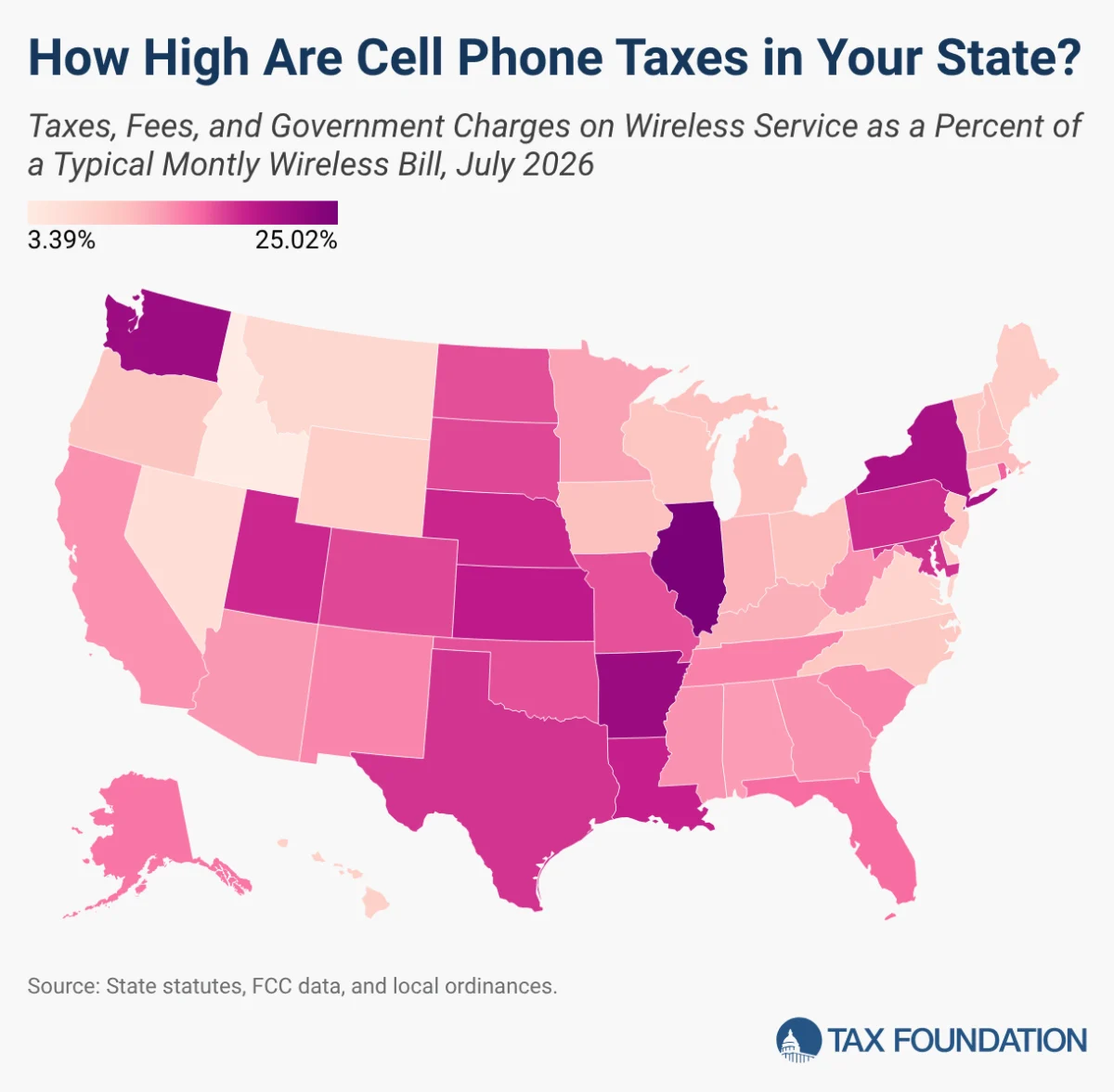
American households are facing a persistent and growing burden from government taxes and fees on wireless services, a critical form of communication and connectivity, particularly for younger demographics and low-income communities. Despite a fiercely competitive market that has driven down the average cost of wireless service over the past two decades, these government-imposed costs continue their upward trajectory, offsetting consumer savings and raising concerns about affordability and infrastructure investment. Projections indicate that by 2026, a typical American family with a four-phone shared plan, paying $100 monthly for taxable wireless service, will incur approximately $345 annually in taxes, fees, and government surcharges. This figure represents an increase from $330 in 2025, underscoring a long-standing trend of escalating charges passed directly to consumers.
The Paradox of Wireless Pricing: Declining Service Costs vs. Soaring Taxes
Over the last two decades, the wireless industry has undergone a significant transformation, marked by intense competition among providers. This competitive environment has been a boon for consumers, leading to a steady decline in the average price of wireless services. Data reveals a remarkable drop in average monthly revenue per wireless line, plummeting from $50.64 to $33.14 during this period. However, this substantial price reduction has been significantly eroded by the concurrent surge in government taxes and fees. Over the same two decades, the percentage of a typical monthly wireless bill allocated to taxes has nearly doubled, rising from 16.2 percent to an unprecedented 28.8 percent. This creates a challenging paradox where the industry’s efficiency gains and competitive pricing are systematically undermined by external fiscal policies.
This escalating tax burden is driven by a combination of factors, primarily a sustained increase in the federal Universal Service Fund (FUSF) surcharge rate, alongside incremental rises in state and local taxes. The FUSF surcharge, a key component of the federal contribution, recently climbed from 13.26 percent to 14.39 percent. Concurrently, the state and local tax burden on wireless services saw a modest increase from 14.25 percent to 14.42 percent. These combined increases push the overall tax rate to its highest level ever, placing additional financial strain on nearly 600 million wireless subscriber connections across the United States. In total, wireless subscribers are projected to contribute approximately $11.4 billion in taxes to state and local governments alone in 2026.
Understanding the Complex Web of Wireless Taxation
The taxes and fees levied on wireless services are not monolithic; rather, they comprise a complex array of federal, state, and local impositions, each with its own purpose and mechanism. Understanding these various charges is crucial to comprehending the overall burden on consumers.
-
Federal Universal Service Fund (FUSF): Mandated by the Telecommunications Act of 1996, the FUSF is designed to ensure that all Americans have access to affordable telecommunications services. It subsidizes programs like E-Rate (connecting schools and libraries), Lifeline (providing discounted service to low-income households), and high-cost programs for rural areas. The Federal Communications Commission (FCC) determines the quarterly contribution factor, which is then passed on to consumers as a percentage of their interstate wireless service charges. The rate fluctuates based on the projected needs of the universal service programs and the total revenue of contributing telecommunications carriers. As traditional landline revenues have declined, the burden on wireless services to fund the FUSF has disproportionately increased, leading to higher surcharges.
-
State Universal Service Funds (SUSFs): Mirroring the federal initiative, nearly half of all states impose their own SUSF charges on wireless services. These funds serve similar purposes to the FUSF, focusing on intrastate telecommunications support. Historically, many SUSFs were percentage-based charges on intrastate revenues. However, a growing number of states have transitioned to a per-line SUSF imposition. This shift significantly impacts multi-line wireless plans, where the per-line charge can accumulate rapidly, contributing to a larger portion of the overall SUSF burden for families.
-
Emergency 911 Fees: Almost all states and numerous local jurisdictions impose flat, per-line taxes on telecommunications customers to finance the capital and operational expenses of state and local emergency 911 systems. These fees vary dramatically across the country. For instance, while most counties in Missouri charge no such fee, the city of Chicago levies a substantial $5.00 per line per month, illustrating the wide disparity in local charges. These fees are vital for maintaining critical public safety infrastructure but add directly to the consumer’s monthly bill.
-
988 Crisis Hotline Taxes: A newer addition to the wireless tax landscape, the 988 tax emerged following a 2020 congressional mandate to establish a national three-digit number for suicide prevention hotlines. States were authorized to impose taxes to fund the creation and operation of these crisis hotline centers. Virginia was the first state to implement a 988 tax in 2021, at $0.12 per line per month. Since then, at least 10 additional states have followed suit, adding another per-line charge for wireless consumers.
-
State and Local Sales and Excise Taxes: Beyond these specific surcharges, wireless services are also subject to general state and local sales taxes in many jurisdictions, or in some cases, specific telecommunications excise taxes that may be higher than general sales taxes. Thirteen states impose wireless taxes that are either additional to sales taxes or levied at a higher rate in lieu of sales taxes. The state of Maine, for example, previously had a Service Provider Tax that imposed a higher state tax rate on wireless services, though its legislature voted to repeal it in 2025, offering some relief to consumers in that state.
Geographic Disparities: A State-by-State Overview
The burden of wireless taxes is far from uniform across the United States, presenting a stark geographic disparity. The combined state and local tax burdens vary significantly, creating a patchwork of costs for consumers depending on their location. Illinois currently leads the nation with the highest wireless taxes, where state and local rates exceed 25.0 percent. It is closely followed by Arkansas at 22.0 percent and Washington state at 21.9 percent. These states represent the upper echelon of wireless taxation, imposing a substantial premium on connectivity for their residents.
Conversely, some states maintain significantly lower wireless tax burdens. Idaho boasts the lowest rates in the country, at a mere 3.4 percent, offering a considerable advantage to its wireless users. Nevada follows with 6.1 percent, and Montana with 7.1 percent, rounding out the states with the most favorable wireless tax environments. These variations are often due to differences in general sales tax rates, the existence and rates of state-specific telecommunications taxes, and the structure of local fees like 911 charges. The impact of these regional differences is profound, influencing consumer choices and the overall cost of living in different states.
The Internet Tax Freedom Act: A Crucial Shield
A critical piece of legislation, the Permanent Internet Tax Freedom Act (PITFA), plays an instrumental role in preventing an even greater tax burden on consumers. This federal law prohibits state and local governments from imposing taxes on internet access services, including wireless internet access. Without the protections afforded by PITFA, the high excise tax rates currently applied to taxable wireless services could easily be extended to wireless internet access. Such an expansion would dramatically inflate consumer tax burdens, potentially stifling access to essential online resources and exacerbating the digital divide. The act, first passed temporarily in 1998 and made permanent in 2016, represents a deliberate policy choice to foster internet adoption by shielding it from additional taxation, a stark contrast to the increasing taxes on core wireless communication services.
Implications for Consumers: The Regressive Nature of Wireless Taxes
The rising tide of wireless taxes carries significant implications for American consumers, particularly those in vulnerable economic positions. Wireless services have evolved from a luxury to an indispensable utility, often serving as the sole means of communication and internet access for many households, especially low-income individuals. This reliance makes wireless taxes inherently regressive, meaning they disproportionately affect those with fewer financial resources. As taxes and fees inflate the cost of access, they create a formidable barrier for low-income consumers, hindering their ability to connect with essential services, employment opportunities, educational resources, and healthcare providers. The $345 annual burden projected for a typical family by 2026, while seemingly manageable for some, represents a substantial strain on tight household budgets, potentially forcing difficult choices between connectivity and other necessities.
Impact on Investment and Economic Growth
Beyond the direct financial burden on consumers, the escalating and often discriminatory nature of wireless taxes poses a threat to broader economic health. Policymakers are cautioned against expanding these taxes for a second primary reason: they can deter crucial investment in wireless infrastructure. The deployment of advanced wireless networks, including 5G technology and the expansion of broadband into underserved rural areas, requires massive capital investment from telecommunications companies. When a significant portion of service revenue is diverted to taxes and fees, it reduces the available capital for these vital infrastructure projects.
Ample evidence demonstrates that investments in wireless networks yield substantial economic benefits across numerous sectors. Industries such as transportation, healthcare, energy, education, and even government agencies leverage robust wireless networks to enhance productivity, improve efficiency, and foster innovation. The critical role of wireless networks was starkly highlighted during the COVID-19 pandemic, enabling remote work, virtual learning, and telemedicine, thereby sustaining economic activity and social connections during unprecedented challenges. These trends have persisted in the post-pandemic era, cementing wireless networks as foundational to the modern American economy. Undermining investment in this critical infrastructure through excessive taxation risks slowing technological progress, limiting economic expansion, and hindering the nation’s global competitiveness.
Calls for Policy Reform and Industry Perspective
Organizations like the Tax Foundation consistently advocate for a more judicious approach to wireless taxation. Their analysis suggests that while applying a traditional, broad-based consumption tax like a sales tax to wireless services is appropriate, the proliferation of excessive targeted excise taxes lacks traditional economic justifications. Excise taxes are typically levied based on a "user-pays" principle (like gasoline taxes funding roads) or to internalize social costs (like taxes on tobacco). Wireless services, while essential, do not fit neatly into these categories in the way many of these additional fees are applied. Such targeted taxation merely raises consumer costs and discourages the vital investment needed for network expansion and improvement.
The Cellular Telecommunications and Internet Association (CTIA), the leading industry trade group, has consistently voiced concerns about the cumulative effect of these taxes. Their stance is that a lower tax burden would free up capital for network upgrades and expansion, ultimately benefiting consumers through improved service and expanded access, especially in rural and underserved areas. Consumer advocacy groups echo these sentiments, emphasizing the disproportionate impact on low-income households and the potential to widen the digital divide.
Policymakers face a delicate balancing act. On one hand, there is a recognized need to fund essential public services, from emergency response systems (911 and 988) to universal service programs that ensure connectivity for all. On the other hand, there is a compelling argument that the current structure and growth rate of wireless taxes are counterproductive, burdening consumers and stifling the very innovation and investment that drive economic growth and societal well-being. Thoughtful reform, perhaps through re-evaluating the funding mechanisms for universal service or consolidating various fees, could provide a pathway to ensuring critical services are funded without unduly penalizing access to one of the 21st century’s most vital technologies. The challenge remains to craft policies that support public services without impeding the affordability, accessibility, and continued advancement of America’s wireless future.