Candice Horbacz
The prevailing rationale for imposing tariffs often posits them as a strategic tool to compel foreign companies to bear the cost of accessing the lucrative U.S. market, thereby safeguarding domestic industries. However, a closer examination of modern global trade dynamics reveals a more intricate reality: a significant portion of these tariffs frequently falls upon American business activities, often more substantially than commonly assumed. Analysis indicates that nearly half of the current U.S. tariff base is directly linked to "related-party trade"—transactions occurring between affiliated entities within the same multinational corporation. This crucial distinction transforms tariffs on such activities into an effective tax on the U.S. production network, escalating costs for domestic manufacturing and production operations rather than primarily burdening foreign competitors.
Empirical studies have consistently demonstrated that U.S. businesses and consumers are shouldering a disproportionate share of the tariff burden, directly challenging claims by past administrations that foreign entities would absorb these costs. While some recent evidence suggests that exporters abroad might bear a larger share than initially estimated, the increasingly complex and integrated structure of modern global production introduces a critical nuance to this economic analysis. The interconnectedness of supply chains means that tariffs designed to target foreign goods can inadvertently disrupt and increase costs for American companies deeply embedded in these international networks.
The Intricate Web of Global Production: Understanding Related-Party Trade
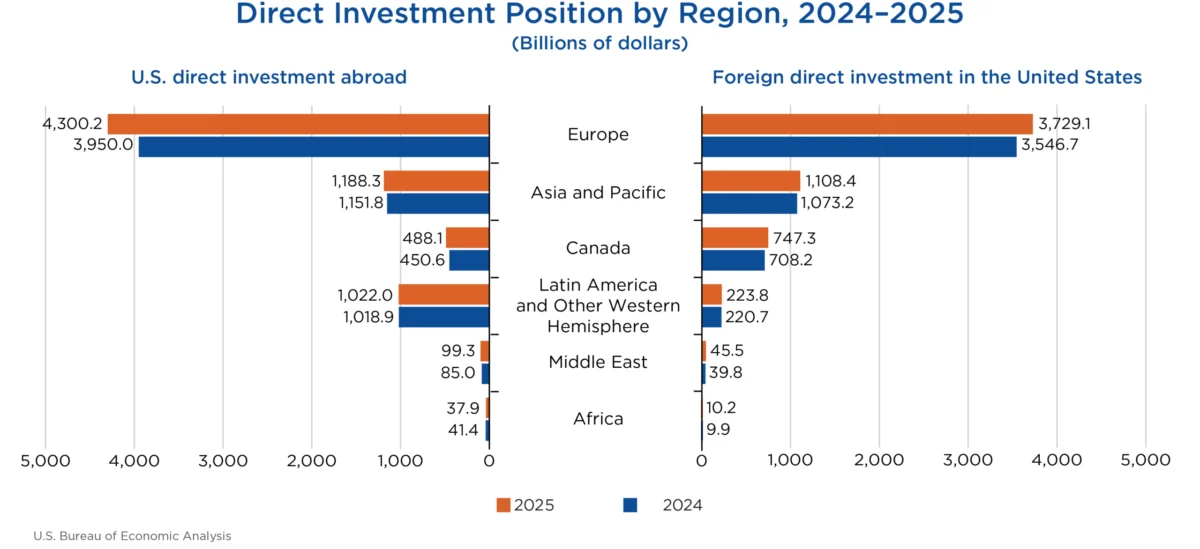
The profound impact of tariffs on domestic costs is particularly pronounced due to the substantial volume of U.S. imports that originate from related parties. This category encompasses a broad spectrum of transactions, including those between U.S.-based parent companies and their foreign affiliates, as well as imports by U.S.-based subsidiaries of foreign-owned multinational corporations. Both types of related-party trade are vital contributors to U.S. employment figures, foster domestic investment, and are integral components of the American economy.
Data meticulously compiled by the Census Bureau on related-party trade underscores its pervasive nature. In 2024, approximately 49.5 percent—nearly half—of all U.S. goods imports were sourced from related parties. This share has exhibited remarkable consistency over the past two decades, fluctuating within a narrow band of 46 to 51 percent of total imports since 2005. Minor dips were observed during periods of significant economic upheaval, such as the 2008 recession and the initial phases of the COVID-19 pandemic, reflecting broader contractions in global trade. This enduring pattern highlights the deeply entrenched reliance of the U.S. economy on intra-firm trade for its supply chain resilience and efficiency.
The prevalence of related-party trade is not an arbitrary outcome of corporate structuring; rather, it is a deliberate and optimized organizational strategy. Multinational firms strategically disperse different stages of their production processes across various geographic locations to leverage specific efficiencies. These advantages might include access to specialized labor pools, proximity to critical raw materials, or strategic positioning near key suppliers and customer bases. Consequently, U.S. manufacturers heavily depend on these imported parts, materials, and specialized equipment from their global affiliates to sustain their domestic production lines and support American jobs. A significant majority of these imports—often overlooked in public discourse—are intermediate and capital goods, meaning they serve as essential inputs that bolster, rather than displace, domestic production. When tariffs are levied on these crucial imports, they inevitably raise the cost of inputs for businesses operating within the United States.
Therefore, while the general perception of tariffs often centers on transactions between independent foreign firms and distinct U.S. entities, the consistently high rate of related-party imports reveals a different operational reality. Tariffs are frequently applied to transactions within multinational enterprises themselves. The direct consequence is that tariffs often function as a de facto tax on the global supply chains utilized by U.S.-based businesses, irrespective of whether they are foreign-owned or U.S.-owned. This mechanism directly increases production costs for domestic operations, moving the burden away from solely foreign producers.
Sector-Specific Vulnerabilities: Where Related-Party Tariffs Hit Hardest
The substantial proportion of related-party imports into the U.S. carries significant implications for determining who ultimately pays the tariffs and how these duties impact the domestic economy. Even when accounting for specific exemptions granted for certain goods, estimates suggest that a considerable 45.6 percent of the current tariff base involves imports exchanged between related parties. This figure escalates dramatically in specific economic sectors, illustrating acute vulnerabilities. For instance, in the automotive and pharmaceutical industries, the share of related-party trade can soar to over 80 percent, indicating a profound reliance on integrated global supply chains.
Consider the automotive sector, where an overwhelming 97.1% of imports subject to current tariffs are related-party transactions. Similarly, pharmaceutical imports see 84.5% in this category. Even in the metals sector, where the overall related-party share is 34.0%, the portion subject to tariffs is also 34.0%. This concentrated reliance means that tariffs in these critical sectors have an outsized impact on the domestic operations of multinational firms.
To illustrate, consider a Japanese automaker operating a manufacturing plant in the U.S. to produce vehicles for the North American market. This plant represents substantial investment and provides significant employment opportunities in the U.S. If tariffs are imposed on components imported from its affiliated entities abroad, these duties directly increase the operational costs of the U.S. plant. Such an increase could disincentivize continued manufacturing investment in the U.S., potentially harming domestic job growth and overall investment, despite the parent company being a foreign entity. This example starkly undermines the simplistic argument that tariffs exclusively tax foreigners.
The very existence and necessity of numerous exemptions within many implemented tariff regimes further highlight the inherent challenges of imposing broad tariffs in an economy characterized by intricate global supply chains and extensive related-party trade. The substantial list of exemptions granted for "baseline" tariffs suggests that even administrations implementing these policies implicitly acknowledge that widespread tariffs would invariably raise costs for domestic manufacturers rather than providing them with blanket protection.
Economic Ramifications: Negative Impacts on US Businesses and Competitiveness
Tariffs levied on related-party trade fundamentally disrupt and increase costs for the sophisticated multinational production networks that businesses have meticulously constructed over years to maximize efficiency and productivity. These highly optimized structures often represent significant long-term investments in physical facilities, specialized worker training, and complex logistical frameworks, making them exceedingly difficult and costly to reconfigure rapidly in response to tariff fluctuations. The immediate consequence is an increase in operational costs for businesses operating within these networks. Any subsequent long-term adjustments, such as reshoring production or rerouting supply chains, typically lead to a reduction in overall efficiency, as firms are forced to optimize for tariff avoidance rather than for genuine productivity gains.
While Census data does not differentiate between imports from U.S. companies’ overseas operations and those from foreign-owned parent companies, a significant portion of what is commonly perceived as "imports from foreign companies" is, in fact, imports from American-owned affiliates. When the importer and exporter are related entities, the traditional economic distinction of whether the importer or the exporter ultimately absorbs the cost becomes blurred. Even in scenarios where related-party trade occurs between a foreign parent company and its U.S. subsidiary, these increased costs inevitably have ramifications for employment levels and investment decisions concerning the portion of business conducted within the U.S.
The bottom line is that tariffs elevate costs for multinational firms, creating pressure to either raise prices for U.S. consumers or curtail expenses by slowing hiring and investment in expansions. These pricing and efficiency challenges also erode the competitiveness of U.S.-produced goods in international markets. Tariffs on inputs for goods manufactured in the U.S. necessitate either higher selling prices when exported to foreign markets or a reduction in profit margins. This disadvantage makes it considerably harder for tariffed goods produced domestically to compete effectively with products manufactured via lower-cost supply chains that circumvent the U.S. entirely.
These negative effects are further compounded by an environment of persistent policy uncertainty. With tariff rates having changed over 50 times since March 2025 (a reference to a period of frequent adjustments), businesses are left in a precarious position, unable to make the long-term strategic decisions that are essential for the effective operation of a multinational company. As this uncertainty persists, businesses are increasingly inclined to delay or altogether withhold critical investments and hiring initiatives, opting instead to adopt a defensive posture to navigate an unpredictable trade policy landscape.
Stakeholder Perspectives and the Evolving Debate
The findings concerning related-party trade have significant implications for various stakeholders and the broader policy debate.
Business Leaders and Industry Associations: For U.S. manufacturers, particularly those in sectors like automotive and pharmaceuticals, the data confirms long-held concerns. Industry groups often advocate for stable, predictable trade policies that support global competitiveness. They express worries that rising input costs due to tariffs can stifle innovation, hinder expansion plans, and ultimately make U.S.-based operations less attractive compared to alternatives abroad. Their call is typically for policies that foster efficiency and global integration rather than erecting barriers.
Economists and Trade Experts: The academic and policy-oriented economic community frequently emphasizes the efficiency gains derived from global supply chains. They argue that tariffs, especially those impacting intermediate goods, distort markets, reduce overall economic welfare, and often lead to deadweight losses. The evidence on related-party trade reinforces their position that tariffs are rarely the precise tool policymakers intend them to be, often leading to unintended consequences for domestic industries and consumers. They advocate for a nuanced understanding of tariff incidence, moving beyond simplistic "us vs. them" narratives.
Government Officials and Policymakers: While administrations often frame tariffs as instruments for national security, leveling the playing field, or addressing unfair trade practices, the complexities of related-party trade present a challenge to this narrative. Policymakers are faced with balancing strategic objectives with the demonstrated economic realities of modern global commerce. The need for extensive exemption processes itself suggests an implicit recognition within government circles that broad tariff application can be counterproductive, potentially harming the very domestic industries they aim to protect. Future trade policy discussions will likely need to integrate this nuanced understanding of intra-firm trade more explicitly.
Conclusion: A Refined Understanding of Tariff Incidence for Modern Economies
The argument that tariffs primarily tax foreign entities is significantly weakened when nearly half of the U.S. tariff base is comprised of intra-firm trade, where costs inevitably flow through and impact U.S.-based production. By elevating the cost of intermediate goods, tariffs effectively increase the cost of capital and diminish the incentive for businesses to invest in expansion and innovation. Furthermore, they compel businesses to undertake costly and often inefficient supply chain reorganizations, as firms are driven to seek lower tariff burdens rather than optimizing for productivity. These cumulative costs translate into higher prices for consumers, downward pressure on wages, and decreased returns on both labor and investment. In an economic landscape where almost half of all trade occurs between related parties, the ownership structure of firms must play a more central role in how economists and policymakers analyze tariff incidence and their broader economic impact.
In a world defined by multinational firms whose operations span national borders and where nearly half of all imports move within these integrated enterprises, tariffs are far from a straightforward instrument of foreign economic pressure. In such an economy, where American and foreign businesses are deeply interwoven across international boundaries, tariffs more often punish efficient operations, impede competitiveness, and deter investment rather than fostering its growth.
Policymakers are therefore urged to exercise considerable caution when deploying tariffs as a blunt instrument. Such measures can easily inflict unintended harm upon American production and undermine domestic economic vitality, even when ostensibly targeting foreign businesses. A sophisticated understanding of global supply chains and related-party trade is indispensable for crafting effective and beneficial trade policy in the 21st century.
Methodology
Estimates regarding the related-party share of U.S. imports subject to recent tariff actions leverage the Census Bureau’s 2024 Related-Party Trade Data, published at the 6-digit NAICS (North American Industry Classification System) level. Relevant NAICS codes were precisely matched to each specific tariff, either directly or through the HTSUS (Harmonized Tariff Schedule of the United States) to NAICS concordance. The related-party share was then calculated by dividing related imports by total imports across all matched 2024 trade categories. Considerations were also made for specific exclusions and utilization rates under agreements such as the USMCA (United States-Mexico-Canada Agreement). It is acknowledged that NAICS codes are a coarser classification system than the HTSUS codes, which define the precise scope of tariffs. However, this precision gap is understood to affect both related and total imports proportionally. Given that related-party trade data is not published below the NAICS6 level, this methodology provides a robust estimate constrained by the available resolution rather than an exact tariff-line calculation.