Lana Rhoades
The California Department of Tax and Fee Administration (CDTFA) is preparing for a landmark shift in the state’s fiscal policy as it moves toward the taxation of digital products and software-as-a-service (SaaS) subscriptions. Effective January 1, 2027, California will officially begin taxing qualifying digital products, including a wide array of SaaS subscriptions accessed remotely. This change represents one of the most significant expansions of the California tax base in recent years, signaling an end to the era where many intangible digital goods remained exempt from state sales and use tax. For thousands of businesses operating within the state or selling to California residents, this transition necessitates a rigorous review of current filing procedures and an adaptation to more complex reporting standards.
The Evolution of California’s Digital Tax Policy
Historically, California has been more conservative than other states regarding the taxation of software and digital goods. Under existing regulations, software delivered electronically—without any tangible personal property like a disc or thumb drive—has generally been considered nontaxable. However, as the global economy has transitioned from physical goods to digital services, state revenues have faced mounting pressure.
The upcoming January 2027 mandate is the result of years of legislative debate aimed at modernizing the California Sales and Use Tax Law. By including "qualifying digital products" and "remote-access subscriptions," the state is aligning itself with the "Wayfair" era of tax administration, following the 2018 Supreme Court decision in South Dakota v. Wayfair, Inc., which allowed states to tax out-of-state sellers based on economic nexus rather than physical presence.
Market analysts suggest that the new tax could generate hundreds of millions of dollars in annual revenue for the state, which currently maintains a base sales tax rate of 7.25%, though local district taxes can push the total rate above 10% in many jurisdictions. For SaaS providers, the move adds a layer of administrative burden, requiring them to accurately identify the location of their users to apply the correct district-level tax rates.
The Current Framework for Quarterly Filers
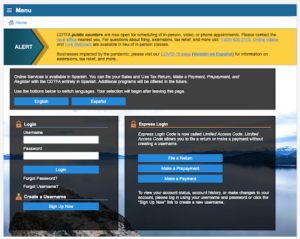
While the 2027 changes loom on the horizon, businesses must currently navigate a complex quarterly filing system managed through the CDTFA Online Services portal. The CDTFA assigns each business account a specific filing frequency—monthly, quarterly, or yearly—based on their reported sales volume. This frequency is subject to change if a business experiences significant growth or a contraction in revenue.
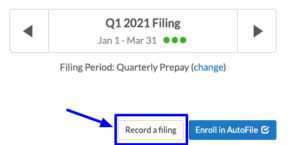
To maintain compliance, businesses must reconcile their internal accounting or third-party reports, such as those provided by TaxJar, with the CDTFA’s digital interface. The filing process requires the aggregation of several key data points: gross sales, purchases subject to use tax, taxable sales, and specific deductions.
A critical component of this process is the "Gross Sales" figure, which must represent the total amount of all sales made during the period, regardless of whether they are taxable. From this total, businesses subtract nontaxable sales—such as those made to resellers or those involving exempt goods—to arrive at the final taxable amount.
Navigating the Complexity of Schedules A, B, and C
One of the most challenging aspects of California sales tax filing is the allocation of taxes to local jurisdictions. California utilizes a "destination-based" tax system for many transactions, meaning the tax rate is determined by the location where the customer receives the product. This necessitates the use of supplemental schedules:
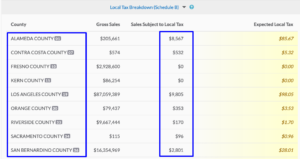
Schedule A (District Tax Breakdown): This schedule is used to report sales made within specific tax districts. Because California has hundreds of unique district taxes, businesses must carefully allocate their taxable transactions to the correct city or county. If a district rate changed mid-quarter, the CDTFA portal may require two separate entries for the same location to reflect the different rates applied during the period.
Schedule B (County Tax Breakdown): This schedule is mandatory for businesses that do not have a physical presence in certain counties but make sales into them, or for allocating county-wide pools. It ensures that local governments receive their share of use tax from remote transactions.
Schedule C (Physical Location Allocation): This is reserved for businesses with registered "brick-and-mortar" locations within California. It allocates local sales tax specifically to the place of business where the sale was negotiated or fulfilled.
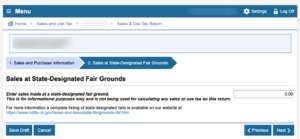
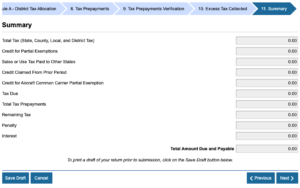
The interplay between these schedules requires precision. Even a minor error in allocation can lead to an "excess tax collected" error, where the amount of tax reported does not match the taxable sales multiplied by the applicable rate.
Marketplace Facilitators and Shipping Deductions
The 2019 Marketplace Facilitator Act fundamentally changed how e-commerce entities report sales. Under this law, platforms like Amazon or eBay are responsible for collecting and remitting tax on behalf of their third-party sellers. However, individual sellers still have a reporting obligation.
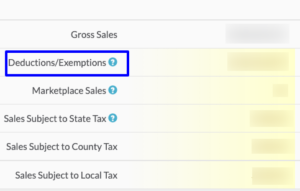
On a California return, a seller must include marketplace sales in their "Gross Sales" but then deduct them under the specific "Marketplace Facilitator" deduction line. Failure to do so results in double taxation or an inflated tax liability.
Similarly, shipping charges remain a point of contention and confusion. In California, shipping is generally nontaxable if the charge is stated separately on the invoice and does not exceed the actual cost of delivery. However, if shipping and handling are combined into a single charge, or if the shipping is included in the price of the item, the entire amount may become taxable. Compliance experts warn businesses against "automatically" deducting all shipping costs without verifying the specific transaction type.
Timeline of Key Regulatory Events
To understand the current environment, it is helpful to view the chronology of California’s tax evolution:
- June 2018: The U.S. Supreme Court rules in South Dakota v. Wayfair, Inc., paving the way for economic nexus laws.
- April 2019: California begins enforcing economic nexus for out-of-state retailers exceeding $500,000 in annual sales.
- October 2019: The Marketplace Facilitator Act takes effect, shifting the collection burden to large platforms.
- 2023-2025: Legislative sessions focus on defining "digital products" to include cloud software and streaming.
- October 2026: Tax authorities and service providers begin issuing guidance for the upcoming SaaS tax.
- January 1, 2027: The new tax on digital products and SaaS subscriptions officially commences.
Industry Reactions and Compliance Challenges
The move toward taxing digital products has met with a mixed response from the California business community. While state officials argue the move is necessary for "tax neutrality"—ensuring that digital and physical goods are treated equally—tech industry advocates highlight the administrative burden on startups.
"The complexity of California’s district tax system is already a significant hurdle for small businesses," says a tax policy analyst at a leading fintech firm. "Adding SaaS to that mix, where the ‘location’ of a user might be fluid or difficult to verify, creates a high risk for unintentional non-compliance and subsequent audits."
Furthermore, the CDTFA’s insistence on exact figures rather than rounded estimates can lead to reconciliation issues. A common frustration among filers is the "rounding variance," where small discrepancies between internal accounting software and the CDTFA portal prevent the submission of a return.
Broader Implications and Economic Analysis
The shift in California’s policy is indicative of a broader national trend. Currently, over 30 states tax software-as-a-service in some capacity. California’s entry into this group is significant due to the sheer size of its economy and the concentration of tech companies within its borders.

From a fiscal perspective, the taxation of digital products provides a more stable revenue stream that is less susceptible to the supply chain disruptions that often affect physical retail. However, for the consumer, this will inevitably lead to a price increase of 7% to 10% on common subscriptions, from business productivity tools to entertainment services.
For businesses, the cost of compliance is also rising. Many are turning to automation tools like TaxJar’s AutoFile or professional tax plan services to manage the intricate requirements of monthly prepayments and quarterly reconciliations. The CDTFA requires "Quarterly Prepay" accounts for businesses with higher liabilities, requiring them to make payments in the first and second months of a quarter before filing the final return in the third month.
Looking Ahead: Preparing for 2027
As the 2027 deadline approaches, the CDTFA is expected to release more granular definitions of "qualifying digital products." Businesses are advised to begin auditing their product catalogs now to determine which of their offerings will fall under the new tax umbrella.
Key preparation steps include:
- Verifying Customer Locations: Ensuring that billing addresses are accurate to facilitate correct district tax allocation.
- Updating Accounting Software: Preparing systems to handle new taxability rules for digital SKUs.
- Monitoring Nexus: For out-of-state SaaS companies, keeping a close eye on California sales volume to determine if the $500,000 economic nexus threshold is met.
In conclusion, while the quarterly filing process in California remains a rigorous exercise in data entry and reconciliation, the upcoming inclusion of digital products marks a transformative moment for the state’s tax landscape. Accuracy in reporting gross sales, diligent application of deductions, and precise allocation to district schedules remain the best defenses against audits and penalties in an increasingly digital economy.