Layla Zulfa
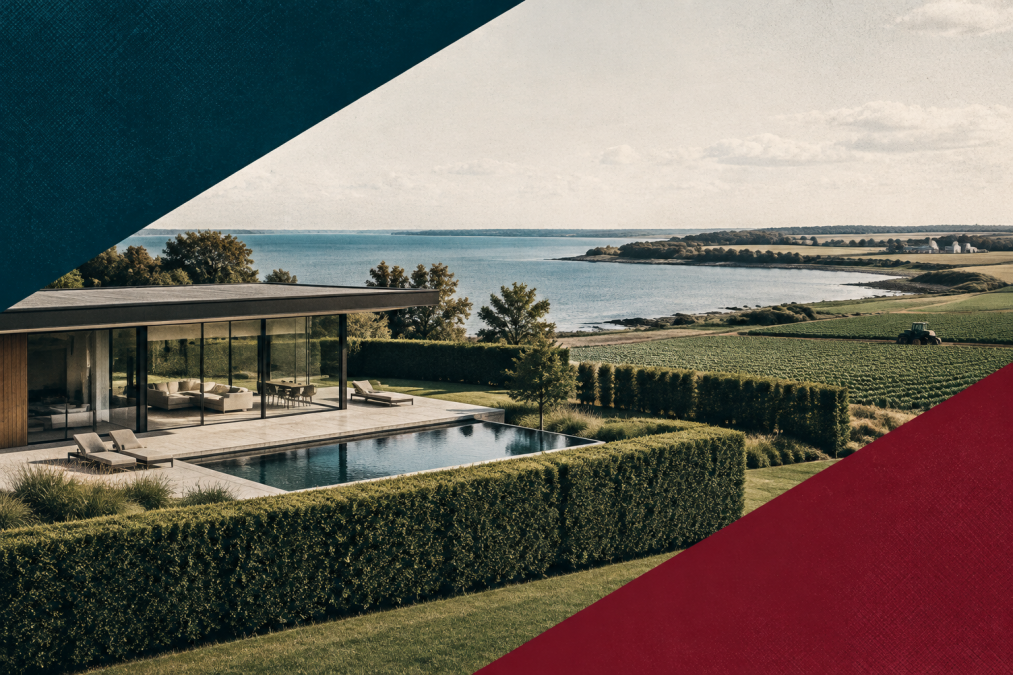
A few years ago, a client of mine walked away from a seven-bedroom estate with a circular driveway and a wine cellar the size of a studio apartment. Objectively, it was the better house. More square footage. Newer construction. A ZIP code that would’ve looked better on paper. They went with the smaller, older place instead: 40 acres, a vineyard that was already producing, a kitchen window that faced straight out at the water and a driveway long enough that you couldn’t see the house from the road even if you tried. Per square foot, it cost more than the estate did. I asked why. Nobody mentioned resale value. Nobody brought up the bedroom count. They talked about Sunday mornings, about their kids learning to drive a tractor and about not hearing a single car door for an entire weekend.
That conversation has stuck with me because it captures something I’ve watched happen across the entire luxury market, not just on the Central Coast of California where I work, but everywhere money moves toward land. For most of my career, luxury real estate just meant a bigger version of an ordinary house. Same floor plan, scaled up. More bathrooms than anyone needed. Ceilings you had to crane your neck to appreciate. A street where the cars in the driveways all matched. That definition is fading. What’s replacing it is harder to measure with a tape measure, and it’s forcing an entire industry, myself included, to rethink what we’re actually selling.
For a long time, luxury signaled itself. The house on the hill, visible from the highway, was the point. That impulse hasn’t disappeared entirely, but it’s been quietly overtaken by something more private. The buyers I work with today, many of them younger than the luxury buyers of a decade ago, made their money in ways that don’t require anyone’s approval. They built companies remotely. They cashed out of something most of their neighbors have never heard of. They don’t need the house to announce anything, because their bank account already did that work years ago. What they’re after now is control over their time and over who gets access to them. For decades, a luxury property had to sit within reach of an office somewhere. Remote work quietly erased that requirement. Once it did, I watched buyers stop asking how close a property was to the city and start asking how far it was from everyone else. A house that lets you disappear for a weekend without leaving your own property is worth more to this buyer than a house that impresses a dinner party.
The Evolving Metrics of Affluence: Beyond the Blueprint
The traditional markers of luxury real estate—expansive square footage, opulent finishes, and prestigious addresses—are increasingly taking a backseat to a more nuanced set of desires. This shift is not a fleeting trend but a fundamental recalibracy of what constitutes premium living, driven by evolving demographics and a reevaluation of life priorities. Data from the National Association of Realtors (NAR) has consistently shown a growing demand for larger lot sizes among affluent buyers, even as the demand for ultra-large homes has seen some plateauing in recent years. While specific figures on lot size preference are not always granularly tracked in the luxury segment, anecdotal evidence from top-tier agents and market analyses point to a significant uptick in interest for properties offering extensive private acreage.
Historically, the luxury market was characterized by overt displays of wealth. Properties were often designed for maximum visibility, featuring grand facades, manicured estates visible from main thoroughfares, and amenities intended to impress a broad social circle. This era, roughly spanning from the mid-20th century through the early 2000s, saw the rise of the "McMansion" and sprawling estates that prioritized quantity of space and perceived grandeur. The prevailing sentiment was that bigger and more ostentatious was inherently better, a reflection of a society where material possessions were often a primary indicator of success.
However, the advent of the digital age and the subsequent rise of remote work have profoundly altered this landscape. The necessity of proximity to corporate hubs has diminished, freeing affluent individuals to seek residences further afield, prioritizing tranquility and personal space over commute times. This was particularly amplified during and in the aftermath of the COVID-19 pandemic, which normalized remote work on an unprecedented scale. According to a 2022 report by Redfin, searches for homes in rural areas by high-income earners saw a substantial increase compared to pre-pandemic levels. This suggests a deliberate move away from densely populated urban centers towards more secluded environments.
The buyers driving this new wave of luxury real estate are often self-made entrepreneurs, tech innovators, and individuals who have achieved financial independence through less conventional means than prior generations. Their wealth is often a private matter, and the need for a physical asset to broadcast their status has waned. Instead, their focus has shifted inward, towards creating personal sanctuaries that cater to their specific lifestyle needs and values.
Redefining the "Dream Home": Specificity in Desires
When engaging with today’s discerning luxury buyers, the conversation rarely centers on raw square footage or the number of bedrooms. Instead, the emphasis gravitates towards highly specific, experience-driven attributes. Privacy, once a given in higher-end properties, has become a paramount concern, often translating into demand for gated entrances, substantial buffer zones of undeveloped land, and strategically positioned residences that offer unobstructed views without compromising seclusion.
"Ocean views, but not just any ocean view," is a common refrain, indicating a desire for the perfect vista—one that can be enjoyed from the master bedroom, the morning coffee nook, or a secluded patio, free from the visual intrusion of neighboring structures. This pursuit of curated experiences extends to the land itself. Usable acreage is no longer just about open space; it’s about potential. This can manifest as a desire for a fully operational vineyard, a small-scale cattle ranch, equestrian facilities, or an extensive organic garden capable of sustaining a family. These elements transform a property from mere shelter into a functional estate, offering opportunities for hobbies, self-sufficiency, and a tangible connection to the land.
A significant generational shift is also evident. The "downsizing" narrative that characterized Baby Boomer home-buying in previous decades is being replaced by a more complex multigenerational living strategy. Rather than selling large family homes, many are opting to purchase properties that accommodate extended family members, often through the addition of accessory dwelling units (ADUs), converted barns, or separate guest houses. This trend is a practical response to the increasing costs of living and the desire to maintain close familial ties in an increasingly fragmented world. For instance, a 2023 report by the Urban Institute highlighted an increase in households with multiple generations living together, a trend often facilitated by the availability of flexible living spaces within a single property. This isn’t about nostalgia; it’s about creating a support system and a shared living environment on one’s own terms, with a degree of autonomy for each resident. The home, in this context, becomes the infrastructure for maintaining familial proximity and interdependence.
The Unreplicable Asset: The True Premium of Rarity
The fundamental shift in luxury real estate valuation lies in the increasing premium placed on assets that are inherently irreplaceable. While a builder can construct another large home, they cannot replicate a mature vineyard, a grove of century-old olive trees, or an undeveloped coastal bluff that has remained untouched for decades. The scarcity of such natural and cultivated assets is becoming a primary driver of value, a concept that traditional appraisal methods often struggle to quantify.
The timeline of development for these desirable features is crucial. A vineyard, for example, takes years, if not decades, to mature and reach its full productive potential. The investment in time, expertise, and environmental conditions required for such a feature is substantial. Similarly, the zoning and permitting processes for coastal development have become increasingly stringent in many desirable locations, particularly in California, where environmental regulations and land-use restrictions have limited new construction for many years. This scarcity of developable land, especially in prime coastal or agricultural regions, means that existing, well-positioned properties with established natural or cultivated assets hold a unique and enduring value.
Consider the case of historic ranches or estates that have remained in the same family for generations. These properties often come with established ecosystems, unique architectural heritage, and a deep sense of place that cannot be manufactured. When such a property eventually comes to market, it represents a rare opportunity to acquire not just land and a home, but a piece of history and a singular lifestyle. The knowledge that such an offering will likely not be replicated creates a powerful incentive for buyers willing to pay a premium.
This disconnect between traditional appraisal methods and the actual market value of these rare assets can lead to frustration for both buyers and lenders. Conventional appraisals rely on comparative market analysis (CMA), which typically involves comparing a property to similar homes that have recently sold in the same area. While this is effective for standard residential properties, it falls short when valuing unique attributes like a fully established vineyard with a proven track record of high-quality production or a pristine natural landscape that cannot be recreated. The value of rarity—the inherent inability to replicate a specific asset—is a concept that appraisers, accustomed to valuing tangible, quantifiable features, often struggle to integrate into their valuations.
Implications for the Future of Luxury Real Estate
The forces driving this transformation—the pervasive influence of remote work, the significant intergenerational transfer of wealth, and the dwindling supply of undeveloped and highly desirable land—are not expected to abate. In fact, they are likely to accelerate. Younger generations of affluent buyers, having witnessed their parents’ pursuit of ever-larger homes, are not inclined to repeat that pattern. Their focus is on experiences, control, and legacy, rather than on ostentatious displays of wealth.
The implication for the real estate industry is profound. Agents and developers must adapt their strategies to align with these evolving buyer preferences. This means understanding the intrinsic value of unique attributes, developing marketing approaches that highlight lifestyle and experience rather than just physical specifications, and potentially collaborating with appraisers to develop more sophisticated valuation models for rare and irreplaceable assets.
The definition of luxury is no longer solely about having the biggest house on the block. Increasingly, it is about owning the property that offers something truly singular, something that cannot be replicated by any amount of money. It is about acquiring a piece of exclusivity that provides unparalleled privacy, a unique lifestyle, and a connection to something enduring and rare. This new paradigm demands a more thoughtful, client-centric approach to real estate, one that recognizes that true luxury lies not just in what can be seen, but in what can be lived and experienced, in ways that are utterly unique and profoundly personal.