Nila Kartika Wati
As the United States approaches the 2026 midterm election cycle, Indigenous communities and advocacy organizations are intensifying a critical dialogue regarding the "Native Vote Dilemma." This term, popularized by Choctaw journalist B. ‘Toastie’ Oaster, describes the existential tension felt by Indigenous people who must decide whether to engage with a political system that was historically built upon the colonization of their lands and the disenfranchisement of their ancestors. For organizations like the NDN Collective, this period marks a strategic pivot toward leveraging electoral participation not as a sign of assimilation, but as a tactical instrument for tribal sovereignty and community liberation.
The challenges facing Native voters are systemic and multifaceted. Indigenous populations frequently encounter significant hurdles, including vast distances to polling locations, lack of guaranteed time off from work, and restrictive mailing address requirements that do not account for the non-traditional addresses common on reservations. Furthermore, shifting state identification laws often fail to recognize tribal IDs, creating a deliberate environment of voter suppression. Despite these obstacles, Indigenous leaders argue that the 2026 elections represent a pivotal moment to exert organized political power and protect sacred sites, legal protections, and land rights.
Historical Chronology of Native American Suffrage
To understand the current "Native Vote Dilemma," one must examine the long and fraught history of Indigenous suffrage in the United States. Although the United States government often touts its democratic foundations, Indigenous people were systematically excluded from the franchise for more than a century after the nation’s founding.
- 1924: The Indian Citizenship Act. President Calvin Coolidge signed this act into law, theoretically granting citizenship to all Native Americans born in the U.S. However, the right to vote was still governed by individual states, many of which used poll taxes, literacy tests, and claims of "incompetence" to bar Native people from the ballot box.
- 1948: Landmark Court Rulings. It was not until 1948 that legal challenges in Arizona (Trujillo v. Garley) and New Mexico (Harrison v. Laveen) forced states to stop denying the vote to Native Americans living on reservations.
- 1965: The Voting Rights Act. This landmark legislation provided federal oversight to prevent discriminatory voting practices. Later amendments in 1975 required jurisdictions with significant language-minority populations to provide bilingual ballots and voting assistance, a crucial provision for many tribal elders.
- 2013: Shelby County v. Holder. The U.S. Supreme Court’s decision to gut the preclearance requirement of the Voting Rights Act led to a surge in restrictive state laws that disproportionately affected Native voters, such as North Dakota’s 2018 street address requirement.
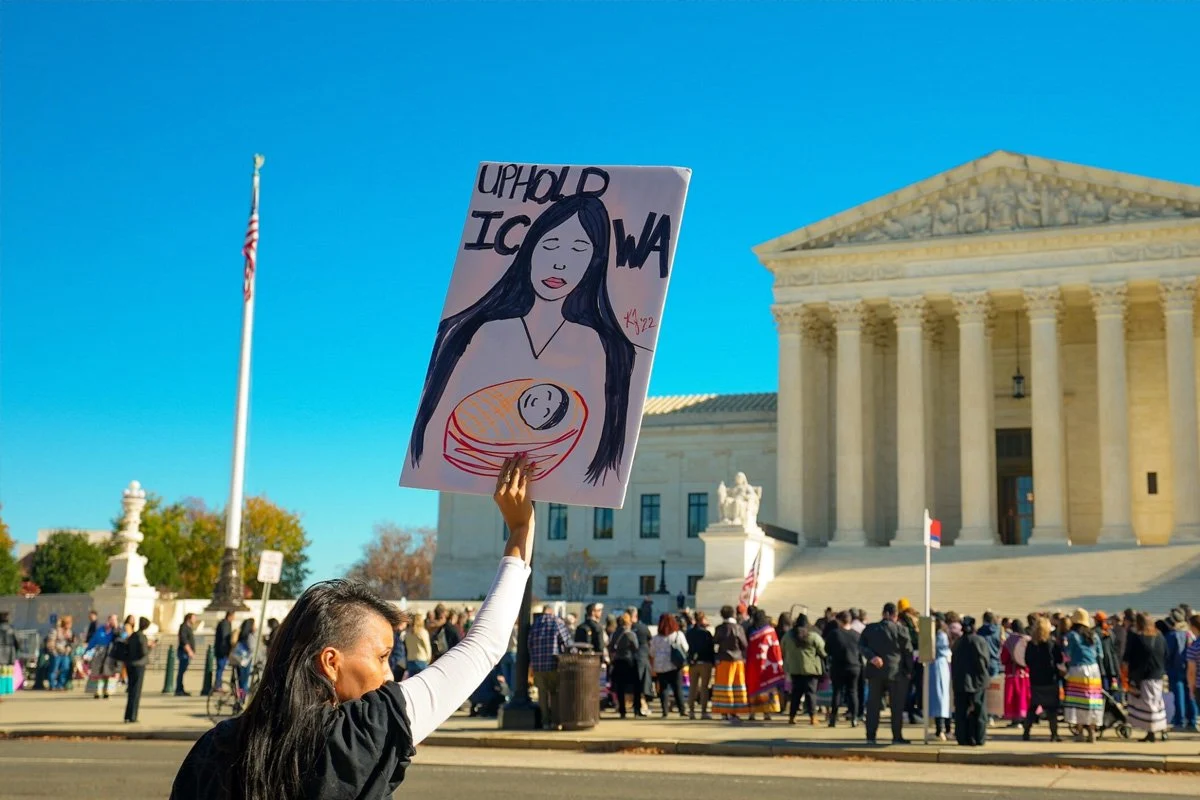
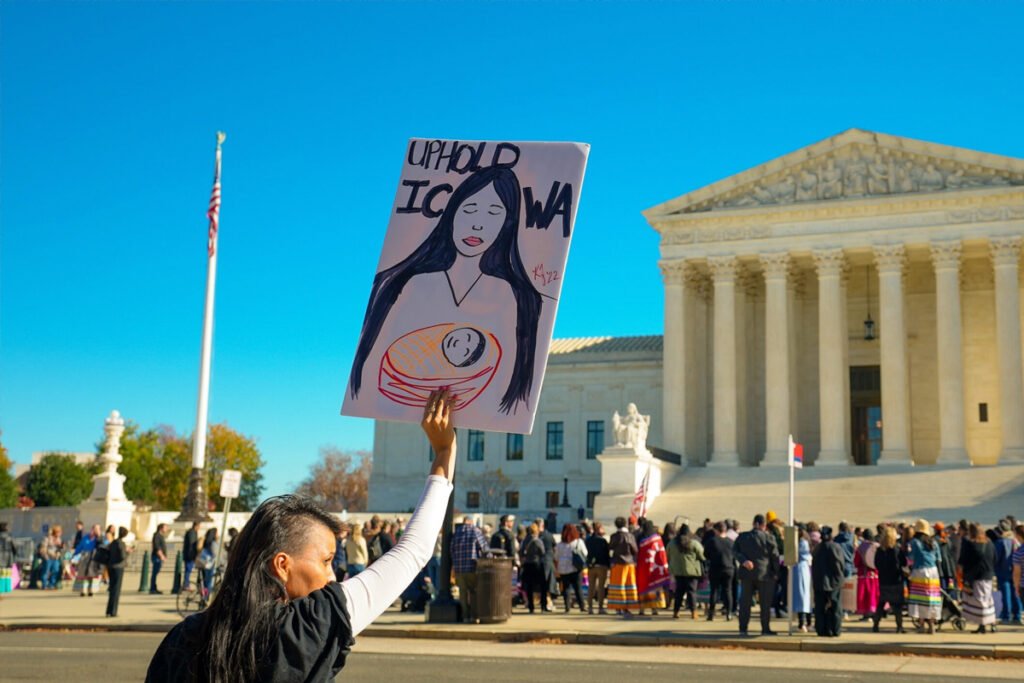
- 2023: Haaland v. Brackeen. The Supreme Court upheld the Indian Child Welfare Act (ICWA), a victory that many Indigenous activists attribute to the long-term pressure exerted on the executive branch through political engagement and judicial appointments.
Statistical Analysis of Barriers to Participation
Data from the Native American Rights Fund (NARF) and the National Congress of American Indians (NCAI) highlights the stark disparities in voting access. In some rural reservation areas, voters must travel over 100 miles round-trip to reach the nearest polling station or county clerk’s office. This physical distance is compounded by economic barriers; the poverty rate among Native Americans is approximately 25 percent, making the cost of transportation and time away from work a prohibitive factor.
The "digital divide" also plays a role in modern suppression. While many states have moved toward online voter registration, nearly 33 percent of people living on tribal lands lack access to high-speed internet. Additionally, the U.S. Postal Service does not provide residential delivery to many homes on reservations, meaning voters must rely on P.O. boxes. When state laws require a physical street address for registration—as was the case in North Dakota—thousands of Indigenous citizens find themselves effectively purged from the rolls.
Despite these barriers, the "Native Vote" has proven to be a decisive factor in recent elections. In 2020, high turnout among the Navajo Nation and the Hopi Tribe in Arizona was credited with swinging the state’s electoral votes. This statistical reality has shifted the focus of political strategists toward Indigenous communities as a critical "swing" demographic.
The Haudenosaunee Influence and the Failures of US Democracy
A central theme in the Indigenous political discourse is the historical irony of the U.S. democratic structure. Historians and Indigenous scholars note that the framers of the U.S. Constitution were heavily influenced by the Great Law of Peace of the Haudenosaunee (Iroquois) Confederacy. This Indigenous system featured a sophisticated structure of checks and balances, collective decision-making, and a bicameral legislature.
In 1988, the U.S. Congress passed Concurrent Resolution 331, officially recognizing the influence of the Haudenosaunee Confederacy on the U.S. Constitution. However, Indigenous leaders point out a fundamental divergence: while the U.S. adopted the mechanics of Indigenous governance, it discarded the underlying values of inclusivity and respect for the sovereignty of all nations.
Eva Cardenas, Director of Organizing at NDN Collective, argues that the U.S. founders created a system designed for white settlers who benefited from stolen land and labor. "They took concepts, ideals, and values from Indigenous People without actually intending to have a clear understanding of what a Democracy truly means," Cardenas stated. The result is a "hollow democracy" that often functions as a mechanism for possession and dominance rather than liberation.
Strategic Perspectives: Voting as a Tactical Tool
Within the Indigenous community, the debate over whether to vote often centers on the concept of kuleana—a Hawaiian term meaning responsibility and obligation. Davis Price, Senior Domestic Policy Strategist at NDN Collective, emphasizes that this responsibility is to one’s family (ohana) and community rather than to the American political process itself.
Professional organizers differentiate between "voting as a ritual" and "voting as a tactic." Dr. Valeriah Big Eagle, Director of He Sapa Initiatives, suggests that voting is merely one tool in a much larger toolbox of resistance. She posits that while the system has failed Indigenous people, disengagement is not necessarily the answer. Instead, participation should be strategic, serving as a way to put individuals in positions of power who are responsive to the demands of grassroots organizers.
The relationship between voting and organizing is seen as symbiotic. Without organizing, voting is a fleeting moment of participation every few years. Without voting, the gains made through organizing—such as land protection or healthcare funding—can be easily dismantled by hostile legislatures.
The Case for and Against Political Disengagement
The sentiment of total disengagement remains a powerful force in Indian Country. For many, participating in the elections of a "settler-colonial" state feels like a betrayal of Indigenous sovereignty. This perspective views the U.S. government not as a broken system to be fixed, but as a system working exactly as designed—to marginalize and erase Indigenous presence.
However, leaders at NDN Collective and other advocacy groups argue that the stakes are too high for total withdrawal. They point to issues such as climate change, the mass extinction of species, and the rising cost of survival as crises that require engagement on every possible front. John Trudell, a prominent activist in the American Indian Movement, famously noted in 1978 that if a government will not allow a society to be free, the people must make it free through protest, criticism, and active resistance.
The current strategy among many Indigenous activists is to "decolonize" the act of voting. This involves stripping away the expectations of "blind obedience" or "patriotic duty" and replacing them with a cold, calculated assessment of which candidates and policies will best facilitate the ultimate goal of "LandBack"—the return of Indigenous lands to Indigenous hands.
2026 Initiatives and the Path Forward
Looking toward the 2026 midterms, the NDN Collective has announced several initiatives designed to empower Indigenous voters while maintaining a critical distance from the partisan mainstream. These include:
- The Indigenous Voter Guide: A comprehensive resource focused on protecting the right to vote and identifying candidates whose platforms align with Indigenous sovereignty.
- Candidate Questionnaires: A tool to apply electoral pressure, forcing candidates to commit to specific actions regarding Indigenous needs, such as upholding treaty rights and protecting sacred sites.
- Community Infrastructure Building: Efforts to move beyond individual voting toward building collective power that can influence policy year-round.
The organization maintains that while voting is not a sacred act, it affects sacred places. By treating the ballot as a defensive shield and a tactical spear, Indigenous communities aim to navigate the "Native Vote Dilemma" without compromising their long-term vision for liberation.
The broader implications of this movement extend beyond the borders of the United States. Indigenous political participation is a global phenomenon, with similar debates occurring in Canada, Australia, and South America. As Indigenous people globally assert their rights under frameworks like the United Nations Declaration on the Rights of Indigenous Peoples (UNDRIP), the 2026 U.S. midterms will serve as a critical test case for how marginalized populations can use the tools of a colonial state to dismantle the structures of their own oppression.
In conclusion, the discourse surrounding the 2026 elections in Indian Country suggests a maturation of political strategy. It is a transition from asking whether to vote to asking how to vote in a way that serves the ongoing battle for self-determination. As Davis Price noted, the strength of the community lies in numbers, but only if those numbers are organized and informed. The conversation beginning now is intended to sharpen that organization, ensuring that every tool—including the ballot—is used to its fullest potential in the pursuit of a prosperous and sovereign future.