Lana Rhoades
As global e-commerce sales are projected to surpass the $8.1 trillion mark by the end of 2026, the regulatory environment governing these transactions has become a primary concern for retailers worldwide. For modern e-commerce businesses, the concept of sales tax nexus has evolved from a simple matter of physical location into a sophisticated framework of economic and legal obligations. Understanding these laws is no longer merely a task for the accounting department; it is a fundamental pillar of corporate financial strategy and risk management. In an era where a single transaction can trigger tax liabilities across state lines, the failure to maintain compliance can lead to debilitating audits, back taxes, and significant financial penalties.
The current complexity of the U.S. tax system is largely a legacy of the 2018 Supreme Court decision in South Dakota v. Wayfair, Inc. This landmark ruling dismantled the decades-old requirement that a business must have a physical presence in a state to be subject to its sales tax laws. Seven years later, the "Wayfair era" has matured into a multi-layered patchwork of state-specific statutes that demand constant vigilance from online sellers.
The Evolution of Nexus: A Chronology of Tax Jurisprudence
To understand the current state of nexus in 2026, one must examine the historical shift in how "presence" is defined by the law. For much of the late 20th century, the governing precedent was the 1992 case Quill Corp. v. North Dakota. This ruling established that a state could only require a business to collect sales tax if that business had a "physical presence" within the state—such as a storefront, warehouse, or office.
As the internet transformed the retail landscape, states began to argue that the physical presence rule created an unfair advantage for out-of-state online retailers over local "brick-and-mortar" businesses. This tension culminated in the 2018 Wayfair decision, which introduced the concept of "economic nexus." Under this new standard, a state could require a seller to collect and remit sales tax based solely on the volume of economic activity (revenue or transaction count) within that state.
Between 2019 and 2023, nearly every state with a sales tax adopted economic nexus laws. However, the landscape continues to shift. By 2025 and 2026, a secondary trend emerged: several states began to simplify their requirements by removing transaction-count thresholds (e.g., the "200 transactions" rule) to reduce the compliance burden on smaller businesses, focusing instead on gross revenue. This evolution reflects a growing recognition by state legislatures that while they seek to capture tax revenue, the administrative complexity of tracking thousands of individual state rules can stifle small business growth.
Defining Modern Nexus: Physical vs. Economic
In the current regulatory environment, a business can establish nexus through two primary avenues. While economic nexus receives the majority of headlines, physical nexus remains a potent and often overlooked trigger for tax liability.
Physical Nexus in the Era of Remote Work and 3PL
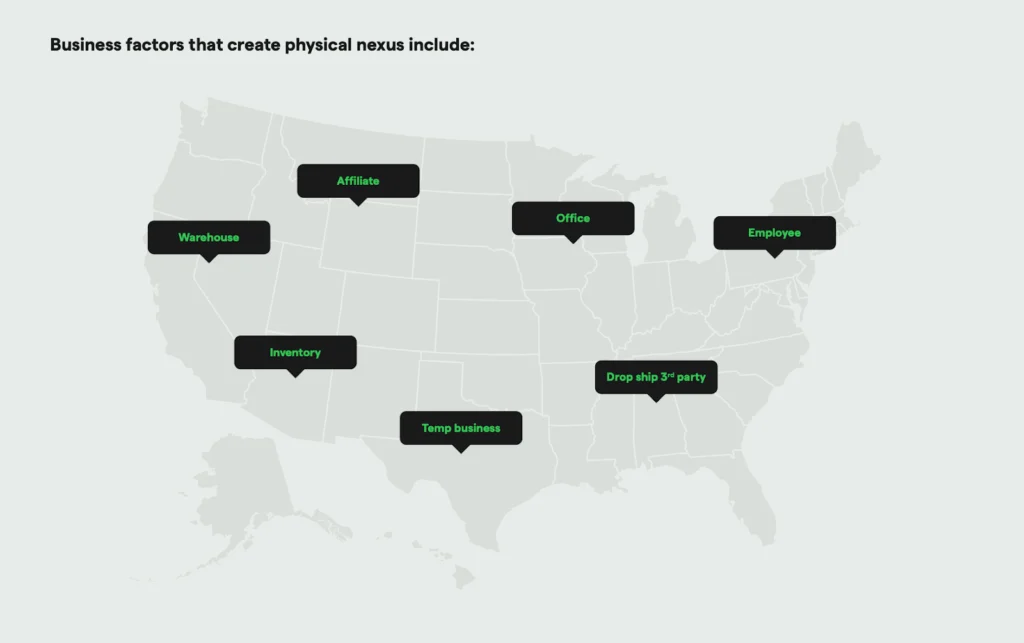
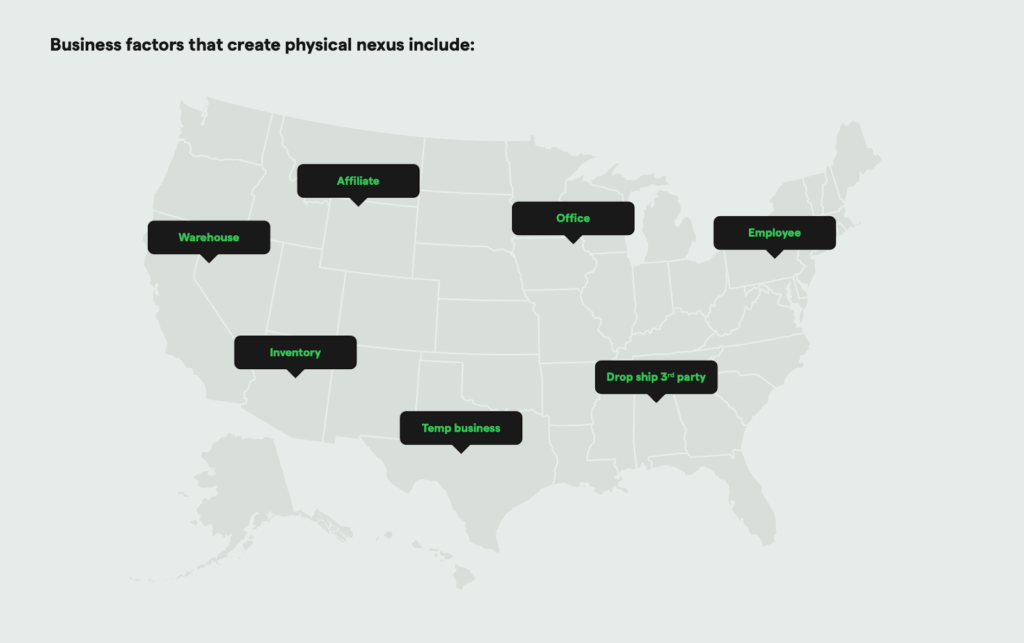
Physical nexus is triggered when a business maintains a tangible connection to a state. While this traditionally meant owning a building, the rise of the gig economy and remote work has expanded this definition. Today, physical nexus can be established by:
- Remote Employees and Contractors: Having even a single employee working from a home office in a different state can create a tax obligation for the entire company in that jurisdiction.
- Inventory Storage: This is particularly relevant for businesses using Third-Party Logistics (3PL) providers or services like Fulfillment by Amazon (FBA). If a retailer’s goods are stored in a warehouse in a specific state, that state generally considers the business to have a physical presence.
- Temporary Presence: Attending trade shows, hosting pop-up shops, or sending sales representatives into a state for a limited time can trigger "click-through" or "affiliate" nexus in certain jurisdictions.
Economic Nexus Thresholds
Economic nexus is determined by a seller’s sales volume or transaction count within a specific state. Because each state is a sovereign entity regarding its tax code, these thresholds vary wildly. For instance:
- California: Requires registration if sales exceed $500,000 in the current or previous calendar year.
- Illinois: Triggers an obligation if a business grosses over $100,000 in sales or reaches more than 200 individual transactions in the preceding twelve-month period.
- New York: Maintains a threshold of $500,000 in sales and 100 transactions.
Retailers must monitor these thresholds in real-time. Crossing a threshold even by a single dollar requires the business to register for a permit and begin collecting tax immediately, often with retroactive liability if the discovery is made late.
The Nuances of Product Taxability and Exemptions
Establishing nexus is only the first step. Once a business realizes it has an obligation to a state, it must determine which of its products are actually taxable. The United States does not have a federal Value Added Tax (VAT); instead, it relies on a diverse array of state and local rules that define what constitutes "tangible personal property."
While most consumer goods like electronics, furniture, and apparel are generally taxable, many states offer exemptions for "necessities." However, the definition of a necessity is far from universal.
- Clothing: In states like Pennsylvania and New Jersey, most clothing is exempt from sales tax. In New York, clothing and footwear are exempt only if the item costs less than $110.
- Digital Goods and SaaS: One of the most contentious areas in 2026 is the taxation of Software as a Service (SaaS) and digital downloads. States like Texas and Massachusetts tax SaaS as a data processing service or tangible software, whereas other states treat it as an exempt intangible service.
- Groceries and Prepared Foods: Most states exempt "unprepared" groceries but tax "prepared" food. The line between the two—such as whether a rotisserie chicken is considered "prepared"—can vary based on the temperature at which it is sold or the presence of eating utensils.
Data-Driven Analysis: The Cost of Non-Compliance
The financial implications of ignoring nexus laws are severe. State revenue departments have become increasingly sophisticated, using data-sharing agreements and web-scraping technology to identify high-volume sellers who have failed to register.
Industry data suggests that the average cost of a sales tax audit can exceed $100,000 when accounting for back taxes, interest, penalties, and the professional fees required to manage the defense. Furthermore, because sales tax is a "trust tax"—meaning the business is collecting money on behalf of the government—officers of a corporation can be held personally liable for unpaid taxes, even in the event of bankruptcy.
According to fiscal analysts, states are projected to collect upwards of $30 billion in additional revenue specifically from remote sales in 2026. This aggressive pursuit of revenue means that "flying under the radar" is no longer a viable business strategy for any e-commerce entity grossing over six figures annually.
Official Responses and the Move Toward Automation
In response to the growing outcry from the business community regarding the complexity of these laws, groups like the National Retail Federation (NRF) and the Multistate Tax Commission (MTC) have pushed for greater uniformity. The Streamlined Sales and Use Tax Agreement (SSUTA) is an ongoing effort by 24 states to simplify and modernize sales and use tax administration. However, with many large states like California, Texas, and Florida remaining outside the agreement, the "patchwork" problem persists.
Tax experts and CPAs increasingly argue that manual compliance is a relic of the past. "The velocity of modern e-commerce makes it humanly impossible to track 12,000 different tax jurisdictions manually," says one leading tax consultant. This has led to a surge in the adoption of automated tax compliance software. These platforms integrate directly with e-commerce storefronts (such as Shopify, Amazon, or Magento) to calculate tax in real-time, monitor nexus thresholds, and automate the filing of returns.
Strategic Roadmap for E-commerce Retailers
To mitigate risk in this environment, businesses are advised to follow a rigorous compliance roadmap:
- Nexus Review: Conduct a quarterly audit of where employees are located and where inventory is stored.
- Threshold Monitoring: Utilize software to track cumulative sales by state against specific economic thresholds.
- Registration: Once a threshold is met, businesses must obtain a sales tax permit from the state’s Department of Revenue before they begin collecting tax. Collecting tax without a permit is illegal.
- Tax Determination: Map product catalogs to the correct tax codes in each state to ensure exemptions are properly applied.
- Filing and Remittance: Maintain a strict calendar of filing deadlines, which can be monthly, quarterly, or annually depending on sales volume.
Broader Economic Impact and Future Outlook
As we look toward the late 2020s, the relationship between e-commerce and state governments will likely remain a focal point of economic policy. There is ongoing discussion in Congress regarding a federal "Safe Harbor" for small businesses, which would prevent states from enforcing economic nexus on businesses below a certain national revenue floor. However, such legislation has faced significant opposition from states’ rights advocates.
For now, the burden of proof and the burden of compliance remain squarely on the shoulders of the retailer. In a global market projected to hit $8.1 trillion, the ability to navigate the intricacies of sales tax nexus is not just a legal necessity—it is a competitive advantage. Businesses that master compliance can scale into new markets with confidence, while those that falter may find their growth cut short by the long arm of state tax authorities.
In conclusion, the era of "tax-free" internet shopping is firmly in the past. As states refine their laws and technology makes enforcement more efficient, e-commerce retailers must prioritize nexus management as a core component of their operational DNA. By leveraging automation and staying informed on the shifting legal landscape, businesses can protect their bottom line and ensure long-term sustainability in the digital age.