Lana Rhoades

The distinction between a resale certificate and a sales tax permit remains one of the most critical yet frequently misunderstood aspects of modern retail operations. As the landscape of American commerce continues to shift toward a decentralized, e-commerce-heavy model, the legal requirements for purchasing and selling inventory have come under increased scrutiny from state revenue departments. While both documents are integral to the tax ecosystem, they serve fundamentally different purposes: a sales tax permit authorizes a business to collect tax from customers, whereas a resale certificate allows a business to purchase inventory from suppliers without paying sales tax upfront. This nuances-driven distinction is the cornerstone of tax-exempt business-to-business (B2B) transactions, ensuring that sales tax is only collected once—at the final point of sale to the end consumer.
The Regulatory Framework of Resale Certificates
A resale certificate, often referred to as an exemption certificate, is a legal document provided by a buyer to a seller. It serves as proof that the items being purchased are intended for resale, either in their original form or as components of a new product. By presenting this certificate, the retailer avoids the "double taxation" that would occur if they paid tax to the supplier and then charged tax again to the customer. However, the burden of proof rests on the purchaser to demonstrate that they are a legitimate, registered entity with the intent to resell the goods.
The administration of these certificates is not centralized at the federal level. Instead, the United States operates under a patchwork of state laws, with 45 states and the District of Columbia levying their own sales taxes. This fragmentation creates a significant compliance burden for businesses operating across state lines. Some states issue official, pre-printed certificates tailored to a specific business, while others provide generic templates that the business owner must complete manually.
The Evolution of Sales Tax Compliance: A Historical Context
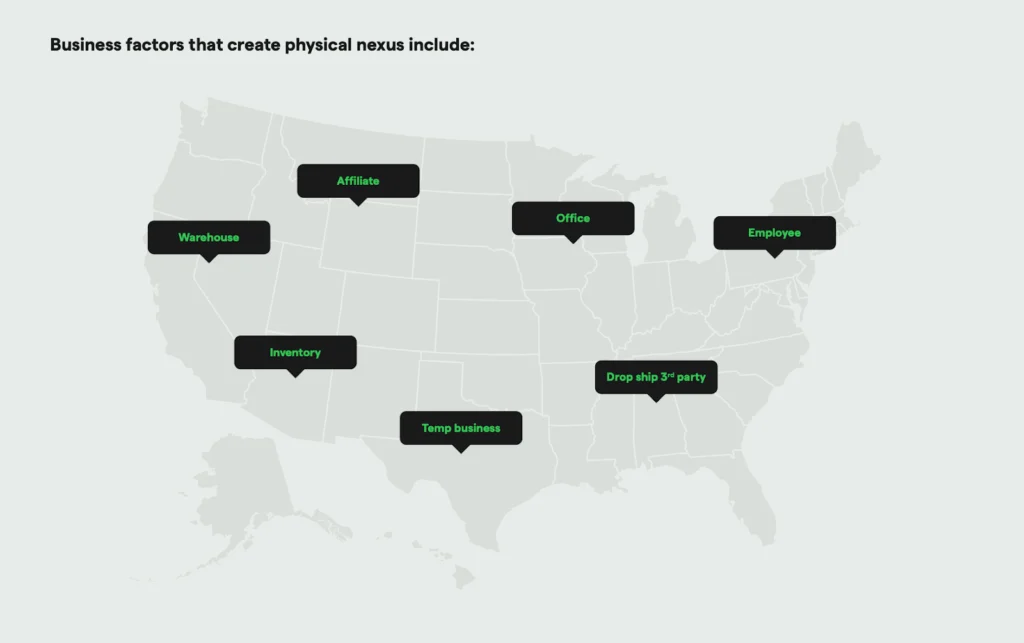
To understand the current complexity of resale certificates, one must look at the landmark 2018 Supreme Court decision in South Dakota v. Wayfair, Inc. Before this ruling, states could only require businesses with a physical presence (nexus) within their borders to collect sales tax. The Wayfair decision overturned this "physical presence" rule, allowing states to mandate tax collection based on "economic nexus"—typically defined by a threshold of sales revenue or transaction volume.
This shift has had a profound impact on the use of resale certificates. As more businesses find themselves with a legal obligation to collect tax in states where they have no physical office or warehouse, the need for valid resale documentation has skyrocketed. In response, many states have joined the Streamlined Sales Tax (SST) Agreement, an effort to simplify and modernize sales and use tax administration. Currently, 24 states are full members of the SST, allowing businesses to use a single, standardized exemption certificate across multiple jurisdictions.
The Risks of Non-Compliance and Economic Impact
Industry analysts suggest that the cost of tax compliance for small to mid-sized enterprises (SMEs) has risen by nearly 30% since the Wayfair ruling. Mismanaging resale certificates can lead to severe financial penalties. If a business fails to collect a valid certificate from a buyer but does not charge sales tax, the state may hold the seller liable for the unpaid tax, plus interest and late fees. Conversely, if a buyer uses a resale certificate for personal purchases—a practice known as tax evasion—they face significant legal repercussions.
"The complexity of the US sales tax system is a significant barrier to entry for many growing brands," notes a senior tax policy researcher. "When you consider that there are over 11,000 different tax jurisdictions in the country, each with its own rules on what constitutes a valid resale document, the margin for error is razor-thin."
Comprehensive State-by-State Directory for Resale Documentation
For businesses seeking to navigate this complex terrain, the following directory outlines the specific requirements and forms needed to obtain or utilize a resale certificate in each state.
Alabama through California: Western and Southern Requirements
In Alabama, the Department of Revenue requires the completion of the Alabama Application for Certificate of Exemption (Form ST-EX-A1). This is a formal application process that distinguishes Alabama from states with more "on-the-fly" documentation.
Alaska presents a unique case; it lacks a state-level sales tax. However, local jurisdictions may levy their own taxes. Businesses operating in Alaska must check with specific localities to apply for tax-exempt status, often managed through the Alaska Remote Seller Sales Tax Commission (ARSSTC).
Arizona offers sellers several paths to compliance. They may use the Arizona Resale Certificate (Form 5000A), the Border States Uniform Sale for Resale Certificate (Form 60-0081), or the Multistate Tax Commission’s (MTC) Uniform Sales and Use Tax Certificate. This flexibility is designed to facilitate trade with neighboring states and international partners in Mexico.
Arkansas and California maintain strict documentation standards. Arkansas accepts the state-specific Form ST 391 or the Streamlined Exemption Certificate. California requires the CDTFA-230, a general resale certificate that must be kept on file by the seller for at least four years to satisfy audit requirements.
Colorado to Florida: The Atlantic and Mountain Variations
Colorado does not issue a standalone resale certificate; instead, a business’s standard sales tax permit serves as the necessary documentation. Notably, Colorado is one of the few states that widely accepts out-of-state certificates, reducing the friction for interstate commerce.
In the Northeast, Connecticut requires the Sales & Use Tax Resale Certificate, while the District of Columbia mandates the OTR-368. Florida stands out for its rigorous annual renewal process. Once a business is registered, the state automatically issues a new resale certificate each year. Unlike Colorado, Florida generally does not accept out-of-state certificates, requiring any business purchasing goods for resale within the state to register with the Florida Department of Revenue.
Georgia to Kentucky: Southeastern and Midwestern Protocols
Georgia businesses utilize the ST-5 Certificate of Exemption. For those not registered in the state, the MTC certificate is often an acceptable substitute. Hawaii uses a tiered system (Forms G-17, G-18, or G-19) depending on the nature of the resale.
In the Midwest, Illinois (Form CRT-61), Indiana (Form ST-105), and Iowa (Form 31-014) provide standardized forms. Kansas offers a multi-jurisdictional option (ST-28M) to assist businesses that operate across state lines. Kentucky requires the 51A105, which must be updated if the buyer’s business information changes significantly.
Louisiana to Missouri: Central US Compliance
Louisiana requires businesses to register through its online portal to download a specific resale certificate. Maine has a unique threshold: businesses must prove at least $3,000 in annual gross sales to automatically receive a certificate. If this threshold is not met, the Uniform Sales & Use Tax Certificate must be used.
Maryland does not provide an "official" state-issued certificate but suggests a specific format for businesses to follow. Massachusetts (Form ST-4) and Michigan (Form 3372) require registration prior to the issuance of any exemption documents. Minnesota (Form ST3) and Missouri (Form 149) follow the standard model of providing a template for businesses to complete and present to vendors.
Nebraska to North Carolina: Expanding the Map
Nebraska (Form 13) and Nevada provide straightforward resale certificates. New Jersey offers two distinct versions: the ST-3 for in-state sellers and the ST-3NR for non-resident sellers, acknowledging the high volume of cross-border trade in the Tri-State area.
New Mexico utilizes a "nontaxable transaction certificate" (NTTC) system, which is more digitally integrated than many other states. New York (Form ST-120) and North Carolina (Form E-595E) both emphasize the importance of the "good faith" acceptance of certificates by sellers.
North Dakota to South Carolina: The Plains and the South
North Dakota (SFN 21950) and Ohio (Form STEC B) use "blanket" certificates, which allow a buyer to make multiple purchases from the same seller over time without providing a new form for each transaction. Oklahoma and Rhode Island heavily lean on the Streamlined Exemption Certificate Form to simplify the process for their retailers.
South Carolina requires Form ST-8A. The state’s Department of Revenue emphasizes that the certificate must be filled out completely, including the buyer’s name, address, and nature of business, to be considered valid during a tax audit.
South Dakota to Wyoming: The Remaining Jurisdictions
South Dakota, the state at the heart of the Wayfair decision, utilizes Form 2040. Tennessee (Certificate of Exemption) and Texas (Form 01-339) are known for their strict enforcement of tax ID verification. Utah and Vermont provide multiple options, including state-specific forms and the MTC certificate.
Virginia (Form ST-10) and Washington state have modernized their systems. Washington issues "reseller permits" to registered businesses, while those not required to register must use the Streamlined Sales and Use Tax Exemption Certificate. West Virginia, Wisconsin (Form S-211), and Wyoming all utilize the Streamlined Sales Tax Agreement forms to maintain consistency with other member states.
Broader Implications for the Future of Commerce
The reliance on manual forms and state-by-state variations is increasingly being viewed as an antiquity in the digital age. Financial technology (FinTech) firms are now developing automated solutions that verify the validity of resale certificates in real-time. This technology is expected to become the industry standard as states look to close the "tax gap"—the difference between taxes owed and taxes collected.
Furthermore, the debate over a potential federal "Remote Seller" law continues in Congress. Such a law would theoretically standardize the requirements for resale certificates nationwide, removing the administrative hurdles that currently plague small businesses. Until such legislation passes, however, the burden of compliance remains firmly with the business owner.
In conclusion, the resale certificate is more than just a piece of paperwork; it is a vital instrument of tax law that facilitates the smooth operation of the American supply chain. As states become more aggressive in their tax collection efforts, the ability to correctly navigate the state-by-state directory of certificates will remain a fundamental skill for any successful retailer or wholesaler. Accuracy in these filings is not merely a matter of administrative preference but a legal necessity that protects a company’s bottom line and legal standing in an increasingly complex regulatory environment.