Lana Rhoades
The global e-commerce market is currently navigating a period of unprecedented expansion, with total annual sales projected to surpass $8.1 trillion by the end of 2026. While this growth represents a significant opportunity for retailers, it has simultaneously created an increasingly dense thicket of regulatory challenges, particularly regarding sales tax nexus. For modern e-commerce enterprises, the ability to interpret and adhere to state-specific tax laws is no longer a peripheral administrative task; it is a fundamental pillar of financial risk management and long-term operational viability.
The current regulatory environment is largely the result of a decade of legal shifts and legislative adjustments designed to capture revenue from a borderless digital economy. As states seek to bolster their budgets through more aggressive enforcement of sales and use tax laws, businesses must contend with a shifting definition of "nexus"—the legal connection between a business and a taxing jurisdiction that triggers the obligation to collect and remit sales tax. Failure to maintain compliance in this area can lead to debilitating audits, back taxes, and significant financial penalties that can threaten the very existence of a growing brand.
The Evolution of Nexus From Physical Presence to Economic Connection
To understand the current state of sales tax nexus, one must look at the legal framework established over the last thirty-four years. For decades, the standard for nexus was defined by the 1992 Supreme Court case Quill Corp. v. North Dakota, which held that a state could only require a business to collect sales tax if that business had a physical presence in the state, such as an office, warehouse, or employees.
This standard remained the status quo until the landmark 2018 ruling in South Dakota v. Wayfair, Inc. The Supreme Court’s decision in Wayfair effectively overturned the physical presence requirement, allowing states to tax remote sellers based solely on their economic activity within the state. This birthed the concept of "economic nexus," which has since been adopted by every state that imposes a general sales tax.
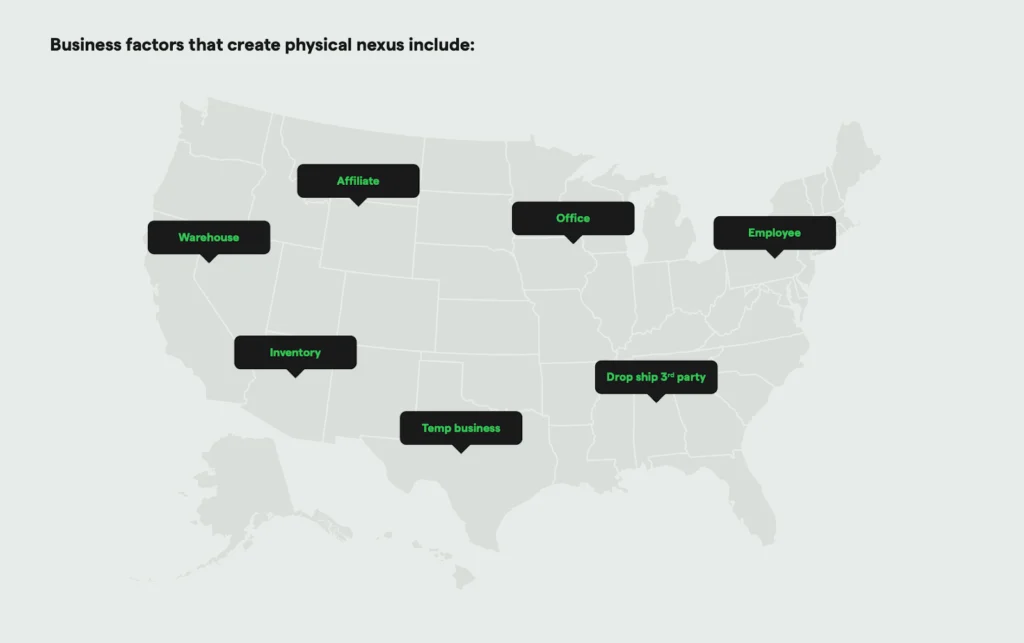
In 2026, the definition of nexus is divided into two primary categories: physical nexus and economic nexus. Physical nexus is still triggered by traditional factors, including owning or leasing property, maintaining a remote workforce, or storing inventory in a third-party logistics (3PL) warehouse. However, economic nexus is triggered when a business exceeds a specific threshold of sales revenue or transaction volume in a given state, regardless of whether they have a single physical asset in that jurisdiction.
The Chronology of Sales Tax Reform
The journey to the current $8.1 trillion e-commerce landscape has been marked by several key milestones that have redefined the relationship between retailers and state departments of revenue:
- 1992 – Quill Corp. v. North Dakota: The Supreme Court affirms the physical presence rule, exempting most mail-order and early internet retailers from collecting out-of-state sales tax.
- 2010-2017 – The Rise of "Amazon Laws": States began passing "click-through nexus" and "affiliate nexus" laws to target retailers using local websites to drive traffic.
- 2018 – South Dakota v. Wayfair, Inc.: The Supreme Court rules that states can mandate tax collection from remote sellers based on economic activity, leading to a wave of new state legislation.
- 2019-2021 – Marketplace Facilitator Laws: States began requiring platforms like Amazon, eBay, and Etsy to collect and remit tax on behalf of their third-party sellers.
- 2023-2025 – Threshold Refinement: Many states began removing "transaction count" requirements (e.g., the 200-transaction rule) to focus solely on gross revenue, simplifying compliance for low-value, high-volume sellers.
- 2026 – The Era of Data-Driven Enforcement: States now utilize sophisticated data-sharing agreements and AI-driven auditing tools to identify non-compliant remote sellers in real-time.
Analyzing Economic Nexus Thresholds and State Variations
While the Wayfair decision empowered states to set their own rules, it also created a fragmented system where thresholds vary wildly. In 2026, the "standard" threshold remains $100,000 in annual sales or 200 separate transactions, but significant outliers exist.
For instance, California maintains a much higher threshold of $500,000 in annual sales, reflecting its massive economy. Conversely, states like Illinois require compliance if a business grosses over $100,000 or reaches 200 transactions. The trend in recent years, however, has been a move toward "revenue-only" thresholds. States such as Washington and Massachusetts have led the charge in eliminating transaction counts to avoid burdening small businesses that sell many low-cost items but do not generate substantial revenue in the state.
Businesses must also account for how states calculate these thresholds. Some states look at "gross sales," which includes exempt and wholesale transactions, while others only count "taxable sales." This distinction is critical for B2B companies or sellers of non-taxable goods, as they may trigger nexus—and therefore the requirement to file "zero-tax" returns—even if they owe no actual tax dollars.
Product Taxability and the Challenge of Digital Goods
Determining where you have nexus is only half the battle; the second challenge is determining what is actually taxable. While "tangible personal property" (TPP) like clothing, electronics, and home goods are generally taxable, the 2026 landscape is complicated by the rise of digital products and Software-as-a-Service (SaaS).
Digital goods—including ebooks, streaming media, and downloadable software—are now taxable in over 30 states, but the definitions of these products are often inconsistent. Furthermore, SaaS taxability remains one of the most contentious areas of tax law. Some states view SaaS as a taxable service, others as a form of tangible software, and some as a non-taxable data processing service.
Exemptions also play a significant role. Many states offer sales tax holidays or permanent exemptions for "necessities." Common exemptions include:
- Groceries: Exempt in most states, though some apply a reduced rate.
- Clothing: Exempt in states like Pennsylvania and New Jersey (up to certain limits).
- Prescription Drugs: Generally exempt nationwide.
- Medical Devices: Taxability varies based on whether the device is "implanted" or for home use.
The Impact of Physical Presence in a Remote-First World
Despite the focus on economic nexus, physical nexus remains a "trap" for many modern businesses. The shift toward remote work has created unexpected tax liabilities. If a company based in New York hires a single customer service representative who works from their home in Ohio, that company likely has physical nexus in Ohio.
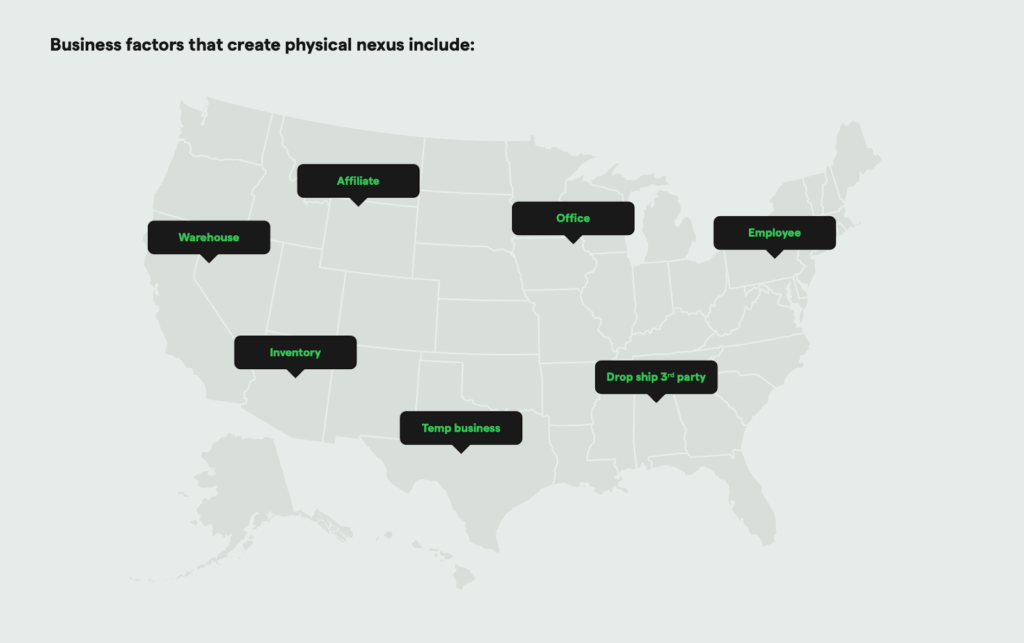
Similarly, the use of Fulfillment by Amazon (FBA) or other 3PL providers can trigger physical nexus. When a retailer sends inventory to a warehouse network, they often lose control over where that inventory is stored. If a 3PL moves a seller’s products to a warehouse in Tennessee to optimize shipping times, that seller now has physical nexus in Tennessee. In the eyes of the law, storing "inventory for sale" is a clear indicator of physical presence.
Official Responses and Expert Analysis
Tax experts and industry analysts suggest that the complexity of the current system is reaching a breaking point for small to mid-sized enterprises (SMEs). "The administrative burden of tracking 45 different sets of state rules, plus thousands of local jurisdictions, is the single greatest non-market barrier to e-commerce growth," says Dr. Aris Vrettos, a senior tax policy analyst.
In response, some states have joined the Streamlined Sales and Use Tax Agreement (SSUTA), an effort to simplify and modernize sales and use tax administration. Member states agree to use common definitions and a centralized registration system. However, several of the largest states, including California, New York, and Texas, remain non-members, limiting the agreement’s effectiveness.
From a corporate perspective, the reaction has been a shift toward total automation. Chief Financial Officers (CFOs) are increasingly viewing sales tax as a technology problem rather than an accounting problem. By integrating automated tax engines into their e-commerce platforms, businesses can calculate tax in real-time, manage exemption certificates, and automate the filing process.
Broader Implications and Future Outlook
As we look toward the remainder of 2026 and beyond, the implications of nexus laws will extend into the realm of international trade and mergers and acquisitions (M&A). International sellers entering the U.S. market are now subject to the same Wayfair rules as domestic sellers, leading to a surge in demand for U.S. tax representation from firms in Europe and Asia.
In the M&A space, sales tax compliance has become a primary focus of due diligence. An e-commerce brand looking to be acquired may find its valuation slashed if it cannot prove it has been compliant with nexus laws across all 50 states. The potential for "successor liability"—where the buyer becomes responsible for the seller’s unpaid taxes—makes non-compliance a deal-breaker for many investors.
Ultimately, the goal for any e-commerce retailer in 2026 should be "compliance by design." By staying informed on legislative changes, leveraging automation tools like TaxJar, and conducting regular nexus reviews, businesses can transform a complex regulatory burden into a streamlined component of their operational strategy. In an $8 trillion market, the winners will be those who can navigate the "tangled web" of tax law with confidence and precision.