Nila Kartika Wati
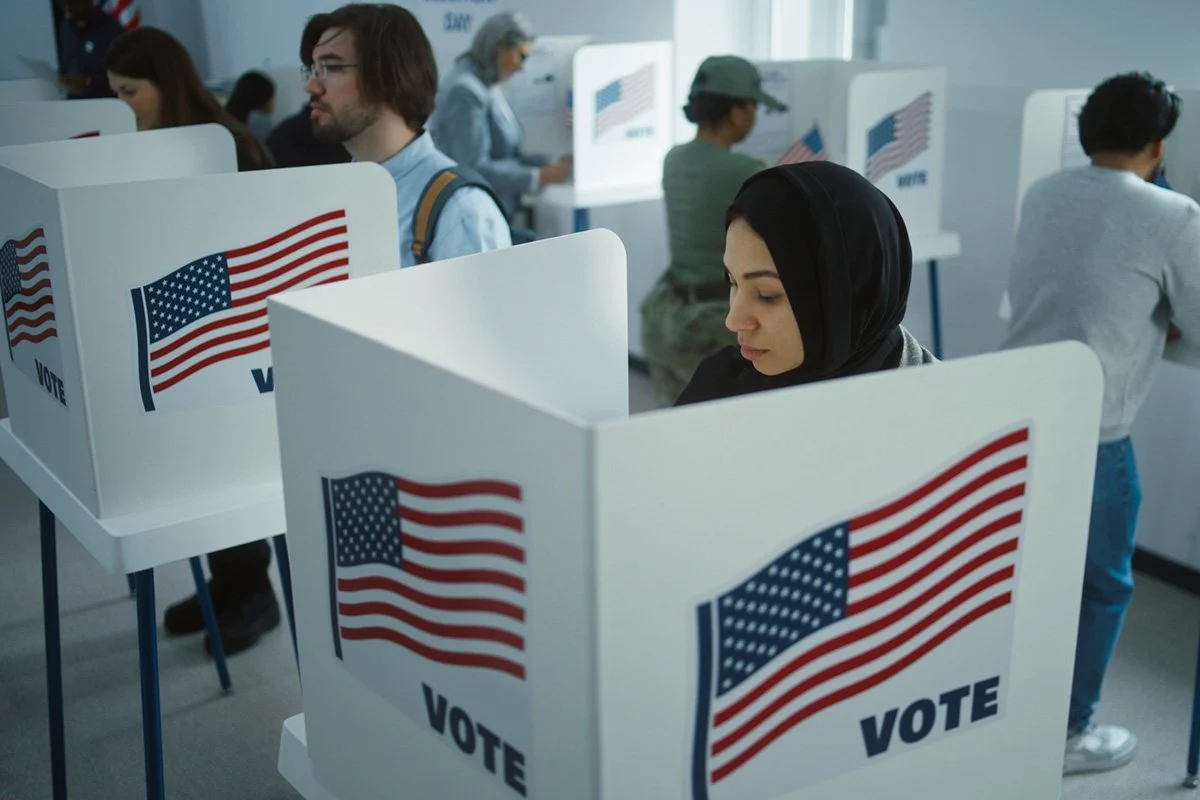
The intersection of physical presence and political participation has become a focal point of intense legal and social scrutiny in California as the state enters a critical election cycle. On the morning of Monday, October 5, an 18-year-old student named Mayrin was arriving for classes at Allan Hancock College in Santa Maria, California. At approximately 9:45 am, as her father drove her through a campus parking lot, officers from U.S. Immigration and Customs Enforcement (ICE) intercepted their vehicle and detained him. The location of the arrest was significant: the parking area was immediately adjacent to an active ballot drop-off site on the first day such boxes were opened to the public. To reach the drop box, voters were required to pass through the same area where federal agents were conducting the enforcement action. By the conclusion of the day, at least 17 individuals had been arrested in Santa Maria and the neighboring community of Guadalupe by masked ICE officers, sparking immediate concerns regarding the proximity of immigration enforcement to democratic processes.
The Launch of Operation Safe California
The Santa Maria incident appears to be part of a broader, coordinated effort recently identified as Operation Safe California. While ICE officials initially claimed to have no record of activity on the Allan Hancock campus that morning, subsequent reports have detailed a strategic surge in enforcement. On September 27, the Department of Homeland Security (DHS) announced a "nationwide public safety surge" specifically targeting sanctuary jurisdictions across 11 states and Washington, D.C. Sources within the agency indicated that management had prioritized "numbers," directing officers to arrest individuals without legal status regardless of their criminal history.
By October 7, internal documents and reports from the Washington Examiner confirmed that Operation Safe California had been quietly initiated in the San Diego region, with an expected duration of at least 45 days. Information leaked to the media suggested that more than 250 additional officers had been deployed to Southern California with instructions to "go after anybody." Although DHS has neither confirmed nor denied the existence of the operation by name, the timing of these arrests—coinciding with the start of the voting period—has led civil rights advocates to argue that the presence of federal agents serves as a de facto form of voter intimidation, particularly in immigrant-heavy communities.
A Chronology of Enforcement and Legislative Friction
The current tension in California is the result of a rapidly evolving timeline of executive actions, judicial rulings, and state-level legislative responses.
- September 8, 2025: The United States Supreme Court issued a stay in Noem v. Vasquez Perdomo, pausing a district court order that had previously prohibited immigration agents from making roving stops based on ethnicity, language, or occupation. This ruling effectively allowed federal agents to use factors such as "accented English" or presence at "day-labor sites" as part of their criteria for stops.
- September 19, 2025: Governor Gavin Newsom signed Senate Bill 884 into law. Authored by State Senator Tom Umberg, the bill prohibits law enforcement from making arrests within 200 feet of a polling place on Election Day, aiming to create a "safe zone" for voters.
- September 27, 2025: DHS announced the "public safety surge" targeting sanctuary cities, marking the beginning of increased federal visibility in California.
- October 5, 2025: The arrest of Mayrin’s father and 16 others occurred in Santa Maria, coinciding with the opening of ballot drop boxes.
- October 7, 2025: Reports of "Operation Safe California" surfaced, and legal groups filed amended complaints in federal court citing the Santa Maria arrests as evidence of illegal voter intimidation.
Historical Precedents of Physical Intimidation at the Polls
The use of physical presence and surveillance to influence voter turnout is not a new phenomenon in American politics. Journalists and historians have drawn direct parallels between the current ICE surge and "Operation Eagle Eye," a 1964 Republican National Committee program. During that campaign, the party deployed approximately 100,000 "watchers" to minority precincts. These individuals, equipped with cameras and two-way radios, were instructed to question voters on their residency and literacy. The program’s national director, Charles Barr, explicitly predicted that the effort would discourage 1.25 million people from voting. While Operation Eagle Eye was widely criticized and followed by the passage of the Voting Rights Act of 1965, the logic of using "body-based" suspicion—targeting accents and skin color—remains a recurring theme in electoral history.
California has its own specific history with these tactics. In 1988, during a local Assembly race in Santa Ana, the Orange County Republican Party hired uniformed guards to stand outside 20 polling places. These guards held signs in English and Spanish warning noncitizens against voting. The resulting outcry led to the creation of new state felonies regarding voter intimidation and eventually paved the way for the protections found in the modern Elections Code. The current enforcement surge is viewed by many as a modern iteration of these historical efforts, utilizing federal agency power rather than private security or party volunteers.
Data Mining and the Digital Surveillance of Electorates
Beyond physical presence at polling sites, modern surveillance has moved into the realm of large-scale data analysis. Records recently obtained by the advocacy group Democracy Forward through the Freedom of Information Act (FOIA) reveal a sophisticated effort by Homeland Security Investigations (HSI) to scrutinize voter rolls. According to the documents, HSI accessed 50.6 million voter registration records from the Department of Justice and over 26,000 records from U.S. Citizenship and Immigration Services.
Furthermore, the records indicate that federal agents conducted reviews of non-profit organizations dedicated to voter registration. In New Jersey alone, 41 such organizations were monitored to determine if undercover operations were warranted. While no evidence has surfaced to suggest that undercover agents were successfully deployed into these civic groups, the scale of the data review indicates a systemic effort to link immigration status with the act of registration. For the non-profit sector, this represents a significant shift in the operational landscape, as traditional civic engagement activities are now being processed through the lens of federal immigration enforcement.
The Judicial Landscape and the Erosion of Profiling Bans
The legal framework governing these enforcement actions has been significantly altered by recent judicial decisions. In the Noem v. Vasquez Perdomo case, the Supreme Court’s decision to stay a lower court’s injunction has been described by dissenting justices as a regression in civil rights. Justice Sonia Sotomayor, joined by Justices Kagan and Jackson, warned that the decision essentially permits the government to "seize people based on how they look and the language they speak."
Justice Brett Kavanaugh, in a solo concurrence, argued that while ethnicity alone cannot justify a stop, it may be weighed alongside other "probative factors." This legal nuance creates a challenging environment for local law enforcement and civil rights attorneys. In the Central District of California—which includes the site of the Santa Maria arrests—federal agents currently have broader discretion to conduct stops than they did in previous years. This judicial shift provides the legal cover necessary for operations like Operation Safe California to function in high-traffic public areas, including those near educational institutions and voting infrastructure.
Legislative Protections and Their Practical Limitations
While California has moved to protect voters through SB 884 and Elections Code § 18544, these laws face practical hurdles in the face of federal enforcement. SB 884’s prohibition on arrests within 200 feet of a polling place is specifically "keyed" to Election Day. This creates a potential loophole for enforcement actions that occur at ballot drop boxes weeks before the actual Tuesday of the election.
Furthermore, federal supremacy issues often complicate the enforcement of state laws against federal agents. The primary federal tool against such actions is 18 U.S.C. § 592, a statute dating back to the Civil War era that forbids the use of "armed men" at polling places. However, the application of this law to ICE officers conducting "routine" immigration enforcement near a drop box has never been fully settled by the courts. Current litigation in federal court seeks to clarify whether the Santa Maria arrests constitute a violation of Section 11(b) of the Voting Rights Act, which prohibits the intimidation of any person for attempting to vote.
Community Response and the "Atmosphere of Fear"
The impact of high-visibility enforcement is often psychological rather than purely legal. In the Central Valley, community organizers report a measurable "chilling effect" on public life. In Kern County, agricultural foremen have noted significant drops in work crew attendance following reports of ICE activity, with many workers expressing fear of leaving their homes.
For naturalized citizens—who are legally entitled to vote—the sight of masked federal agents near a voting site can be enough to deter participation. Advocates argue that the "real audience" for these enforcement surges is not the undocumented population, but rather the mixed-status families and naturalized neighbors who share the same physical characteristics as those being detained.
In response, a coalition of California organizations, including CAUSE, MICOP, and the 805 UndocuFund, has revitalized Rapid Response Networks. These groups utilize mobile alerts to inform communities of ICE presence in real-time. In San Diego, the City Heights Defense Committee has initiated morning patrols to provide a protective presence for residents. These grassroots efforts emphasize a "collective defense" model, encouraging voters to visit drop boxes in groups and providing legal observers to document enforcement actions.
As the November 3 election approaches, the state of California remains a primary battleground for the definition of voter access. The tension between federal immigration priorities and state-protected voting rights continues to escalate, with the final resolution likely to be determined in federal courtrooms and at the ballot boxes themselves. For now, the events in Santa Maria serve as a stark reminder of how the physical presence of the state can influence the exercise of the franchise.