Nila Kartika Wati
The prevailing political narrative within the Beltway and mainstream media often presents the American farmer as a singular, predictable demographic: a conservative, Midwestern operator of large-scale machinery who remains steadfastly loyal to the Republican Party despite the economic volatility of tariffs and international trade disputes. This archetype, while grounded in some statistical reality, frequently obscures a much more intricate tapestry of political identity, economic struggle, and social diversity. Michael Shepherd, an assistant professor at the University of Michigan and a scholar of rural politics, is currently challenging these oversimplifications through a comprehensive survey of farmer attitudes. His research, which culminates in the upcoming book Rural Pain, Republican Gain, suggests that the political landscape of American agriculture is shaped by a confluence of historical shifts, cultural identity, and a widening gap between corporate agribusiness and small-scale family operations.
The Myth of the Agricultural Monolith
While it is true that many farmers in the Plains and the Midwest—regions dominated by thousands of acres of commodity corn and soybeans—lean heavily toward conservative candidates, this group does not represent the entirety of the American agricultural sector. According to U.S. Department of Agriculture (USDA) data, there are approximately 2 million farms in the United States, yet they vary wildly in scale, production method, and ideological alignment.
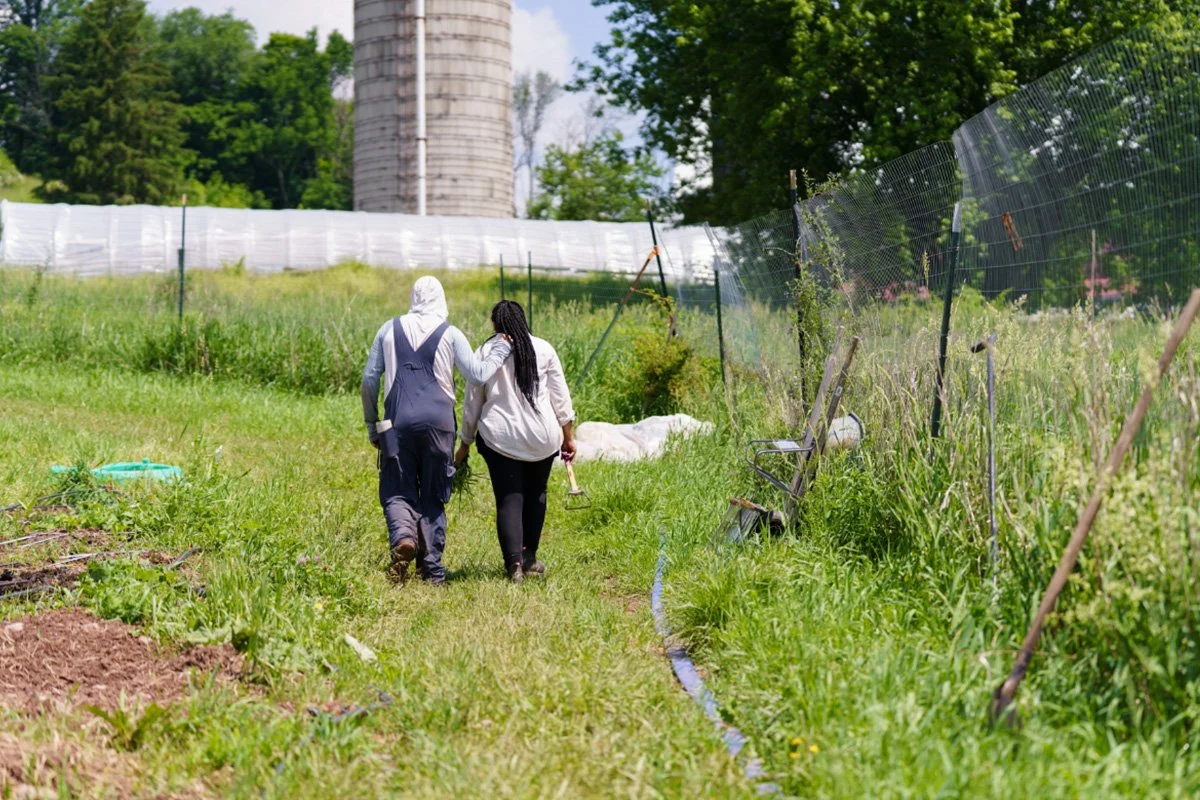
Shepherd’s research indicates that as one moves away from large-scale commodity production, political affiliations become increasingly "heterodox." Small-scale, diversified, and organic farmers often exhibit leanings that range from progressive to libertarian. For example, operations like Rock Steady Farm and Soul Fire Farm represent a growing movement that views agriculture through the lens of food sovereignty, liberation, and support for LGBTQ+ and BIPOC (Black, Indigenous, and People of Color) communities. Conversely, figures like regenerative rancher Will Harris of White Oak Pastures describe themselves as "apolitical," engaging with whichever administration—Republican or Democrat—addresses issues of soil health and the consolidation of corporate agribusiness.
A Historical Chronology of Political Realignment
To understand the current conservative lean of many rural communities, one must examine the profound shifts that have occurred over the last century. The political identity of the American farmer has not always been synonymous with the Republican Party; in fact, the early 20th century was defined by a robust tradition of left-wing agricultural populism.
The Era of Agrarian Populism (1890s–1940s)
During the late 19th century, the People’s Party (the Populists) emerged as a powerful force among farmers who felt exploited by railroads and banks. This movement advocated for radical economic reforms, including the nationalization of railroads and a graduated income tax. This populist streak continued into the 1930s and 40s during the New Deal era. Farmers were a core component of President Franklin D. Roosevelt’s coalition, benefiting from the establishment of price supports and rural electrification. In states like Minnesota, this legacy is still visible in the name of the "Democratic-Farmer-Labor" (DFL) Party.
The Technological and Economic Pivot (1970s–1980s)
The 1970s marked a turning point under Agriculture Secretary Earl Butz, whose famous directive to "get big or get out" encouraged massive expansion and industrialization. This led to a capital-intensive model of farming that favored consolidation. However, the 1980s farm crisis—characterized by high interest rates, a grain embargo against the Soviet Union, and plummeting land values—shattered the economic stability of the family farm. Thousands of farmers were forced into foreclosure, leading to a permanent reduction in the number of people working the land. Those who remained were often managers of larger, more corporate-aligned operations who gravitated toward the Republican Party’s focus on tax reduction and deregulation.
The Rise of Cultural Politics (1990s–Present)
As the economic interests of large-scale farmers aligned with Republican fiscal policy, a parallel shift occurred in the broader rural culture. Over the last three decades, both major parties began to prioritize "culture war" issues, such as traditional gender roles, religious identity, and immigration. Shepherd notes that many farmers began to vote based on these social identities rather than purely on agricultural policy. This "identity-based" voting explains why a farmer might support a candidate whose trade policies (such as tariffs on Chinese imports) may cause them direct financial harm.
Data and the Economic Disparity of Subsidies
The political prominence of farmers is disproportionate to their actual numbers. Today, farmers make up only about 2 percent of the U.S. population. However, the agricultural sector receives a staggering amount of federal support. In 2020 alone, federal direct farm payments reached a record $45.6 billion, largely due to supplemental pandemic relief and trade-war compensation.
Despite these massive sums, the distribution of wealth remains highly skewed. According to the Environmental Working Group’s (EWG) tracking of USDA data, the top 10 percent of subsidy recipients—largely corporate and large-scale commodity farms—receive approximately 78 percent of all subsidies. In contrast, the bottom 80 percent of farmers receive an average of only a few hundred dollars per year. This disparity creates a "missing middle" in American agriculture, where small family farms struggle to survive while large-scale operations are insulated from market volatility by federal programs.
This economic reality fuels different political frustrations. Large-scale producers may view the government as a necessary but intrusive partner, while small-scale and organic farmers often feel entirely abandoned by a federal policy framework that favors industrial monocultures over local food systems.
The Farmer as an American Cultural Icon
Shepherd posits that the reason the American public and political class remain obsessed with the "farmer vote" is largely symbolic. The farmer serves as a "stand-in" for the rural manual laborer—a storied figure in the American mythos representing self-reliance and national grit. This persists even though more rural Americans work in healthcare or education than in agriculture.
"The farmer is almost an American myth in some ways," Shepherd explains. This mythic status allows politicians to use agricultural imagery to signal "rural values," even when their policies may not benefit the majority of rural residents. At events like Farm Aid 2025, this symbolism was on full display, though with a different ideological flavor. The event featured a strain of left-wing populism, with musicians like Neil Young criticizing corporate influence and Democratic lawmakers taking the stage to champion small-scale sustainable agriculture.
Impact of Trade Wars and Tariffs
Recent years have tested the loyalty of the agricultural sector. The trade war with China, initiated in 2018, saw retaliatory tariffs placed on U.S. soybeans, corn, and pork. While the Market Facilitation Program (MFP) was created to offset these losses, the distribution of these funds was widely criticized for favoring Southern states and large corporate entities over Midwestern family farms.
Data from the American Farm Bureau Federation showed that farm bankruptcies increased significantly during the peak of the trade war, yet the political shift away from the Republican Party was less dramatic than many analysts predicted. Shepherd’s research suggests this is because voters are cognizant of the harm but prioritize other factors. "I don’t vote solely based on education policy because I’m a professor," Shepherd argues, suggesting that farmers, like any other group, weigh a complex basket of priorities including religion, community safety, and national identity.
Implications for Future Policy
The ongoing debate over the next Farm Bill—a massive piece of legislation that governs everything from crop insurance to the Supplemental Nutrition Assistance Program (SNAP)—will be a critical litmus test for these shifting politics. There is growing pressure from diverse coalitions to redirect subsidies toward climate-smart agriculture and to support the "small family farmer" who has historically been left behind.
As the 2024 and 2026 election cycles approach, the "farmer vote" will undoubtedly remain a focal point of media coverage. However, Shepherd’s work serves as a reminder that the rural landscape is not a monolith. The future of American agriculture may depend less on the loyalty of large-scale commodity producers and more on the rising influence of "heterodox" farmers—those who are blending traditional agrarian values with modern concerns for sustainability, social justice, and economic independence.
In conclusion, the American farmer exists at the intersection of a fading historical myth and a complex modern reality. While the stereotype of the conservative tractor-driver persists, the data and the lived experiences of diverse growers across the country tell a story of a demographic in flux, navigating a world where identity, economics, and culture are increasingly inseparable. Understanding this complexity is essential for any political movement or policymaker hoping to bridge the widening divide between rural and urban America.