Nila Kartika Wati
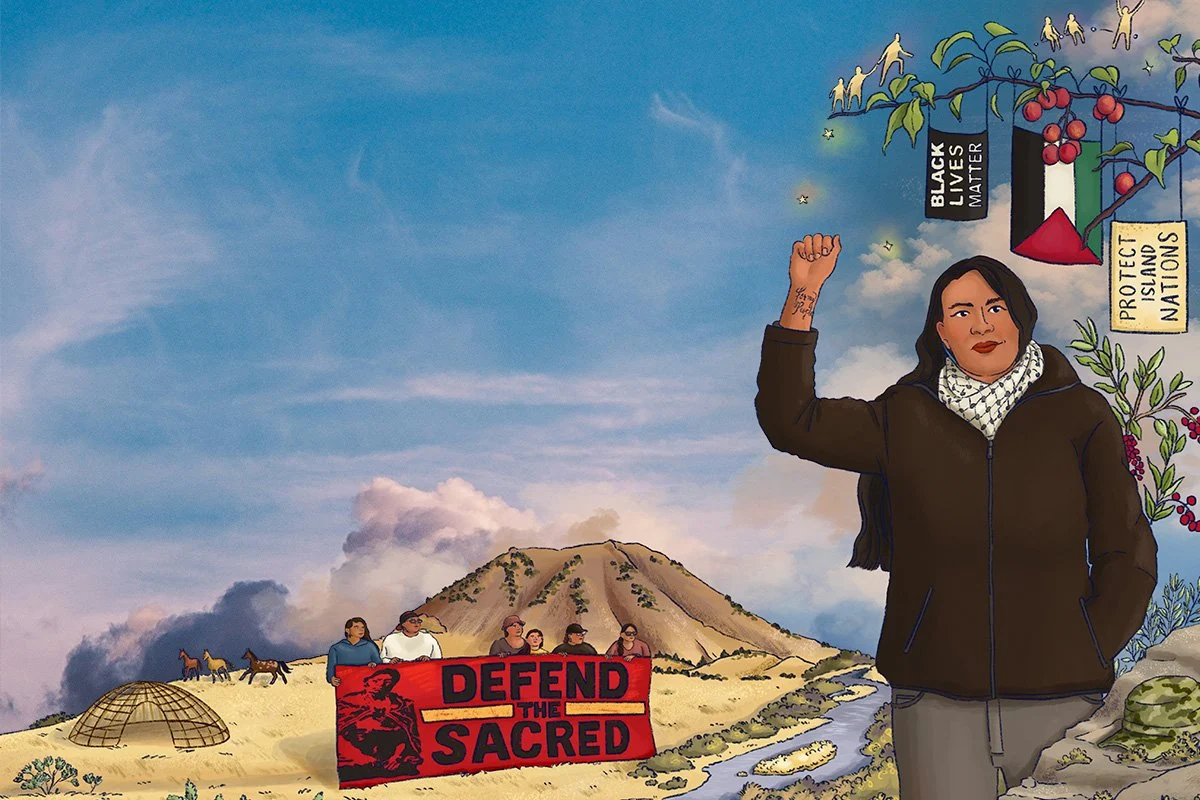
The concept of an island is traditionally defined by its geographic isolation—a landmass entirely surrounded by water. However, for the Northern Cheyenne Tribe in southeastern Montana, isolation is a structural phenomenon rather than a maritime one. Though situated in the vast plains of the American West, the reservation is effectively "walled in" by industrial infrastructure, including sprawling strip mines, coal-fired power plants, and a web of transmission lines and haulage railroads. This environment represents a decades-long struggle for sovereignty against external economic interests that prioritize resource extraction over local water security and public health.
As national energy policies undergo a significant shift toward the revitalization of fossil fuel infrastructure, the role of state and tribal governments in environmental oversight has become a focal point of legal and political discourse. While federal agencies often dominate the headlines regarding interstate pipelines and mining permits, Section 401 of the Clean Water Act (CWA) provides states and authorized tribes with a potent, yet frequently underutilized, mechanism to safeguard their own natural resources.
The Mechanism of Section 401 and Tribal Sovereignty
Section 401 of the Clean Water Act serves as a bridge between federal permitting and local environmental standards. It mandates that any federal permit or license for an activity that may result in a "discharge" into the waters of the United States must first obtain a certification from the state or authorized tribe where the discharge originates. This certification confirms that the proposed project will comply with local water quality standards and other appropriate requirements of state or tribal law.
For Indigenous nations, the path to exercising this authority often involves obtaining "Treatment as a State" (TAS) status from the Environmental Protection Agency (EPA). This designation allows tribes to manage their own water quality standards and receive federal grants to operate environmental protection departments. The Northern Cheyenne have successfully secured this status, granting them the legal standing to review federal projects that threaten their clean spring water—a resource central to their cultural identity and physical survival.
The power of Section 401 lies in its breadth. States and tribes have three primary options when a certification request is filed: they can grant it, deny it (which effectively blocks the federal permit), or waive their right to act. Furthermore, they can grant certification with specific conditions, such as mandatory monitoring or technical modifications to the project design, to mitigate environmental degradation.
A Comparative Analysis of the Dakota Access and Atlantic Coast Pipelines
The efficacy of Section 401 is best illustrated through two divergent case studies: the Dakota Access Pipeline (DAPL) and the Atlantic Coast Pipeline (ACP). These projects represent the two extremes of how state and tribal authority can be exercised in the face of massive industrial development.
The Dakota Access Pipeline: A Case of Overridden Objection
The $3.78 billion Dakota Access Pipeline, designed to transport crude oil from the Bakken fields in North Dakota to Illinois, became a global symbol of Indigenous resistance during the #NoDAPL movement in 2016 and 2017. The Standing Rock Sioux Tribe argued that the pipeline’s path under the Missouri River—just upstream from their drinking water intake—posed an existential threat.
Despite the tribe’s vocal opposition and claims that the project violated the Clean Water Act and the National Environmental Policy Act (NEPA), state regulators in North Dakota and federal agencies under two different administrations prioritized energy security and economic output. The state’s decision to approve the project, combined with federal permits from the U.S. Army Corps of Engineers, effectively marginalized the tribe’s environmental concerns. The pipeline began commercial operations in June 2017, highlighting a scenario where state deference to industry can neutralize the protective intent of the Clean Water Act.

The Atlantic Coast Pipeline: The Power of Regulatory Denial
In contrast, the Atlantic Coast Pipeline serves as a precedent for the successful use of state authority to halt a major project. Originally proposed by Dominion Energy and Duke Energy, the $8 billion project was intended to carry natural gas across West Virginia, Virginia, and North Carolina. The route would have bisected Robeson County, North Carolina, home to the Lumbee Tribe and the Tuscarora people.
In this instance, years of grassroots organizing led by figures such as Lumbee elder Donna Chavis provided state regulators with both the political impetus and the scientific evidence needed to scrutinize the project. North Carolina and Virginia environmental agencies flagged significant concerns regarding the pipeline’s impact on water quality and sensitive ecosystems. Faced with mounting legal challenges and the refusal of state agencies to provide a "rubber stamp" certification under Section 401, the developers cancelled the project on July 5, 2020. This outcome demonstrated that when states exercise their delegated authority, even multibillion-dollar energy projects can be stopped to protect local interests.
Technical Impacts and the Risks of Inaction
The environmental risks associated with pipeline construction extend beyond the catastrophic potential of an oil spill. During the construction phase, the process of "trenching" through riverbeds and wetlands can introduce massive amounts of sediment into the water column, choking aquatic life and degrading downstream water quality. Furthermore, the use of horizontal directional drilling (HDD) involves high-pressure drilling fluids that can "frac-out," or leak into the surrounding environment, introducing synthetic chemicals into pristine aquifers.

Despite these risks, many states choose to waive their Section 401 authority. This decision is often driven by administrative bottlenecks. The U.S. Army Corps of Engineers frequently uses "nationwide permits" to fast-track thousands of small-scale infrastructure projects simultaneously. State environmental agencies, often underfunded and understaffed, may find it impossible to conduct a thorough review of every permit within the federally mandated timeframe (typically one year). When a state fails to act within this window, its authority is considered waived, and the project proceeds without local conditions.
The Shifting Political Landscape and Future Implications
The relevance of Section 401 has intensified under the current federal administration’s pivot toward fossil fuel expansion. Executive orders aimed at streamlining energy infrastructure have sought to limit the scope of state and tribal reviews, arguing that local delays hinder national energy independence. Projects previously stalled or cancelled, such as the Keystone XL pipeline, have seen renewed interest as the federal government encourages a return to traditional energy sources and pulls back from renewable energy subsidies.
However, legal experts argue that the Clean Water Act remains a formidable barrier to unchecked industrial expansion. A 2023 EPA rule clarified that states and tribes have a "reasonable period of time" to review certifications and emphasized that their review can include any water quality requirement of state or tribal law, not just those explicitly listed in the CWA.

Recommendations for a Just Environmental Transition
For the Northern Cheyenne and other frontline communities, the future of their land depends on a more robust application of existing laws. To ensure that Section 401 serves its intended purpose, several policy and social shifts are necessary:
- Elimination of Default Waivers: State environmental agencies must move away from the practice of waiving reviews due to administrative constraints. The burden of proof regarding environmental safety should rest with the project developers, not the residents who will live with the consequences of a failure.
- Increased Funding for Tribal EPA Departments: Tribal nations require the financial and technical resources to maintain sophisticated environmental monitoring programs. Without the capacity to produce their own data, tribes are often at a disadvantage when challenging the technical reports provided by industry consultants.
- Collaborative Governance: State governments should treat tribal nations as partners rather than subordinates. Synchronizing state and tribal water quality standards can create a more unified and legally defensible front against projects that threaten shared watersheds.
- Public Engagement and Advocacy: The Atlantic Coast Pipeline cancellation proved that public pressure is a critical component of regulatory courage. When residents engage with the permitting process through public hearings and comment periods, they provide the "evidentiary record" that regulators need to justify a denial or a conditional approval.
The choice facing state and tribal governments is one of agency versus passivity. The fossil fuel industry frequently relies on the assumption that local governments will be too exhausted by litigation or too economically desperate to exercise their rights. Yet, as the success in North Carolina shows, the tools for environmental justice are already encoded in federal law. The question remains whether those in power will choose to use them to protect the "islands" of communities like the Northern Cheyenne, or whether they will allow the tide of industrial expansion to submerge them.