Dwi Wanna
The complexity of the United States federal tax code presents a significant administrative challenge for the nation’s nearly 33 million small businesses. As entrepreneurs navigate the transition between fiscal years, a fundamental question remains central to their operational planning: at what point does a business transition from a tax-exempt status to a tax-paying entity? The answer is not a single figure but a variable determined by legal structure, gross revenue, and the application of various credits and deductions. For the majority of American small businesses—approximately 95% of which are organized as pass-through entities—the threshold for paying federal income tax is inextricably linked to the personal financial circumstances of the owners and the standard deductions set by the Internal Revenue Service (IRS).
The Structural Determinants of Business Taxation
To understand the taxation thresholds of a small business, one must first categorize the entity under the current federal framework. The IRS distinguishes between two primary methods of taxation: corporate taxation and pass-through taxation.
C Corporations and the Flat Tax Model
A C corporation is legally viewed as a separate tax-paying entity from its owners. Under the Tax Cuts and Jobs Act (TCJA) of 2017, the federal corporate tax rate was established at a flat 21%. This rate applies regardless of whether the corporation earns $1,000 or $1,000,000 in taxable income. Consequently, a C corporation effectively begins paying taxes on its first dollar of net profit after accounting for business expenses.
However, the financial obligation for C corporation owners extends beyond the corporate level through a mechanism known as double taxation. After the corporation pays its 21% flat tax, any remaining profits distributed to shareholders as dividends are subject to personal income tax. These dividends are classified into two categories:
- Qualified Dividends: These are taxed at capital gains rates (0%, 15%, or 20%), which are generally lower than standard income tax rates. To qualify, the shareholder must meet specific holding period requirements.
- Unqualified (Ordinary) Dividends: These are taxed at the shareholder’s standard federal income tax rate, which can reach as high as 37% for the top earners.
Pass-Through Entities
The vast majority of small businesses, including sole proprietorships, partnerships, Limited Liability Companies (LLCs), and S corporations, utilize pass-through taxation. In this model, the business itself does not pay federal income tax. Instead, the net profit or loss "passes through" to the owners’ personal tax returns. The owners then pay taxes on these profits based on their individual income tax brackets. Because these profits are combined with other sources of personal income (such as wages from a second job or a spouse’s income), the threshold for when the business "starts paying taxes" is actually the threshold of the owner’s total taxable income.
Thresholds for Exemption: When a Business Owes No Federal Tax
There are four primary scenarios in which a small business may legally avoid paying federal income tax for a specific fiscal year. These exemptions are grounded in the intersection of business performance and IRS-mandated deduction levels.
1. Income Below the Standard Deduction
For unincorporated pass-through businesses, the most common threshold for tax liability is the federal standard deduction. If a business is the owner’s sole source of income and that income is less than the standard deduction for their filing status, they may owe zero federal income tax.
For the 2026 tax year (returns filed in 2027), the standard deductions are projected as follows:
- Single or Married Filing Separately: $16,100
- Head of Household: $24,150
- Married Filing Jointly: $32,200
By 2027 (returns filed in 2028), these figures are expected to rise to:
- Single or Married Filing Separately: $16,600
- Head of Household: $24,925
- Married Filing Jointly: $33,200
If a sole proprietor’s net business profit falls below these amounts and they have no other income, their taxable income is effectively zero.
2. The $400 Self-Employment Tax Threshold
It is critical to distinguish between federal income tax and self-employment tax. Self-employment tax covers Social Security and Medicare contributions (FICA). While a business owner might not owe income tax due to the standard deduction, they are generally required to pay self-employment tax if their net earnings are $400 or more. If a business earns less than $400 in net profit for the year, it is exempt from both federal income tax and self-employment tax.
3. Zero Taxable Income via Expense Matching
A business may generate significant gross revenue but still owe no taxes if its "allowable" business expenses equal or exceed its income. For instance, a startup that generates $50,000 in sales but reinvests $50,000 into equipment, marketing, and inventory has a net taxable income of zero. Under IRS guidelines, business expenses must be both "ordinary" (common in the industry) and "necessary" (helpful for the business) to be deductible.
4. Net Operating Loss (NOL)
If a business’s expenses exceed its gross income, it operates at a net loss. Not only does the business owe no taxes for that year, but depending on current tax laws, the owner may be able to use that loss to offset other income or carry the loss forward to future tax years to reduce future liability.
Data Analysis: Federal Income Tax Brackets for 2026-2027
For pass-through entities, the rate of taxation is determined by the federal individual income tax brackets. The following data outlines the projected brackets for the 2026 and 2027 tax years, illustrating the progressive nature of the U.S. tax system.
Projected 2026 Tax Year (Single Filers):
- 10% Rate: $0 to $12,400
- 12% Rate: $12,401 to $50,400
- 22% Rate: $50,401 to $105,700
- 24% Rate: $105,701 to $201,775
- 32% Rate: $201,776 to $256,225
- 35% Rate: $256,226 to $640,600
- 37% Rate: Over $640,600
Projected 2027 Tax Year (Single Filers):
- 10% Rate: $0 to $12,800
- 12% Rate: $12,801 to $52,025
- 22% Rate: $52,026 to $109,125
- 24% Rate: $109,126 to $208,325
- 32% Rate: $208,326 to $264,550
- 35% Rate: $264,551 to $661,375
- 37% Rate: Over $661,375
These adjustments reflect the IRS’s annual inflation indexing, designed to prevent "bracket creep," where inflation pushes taxpayers into higher brackets without a real increase in purchasing power.
Strategic Reductions: Credits vs. Deductions
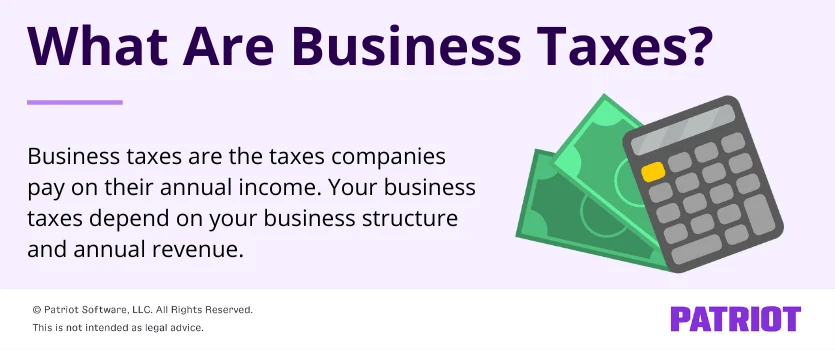
Small business owners frequently employ two primary mechanisms to lower their tax liability: deductions and credits. While often used interchangeably in casual conversation, they function differently within the tax code.
Tax Deductions reduce the amount of income that is subject to taxation. If a business has $100,000 in income and $20,000 in deductions, it is only taxed on $80,000. Common deductions include the home office deduction, business travel, insurance premiums, and the Section 199A Qualified Business Income (QBI) deduction, which allows eligible pass-through entities to deduct up to 20% of their qualified business income.
Tax Credits provide a dollar-for-dollar reduction in the actual tax bill. A $5,000 credit reduces a $15,000 tax bill to $10,000. Credits are further divided into:
- Refundable Credits: If the credit exceeds the tax owed, the IRS issues a refund for the difference.
- Non-Refundable Credits: These can reduce the tax bill to zero, but any remaining credit value is lost or, in some cases, carried forward to future years.
Historical Context and Economic Implications
The current tax landscape for small businesses is largely a result of the 2017 Tax Cuts and Jobs Act. This legislation significantly lowered the corporate rate from a top tier of 35% to a flat 21% and introduced the QBI deduction for pass-through entities. As several provisions of the TCJA are set to expire at the end of 2025, the 2026 and 2027 tax years represent a period of potential volatility and transition.
Economic analysts note that tax thresholds have a profound impact on "side-hustle" culture and micro-entrepreneurship. The $400 self-employment threshold, which has remained unchanged for decades despite significant inflation, often forces very small operators into the tax system earlier than they might expect. Conversely, the high standard deduction for married couples serves as a buffer for many family-owned businesses in their early, less profitable years.
Official Reactions and Compliance Sentiment
Industry advocacy groups, such as the National Federation of Independent Business (NFIB), have consistently highlighted that tax complexity is a top concern for small business owners. In recent surveys, entrepreneurs have noted that the cost of professional tax preparation often exceeds the actual tax liability for businesses hovering near the exemption thresholds.
The Small Business Administration (SBA) emphasizes that even businesses that do not owe taxes must maintain rigorous record-keeping. Federal law generally requires businesses to keep records for at least three years, though many experts recommend seven years to account for potential audits or amended returns.
Conclusion: The Importance of Proactive Planning
Understanding how much a small business can earn before paying taxes is essential for cash flow management and long-term viability. While the standard deduction and the $400 self-employment threshold provide clear markers for unincorporated businesses, the flat-tax nature of C corporations requires a different strategic approach.
As the 2026 and 2027 tax years approach, business owners are encouraged to monitor legislative changes regarding the expiration of TCJA provisions. Proactive tax planning—utilizing all available deductions and credits while maintaining precise financial records—remains the most effective way for small businesses to minimize their federal obligations and reinvest their earnings into growth and innovation. In a shifting regulatory environment, the difference between a tax-exempt year and a significant tax bill often lies in the details of structural choice and expense documentation.