Candice Horbacz
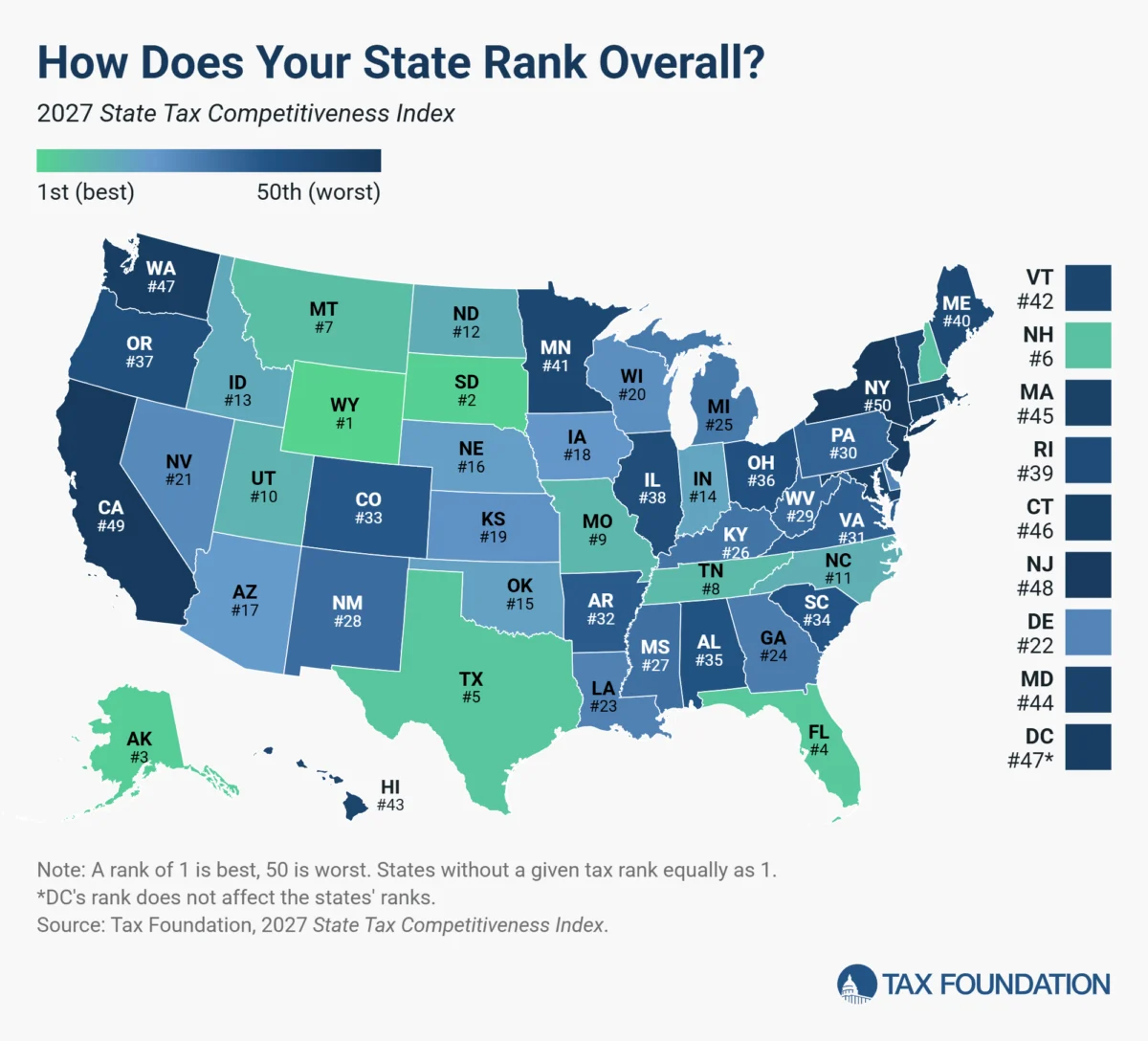
The Tax Foundation has released its significantly reworked 2027 State Tax Competitiveness Index, a comprehensive analytical tool designed to offer policymakers, taxpayers, and business leaders an in-depth understanding of how state tax systems measure up against each other. This edition marks a pivotal transformation for the long-running study, which, since its inception in 2003, was known as the State Business Tax Climate Index. The rebranding for the 2025 edition (reflected in this 2027 release) to State Tax Competitiveness Index signifies a broadened scope, focusing on overall tax competitiveness rather than solely the business tax climate. This overhaul involved a complete re-evaluation of its methodology, the introduction of new variables, and a reimagined digital presentation to provide unprecedented granularity and accessibility.
Evolution of the Index: Rebranding and Enhanced Methodology
For over two decades, the Index has served as a crucial roadmap for states evaluating and reforming their tax codes. While it consistently underwent methodological refinements to keep pace with legislative changes—such as the introduction of global intangible low-taxed income (GILTI), now net CFC tested income (NCTI), or the response to the Supreme Court’s Wayfair decision on remote seller taxes—the pace of change has dramatically accelerated in recent years. Landmark federal legislation like the Tax Cuts and Jobs Act (TCJA), the rise of remote work, and the adoption of the "One Big Beautiful Bill Act" (OBBBA), alongside emerging interest in new or expanded taxes on wealth, digital products, and unrealized gains, necessitated a more robust and comprehensive analytical framework.
The 2027 edition is not merely an update but a fundamental redesign. It expands the analysis to include over 150 variables, many of which were previously confined to appendix tables. The online presentation has been transformed from a static PDF and interactive map into a dynamic digital environment. Each state now benefits from a dedicated summary, detailing notable tax code features, explaining its ranking, and suggesting specific reforms to bolster competitiveness. Users can now access interactive, sortable, and filterable datasets, along with new visuals and historical rate tools, allowing for intricate comparisons between states or deep dives into specific tax variables. To ensure transparency and accurate historical comparison, the Tax Foundation has backcast state rankings under the new methodology for seven years prior to this current edition, acknowledging that the scope of these changes means some year-to-year rank shifts are more pronounced than in previous cycles.
The 2027 Rankings: A Snapshot of State Tax Competitiveness
The State Tax Competitiveness Index evaluates how effectively states structure their tax systems, aiming for simplicity, neutrality, transparency, and pro-growth principles. It delves into five core components: corporate taxes, individual income taxes, sales and excise taxes, property and wealth taxes, and unemployment insurance taxes.
Top Performers: The Appeal of Streamlined Systems
The 10 highest-ranked states in the 2027 Index are characterized by their commitment to these principles, often achieved through the absence of one or more major tax types. States like South Dakota and Wyoming, for example, levy neither a corporate nor an individual income tax, contributing significantly to their top positions. Alaska and New Hampshire benefit from having no individual income or state-level sales tax, while Florida, Tennessee, and Texas forgo individual income taxes. Montana, similarly, stands out for having no state sales tax.
However, achieving a high rank is not exclusive to states that eliminate major taxes. States like Missouri and Utah, along with North Carolina, North Dakota, Idaho, Indiana, Oklahoma, and Nebraska (ranking 11th to 16th), demonstrate that a well-structured system with moderate rates across all major tax categories can also lead to strong competitiveness.
Bottom Ranks: The Burden of Complexity and High Rates
Conversely, the 10 lowest-ranked states in the 2027 Index generally share common issues: complex, nonneutral taxes coupled with comparatively high rates. New Jersey, for instance, faces challenges from some of the nation’s highest property tax burdens, the highest corporate income tax rate, and one of the highest individual income tax rates. It further complicates its system with an inheritance tax and poorly structured individual income tax provisions. These states often impose significant compliance costs and create economic distortions that deter investment and growth.
Understanding the Metrics: How States Are Evaluated
The Index employs a sophisticated methodology, scoring states across the five aforementioned subindices. Rather than assigning equal weight, each subindex is weighted based on the variability of scores across states within that category. This approach ensures that areas where states exhibit greater differences in tax policy, and thus more opportunities for competitive advantage, carry more influence in the overall ranking.
- Individual Income Taxes: 30.2%
- Sales and Excise Taxes: 21.7%
- Corporate Taxes: 21.3%
- Property and Wealth Taxes: 15.2%
- Unemployment Insurance Taxes: 11.6%
This weighting scheme reflects the economic principle that businesses and individuals are more sensitive to tax differentials in areas where states offer widely varying approaches. For example, substantial differences in income or sales tax rates between neighboring states can significantly influence consumer and business location decisions. The Index’s relative scoring system compares each state to its peers, with states completely foregoing a major tax (e.g., individual income tax) typically receiving a perfect score in that subindex due to the inherent neutrality and competitive advantage.
Federal Policy Shifts and State Responses: A Dynamic Landscape
The American tax landscape has been significantly shaped by major federal legislative and judicial actions in recent years, prompting varied responses from states:
- Tax Cuts and Jobs Act (TCJA) of 2017: This federal reform drastically reduced the federal corporate income tax rate and altered numerous provisions, including those related to depreciation and international income (GILTI). States had to decide whether to conform to these federal changes or decouple, leading to diverse state tax bases.
- Supreme Court’s Wayfair Decision (2018): This ruling eliminated the physical presence requirement for sales tax collection, allowing states to require remote sellers to collect and remit sales taxes. This spurred many states to adopt economic nexus standards, expanding their sales tax revenue bases.
- The "One Big Beautiful Bill Act" (OBBBA): This recent federal legislation further altered expensing provisions, such as Section 168(k) (restoring full expensing for certain investments) and Section 174 (restoring immediate expensing for research and experimentation costs), and introduced Section 168(n) (first-year expensing for certain structures). It also replaced GILTI with NCTI. States conforming to these pro-growth expensing provisions generally see improved rankings, while those introducing base-narrowing changes like federal deductions for tips and overtime pay may see declines.
- Emergence of New Tax Types: Beyond federal conformity, states are grappling with novel tax concepts. The rise of digital economies has led to the adoption of digital advertising taxes in Maryland and Washington (with Illinois joining in 2027). There is also an emerging interest in new or expanded taxes on wealth, unrealized gains, data, and digital products, signaling a potential shift in revenue generation strategies for some states.
Significant State-Level Changes and Their Impact
The 2027 Index reveals substantial movement among states, reflecting active legislative sessions and diverse approaches to tax policy:
- Arizona fell three places to 17th due to nonconformity with federal full expensing (Section 168(k)) and a moratorium on data center tax incentives, impacting its corporate and sales tax rankings. However, an increased tangible personal property (TPP) tax exemption slightly improved its property tax score.
- Arkansas dropped three spots to 32nd, despite individual income tax rate reductions, primarily because of its nonconformity with federal full expensing.
- Georgia saw a notable drop from 18th to 24th. Its nonconformity to OBBBA’s corporate expensing provisions and the partial exemption of tips and overtime pay from individual income tax narrowed its base, impacting its corporate and individual income tax scores.
- Idaho experienced a four-place decline to 13th, largely due to conforming to OBBBA’s temporary individual deductions for tips and overtime, which narrow the tax base.
- Indiana fell three spots to 14th, with its individual income tax ranking dropping due to local income taxes and base-narrowing deductions for tips and overtime. Nonconformity to key expensing provisions also lowered its corporate tax rank, despite an improved TPP exemption.
- Iowa had a slight drop to 18th. While its individual income tax ranking fell due to federal base-narrowing provisions and other states’ rate cuts, its corporate income tax ranking rose significantly by conforming to full bonus depreciation and decoupling from NCTI.
- Kansas improved four places to 19th, driven by rolling conformity to OBBBA’s pro-growth business expensing provisions, though an increase in property tax collections per capita caused a drop in its property tax component.
- Louisiana saw a significant nine-place jump to 23rd, primarily due to the final phase-in of a 2024 tax reform package that eliminated the capital stock tax and allowed S corporations to file through individual income tax.
- Maine slid seven places to 40th with the adoption of a 2 percent "high-income surcharge," bringing its top individual income tax rate to 9.15 percent on incomes over $1 million and introducing a marriage penalty.
- Missouri broke into the Index’s top 10, rising from 12th to 9th. This improvement stemmed from conforming to OBBBA’s expensing provisions and resisting base-narrowing exemptions for tipped and overtime pay.
- Nebraska improved eight places to 16th, benefiting from the continued phase-down of its individual and corporate income tax rates and conformity to full bonus depreciation.
- North Carolina rose two spots to 11th, thanks to an individual income tax rate reduction and maintaining the nation’s lowest corporate income tax rate among states that impose one.
- Oklahoma climbed four places to 15th, driven by a reduction in individual income tax brackets and rates, and conformity to OBBBA’s expensing treatment while avoiding tip and overtime pay exemptions.
- Utah improved five places to 10th, trimming individual and corporate income tax rates, conforming to OBBBA’s expensing provisions, and benefiting from an inflation-adjusted TPP tax exemption.
- Washington fell one place to 47th overall. While it improved on property taxes by reverting its top estate tax rate, the inclusion of digital advertising in the sales tax base (part of a broader expansion of B2B digital product taxation) caused its sales and excise tax component to drop to 50th.
Looking Ahead: Forthcoming Tax Policy Changes
The dynamism of state tax policy continues, with several significant changes already enacted but not yet reflected in the 2027 Index (which captures tax systems as of July 1, 2026):
- Arkansas: Corporate income tax rate scheduled to fall to 4.1 percent in 2027.
- Georgia: Top individual income tax rate set to decline annually if revenue thresholds are met, with triggered standard deduction increases.
- Hawaii: A new, additional tax bracket of 13 percent on incomes over $500,000 (effective 2027) is expected to significantly lower its individual income tax and overall rank.
- Illinois: New and increased taxes, including targeted advertising services tax, digital asset tax, and social media platform fee, take effect January 1, 2027, impacting the 2028 Index.
- New Mexico: Decoupling from federal expensing provisions (Sections 168(k) and 168(n)) and expanding the corporate tax base to include NCTI (effective January 1, 2027) will negatively impact future scores.
- North Carolina: Continued phased reductions could see the individual income tax rate drop to 3.49 percent in 2027 and 2.99 percent in 2028, with corporate tax rate falling to 1 percent in 2028 and potential elimination by 2030.
- Rhode Island: A new three-percentage-point surtax on individual income over $1 million, phasing in over three years (reaching 8.99 percent by 2029), will hurt future rankings.
- Utah: A new tax on "targeted advertising" (effective January 2027) will be reflected in next year’s Index.
- Washington: A new 9.9 percent tax on income above $1 million (effective 2028) is likely to face legal challenges but will significantly impact future Index scores.
The Imperative of Tax Structure for Economic Growth
The Tax Foundation underscores that taxation is an inevitable aspect of governance, but the structure of a state’s tax system profoundly influences its economic health. A vast body of economic literature, spanning over six decades, increasingly supports the consensus that taxes significantly impact business location decisions, investment, and job creation. Early skepticism has given way to robust empirical evidence demonstrating that businesses and individuals "vote with their feet," favoring jurisdictions with simpler, more neutral, and lower-burden tax codes. Studies show that a well-structured tax code, while not a panacea, provides "Wins Above Replacement" – a measurable economic advantage over states with less competitive systems.
Policymakers, the Tax Foundation asserts, control their state’s tax structure and can swiftly implement changes that foster growth. While some states are tempted by targeted tax incentives and subsidies to lure businesses, such approaches are often inefficient, distort markets, complicate tax systems, and may fail to deliver sustained economic benefits. The example of North Carolina’s $240 million incentive package to Dell, which ultimately closed its plant after only four years, serves as a cautionary tale. A far more effective strategy, the Tax Foundation argues, is systematic, broad-based tax reform that improves the overall business climate for all enterprises, rather than picking winners and losers.
The State Tax Competitiveness Index serves as an invaluable diagnostic tool, enabling policymakers to understand how their state compares across corporate, individual income, sales, property, and unemployment insurance taxes. It highlights where states diverge from their peers—for better or for worse—in areas like tax rates, expensing provisions, treatment of net operating losses, and protections against double taxation. The Tax Foundation, with its team of state tax experts, invites policymakers and the public to utilize this resource, fostering informed dialogue and evidence-based reforms that position states for long-term economic prosperity.