Lina Irawan
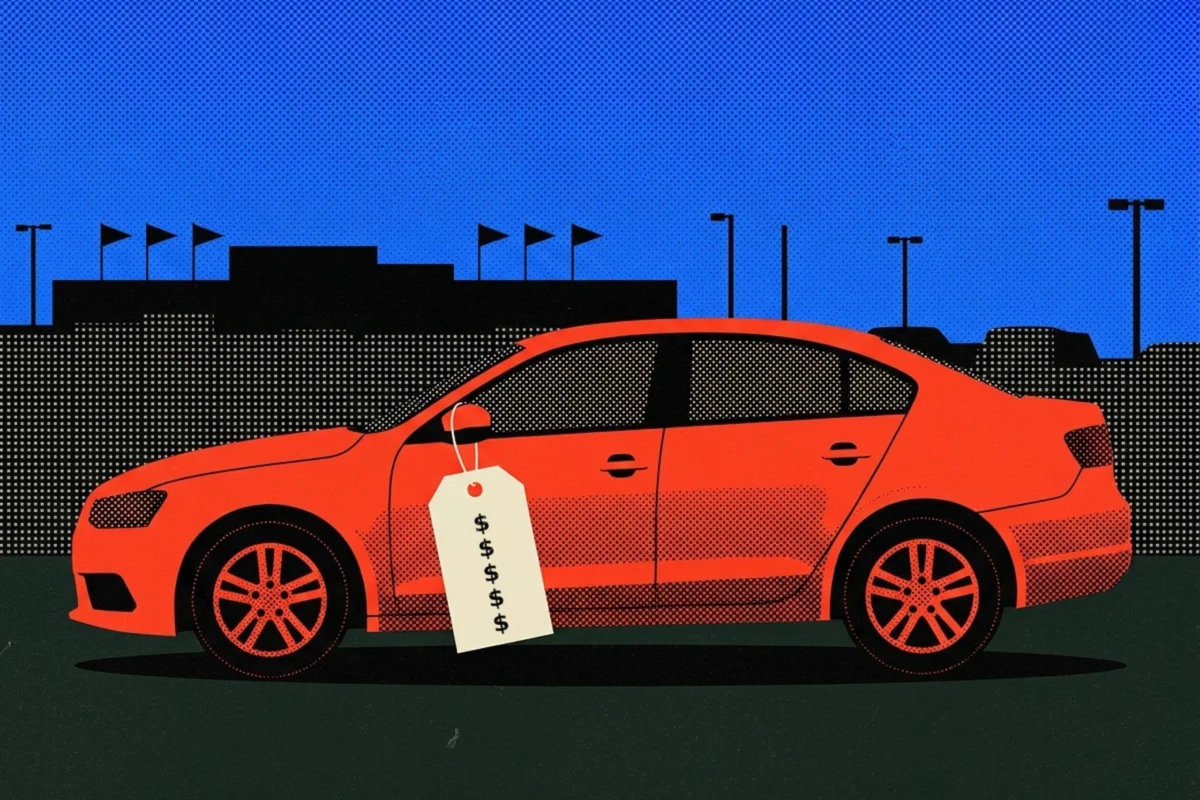
The landscape of automotive purchasing has undergone a significant transformation, with the average transaction price for a new vehicle in the United States eclipsing the $50,000 mark for the first time in history. According to October sales data released by Edmunds, the average sales price reached a record $50,087. This milestone, long anticipated by industry analysts, represents a confluence of persistent inflationary pressures, enduring supply chain disruptions, and a distinct shift in consumer preferences toward larger, more technologically advanced, and often luxurious models. The year-end surge in luxury vehicle purchases played a critical role in pushing the average over this psychological barrier, signaling a new era for car buyers.
Ivan Drury, director of insights at Edmunds, characterized the development as "inevitable," highlighting the long-term trends that have been building toward this moment. While seasonal factors, such as the holiday gift-giving season and the gradual introduction of upcoming model year vehicles, contribute to year-end sales dynamics, Drury emphasized that the steady upward trajectory of auto prices is also heavily influenced by what he terms "lifestyle creep." This phenomenon describes consumers’ increasing desire for premium features and larger vehicles once they have experienced them, making it difficult to revert to more basic options.
A Decade of Rising Costs: The Chronology of Price Escalation
The journey to $50,000 has been a gradual but accelerating one, reflecting broader economic shifts and specific industry challenges. For years leading up to the COVID-19 pandemic, average transaction prices for new vehicles had been steadily climbing, driven primarily by consumers’ increasing preference for SUVs and trucks over sedans, and the continuous integration of new technologies. However, the pace of this increase dramatically accelerated in the wake of the pandemic.
In the early 2010s, average new vehicle prices hovered in the low to mid-$30,000s. By 2019, just before the pandemic, they had edged past $38,000. The true inflection point came in 2020 and 2021, when global supply chains buckled under the strain of lockdowns and unprecedented demand. The infamous semiconductor chip shortage, which severely constrained vehicle production, led to historically low inventory levels on dealer lots. This scarcity, combined with robust consumer demand fueled by pandemic-era savings and a desire for personal mobility, created an environment ripe for price increases. Automakers, facing limited production capacity, prioritized building higher-margin vehicles, often fully loaded with premium features, which further skewed average prices upwards.
The average transaction price crossed the $40,000 threshold in mid-2020 and surged past $45,000 by early 2022. Each subsequent quarter has seen incremental increases, with the $50,000 mark being flirted with throughout 2023 before finally being breached in October. This chronology underscores a market where demand consistently outstripped supply for an extended period, allowing prices to rise with little resistance.
The Multi-faceted Drivers Behind the Price Surge
Several interconnected factors have converged to push new vehicle prices to unprecedented levels, extending beyond simple supply and demand dynamics.
Inflationary Pressures and Production Costs:
The broader inflationary environment has played a significant role. The cost for auto manufacturers to produce a vehicle has been surging, with a 6.3% increase for the year ending in October, according to data from the Federal Reserve Bank of St. Louis. This encompasses raw materials like steel, aluminum, and plastics, which have seen their prices escalate globally. Labor costs have also risen, driven by a tighter job market and increased wage demands. Energy costs, impacting everything from transportation to factory operations, further contribute to the overhead.
Tariffs and Trade Policies:
Adding another layer of cost are tariffs on imported goods, which have significantly impacted the automotive industry. Kelley Blue Book (KBB) has consistently highlighted the financial burden of these trade policies. In March, KBB estimated that tariffs added between $5,000 and $8,900 to the price of an imported vehicle and approximately $2,000 to the cost of a domestically produced vehicle, largely due to tariffs on imported components. These additional costs, amounting to an estimated $30 billion in extra manufacturing expenses across the industry, are invariably passed on to the consumer, further inflating sticker prices. While the original article references tariffs from a specific period, their lingering effects on supply chains and input costs continue to ripple through the market.
Consumer Preferences: The Allure of Upgrades and Larger Vehicles
Beyond the economic and geopolitical factors, a fundamental shift in consumer behavior is a primary driver. Ivan Drury of Edmunds points to two clear car-buying trends that are propelling sales prices above the $50,000 threshold.
Firstly, there’s an undeniable preference for larger and, consequently, more expensive vehicles. The market has seen a sustained migration away from sedans towards SUVs, crossovers, and pickup trucks. These larger vehicles naturally command higher prices due to greater material use, more complex engineering, and often more advanced features. This trend is not merely about utility but also about perceived safety, space, and a commanding road presence. "We do not see consumers downsizing in any meaningful manner," Drury observed. "You don’t need a $70,000 Chevy Tahoe, but do you want one? Yeah." This highlights the discretionary nature of many purchases, where desire often outweighs strict necessity.
Secondly, the appetite for advanced technology and comfort add-ons is insatiable. While many consumers might initially target a vehicle in the $35,000 to $40,000 range, they frequently find themselves unable to resist the lure of modern amenities and technological upgrades. Features such as semi-autonomous driving capabilities, remote start, ventilated and heated seats, sophisticated laser headlights, expansive infotainment systems, and heads-up displays with night vision are becoming increasingly standard or highly sought-after options. Each of these add-ons, while enhancing convenience and safety, significantly inflates the final purchase price, pushing what might have been a moderately priced vehicle well past the $50,000 mark. Drury succinctly captured this trend, stating, "It really is that convenience stuff that takes it over the top. Because again, it’s hard to get away from that kind of lifestyle creep."
The Financing Conundrum: Longer Loans and Mounting Debt
The rising sticker prices are having a profound impact on how consumers finance their vehicle purchases. The traditional five-year auto loan is increasingly becoming a relic of the past, as borrowers are forced into longer repayment terms to manage higher monthly payments. Edmunds data indicates a significant increase in the prevalence of six- to eight-year loans. Alarmingly, 1 in 4 new car buyers are now financing their purchase for seven years or more.
This trend toward extended loan terms carries significant implications for consumer debt and long-term financial health. While longer terms reduce the monthly payment, they drastically increase the total interest paid over the life of the loan. Furthermore, they expose consumers to a greater risk of negative equity, where the outstanding loan balance exceeds the vehicle’s market value, particularly in the initial years of ownership when depreciation is most rapid. This can trap buyers in a cycle of debt, making it harder to trade in or sell their vehicle without incurring a loss.
The rise in interest rates, driven by the Federal Reserve’s efforts to combat inflation, further exacerbates this issue. Higher interest rates amplify the cost of borrowing, making extended loan terms even more expensive. For a $50,000 vehicle, a difference of a few percentage points in interest over a seven or eight-year loan can amount to thousands of dollars in additional costs.
Broader Market and Economic Implications
The $50,000 average transaction price is not merely a statistical benchmark; it has far-reaching implications for the automotive industry, consumer behavior, and the broader economy.
Impact on Affordability and Accessibility:
The most immediate consequence is a significant erosion of vehicle affordability for a large segment of the population. For many households, a $50,000 vehicle, especially when combined with high interest rates and longer loan terms, represents a substantial financial burden. This could lead to a widening gap between those who can afford new, technologically advanced vehicles and those who are priced out, potentially pushing more consumers towards the used car market or prolonging the lifespan of their current vehicles.
Shift in Market Dynamics:
Automakers, driven by profitability, have increasingly focused on higher-margin segments like luxury vehicles, SUVs, and trucks. This strategy, while financially beneficial for manufacturers, may lead to a reduced availability of entry-level or more affordable new vehicle options. The market is effectively becoming more segmented, with fewer choices for budget-conscious buyers. This could also spur innovation in the compact and subcompact segments as manufacturers seek to offer more value-packed smaller vehicles.
Used Car Market Ripple Effects:
The high prices of new vehicles have a direct impact on the used car market. As new cars become less accessible, demand for used vehicles, particularly those just a few years old, intensifies. This increased demand, coupled with the lingering effects of reduced new car production (meaning fewer trade-ins), has kept used car prices elevated. While used car prices have shown signs of stabilizing or even slightly declining from their peak, they remain historically high, creating a challenging environment for all car buyers.
Economic Contribution and Consumer Spending:
The automotive sector is a significant contributor to the U.S. economy, supporting millions of jobs and driving substantial consumer spending. While high transaction prices boost revenue for automakers and dealers, they also represent a larger allocation of consumer disposable income towards transportation. This could potentially reduce spending in other sectors of the economy. The increasing reliance on longer-term debt for vehicle purchases also raises concerns about overall household debt levels and financial stability.
The Road Ahead: What to Expect
Looking forward, several factors could influence whether average transaction prices continue their ascent or begin to stabilize.
Inventory Recovery: As semiconductor supply chains gradually improve and automakers ramp up production, inventory levels are expected to normalize. A more balanced supply-demand equation could alleviate some of the upward price pressure. However, it’s unlikely that prices will revert to pre-pandemic levels due to the embedded increases in production costs and sustained consumer preferences.
Interest Rate Environment: The Federal Reserve’s monetary policy will play a crucial role. If interest rates remain high or continue to rise, the total cost of ownership will increase further, potentially cooling demand for new vehicles. Conversely, a future reduction in rates could make financing more affordable and stimulate sales.
Technological Advancement and Electrification: The ongoing transition to electric vehicles (EVs) introduces another layer of complexity. While EV technology is advancing rapidly, many models still command a premium price compared to their internal combustion engine (ICE) counterparts. As battery costs decrease and production scales up, EV prices may become more competitive, but for now, they contribute to the higher average transaction price. The continuous integration of advanced driver-assistance systems (ADAS) and connectivity features will also likely keep a floor under prices.
Consumer Behavior: The "lifestyle creep" identified by Edmunds’ Ivan Drury is a powerful force. As long as consumers prioritize larger vehicles and premium features, and are willing to finance them over longer terms, the upward pressure on average prices will persist. Educational efforts regarding the true cost of extended loans and the long-term financial implications might be necessary to encourage more prudent purchasing decisions.
In conclusion, the $50,000 average new vehicle transaction price is a landmark achievement, reflecting a complex interplay of economic forces, global supply chain dynamics, and evolving consumer desires. It underscores a fundamental shift in the automotive market, where the aspiration for advanced technology, comfort, and larger vehicles is increasingly met with a willingness to pay a premium, even if it means shouldering longer-term debt. The implications of this new pricing reality will continue to shape the industry and influence household finances for years to come.