Candice Horbacz
The period following the 2007-2008 global financial crisis ignited an extensive international debate concerning the role of taxation as a tool for financial sector stabilization and as a mechanism to generate revenue, potentially offsetting the enormous public costs associated with systemic financial breakdowns. This complex issue has dramatically re-entered the global spotlight since 2023, driven by a confluence of factors: banks benefiting significantly from a regime of higher interest rates, and governments worldwide seeking novel revenue streams in the aftermath of the profound 2022-2023 inflation shock. This renewed focus underscores a persistent tension between public fiscal needs, financial stability objectives, and the operational realities of the banking industry.
The Genesis of the Debate: The 2007-2008 Financial Crisis
The global financial crisis of 2007-2008 stands as a seminal event that fundamentally reshaped economic policy and financial regulation. Originating in the United States with the subprime mortgage crisis, its repercussions quickly spread across the globe, leading to the collapse of major financial institutions like Lehman Brothers, the near-failure of others such as AIG, and a severe credit crunch that threatened the entire global economy. Governments and central banks were compelled to intervene on an unprecedented scale, injecting trillions of dollars into the financial system through bailouts, asset purchases, and guarantees to prevent a total systemic collapse. Estimates of direct government support to the financial sector in advanced economies alone exceeded $5 trillion, with indirect costs, including lost economic output and increased public debt, far surpassing this figure.
In the wake of this crisis, a consensus emerged among policymakers that the financial sector, which had been at the heart of the meltdown, should contribute more significantly to the costs of its own instability. The "too big to fail" phenomenon, where large institutions were deemed indispensable to the economy, leading to implicit government guarantees, was a central concern. This sentiment fueled discussions on various policy levers, including stricter capital requirements, enhanced supervision, and the introduction of specific financial sector taxes. The primary objectives of these proposed taxes, often termed "Financial Stability Contributions" (FSCs) or "bank levies," were multifaceted: to recoup some of the public funds expended during the crisis, to create a buffer for future crises, and to internalize the negative externalities associated with excessive risk-taking by financial institutions.
The Inflation Shock of 2022-2023 and the Resurgence of Bank Profits
More than a decade after the initial wave of bank tax implementations, the issue gained renewed prominence in 2023. This resurgence was largely catalyzed by the significant global inflation shock that commenced in late 2021 and intensified throughout 2022 and early 2023. Driven by a complex interplay of factors including pandemic-induced supply chain disruptions, robust consumer demand fueled by fiscal stimulus, and particularly, the sharp increase in energy and commodity prices following Russia’s invasion of Ukraine, inflation rates soared to multi-decade highs across many economies. In the Eurozone, for instance, inflation peaked at 10.6% in October 2022, while in the United States, it reached 9.1% in June 2022.
Central banks, including the European Central Bank (ECB) and the U.S. Federal Reserve, responded aggressively by implementing a series of rapid and substantial interest rate hikes to curb inflationary pressures. While these measures were designed to cool down overheating economies, they also had a direct and often beneficial impact on commercial banks’ profitability. Banks typically benefit from rising interest rates because they can charge more for new loans (variable rates or new fixed-rate loans) faster than they increase the interest paid on deposits. This widening spread between lending rates and deposit rates, known as the Net Interest Margin (NIM), significantly boosted bank earnings. Major European banks reported substantial increases in profits throughout 2022 and 2023, with some reporting record or near-record earnings, largely driven by these higher NIMs. For example, several leading European financial institutions reported double-digit percentage increases in net interest income during this period.
Simultaneously, governments found themselves in a precarious fiscal position. The extensive spending undertaken during the COVID-19 pandemic, coupled with the economic slowdowns and increased social welfare costs associated with the inflation crisis, left many national treasuries searching for additional revenue. The perception of banks generating "windfall profits" at a time when households and businesses were struggling with high living costs and rising borrowing expenses created a powerful political impetus for considering new or enhanced bank taxes. This sentiment echoed the public outcry against bank bonuses and profits during the 2008 crisis, framing bank taxation as a matter of fairness and equitable burden-sharing.
The European Landscape of Financial Stability Contributions
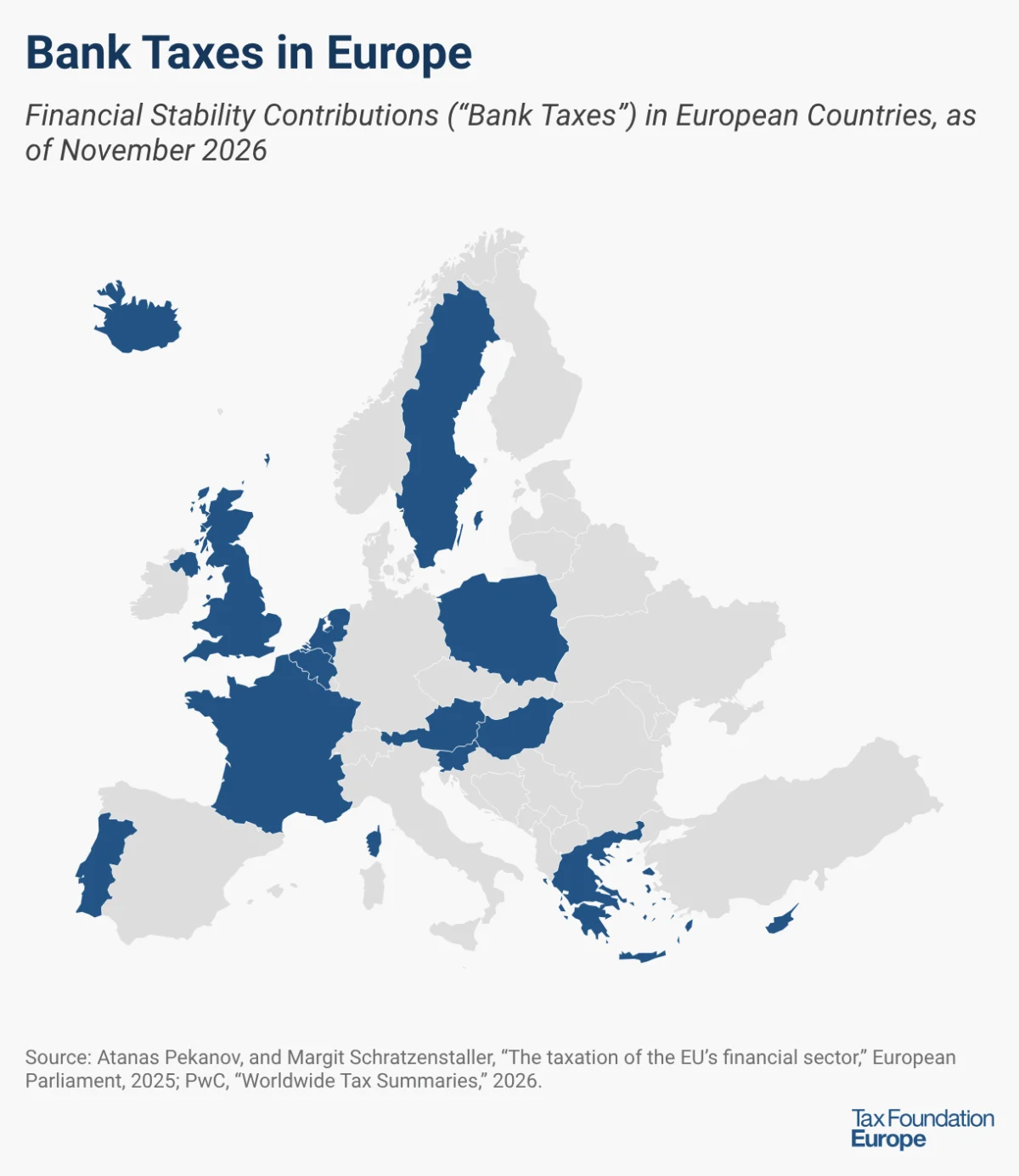
Against this backdrop, the concept of Financial Stability Contributions (FSCs), colloquially known as "bank taxes," has become a recurring feature of fiscal policy discussions across Europe. As of the most recent analyses, a significant number of European countries have implemented such levies. These include Austria, Belgium, Cyprus, France, Greece, Hungary, Iceland, the Netherlands, Poland, Portugal, Slovenia, Sweden, and the United Kingdom.
While the primary wave of implementation for most of these countries occurred in the immediate aftermath of the 2007-2008 financial crisis, there is one notable exception: Greece. Greece’s bank tax dates back to 1975, indicating a historical precedent for the country to utilize such a levy, albeit for different initial reasons than post-crisis stabilization. For the majority, however, the establishment of these taxes was a direct policy response to the perceived need to stabilize the financial sector and generate revenue to cover potential future bailout costs.
The design of these bank taxes varies considerably across jurisdictions, reflecting different policy priorities and national banking sector structures. Most countries levy their bank tax on a measure of liabilities or a measure of assets.
- Liabilities-based taxes: These typically target a bank’s total liabilities (excluding certain types of equity), often with specific exclusions for insured deposits or short-term interbank lending to avoid disincentivizing stable funding. The rationale is that large liabilities indicate systemic importance and potential risk to the financial system, thus justifying a contribution.
- Assets-based taxes: These are levied on a bank’s total assets, sometimes adjusted for certain risk factors. The argument here is that a larger asset base correlates with greater economic footprint and potential systemic risk.
- Other Tax Bases: Some countries have opted for more nuanced approaches. France, for example, taxes the minimum amount of capital necessary to comply with regulatory requirements. This approach ties the tax directly to the regulatory framework, potentially incentivizing prudent capital management. Italy, in its recent proposal, initially targeted a percentage of net interest income exceeding a certain threshold, directly aiming at the "windfall profits" derived from higher interest rates, although this was later modified.
Chronology of Implementation and Evolution
The timeline of bank tax implementation in Europe offers a dynamic picture of policy evolution:
- Pre-2007: Greece stands out as an early adopter, having a bank tax in place since 1975, long before the modern financial stability debate.
- 2009-2012: The Initial Post-Crisis Wave: Following the G20 Pittsburgh Summit in 2009, which called for the financial sector to contribute to the costs of future crises, several European nations moved swiftly.
- The United Kingdom introduced its Bank Levy in 2011, initially targeting the balance sheet liabilities of UK banks and building societies, and the UK operations of foreign banks.
- France implemented its tax on regulatory capital and certain liabilities in 2011.
- Germany established its bank levy in 2011, based on the bank’s liabilities.
- Sweden introduced its Financial Stability Fee in 2011.
- Hungary implemented a broader financial transaction tax and a bank levy in 2010, which was initially quite high, reflecting significant fiscal pressures.
- Austria, Belgium, Iceland, the Netherlands, Poland, Portugal, and Slovenia also introduced their versions of bank taxes within this period, often varying in scope and tax base.
- Mid-2010s: Adjustments and Debates: The initial years saw various adjustments, as countries refined their levies to address concerns about competitiveness, impact on lending, and effectiveness. Some countries, like Germany, linked their levy to a national resolution fund, making it a direct contribution to crisis management mechanisms.
- 2023: The Resurgence: The current inflationary environment and rising bank profits have reignited the debate.
- Italy made headlines in August 2023 with a surprise announcement of a 40% windfall tax on bank profits, targeting net interest income that exceeded certain thresholds compared to previous years. While initially framed as a direct tax on "extra profits," it was later clarified to allow banks to allocate an equivalent amount to non-distributable reserves, thereby mitigating some of the immediate fiscal impact but still serving as a capital-building measure.
- Other countries, including Spain, which had already implemented a temporary bank tax in 2022, continued to defend and evaluate their measures. Hungary also maintained its higher tax rates on banks and other sectors.
- The debate has also spurred discussions in countries that previously considered but did not implement such taxes, or those that had scaled them back.
Supporting Data and Economic Impact
The rationale and impact of bank taxes are often underpinned by significant economic data:
- Bailout Costs: The scale of the 2008 crisis response was monumental. For instance, the US government alone provided over $700 billion through the Troubled Asset Relief Program (TARP), while the UK injected billions into Lloyds and RBS. These figures illustrate the immense financial burden that bank taxes aim to partially address.
- Bank Profitability: Recent financial reports from European banking giants underscore the profitability surge. For example, several major Eurozone banks reported net interest income growth exceeding 20% year-on-year in 2023, translating into billions of euros in additional profit. This starkly contrasts with the struggles faced by consumers and businesses.
- Revenue Generation: While specific revenue figures vary widely by country and year, bank taxes have demonstrably contributed to national treasuries. For instance, the UK’s Bank Levy generated around £1.2 billion ($1.5 billion) in 2022-23. Germany’s bank levy contributes to its national resolution fund, accumulating significant sums over the years. These contributions, while not fully covering potential future crisis costs, represent a tangible effort to make the financial sector bear a greater share of its systemic risks.
- Impact on Lending and Growth: Studies on the economic impact of bank taxes have yielded mixed results. Some analyses suggest that poorly designed taxes can reduce bank lending capacity, potentially hindering economic growth. Others argue that if revenues are used to build resolution funds or reduce other taxes, the net effect on the economy could be neutral or even positive by enhancing financial stability. The IMF, in its initial assessment, noted that a well-designed financial sector tax could raise significant revenue without unduly impacting economic activity, provided it is broad-based and avoids distorting incentives.
Perspectives and Official Responses
The debate surrounding bank taxes elicits strong reactions from various stakeholders:
-
Governments and Fiscal Authorities (Proponents):
- Revenue Generation: For governments grappling with budget deficits and increased public spending, bank taxes offer a direct and politically palatable source of revenue. The "windfall profits" argument is particularly potent in this context.
- Fairness and Burden Sharing: Many governments argue that the financial sector should contribute more to society, especially given past public bailouts and current profitability. This aligns with public sentiment that banks should pay their "fair share."
- Financial Stability: By making banks internalize some of the costs of systemic risk, these taxes can theoretically disincentivize excessive risk-taking and contribute to a more stable financial system. Funds raised can also be directed to resolution authorities.
- Statements: Officials from countries like Italy and Spain have explicitly stated that their taxes aim to redistribute wealth and ensure that citizens benefit from the current economic conditions.
-
Banking Industry and Lobby Groups (Critics):
- Competitiveness Concerns: Banks argue that national bank taxes can put them at a disadvantage compared to international competitors operating in jurisdictions without such levies, potentially leading to capital flight or reduced investment.
- Impact on Lending: Industry representatives often contend that these taxes erode capital, reduce their capacity to lend to businesses and households, and ultimately stifle economic growth.
- Double Taxation: Banks highlight that they already pay corporate income tax and contribute to deposit guarantee schemes and resolution funds, arguing that a specific bank tax constitutes double taxation.
- Pass-through to Customers: A common argument is that banks will ultimately pass on the cost of these taxes to their customers through higher fees, reduced deposit rates, or increased lending rates, thereby undermining the intended beneficiaries.
- Statements: Banking associations across Europe have voiced strong opposition, warning of negative consequences for investment, credit availability, and the overall stability of the financial system.
-
International Organizations (Nuanced Views):
- International Monetary Fund (IMF): Post-2008, the IMF extensively researched financial sector taxation. It acknowledged the potential benefits of such taxes for revenue generation and risk mitigation, particularly advocating for a "financial activities tax" or a "financial stability contribution" to address the "too big to fail" problem. However, it also cautioned about design complexities and potential distortions.
- European Central Bank (ECB): The ECB has generally expressed caution regarding national bank taxes, especially those targeting windfall profits, citing concerns about their potential impact on financial stability, bank profitability, and ultimately, the transmission of monetary policy. The ECB’s position typically emphasizes the need for a stable and well-capitalized banking sector to support the real economy. For instance, in response to Italy’s proposed tax, the ECB reportedly expressed concerns about its potential impact on banks’ capital buffers.
- European Commission (EC): The EC has explored EU-wide financial transaction taxes but has largely left national bank levies to individual member states, while monitoring their compliance with state aid rules and their impact on the single market.
Broader Impact and Implications
The ongoing debate and implementation of bank taxes carry significant broader implications:
- Fiscal Policy Tool: Bank taxes have firmly established themselves as a legitimate, albeit controversial, fiscal policy tool for governments to manage public finances and address systemic risks. Their use underscores a shift towards making specific sectors contribute more to public coffers, particularly when perceived to be generating outsized profits.
- Regulatory Harmonization Challenges: The disparate nature of bank taxes across Europe, with varying tax bases and rates, poses challenges for regulatory harmonization within the EU’s single market. It can create an uneven playing field and potentially lead to regulatory arbitrage.
- Impact on Financial Sector Structure: The design of these taxes can influence banks’ balance sheet structures, risk-taking behavior, and even their operational models. For instance, a tax on liabilities might encourage banks to rely more on equity financing or reduce certain types of debt.
- Political Economy of Taxation: The resurgence of bank taxes highlights the potent political dimension of taxation. When public finances are strained and certain sectors are seen to be thriving, the political pressure to tax perceived "windfall profits" becomes immense, often overriding purely economic arguments. This reflects a broader societal expectation for fairness and accountability from powerful economic actors.
- Future of Financial Regulation: The debate over bank taxes is intertwined with the broader agenda of financial regulation. It complements measures like increased capital requirements (Basel III/IV), resolution frameworks, and stress testing, all aimed at building a more resilient financial system. The question remains whether these taxes are an effective addition to this regulatory toolkit or an unnecessary burden.
In conclusion, the journey of bank taxes in Europe, from their genesis in the aftermath of the 2007-2008 financial crisis to their renewed prominence in the current inflationary climate, reflects a complex interplay of economic necessity, political expediency, and evolving regulatory philosophies. As governments continue to seek sustainable revenue streams and maintain financial stability, the debate over how—and how much—the banking sector should contribute is likely to remain a central feature of economic policy discussions for the foreseeable future. The challenge lies in designing these taxes in a way that generates meaningful revenue without undermining the crucial role of banks in facilitating economic growth and stability.