Pevita Pearce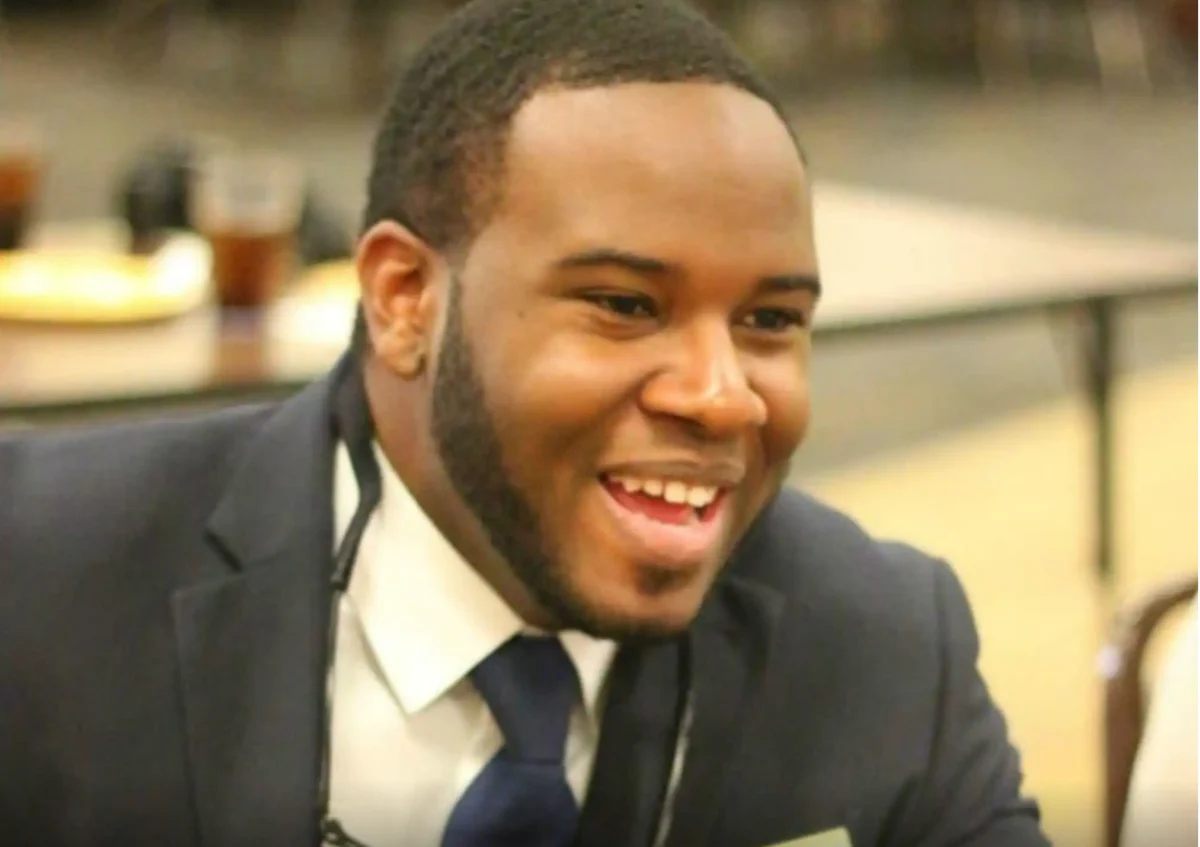
The recent parole of former Dallas police officer Amber Guyger, who fatally shot accountant Botham Jean in his own apartment, has intensified a complex legal struggle. While Guyger will now serve the remainder of her sentence under supervision outside of prison, the substantial $98.65 million federal civil judgment against her for wrongful death and civil rights violations remains an unresolved financial burden. Jean’s family is now actively pursuing legal avenues to compel the City of Dallas, as Guyger’s former employer and insurer, to satisfy this significant judgment, arguing that the city bears ultimate responsibility for the actions of its officer.
The tragic incident that led to Jean’s death occurred in September 2018. Guyger, who was off-duty but in uniform, returned to her apartment complex after a nearly 14-hour shift. Mistaking Jean’s apartment for her own, she entered the residence and, believing him to be an intruder, fired two shots, killing the 26-year-old PwC accountant. This misjudgment and subsequent use of deadly force have cast a long shadow, leading to criminal charges, a civil lawsuit, and now, a legal battle over financial accountability.
Guyger was convicted of murder in 2019 and sentenced to 10 years in prison. Her parole, granted this week, means she will be released from incarceration but will remain under parole supervision. The precise timing of her release is not yet public. The family’s pursuit of the judgment against the City of Dallas centers on the argument that the municipality, through its provision of liability coverage to its police officers, should be held accountable for the financial ramifications of Guyger’s actions.
"If a police officer makes a mistake when they decide to pull the trigger, they are on their own. You can pay your taxes to fund the insurance plan, but if you are harmed by an officer’s mistake, you are on your own," stated Dallas attorney Lisa Blue, representing the Jean family. This sentiment underscores the core of the family’s legal strategy: to ensure that the city, which employed and insured Guyger, shoulders the burden of the judgment rather than leaving Guyger with an insurmountable debt and the family without recompense.
City officials, however, maintain a starkly different position. They assert that the city’s insurance plan does not cover the circumstances of the shooting, thereby absolving Dallas of any liability for the $98.65 million judgment. This stance creates a significant legal and ethical chasm, as the Jean family’s legal team argues that such a position would effectively deny restitution to Jean’s survivors, saddle Guyger with an impossible financial obligation, and allow the city to evade accountability for the actions of one of its employees.
The resurgence of this case, amplified by Guyger’s parole, has inevitably reopened the deep wounds of grief for the Jean family. In a statement released on Friday, the family expressed the enduring pain of their loss: "The loss of Botham has left our family forever dismembered, and that is something we continue to live with every day." This emotional toll highlights the human dimension of the legal proceedings, where financial compensation is sought not only as a matter of justice but also as a means of acknowledging the profound and lasting impact of Jean’s death.
While Guyger herself is not a direct party to the family’s current lawsuit against the city, the outcome of this legal challenge will significantly impact her. If the Jean family prevails, Guyger would be relieved of the personal obligation to pay the judgment, and the onus would shift entirely to the City of Dallas. A hearing in this case was initially scheduled but was postponed at the city’s request, with a new date yet to be determined.
City officials have consistently declined to comment on ongoing litigation. However, court filings from the city’s attorneys outline their defense, asserting that the city’s insurance plan excludes coverage for losses stemming from "criminal acts and other willful and intentional misconduct and wrongdoing." The city’s legal team contends that Guyger’s murder conviction serves as irrefutable evidence that her actions fall into these excluded categories, thus relieving the city of its insurance obligations.
The City’s Responsibility Under Insurance and Ethics
Jean’s death, according to Lisa Blue, serves as a stark illustration of why liability insurance for law enforcement officers is crucial. The family’s lawsuit contends that the City of Dallas is not only legally obligated as an insurer but also ethically responsible, suggesting that the city’s own police staffing practices—characterized by alleged understaffing and excessive work hours—contributed to an environment where officers might be more prone to critical errors. The city has dismissed this argument as irrelevant to the insurance coverage dispute.
Central to Guyger’s defense during her criminal trial was the assertion that she acted in self-defense, believing she was in a life-threatening situation. While the family’s lawyers do not dispute the jury’s guilty verdict, they argue that Guyger’s actions, though resulting in a tragic outcome, did not stem from an intentional criminal intent in the manner the city’s insurance policy might define it.
"You can’t say it wasn’t an accident. She shot an innocent man sitting in his apartment eating ice cream. I mean, that’s an accident," Blue elaborated in a phone interview. "Of course, she intentionally pulled the trigger, but she did not intentionally violate the law. She thought she was following the law, but made a terrible, tragic mistake. That is exactly what insurance is for." This nuanced distinction between an intentional act (pulling the trigger) and intentional criminal wrongdoing is a key point of contention in the civil case.
The City of Dallas has also invoked the doctrine of governmental immunity under the Texas Constitution, arguing that it shields the city from lawsuits seeking monetary damages. Furthermore, the city asserts that Jean’s family lacks the legal standing to make a claim directly against the city’s insurance plan.
Chronology of Events
The events leading to Botham Jean’s death and the subsequent legal battles can be traced through a timeline:
- September 6, 2018: Amber Guyger, after a prolonged shift, mistakenly enters Botham Jean’s apartment and fatally shoots him, believing him to be an intruder.
- September 2018: Guyger is fired from the Dallas Police Department and initially charged with manslaughter.
- November 2018: A grand jury indicts Guyger on a murder charge.
- October 2019: Guyger is convicted of murder and sentenced to 10 years in prison. The city ceases to cover her legal defense costs.
- March 2024: Jean’s family files a new lawsuit seeking to hold the City of Dallas responsible for the $98.65 million federal civil judgment.
- Present: Amber Guyger is granted parole. The lawsuit against the City of Dallas is ongoing.
On the night of the shooting, Guyger had reportedly been working extensive hours, including 11-hour shifts for the preceding four days. Exhausted, she reportedly went to the wrong floor of her parking garage, navigated to the incorrect hallway, and attempted to enter Jean’s apartment, which was located directly above hers. The apartment’s lights were off, and the door, unlocked, swung open. Upon seeing a figure on the couch, she discharged her firearm twice. In a call to 911 operators immediately following the shooting, Guyger can be heard expressing her exhaustion and confusion as she begins to realize her mistake.
The recent lawsuit filed by the Jean family also alleges a pattern of alleged negligence by the city, claiming that Dallas had been in violation of its own ordinances by understaffing its police department. This alleged understaffing, the suit contends, led to excessive work hours and a stressed, exhausted police force, potentially increasing the likelihood of critical errors. The city has countered this by deeming the argument irrelevant to the insurance coverage issue.
Legal Maneuvers and Claims of Immunity
Attorneys representing the Jean family initiated a federal lawsuit against both the city and Guyger in 2024. However, the city was subsequently dismissed from this federal action based on its claims of immunity and the assertion that its insurance policy did not extend coverage to the intentional commission of a crime.
Daryl Washington, who represented the Jean family in the 2024 civil suit, expressed frustration with the city’s stance: "The city of Dallas really, really let this family down. They [the city] fought so hard not to be responsible for what happened with Botham. You have families whose lives have been torn apart, and they will never be the same. And it makes it even worse when these cities fight so hard not to be held accountable for the actions of people who they hired."
Even legal professionals who achieved success in previous litigation involving Guyger express skepticism about the Jean family’s ability to collect the judgment if Guyger is the sole party responsible for payment. Lisa Blue, while expressing empathy for Guyger, noted, "She made a terrible mistake that’s going to follow her for the rest of her life. I mean, her name is all over the world." This sentiment suggests that the immense financial judgment is likely beyond Guyger’s personal capacity to repay.
The core of the Jean family’s argument remains that Botham Jean’s death at the hands of a city employee—whose salary and benefits were funded by taxpayer dollars—has left an unfillable void. Their pursuit of the judgment is not solely about financial recovery but also about seeking a form of validation for the immense loss they have suffered and potentially alleviating financial burdens that may have arisen from their grief and the ongoing legal proceedings.
"There is not a citizen in Dallas who would think it’s fair for the city to deny insurance coverage," Blue asserted. "The only thing we can do for this poor family is try to get them some compensation." The family’s legal team is working to secure a resolution that provides a measure of justice and financial relief, emphasizing that the city’s potential denial of insurance coverage compounds the tragedy of Jean’s untimely death.
The ongoing legal battle underscores a critical tension between governmental immunity, the scope of insurance policies, and the pursuit of accountability for the actions of public servants. As the case progresses, its outcome could have significant implications for how cities handle liability for the conduct of their employees and the expectations of victims seeking redress. The Jean family continues their fight for justice, hoping to ensure that the City of Dallas is held to account for the actions of its former officer and that they receive the restitution they believe they are owed.